
If you're looking for a pair of stereo speakers to complete your hi-fi system, then you have plenty of choose from. Large bookshelf models, compact floorstanders, small budget speakers or high-end audiophile pairs – there is no shortage of variety available on the market.
So how do you know which speaker is right for your room, your listening tastes, and your system? We're here to help.What Hi-Fi? has been testing hi-fi speakers of all types, prices and sizes for 50 years, so we know exactly what to look for in a great-sounding speaker.
Every speaker in this guide has been tested in our dedicated listening rooms by our in-house team of expert reviewers. Every member of our reviews team loves listening to music and has extensive knowledge, so we can provide the best advice on the speakers that will best fit your criteria and budget.
Every speaker has its own sonic characteristics, but the best stereo speakers should deliver great sound quality for the price, whether that's at £100/$150 or £3000/$4200 per pair. They should bring your music to life with clarity, detail and spaciousness, offer engaging dynamics and a snappy sense of rhythm – all while upholding the build quality standards expected at their respective price brackets.
Below you'll find our selection of the top passive stereo speakers we've tested across a range of prices. These models deliver the best value for money and will make your music sing – we are confident there's something for everyone here. You can read more about our speakers testing process, get our expert tips on how to choose the right speakers for you, or scroll down for our pick of the best speakers for every budget.
6th November 2026: We've been testing a whole bunch of speakers for our What Hi-Fi? Awards 2026 recently, and have added in the newly crowned Dali Sonik 5 floorstanders as our favourite mid-price floorstanders, which ousted the Fyne F501E. We also added new models from Dali, Fyne, Rotel and Monitor Audio to our Also Consider and Coming Soon sections.

I've been testing and reviewing speakers at What Hi-Fi? for over 14 years, and have listened to speakers of all shapes and sizes in that time. From budget pairs to premium models, the various speakers I have tested over the years have given me the knowledge and experience to know exactly what a buyer should be expecting for their money. Budget doesn't mean you should settle for shoddy build quality, and high-end doesn't mean you have to sacrifice fun for ultimate transparency and refinement. The best speakers should let you enjoy listening to your favourite music to the fullest, and the five-star recommendations in this guide aim to deliver exactly that.
Best speakers overall


To make it onto this list, you need to be a very fine pair of speakers, but for us to consider you to be the best overall, you need to be something truly special. Fortunately, the AE300 Mk2 are just that.
The AE300 Mk2 are housed in neatly made but pleasingly compact boxes. Each speaker stands 32cm tall and is relatively slim at just 17cm wide, and while they're visually unobtrusive units, that isn't a byword for boring.
The AE300 Mk2 employ a large 29mm fabric dome tweeter with a 12cm paper/coconut fibre mid/bass, a design that leans heavily on the lessons learnt during the development of Acoustic Energy’s high-end Corinium range.
Don't be put off by the Acoustic Energy units' slightly lower-than-usual impedance. The speaker’s mostly benign impedance curve ensures that any decent price-compatible amplifier will be able to drive them properly, with both the Arcam A5 (£749 / $699) and the Rega Brio Mk7 (£799 / $1095) doing a fine job of playing nice with the AE300 Mk2.
Regardless of partnering equipment, we find so much to be impressed by. These are speakers with poise and control, so that even when we feed them a demanding recording such as Michael Jackson’s Off The Wall, they don’t sound out of their depth. There is an excellent level of detail, but it's presented in a natural and unforced manner.
When listened to against their key rivals, the Acoustic Energy are smoother, more refined than almost anything else at this level, with, to quote from our review, "high-frequency sounds shimmer rather than sizzle". A lovely way to put it.
The AE300 Mk2 aren't the sort of speakers that grab you by the lapels. Instead, they slowly charm you , steadily revealing themselves to be a superb pair that, if you invest a little time, will reward you endlessly.
Read our full Acoustic Energy AE300 Mk2 review
Best budget bookshelf speakers


If you're in the UK (£299) or Australia (AU$599), the Dali Kupid are the most affordable speakers you'll find on this list. They're more expensive for US buyers at $600, but not so much that we don't consider them great value no matter where you get them.
The Kupid are truly compact bookshelf speakers. They've got a small price and a small footprint, weighing in at just 5.8kg, and while they've also got a low sensitivity of 83dB, we didn't find them tough to drive during our rigorous tests.
Their small size actually works to their advantage, as they can be placed on desks, cabinets, bookshelves, TV stands or large windowsills rather than on dedicated speaker stands, making them a perfect pick if you have with limited space. You can even mount them on the wall thanks to their included fixing screws and wall brackets.
Small speakers they may be, but the Kupid aren't shy in how they deliver their sound. The compact units offer a lively, nimble presentation that is packed with enthusiasm, and while you won't get a huge amount of bass, their expressive midrange takes the spotlight and shines as it does so.
They're great with rhythms, and as we stated in our review, the Dalis "exhibit a knack for snappy timing and agile rhythm (and) have a fleet-footed quality that zips along with all kinds of tracks in an engaging manner".
Dynamically, the Kupid can pull out the ebbs and flow of tracks with aplomb, all while revealing subtler moments with a delicate touch. They can bring out the drama of more challenging tunes, and while they may be small, we don't often feel as though the Kupid aren't immersing us in the music we feed them.
As we enthused in our review's verdict: "A great choice for small, modern music systems, the entertaining Dali Kupid will win over many hearts". How romantic.
For a more hi-fi, step-up model, we recommend the Dali Sonik 1 (£449 / $900 / AU$849), which currently holds a What Hi-Fi? Award as our best pair of standmounter speakers in the £300-£500 price range.
Read our full Dali Kupid review
Best budget floorstanding speakers


Wharfedale's Diamond range has been impressing us for many years for its potent mix of great performance and great value. The affordable 12.3 floorstanders have been a multiple Award-winner and our go-to recommendation for the last handful of years.
The updated Diamond 12.3i model retains the same dimensions and 2.5-way design as its predecessor, with changes to the internal damping and rear-firing bass reflex port. These might sound trivial, but they result in quite the sonic difference – the new 12.3i floorstanders are bigger and bolder-sounding than before.
In our review, we said: "Dynamic shifts are a little more vivid with the new-gen model going from quiet to loud and back again with greater conviction. The bass also kicks harder and, perhaps surprisingly given the identical specifications, seemingly a little deeper."
Despite an unchanged tweeter, we find the treble is a touch forward, which makes low-level details clearer and adds to the overall sense of space. The speakers remain a refined listen, with no other rivals coming close to their winning blend of insight, dynamic expression and control at this price.
We would like to hear a touch more musical momentum and cohesion, but these new floorstanders are still a fun listen, conveying a good amount of energy, sure-footed rhythms and vocal textures to keep us entertained.
These floorstanders have always been easy to accommodate in a room, although we find the new 12.3i's revised port arrangement means they are a little fussier about room positioning. Don't place them too close to a wall – we found placing them 70cm into a room helped solidify the stereo imaging.
Build quality is solid for this relatively modest price tag, with three finishes available for the new 'i' model – our sample looked understated but neat.
At this affordable price, the Diamond 12.3i remain unmatched when it comes to performance and value, and the more powerful, exciting presentation will delight many. They're a little fussier to position than before, but they remain an excellent buy for the money.
Read the full Wharfedale Diamond 12.3i review
Best mid-price floorstanding speakers


Rarely can we label a pair of floorstanders as ‘compact’, but with space at a premium for many, as the average size of living spaces shrinks almost year on year, Dali’s Sonik 5 really do bring top-quality audio in a reasonably sized package.
Standing just under 83cm tall, these relatively petite two-way towers come in a choice of four different finishes to match your decor. Some caution will be necessary when it comes to positioning these speakers in order to keep the tweeters aligned with your ears, but with just a little forethought, they are capable of producing a sound that far outgrows their reasonable size.
We tested the Sonik 5 alongside both the Arcam A15+ and Naim Nait XS 3 stereo amplifiers and found ourselves impressed with how adaptable these speakers are. Across genres, they deliver a dynamically nuanced and engaging performance.
Other sonic merits include the texture, clarity and warmth of vocals – thanks to their highly capable midrange – powerful and pleasingly controlled bass and refined, airy treble. Good separation also allows listeners to really appreciate the vivid detail on offer across the frequency spectrum.
Rhythmically, these speakers can offer punch and fine detail, making them adaptable across genres. When scale is called for, for instance during dramatic, orchestral compositions, they have no trouble producing an expansive, hard-hitting sound.
Of course, they will still be too big for some rooms, but you'll be hard-pressed to find a more accommodating and capable pair of floorstanders than the Dali Sonik 5.
Read our full Dali Sonik 5 review
Best premium standmount speakers


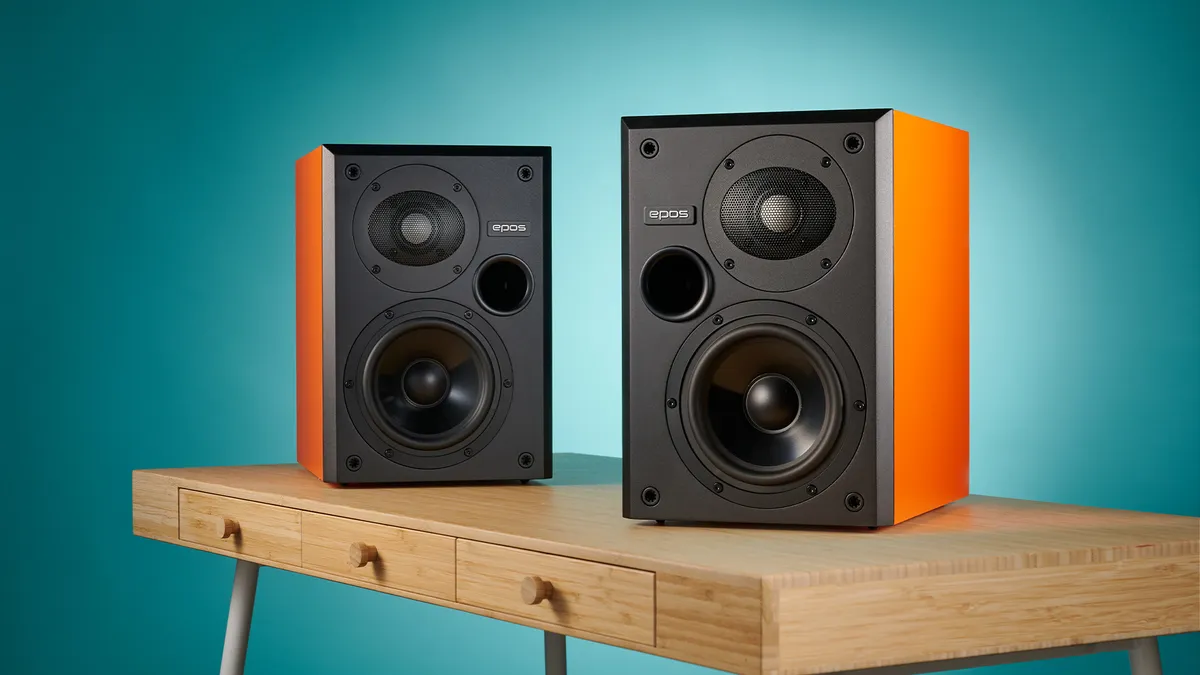


While we (and most manufacturers) would advise you to place standmounter or bookshelf speakers on dedicated stands, Epos has made things a little more flexible. Recognising that it's not always viable for people to accommodate stands in their space, Epos has optimised its ES-7N small speakers so they sound their best even when placed inside a bookshelf.
Flip a switch at the back of these petite speakers and the speakers will adjust their performance accordingly when placed up against a wall or corner to remain evenly balanced.
It's impressive just how close to the free-standing (away from wall, on stands) performance these speakers get when placed inside our IKEA Kallax bookshelf, and while there is a slight drop in clarity and stereo imaging, it remains a fantastic presentation overall.
In fact, even though these are small boxes that won't compete with larger designs – such as KEF's R3 Meta, which offer deeper bass, bigger and more dynamic sound – what these Epos speakers do so well with music gets us smiling with joy and our feet tapping. They're incredibly talented.
As we said in our review: "The ES-7N are bold and confident performers that resolve high levels of detail and organise it in a cohesive and musical way. Play Kendrick Lamar’s Not Like Us and the Epos kick like a mule. They sound taut and punchy with music such as this, delivering the song’s jumpy rhythm track in a wonderfully surefooted manner.
There is plenty of drive here and the speakers are great at conveying the music’s varying momentum."
Voices are delivered with impassioned nuance and clarity, and bass notes are – for such small cabinets – taut, solid and grippy. We love the similarly-priced Neat Petite Classic's fun, peppy presentation, but the Epos are even more precise and controlled when it comes to rhythmic agility.
They are just as considerate with more classical or intimate recordings, and they pair well with a variety of amplifier partners, from the budget Rotel A8 to the premium Naim Nait XS3.
The Epos ES-7N are charming performers. They are small, hugely capable and surprisingly unfussy in use. That they recognise not everyone will be able to position their speakers perfectly and sound just as good when placed inside bookshelves is a rare talent that should be celebrated.
If your budget can stretch this high and you have a small space to work with, these are highly recommended.
Read the full Epos ES-7N review
Best premium floorstanding speakers
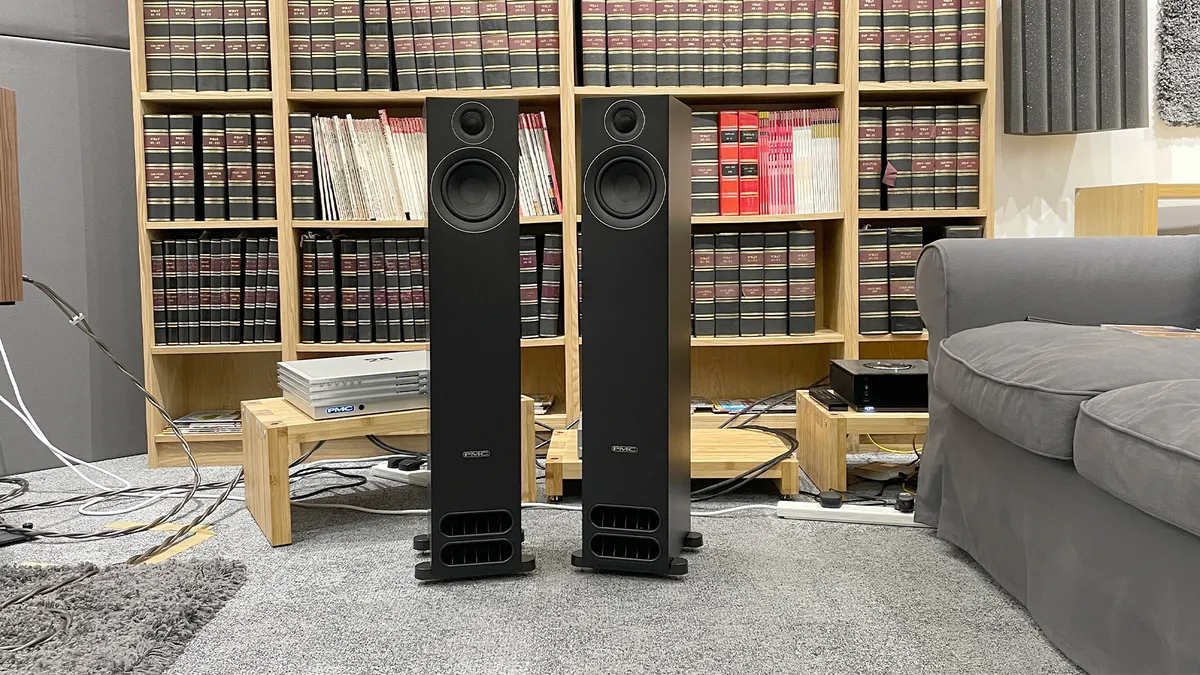


PMC has something of a reputation for high-end hi-fi, and while the superb Prodigy 5 have wound up as our best premium floorstanders on this list, they're actually miraculously good value.
The priority with the Prodigy 5, much like their five-star Prodigy 1 standmount siblings, has been to eke out as much sound-per-pound punch as possible, letting considerations over design and aesthetic flourishes fall away in the pursuit of the best audio you can get for the price.
And boy has the effort paid off. PMC has hit the sweetest of sweet spots with the Prodigy 5. The speakers balance subtle details and musical flourishes with a heightened sense of presence, poise and confidence. In terms of sonic performance, we didn't hear many better new speakers in the last year, and it was the Prodigy 5's musical chops that really earned them a current What Hi-Fi? Award.
The Prodigy 5 are adept at giving the best of all worlds without a hint of sonic sacrifice. While comparatively priced rivals substitute space for precision or dynamics for subtlety, PMC’s unassuming towers are truly comprehensive performers.
There's so much scale and breadth to them, yet they never seem to sacrifice the intimacy or nuance of a piece. It's a remarkable trick, and one that had us wanting to test more and more tracks to see what the Prodigy 5 could do with them.
All in all, a marvellous success story. Worthy Award-winners, indeed.
Read our full PMC Prodigy 5 review
Best high-end standmount speakers


The Prophecy 1 may be the babies of PMC's Prophecy range, but their performance is a long way from lagging behind the rest of their esteemed siblings. Just as we're keen on the Prophecy 5 floortanders, we find the standmounted Prophecy 1 to be a delight no matter what we throw at them.
The high-end standmounts stick to PMC’s tried and trusted transmission line configuration, wherein the rear-firing output from the 12.5cm mid/bass travels down a folded path inside the cabinet so that most of the sound gets absorbed and only the lowest frequencies emerge from the vent at the speakers' base.
This low-frequency sound is in phase and, if properly tuned, fills in below the point where the mid/bass’s output starts to tail off. The tweeter used here is the very same 27mm soft dome unit we so liked in the Prophecy 7 floorstanders, another five-star candidate on this list.
All of this adds up to a winning combination for PMC. The Prophecy 1 are outstanding speakers, offering class-leading precision and clarity wedded to a precise, articulate handling of dynamics. In terms of getting you close to the original intention of the recording, they're pretty much in a class of one for the price you'll pay.
To quote from our review, the PMC boxes "have the kind of free-flowing dynamics that seem a little out of place in such a compact design, and can deliver the sledgehammer crescendos of a piece like Mars with unusual composure and punch. Even when pushed, these standmounts sound controlled, where others begin to crack."
At this level, the Prophecy 1 tick almost all of the key boxes. Pair them with a talented system and we doubt many rivals will be able to keep up.
Read our full PMC Prophecy 1 review
Best high-end floorstanding speakers


The Prophecy 7 are the middle floorstander in the PMC's Prophecy range. The Prophecy line replaces the long-running Twenty 5i series that has formed the core of PMC’s home speaker output for years, so expectations were high for a brand making a big transition away from its established series of loudspeakers.
The Prophecy 7 employ a three-way design, with a woofer augmented by one of the brand’s special 'transmission line' systems, the same tech you'll have read about if you checked out our Prophecy 1 standmount entry above.
If you didn't, it's a folded, damped path inside the speaker cabinet that takes the rear-firing sound from the bass driver and absorbs all but the lowest frequencies, which then exit through a vent at the base of the front panel.
As with the Prophecy 1, the results are exceptional. Rarely have we heard such a clear, clean and well-integrated sound at this level, not to mention such an impressively spacious soundstage from what are still relatively compact speakers.
They're so well judged, too. As we stated in our review, "Tonally, these floorstanders are superbly balanced, sounding neutral without falling into the trap of being cool or aloof. That’s a difficult trick, judging by the number of ‘neutral’ products we hear that sound lifeless and boring".
Add in a knack for dynamics and plenty of punch and attack and you've got something rather remarkable on your hands.
Any downsides to be wary of? The Prophecy 7 are best suited to mid-sized rooms rather than massive spaces, but if you have an area that's right for them, they're a special pair of loudspeakers.
If you have the money, they're very easy for us to recommend.
Read our full PMC Prophecy 7 review
Best floorstanding speakers for large rooms


Fyne's F500S range of loudspeakers debuted in February 2025, promising a "significant audio and aesthetic upgrade" over the previous generation F502.
Placed a step above the brand’s entry-level F500E Series, the F502S floorstanders – aim to make noticeable sonic strides without a huge increase in price over the outgoing speakers.
They've done just that. The F502S are a sizeable set of floorstanders, dwarfing the comparably petite Neat Mystique Classic and the slimmer, cheaper PMC Prodigy 5, so you'll need space to give them room to shine, but if you can accommodate them, these Fyne towers are something really special.
The F502S pack a 25mm magnesium dome tweeter alongside a 20cm mid/bass driver and a 20cm bass driver. The mid/bass unit harnesses the brand’s signature Isoflare point source technology, which has trickled down from its higher-end models to its ever-expanding roster of speakers.
The results are outstanding. The Isoflare tech works beautifully once again, bringing impressively consistent dispersion alongside improved time alignment and excellent musical integration. Wherever you stand or sit in relation to the F502S, their central image never collapses or sounds off-kilter, making them remarkably unfussy when it comes to picking a listening position.
That's not even the best part. The F520S strike a lovely balance, blending potent power and authority with those trickier musical elements that reveal a considered, nuance pair of performers.
As we said in our review, the F502S "are like your favourite school teacher or most inspiring university lecturer: authoritative and competent, yes, but personable, engaging and genuinely approachable".
If you want to test out their abilities, Hans Zimmer's The Battle from the Gladiator soundtrack is a perfect showcase of what they can do. With their wonderful dynamic talents and eye for detail, they bring the complex arrangement to life with ease.
The premium F502S towers continue a rather remarkable hot streak for Fyne Audio. If you have the money and space, they demand your consideration.
Read our full Fyne Audio F520S review
Also consider

There are plenty of excellent speakers that we couldn't fit into the main list above, so here are some more alternative options, both new and old, that we would recommend to anyone looking for a new pair of speakers.
Dali Sonik 1: The Award-winning Dali Sonik 1 are a talented and versatile pair of standmounters. With a subtle, high-quality design and an expressive, well-balanced sound, these are an excellent pick for anyone seeking serious sonic performance at a price of £449 / $900 / AU$849.
KEF LS50 Meta: Their price has risen, but the multiple Award-winning KEF LS50 Meta remain a solid recommendation for their excellent sound and innovative Metamaterial (MAT) technology. Their cohesive, dynamic and detailed performance is a treat and work with a range of partnering kit, even pricier amplifiers.
Acoustic Energy AE1 40th Anniversary: A premium standmounter that is designed to capture the authentic sound of an '80s classic. It's not perfect, but it is capable of a spellbinding performance when partnered with care.
Neat Petite Classic: If you're limited on space but want high-quality sound from a very small footprint, these Petite Classic speakers are terrific fun. Their dimensions won't allow for huge scale or bass extension like the KEF R3 Meta, but we're won over by their terrific rhythmic precision and agility, solid sound and fun presentation.
Monitor Audio Bronze 50 7G: The Bronze 50 7G standmounts are beautifully made and tuned to have a good time. If you like bold, flashy speakers that demand your attention, they're as good as it gets at their £500 / $849 / AU$1099 price.
Epos ES14N: They may not look that impressive, but these large standmounters are mighty impressive when it comes to analysis, organisation and control. Low-level detail and dynamics are revealing, while they have an open, articulate way with voices. We'd perhaps like a bit more rhythmic drive, but we can't fault the stunning clarity and cohesion on offer.
Fyne F501E: Perhaps not the floorstanders for anyone short on space, these former Award-winning Fynes more than compensate for the room they take up with a fluid and expressive sound that doesn't skimp on low-end authority. Stereo imaging is focused and layered thanks to a coaxial "Isoflare" driver array, which allows the clear, well-organised sound to shine, no matter where we listen from.
ProAc D20R: ProAc's premium floorstanders are easy to accommodate, are beautifully made, and are strikingly musical. Their expressive, articulate and energetic presentation demands your consideration, but need carefully chosen partnering electronics to shine.
Speakers coming soon

Rotel Amora 5: Returning to the passive speaker market for the first time in over 25 years, Rotel has recently announced the Amora 5 standmounts. These speakers use a two-way design, and pair a 25mm silk-dome tweeter with a 16.5cm woven fibre composite mid/bass driver. They are available in Black or White finishes for a price of £999 / $999 per pair.
Monitor Audio Silver Series 8G: The Silver Series 8G comprises seven new models designed for both stereo and surround sound systems, including Silver 500 8G floorstanding speakers, the Silver 300 8G floorstanders, and the Silver 100 8G and Silver 50 8G standmounters. Home cinema listeners are catered for by the Silver Centre 8G and Silver AMS 8G Dolby Atmos-enabled speakers, while there is also a wall-mountable model, the Silver On-Wall 8G. Prices range from £450 / $575.00 to £2000 / $2600.00.
Arcam Radia: The brand's six-strong speaker lineup includes two floorstanders (R45, R35) and two bookshelf models (R25, R15), all designed to match its Award-winning electronics. The speakers feature acoustic technology from Arcam’s sister brand Revel, and will be available in the UK and European markets only. Price ranges from £1699 to £5998.
Bowers & Wilkins 800 Series Diamond D5: To celebrate B&W's 60th anniversary, the 5th generation of the brand's flagship 800 speakers is meant to be the most advanced yet, with improvements inside and out throughout. The range consists of the two-way 805 D5 standmount (£10,000 / $15,000), and the 804 D5, 803 D5, 802 D5 and 801 D5 three-way floorstanders, with the flagship model costing £43,000 / $65,000.
How to choose the best speakers for you
First things first, decide on a budget. Your components should be evenly matched, both tonally and in terms of price, so consider this before breaking the bank on a new pair of speakers that the rest of your kit can't do justice to.
You also need to make sure your speakers fit your room. Most speakers require a degree of space to sound their best, so be sure not to buy speakers that are too big for your listening area. This is also a good time to consider whether you want bookshelf or floorstanding speakers. Bigger speakers mean higher volumes but, again, you need the space.
It's also worth checking that your system's amplifier can comfortably drive the speakers, and that the sonic character between each component in your system match up.
A bright-sounding pair of speakers can sound too hard or harsh when paired with equally bright/top-end heavy partnering equipment, so it's worth reading multiple reviews or – if you're able to – demo the speakers before taking the plunge. If you'll be buying high-end models, it's worth having a conversation with the dealer and taking time to match your system.
There's also the choice between passive or active speakers. All the speakers on this list are passive: i.e. they have no amplification built-in, and so require a separate amplifier to work.
Active speakers or powered speakers with amplification inside (and sometimes DAC and streaming smarts) are increasingly popular and can connect straight to your source, no amp required, though they do require a connection to mains power. Check out our pick of the best active speakers or best desktop speakers if you're curious about this alternative.
For a more detailed explanation of everything you should consider, check out our complete guide to choosing the right speakers.
How we test speakers
The What Hi-Fi? team has more than 150 years of combined experience in reviewing, testing and writing about consumer electronics, from hi-fi to headphones to TVs.
We have state-of-the-art, acoustically treated testing facilities in London and Reading, where our team of experienced reviewers conduct all our in-house testing, including all stereo speakers. This gives us complete control over the entire review process, ensuring consistency across all our listening.
When testing speakers, we ensure we position them in the correct place in the room, partner them with price-appropriate source kit and amplifiers, and play a variety of music genres when reviewing.
Check out our ultimate test tracks list for the various types of songs we use to test speakers, including specific elements such as treble, bass, dynamics and vocals.
We make sure we run in each pair of speakers and spend plenty of time with them, and we try various partnering amplifiers and sources, and different positions (including placing on stands where needed) to ensure we give the best advice to buyers.
What Hi-Fi? is all about comparative testing; all products we review are tested in comparison with rival products in the same category and at the same price point, and each pair of new speakers is always listened to by two to three members of the team.
All final review verdicts are agreed upon by the reviewing team as a whole, rather than a single reviewer, to ensure we avoid individual subjectivity and are consistent across all our reviews and verdicts.
We pride ourselves in the fact that our reviews are 100% independent, with no input from manufacturers, PR or commercial teams. This means that if you take the plunge and buy one of the products recommended in this buying guide, or on any of our other Best Buy pages, you can rest assured you're getting a What Hi-Fi?-approved product.
You can read more about how we test and review products on What Hi-Fi? here.
F.A.Q
Are bookshelf speakers better than floorstanders?
The short answer is: it depends. For the long answer, you might want to peruse our standmounts vs floorstanders article, where we go into more detail about the differences between the two types of speakers, and the advantages (and disadvantages) of each.
A lot will depend on the size of your room. Floorstanding speakers typically need more space to breathe in, while bookshelf (or standmount) speakers can be placed in smaller rooms or surfaces.
Of course, if you'll be using speaker stands with your bookshelf speakers, you'll need ample space for these too. Loudness levels are another consideration: if you have a large living room, will compact bookshelf speakers be able to fill the space satisfyingly? Floorstanders' large cabinet volume will tend to deliver a bigger scale of sound – it really depends on what your sonic tastes and home system's needs are.
If you'll be using your speakers for movies as well as music, or simply favour lots of deep bass, then a larger cabinet is the way to go. If the only place to put your speakers is on your desk or you'll be sitting close to your speakers, you'll want small bookshelf units.
Just bear in mind that the quantity of bass doesn't necessarily equate to better quality of bass, and how a speaker is engineered to deliver the best balance and quality of sound differs from model to model, and should be taken into consideration before buying.
Recent updates
- November 2026: We replaced the Fyne F501E with the new five-star Dali Sonik 5 as our best mid-priced floorstanders and added new models from Dali, Fyne, Rotel and Monitor Audio to our Also Consider and Coming Soon sections. Copy was updated throughout to reflect recent releases.
- July 2026: Added the Wharfedale 12.3i as our new best budget floorstanders and updated the Coming Soon list with new launches.
- March 2026: We've updated the Coming Soon section and our Also Consider list.
- January 2026: It's a new year, so we've checked that our list of recommendations are current and correct. We've also added a 'Coming Soon' section.
- December 2025: Refined our Also Consider list.
- November 2025: The Acoustic Energy AE300 MK2 are our new pick as the best speakers overall, while the Dali Kupid are our favourite budget option. The PMC Prophecy 7 are our new high-end floorstander recommendation, while the Fyne Audio F502S are the best floorstanders for large rooms.
- August 2025: Replaced the Spendor A7 floorstanders with the new five-star Fyne Audio F502S and added the Neat Mystique Classic to our also consider section.
- August 2025: Replaced the B&W 607 S3 standmounts in our main list with the five-star Acoustic Energy AE300 Mk2, and placed the 607 S3 in our "also consider" section.
- July 2025: Added the Neat Iota 2 and PMC Prophecy 7 to our "also consider" list; updated the "coming soon" section.
- April 2025: Checked all product prices are correct, updated the "coming soon" section.
- March 2025: Added the Fyne Audio F501E entry in the main list, and updated the "also consider" and the "coming soon" sections.
- January 2025: Updated "coming soon" section with new speaker launches and models we are reviewing next month.
- December 2024: Added a new "coming soon" section detailing the new speakers announced and that we will be reviewing in the coming months.
- November 2024: The Epos ES-7N and Wharfedale 12.1 have been added to the list following their 2024 What Hi-Fi? Award wins.
- September 2024: The new Dali Rubikore 2 replaces the KEF R3 Meta as our premium standmounter choice, but the R3 Meta remains a good alternative and has been added to our Also Consider list.
- July 2024: The new five-star Monitor Audio Studio 89 speakers have been added to the Also Consider list.
- June 2024: No new entries, but added the new five-star Q Acoustics 5050 to the Also Consider section, and added image galleries.
- March 2024: Added an Also Consider section to offer even more choice of speakers across all budgets and types.
- February 2024: Updated our 'how we test' process and added a FAQ section to help buyers in their decision to buy hi-fi speakers.
Today's best deals
