With age comes wisdom, so it perhaps isn't surprising that many of the oldest hi-fi brands around today are still at the top of their game.
We've delved into the archives to shine a light on some of the industry's longest-running manufacturers that continue to serve music fans worldwide to this day. These are true veterans of hi-fi – all over 70 years old – who we think deserve to be called out.
Some companies have changed hands or been resurrected from the dead, others have been comparatively untouched. But whatever their journey, all are still making great hi-fi products – and that's something worth celebrating.
Thorens (1883)
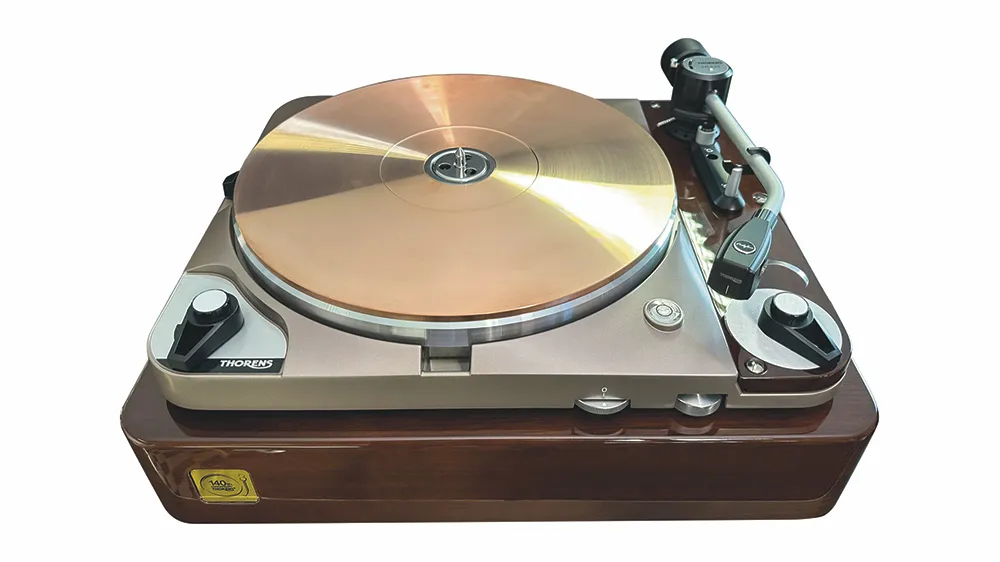
One of the oldest electronics companies in history, the legendary turntable purveyor actually started out manufacturing music boxes, clock movements and, at the turn of the 19th century, Edison-style phonographs – several decades before the era of the record player would catapult the brand to world-renowned fame.
Founded by Hermann Thorens in Sainte-Croix Vaud, Switzerland, Thorens produced its first turntable in the late 1920s and went on to become one of the most revered manufacturers of record players in the '50s and '60s.
Many notable models – the TD 124, TD 150 and TD 160, to name just a few – helped build that reputation. The Thorens TD 160HD we tested in 2008 even made our list of the very best turntables of our lifetime.
The brand filed for bankruptcy in 2000, before being revived by Swiss businessman Heinz Rohrer and later, in 2018, by former Elac Electroacoustic managing director, Gunter Kürten. Today, Thorens has a number of decks in circulation, including the TD 1600 and TD 1601, which are based on the classic TD 160 design.
Ortofon (1918)

Cartridge manufacturer Ortofon – a portmanteau of the Greek words “orto”, meaning correct, and “fon”, meaning sound – began life as a very different beast.
In Denmark after the First World War, two engineers, Axel Petersen and Arnold Poulsen, began their experiments to synchronise sound and picture on film, which they achieved with their 'Petersen and Poulsen System' in the early 1920s.
The duo later transferred their technological know-how to help create a new cutter head for the gramophone industry – a cutter head that record manufacturing companies around the world soon adopted.
That was followed by a mono pickup (or cartridge) and pickup arm so that records cut with the superior head could be reproduced with decent enough audio quality.
Various models of mono cartridges came to the market and, in 1959, the first stereo cartridge arrived. The rest, so it goes, is history. Over 100 years since its story began, Ortofon is now among the most renowned and celebrated turntable cartridge manufacturers.
Celestion (1924)

Celestion is a big name in the guitar world thanks to its decades spent manufacturing guitar speakers, but the hi-fi industry also owes a great deal to the British brand.
Soon after it was founded in 1924 by Cyril French (who was later joined by two of his brothers), Celestion manufactured one of the world's earliest cone loudspeakers, based on the design of Eric Mackintosh.
The company became one of the pioneering speaker driver manufacturers in the decades following. It made drivers for the legendary B&W P1 and Spendor BC1 speakers in the '60s, for example, and, amid multiple acquisitions and name changes, the brand continued to make award-winning designs, such as the ribbon tweeter.
Bang & Olufsen (1925)

When engineers Camillo Bang (the tech guy) and Svend Olufsen (the business man) made the transition from experimenting with making radios in their parents' houses to an actual electronics business in the mid 1920s, success came quickly.
The company's first commercially available product was in 1927 with the B&O Eliminator, which enabled a radio to be powered by the mains, as opposed to the huge batteries which were the norm at the time.
The 1930s saw the company outgrow the family home and move into a purpose-built factory in Struer (where B&O still operates), at which point the brand we know and love today began to show its stylish face.
In 1939 it launched the Beolit radio, kickstarting both a successful line of radios and the famous 'Beo' prefix that's still very much in use today. The company later expanded into TVs with the 17-inch Beovision Capri TV, as well as record players and speakers.
Tannoy (1926)

To borrow an excerpt from our Tannoy: after 90 years, what does the future hold? piece, "Tannoy wasn’t always Tannoy. It was the Tulsemere Manufacturing Company in 1926, when broadcasting was in its infancy and the first talking film had yet to be shown.
"Radio sets needed huge batteries, which in turn needed huge chargers. Enter one Guy R Fountain, who came up with a new type of electrical rectifier, with the aim of making home-friendly chargers.
"This did rather well, and Fountain founded a company named after the two metals used in the rectifier: Tantalum and lead alloy. The Tannoy trademark first appeared in 1928 and quickly became associated with inescapable public address systems. They even made it into the British House of Commons."
Having provided PAs to the British Ministry of Defence and RAF airfields during WWII, and inventing the Dual Concentric speaker in the years following, Tannoy finally entered the place most of it subsequent efforts would reside: the home. And it has had a fair bit of success...
Roberts Radio (1932)

While many audio companies started life as a manufacturer of radios before expanding into other areas of hardware, Roberts has stuck at that trade for almost 90 years.
You could say that Leslie Bidmead's decision to sell his motorbike, to enable him and co-founder Harry Roberts to pay for the company's first factory, has paid-off. And then some.
Roberts Radio has become as synonymous with British heritage as Harrods and a cup of tea (it even has three Royal warrants to its name), and has successfully kept up with the fast-moving audio industry over the years.
The company launched the first portable DAB radio just before the millennium, a smart streaming radio in 2007, and the award-winning 'Stream' range in 2014.
Wharfedale (1932)

Wharfedale has launched enough pairs of anniversary speakers in recent years to remind us that the British brand is fast approaching its centurion.
The company's first speaker was built in the cellar of the llkley home of founder Gilbert Briggs, who designed Wharfedale speakers over two decades and wrote over 20 books on high-fidelity audio.
The Bronze speaker started life purely as a drive unit (enthusiasts assembled their own cabinets) before being housed in a wooden cabinet a year later as an option for those who wanted an ‘extension’ speaker.
Wharfedale's invention of the first two-way loudspeaker in the 1940s, and the use of ceramic magnets in its speakers, have been among Wharfedale's most notable achievements. The brand went on to be defined by the monumental success of its Diamond speaker range, launched in the '80s and still enjoying success to this day.
Leak (1934)

International Audio Group (IAG), the parent company of Wharfedale, Quad and Audiolab, has recently resurrected Leak after a 40-year hiatus.
Founded by Harold Joseph Leak in 1934, Leak was a British hi-fi trailblazer during the mid-20th century.
Its Point One valve amplifier range from 1945 arrived as the first amp to deliver 0.1 per cent total harmonic distortion; its innovative Sandwich speakers heralded true-piston cone action by sandwiching polystyrene foam between outer skins of stiff aluminium foil; and its 1957 Trough-Line is still considered one of the greatest FM tuners ever made.
Electronics and speaker production ceased under the Leak name in the late '70s as then-owner Rank pulled the plug on the brand after years of struggling to compete with Japanese manufacturers – but the brand returned in 2020 with a classic pair of hi-fi separates.
Quad (1936)

Wharfedale has enjoyed a rather special, 70-odd-year relationship with one other audio brand: Quad.
In the '50s, the two brands embarked on a US and UK tour to allow audiences to experience live versus recorded music first hand, and their current position under International Audio Group (IAG) allows them to continue joint amplifier and speaker demonstrations at industry shows to this day.
Quad (which stands for Quality Unit Amplifier Domestic) has had an illustrious history of its own, of course, perhaps no more so than with its 1957 Electrostatic Loudspeaker (ESL), the very first full range electrostatic loudspeaker.
As we've noted in What Hi-Fi? reviews of the many versions that have blessed this world, such as the Quad ESL-2812, few audio designs have attracted such fanatical loyalty from their owners or such fascination from those who covet them.
Today, Quad still has two ESL models in its catalogue, alongside amplifiers and music systems which have helped the brand remain a formidable force.
Pioneer (1938)

While these days Pioneer perhaps has stronger sway in the home cinema market, the Japanese giant has plenty of two-channel pedigree.
We're talking about a brand that began in 1938 when its founder, Nozomu Matsumoto, released the A-8 dynamic speaker after years of research, and which went on to make a name for itself in car audio.
Pioneer manufactured the world's first separate stereo system, component car stereo and in-car CD player, and was a major player in the LaserVision phenomena in the '80s. What's more, Pioneer plasma TVs remain legendary.
SME (1946)

While SME (originally The Scale Model Equipment Company) is known today for its exceptional high-end turntables, including the SME Synergy, winner of the coveted What Hi-Fi? 2019 Temptations Award, it was in operation for over a decade before it entered the record player market.
SME was formed in 1946 to manufacture scale models and parts for the model engineering trade, before turning its head to precision engineering for aircraft instruments and business machines.
It wasn't until 1959, when the company's founder, Alastair Robertson-Aikman, needed a pick-up arm for his own use, that an experimental model was built. Upon its positive reception from friends and industry folk, the company started commercially producing tonearms – a business it has only recently stopped in order to focus on its core turntable business. Its first turntable, the Model 30, came in 1991.
In 2018, SME also acquired the rights to the iconic Garrard turntable brand – another revered hi-fi veteran – from IGB Gradiente S.A, a Brazilian firm that took over the brand in the late '70s.
Sony (1946)

Everything and everyone has to start somewhere to get anywhere, and for consumer electronic conglomerate Sony that was with a small company called Tokyo Telecommunications Engineering Corporation.
It built Japan's first tape recorder, the Type-G, and in 1958 changed its name to Sony – a combination of the Latin word 'sonus', meaning sound, and 'sonny', which was seen as a desirable word to describe a young gentleman. Yes, really.
The Sony branding had already been used three years prior on its TR-55 transistor radio, the first of many transistor radios and the first Sony product to be sold overseas (in Canada).
Sony's history is, of course, full of landmarks in radio, audio and TV: its first TV, the TV8-301 8-inch portable transistor, launched Sony's TV business in 1960; the first-generation Walkman went on sale in 1979; and it was one of the leading developers of the Compact Disc and the Blu-ray Disc.
It's pretty remarkable that Sony continues to have such a presence, and success, in almost every corner of the audio market to this day, arguably now most notably by dominating the headphone and wireless earbud market.
Klipsch (1946)

It all started with one man (Paul W. Klipsch) and one idea (horn-loaded speakers). In a tiny tin shed in Hope, Arkansas in 1946, Klipsch designed, hand-built and patented the now-legendary Klipschorn, the only speaker in the world that has been in continuous production for over 70 years – and yes, they're still made in Arkansas, albeit no longer in a shed, and largely unchanged from the original design.
The first commercial production run of 12 units was built by the Baldwin Piano & Organ Company of Cincinnati, Ohio, with another built by hand in a local cabinet shop, before the first actual Klipsch factory (now the company's museum) got up and running in 1948.
Other early Klipsch horn-loaded speakers, such as the Heresy and Cornwall from the late '50s, also continue in modified form in the company's line-up today.
JBL (1946)

You may have noticed by now that 1946 was a noteworthy year in hi-fi history. JBL was yet another now-notable name to come onto the scene in 1946, named after its founder James Bullough Lansing, an audio engineer and speaker designer who, by that time, had already enjoyed success with his Altec Lansing electronics company.
JBL's first products, the D101 15-inch loudspeaker and D175 high-frequency driver, were unsurprisingly, then, mimics of Altec Lansing designs. Soon came the 375 high-frequency compression driver – the first 4-inch diaphragm driver – and recognition from Leo Fender, who chose to implement one of JBL's drivers into its guitar amplifiers.
Lansing tragically died, and in 1969 JBL was sold by vice president Bill Thomas to the Jervis Corporation (now Harman International, owned by Samsung), pushing JBL into the world of pro and consumer audio.
The JBL L-100 speakers were launched at CES Chicago back in 1970 and were a huge hit for the company, not only JBL's all-time, best-selling loudspeakers, but the best-selling system of that decade from any brand. Fortunately for the brand (and fans of it), JBL was able to honour that legacy with the JBL L100 Classic.
McIntosh (1949)
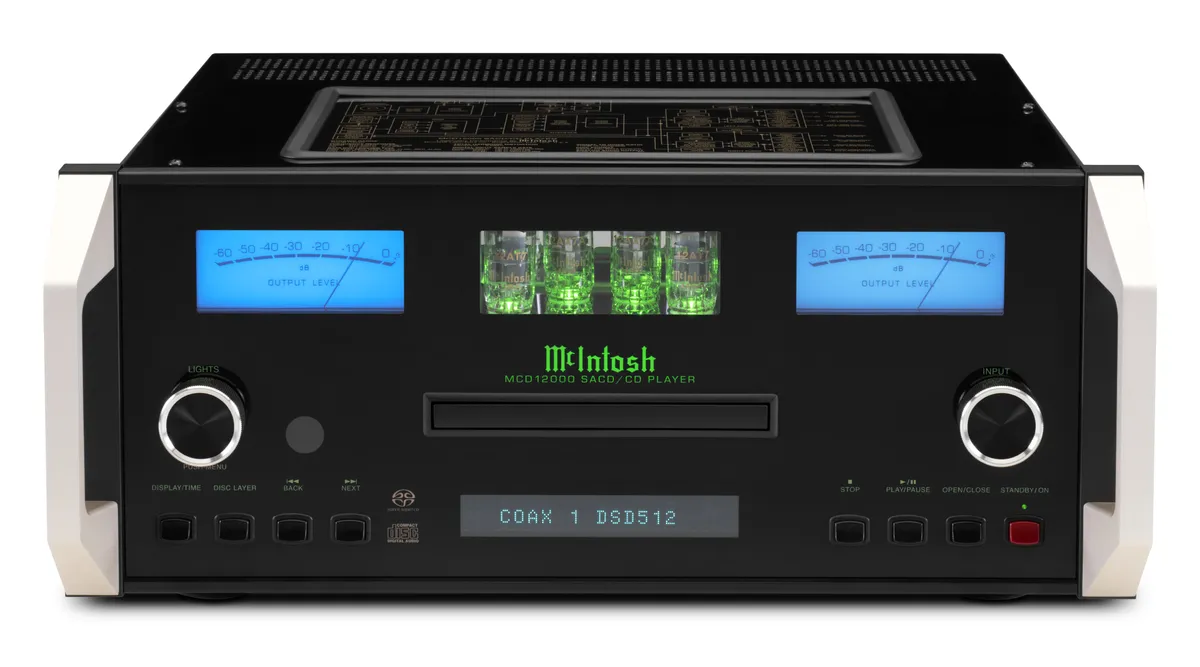
Founded in 1949 in Maryland, USA, McIntosh has been making its iconic products in Binghamton, New York since 1951. Known for consumer and professional electronics, the company's distinctive front-panel teal illumination has meant McIntosh amps are always easy to pick out of a line-up.
Famously used to power Woodstock and the Grateful Dead's 'Wall of Sound', the company also branched out into speakers and turntables, bringing its trademark styling to a new audience.
The signature power meters even made their way into in-car audio in the 1990s, supercharging the next couple of decades alongside a resurgent high-end audio and home cinema market.
The McIntosh Group, including the McIntosh brand, Sonus Faber and Sumiko, was acquired by Bose in 2024, having previously been owned by an American private equity group.
New products continue to appear, with the DS200 streaming DAC showcasing how McIntosh has moved with the times while maintaining their distinctive style and overall brand identity. Long may that continue.
MORE:
The What Hi-Fi? Hall of the Fame