
Looking for a pair of great-sounding bookshelf speakers? You've come to the right place. Whether you're looking for your first budget pair, upgrading to a step-up model or want a premium audiophile set, there is a wealth of small stereo speakers to choose from today, and we're here to help you pick the best model for your needs and space.
Why are they called 'bookshelf speakers'? Because many of them are compact enough to fit into a bookshelf. You can also place them in a corner or even on your desk (depending on size), but a bookshelf isn't necessarily where you should put them. We would always recommend placing speakers on dedicated speaker stands, if you can, to ensure they sound their best.
Standmount speakers come in a variety of sizes, from large to petite, making it easier to choose a pair that fits your space and needs. Whether your budget is strict or endless, the performance and build quality should reflect the price point's expectations. And of course, the speaker's sonic character should match the rest of your hi-fi system.
What Hi-Fi? has been testing bookshelf speakers for nearly 50 years, and our in-house team of expert reviewers has tested every speaker below – so you can trust our reviews.
You can read more about how we test bookshelf speakers below, but rest assured, every speaker recommended below represents the best sound-per-pound performance for your listening needs and budget.
24th March 2026: We've recently tested the Acoustic Energy AE1 40th Anniversary speakers, whose "spellbinding performance" earns themselves a place in on our 'also consider' list. The 'coming soon' list has also been updated with the new Arcam Radia loudspeaker series and the ProAc Response DB1R speaker.

I have been at What Hi-Fi? for over 14 years, and in that time I have reviewed countless stereo speakers, from budget bookshelves to upmarket floorstanders, and had the privilege of seeing the market continually push the envelope to produce better-sounding models. In this list, I've chosen the current What Hi-Fi? Award-winning, class-leading crop of bookshelf speakers across a wide range of prices, each representing the pinnacle of sound quality and design available at their respective price levels.
Best bookshelf speakers overall


It was always going to take something special to knock the KEF LS50 Meta off their perch as our best overall bookshelf speakers, but the Acoustic Energy AE300 Mk2 are something special.
The AE300 Mk2 are housed in neatly made but pleasingly compact speakers, with each box standing 32cm tall and measuring just 17cm wide. They're understated and slim, but don't imagine that means they look boring.
The AE300 Mk2 use a large 29mm fabric dome tweeter with a 12cm paper/coconut fibre mid/bass, a design that draws on the lessons learned during the development of Acoustic Energy’s high-end Corinium series.
Their lower-than-usual impedance is no cause for concern: any decent price-compatible amplifier will be able to drive them, with both the Arcam A5+ (£749 / $1200) and the Rega Brio Mk7 (£799 / $1095) doing a fine job of playing nice with the AE300 Mk2 during our testing.
Regardless of partnering, we find so much to be impressed by. These are speakers with poise and control, so that even when we feed them a demanding recording such as Michael Jackson’s Off The Wall, they don’t sound out of their depth. They showcase excellent levels of detail, but it's presented in a natural and unforced manner that makes for an effortless listen.
When listened to against their key rivals, the Acoustic Energy are smoother, more refined than almost anything else at this level, with, to quote from our review, "high-frequency sounds shimmer rather than sizzle".
The AE300 Mk2 aren't the sort of speakers that immediately grab your attention. Instead, they steadily charm you, revealing themselves to be a superb pair that, if you invest some time, will reward you endlessly.
Read our full Acoustic Energy AE300 Mk2 review
Best budget bookshelf speakers


If you're in the UK (£299) or Australia (AU$599), the Dali Kupid are some of the most affordable speakers you'll find on this rundown. They're more expensive for US buyers at $600, but not so much that we don't consider them great value no matter where you are and where you buy them.
These are compact bookshelf speakers through and through. They've got a small price and a small footprint, weighing in at just 5.8kg, and while they've also got a low sensitivity of 83dB, we didn't find them tough to drive during our extensive tests.
Their small size, meanwhile, works to their advantage, as they can be placed on desks, cabinets, bookshelves, TV stands or large windowsills rather than on dedicated speaker stands, making them well-suited to those with limited space. You can even mount them on the wall thanks to their included fixing screws and wall brackets.
Small speakers they may be, but the Kupid aren't shy in how they deliver their sound. The compact units offer a lively, nimble presentation that is packed with enthusiasm and brio, and while you won't get a huge amount of bass, their expressive midrange is enough to make up for it.
They're great with rhythms, too, and as we stated in our review, the Dalis "exhibit a knack for snappy timing and agile rhythm (and) have a fleet-footed quality that zips along with all kinds of tracks in an engaging manner". Nice.
Dynamically, the Kupid can pull out the ebbs and flow of tracks with conviction, while also revealing subtler moments with a deft hand. They're able to bring out the drama of more challenging tunes, and while they may be small and nimble, we don't often feel as though the Kupid aren't immersing us in the music we feed them.
As we made clear in our review's verdict: "A great choice for small, modern music systems, the entertaining Dali Kupid speakers will win over many hearts". A nice way to put it.
Read our full Dali Kupid review
Best mid-price bookshelf speakers


Monitor Audio took a ground-up approach with the 50 7G, looking back at previous generations of the Bronze speakers to find the qualities that made them great before blending that DNA with a host of key refinements in a bid to elevate the company's entry-level speakers.
From the outside, they look the part. They're not that expensive, but the 50 7G look cool and classy, with a beautifully made and a sleek aesthetic that we find hugely appealing.
Inside, new Ceramic-Coated Aluminium Magnesium (C-CAM) drivers used in the Bronze series offer a better “piston-like movement” that helps reduce break-up issues. In the Bronze 50 7G, there's a a 25mm C-CAM gold dome tweeter that’s lighter, thinner and more rigid than before, combined with an updated UD (Uniform Dispersion) Waveguide II for pursuing a wider, more precise sound and improved time alignment.
It's all worked wonders. For a speaker at this price, the Bronze 7G are remarkably precise and controlled, offering a clear, fast and detailed sound that grabs you from the get-go. These are front-footed speakers, and they have no intention of being ignored.
The 50 7G deliver a full-scale sound that’s spacious and enveloping, with an adept handling of rhythmic snap and dynamic contrast. They are clearer, more detailed and more rhythmically talented than the B&W 607 S3, and that's not an easy benchmark to reach.
Some listeners might prefer a more relaxed presentation, but if you're onboard for what the Bronze 50 7G are offering, they're an immensely entertaining choice.
Read our full Monitor Audio Bronze 50 7G review
Best bookshelf speakers for audiophiles


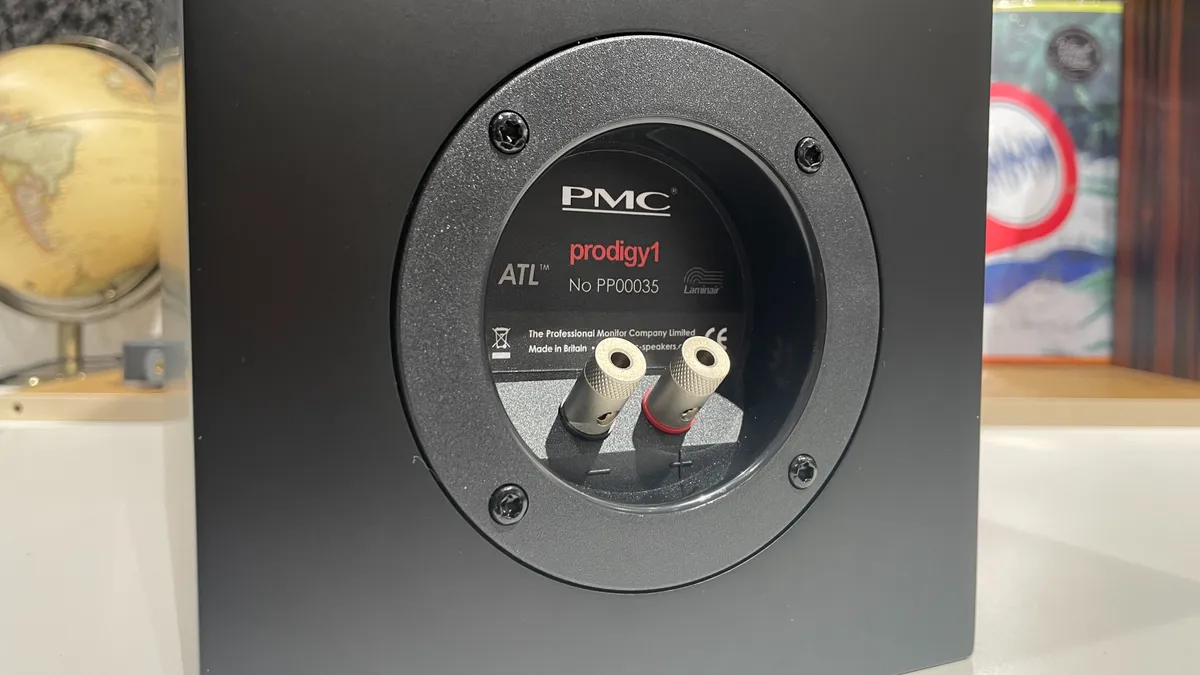


These might be PMC's entry-level standmounts, but they sound anything but (and they're not exactly cheap, either). That's hardly surprising – they're measured and listened to alongside the firm's reference models, and feature the same 27mm soft dome tweeter and 13cm mid/bass driver taken from models further up the company’s line.
They also feature Laminair – the aerodynamic port which was first developed for the flagship QB-1 studio monitors. This smooths the passage of air exiting the speaker to minimise airflow noise and improve bass definition.
The design is pleasingly minimalist, though it lacks some of the high-end polish of PMC's pricier models. But sonically, they're stunning, boasting excellent detail, clarity and charisma.
The midrange is full of dynamic expression and solidity, and the bass digs deep without losing definition. Low frequencies have pace and punch to complement that impressive presence and depth, too.
As we said in our review: "Play Anohni And The Johnsons’ It’s My Fault from the collective’s latest album, and the Prodigy’s midrange talents come to the fore once more. There’s substance behind her vocal delivery, and a very honest rawness that conveys her grief and guilt around her complicity with how humanity has 'broke the earth.' Emotion pours out of her mouth and the PMCs do well to communicate it."
While the Prodigy 1’s talents in precision and organisation mean we would veer towards calling them ‘analytical’, the speakers aren’t informative at the expense of entertainment.
Systematic, yes, but anything but soulless.
Read our full PMC Prodigy 1 review
Best premium bookshelf speakers


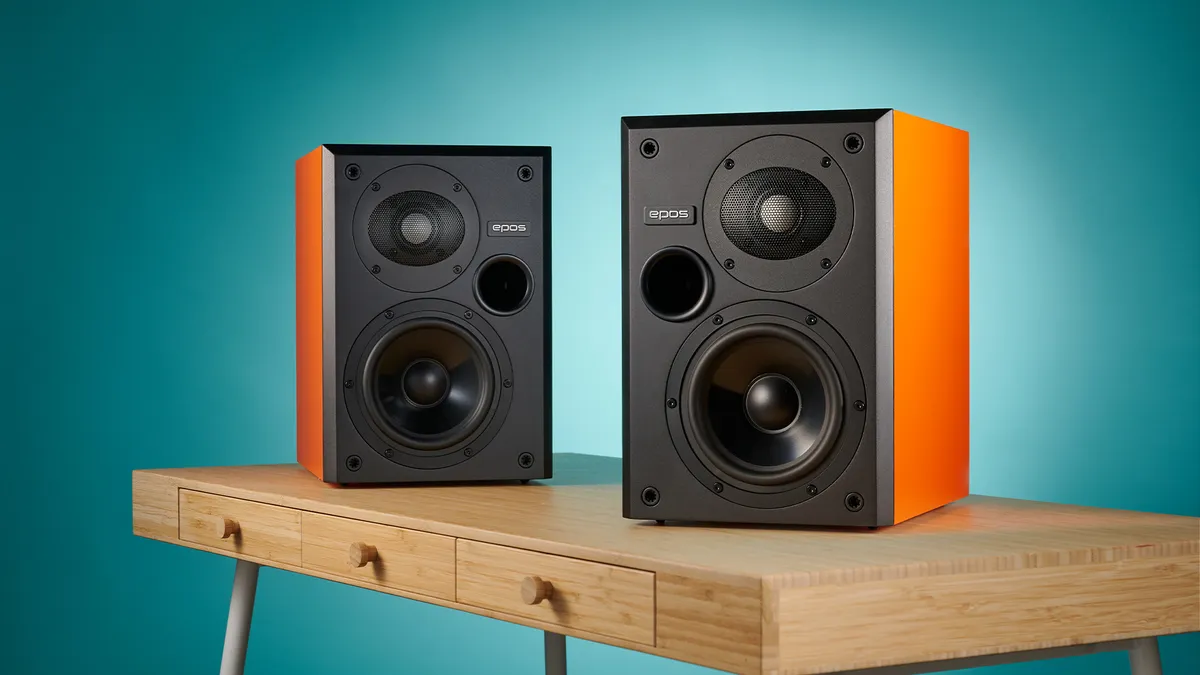


In complete contrast to our statement in the intro that speakers should never be placed inside a bookshelf if you want them to sound their best, Epos has made a pair of speakers that are very much optimised to sound good when placed inside a bookshelf.
The conventional recommendation is to place speakers a few inches or centimetres away from a wall, but that's not always practical in your space. Epos has made it so that their small but brilliant ES-7N speakers sound evenly balanced when placed up against the wall or inside a bookshelf. You can flip a switch at the back of the speaker unit to tell the speakers where they are placed and they will change modes accordingly.
The speakers do sound their best out in the open on dedicated speaker stands, but it is impressive just how close to this performance they get when shoved inside a bookshelf unit (flick the switch down in this case).
There is a slight drop in clarity and stereo imaging, but it doesn't impact our enjoyment overall. In fact, even though these are small boxes that won't compete with larger designs – such as KEF's R3 Meta, which dig deeper into the bass and deliver a bigger, more expansive and dynamic sound – what these Epos speakers do so well with music gets us smiling with joy and our feet tapping as they deliver an incredibly capable performance.
As we said in our review: "The ES-7N are bold and confident performers that resolve high levels of detail and organise it in a cohesive and musical way. Play Kendrick Lamar’s Not Like Us and the Epos kick like a mule.
They sound taut and punchy with music such as this, delivering the song’s jumpy rhythm track in a wonderfully surefooted manner. There is plenty of drive here and the speakers are great at conveying the music’s varying momentum."
Voices are delivered with impassioned nuance and clarity, and bass notes are – for small cabinets – taut, solid and grippy. We love the similarly-priced Neat Petite Classic's fun, peppy presentation, but the Epos are even more precise and controlled when it comes to rhythmic agility.
They are just as considerate with more classical or intimate recordings, and they pair well with a variety of amplifier partners, from budget Rotels to premium Naims and beyond.
The Epos ES-7N are charming. They are small, hugely capable and surprisingly unfussy in use. That they recognise not everyone will be able to position their speakers perfectly and sound just as good when placed inside bookshelves is a rare talent that should be celebrated.
If your budget can stretch this high, we can't recommend these enough.
Read our full Epos ES-7N review
Best bookshelf speakers for large rooms

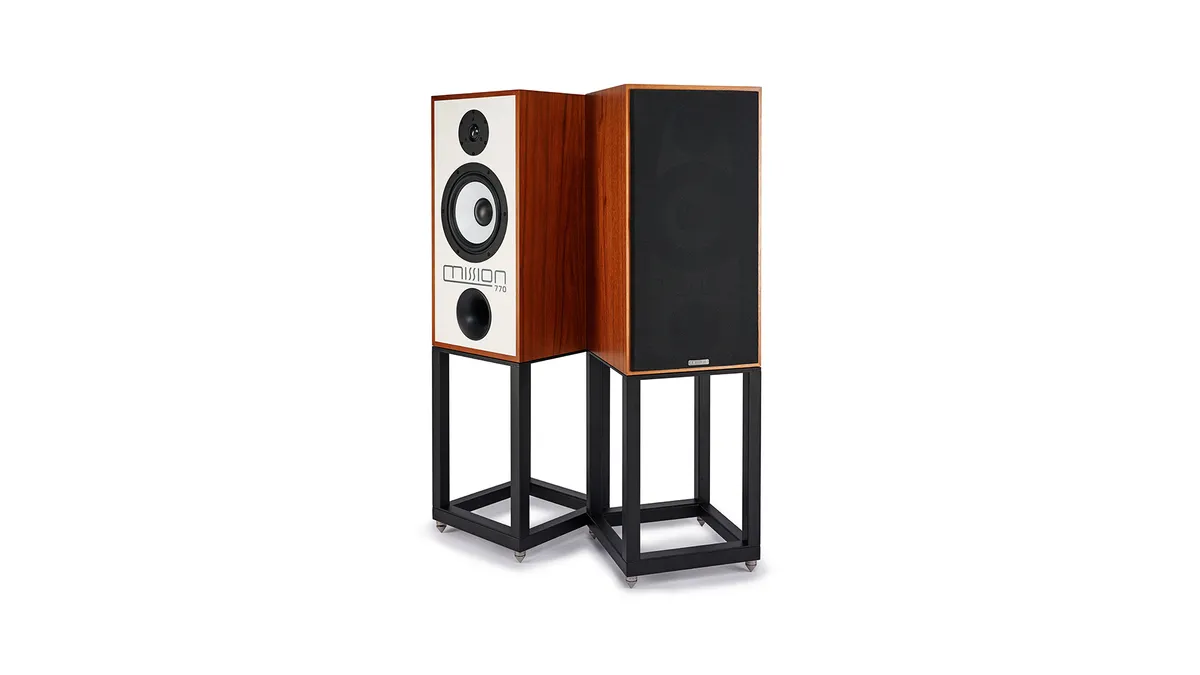


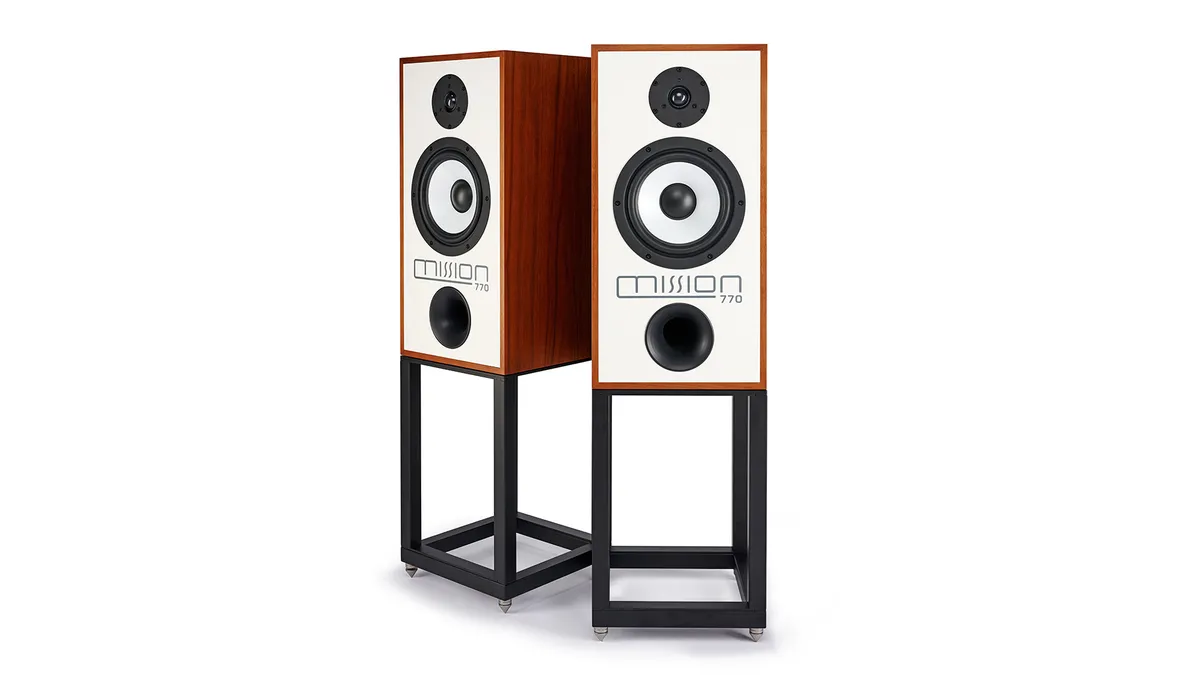


We think these Mission 770 speakers are right up there with the very best at this price, and one of the best ways to fill a large room with sound. Mission takes design inspiration from the original 770 speakers launched in the 1970s, but has improved and modernised every other element: from the cabinet design to the drivers and even new dedicated stands.
While the retro link will be the main attraction for some, for us that’s put in the shade by the speakers' excellent all-round performance. The 770 speakers have a range of sonic talents that set them apart from most rivals and earns them a warm recommendation.
They have so much finesse when it comes to delivering extended bass. We said in our review: "As we listen to Massive Attack’s Angel, it’s the articulate way these speakers render the bass notes that stick in the mind. They sound taut and agile, but also delicate in the way they paint bass textures and resolve low-level information."
There's plenty of punch and power, too. The speakers have a slightly forward balance, especially with the clear and expressive midrange, that sounds lively and engaging – but thankfully never too aggressive.
Songs are delivered with wide-ranging dynamics, impressive authority and scale. It’s a musically cohesive presentation that’s controlled and nicely organised. If you have a large space that needs a room-filling sound and you have the budget, these large speakers are worth an audition.
Read our full Mission 770 review
Best bookshelf speakers for tiny spaces


There are many for whom the Iota II are exactly what is required: tiny speakers that can be placed pretty much anywhere in cramped spaces to deliver a capable, hi-fi quality performance.
One Iota's footprint is barely bigger than a DVD case, but these speakers have no idea that they're supposed to behave like tiny speakers: they belt out an enthusiastic and dynamic performance that sounds far bigger and punchier than you'd expect from such small cabinet sizes.
As we said in our review: "Neat’s proven knack for keeping the rhythm of a song going with a tremendous amount of agility, enthusiasm and spark is present here. It’s what makes the Iota II sound so much fun. This is an entertaining pair that can keep apace with Gershwin’s nimble, jazzy piano in Rhapsody in Blue, the high-tension driving beats in Still Dre, and Sabrina Carpenter’s frothy, bubbly Espresso."
The Iota II feature the same cabinet size and ribbon tweeter as their 2012 originals, and now have a new mid/bass driver and revised crossover. The new generation only comes in black and white finishes – you won't find them in the colourful blue, red and yellow finishes as before.
Yes, that’s a lot of money to pay for rather plain, dinky boxes (£1095 / $1699 / AU$2000 per pair – the main reason they didn't get that fifth star), and their sonic flavour and lack of real bass depth won’t be for everyone. But they are designed to solve a particular niche problem, and do so with so much spirited performance that we don’t mind overlooking their limitations.
For those with super small spaces where the only place to put a speaker is perched on a windowsill, a desk, a bedside table and without any stands, these Neats work a treat. Their sound isn't compromised even when placed inside a bookshelf or on a desktop next to your laptop. And they're a joy to listen to.
If you can afford that price tag and have that exact niche to fill in your tiny space, these hugely fun Iota II might just win you over.
Read our full Neat Iota II review
Also consider
- Wharfedale Diamond 12.1: Despite being knocked off their perch as our best budget option, these former Award-winning speakers remain an incredibly attractive proposition. They're compact, well made and sound surprisingly sophisticated for speakers at this affordable price point.
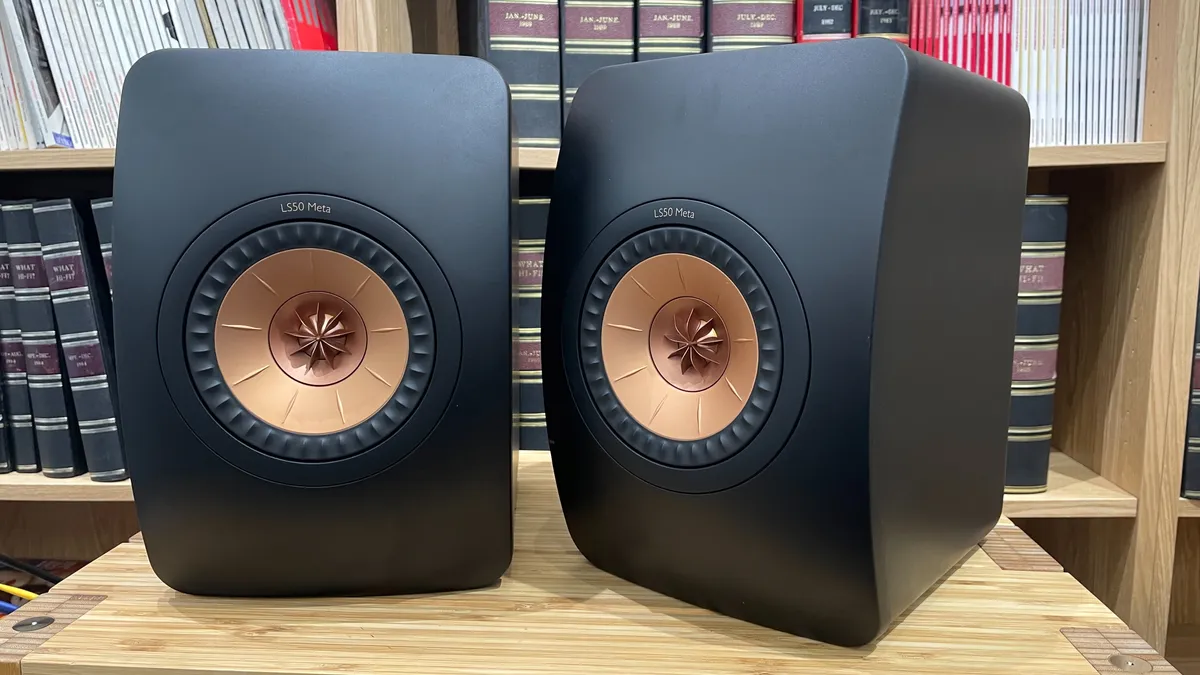
- KEF LS50 Meta: Despite their rising price, the KEF LS50 Meta are truly remarkable speakers that sound cohesive, dynamic and detailed. Thanks to their innovative Metamaterial tech, they remain excellent performers and work with a wide range of partnering kit.
- Dali Spektor 2: These Dali speakers are a long-running favourite for their natural, nuanced way with voices, while fluid dynamics make them hugely appealing and entertaining to listen to. A great affordable bookshelf pair.
- Bowers & Wilkins 607 S3: The 607 S3 remain an outstanding buy thanks to their clean, refined and detailed sound that never leaves us feeling like we haven't been thoroughly entertained.
- PMC Prophecy 1: PMC’s astoundingly talented small speakers deliver a class-leading performance thanks to their class-leading precision and impressive stereo imaging. Just make sure you pair them with good quality partnering equipment...
- Neat Petite Classic: These Neat speakers are terrific fun, with their precise, agile rhythms and solid, detailed sound winning us over – even though the very small cabinet size won't allow for truly deep bass or large-scaled sound. If you're after premium speakers for a small space, consider the Classic's peppy energy as an alternative to the Epos ES-7N.
- KEF Q3 Meta: The KEF Q3 are mature and refined speakers, showcasing a composed and even-handed presentation at their mid-price level, and delivering plenty of scale for standmounters.
- Epos ES14N: You'll need a large space to accommodate these odd-looking large standmounters, but they are mighty impressive when it comes to analysis, organisation and control. A little more rhythmic drive wouldn't go amiss, but we're big fans of the stunning clarity and cohesion on offer.
- Acoustic Energy AE1 40th Anniversary: A reimagined version of AE1's first and iconic 1980s speaker, this pair captures much of the sonic magic of the original. While modern rivals will offer deeper bass and a more open and neutral sound, this AE1 is hugely engaging and entertaining with a characterful, "spellbinding" performance that still communicates the essence of music.
Bookshelf speakers coming soon
- Arcam Radia: Arcam's refreshed Radia amplifiers are an Award-winning success, and the brand has now launched a Radia series of loudspeakers to match the electronics. This new range features two standmount speakers and two floorstanding models, but note that they will only be available to buy in the UK/Europe markets. The range is on the premium side, with the smallest two-way bookshelf speaker starting from £1699 / €2000 per pair.
- ProAC Response DB1R: ProAc's brand new premium standmount speaker is set to build on the compact Response DB1 that originally launched around a decade ago, aiming to take its balanced, refined performance "to the next level" thanks to a new ribbon tweeter. Price starts at £2945 per pair.
- Wharfedale Diamond 12i: Wharfedale's updated Diamond 12i range features three pairs of standmount speakers (12.0i, 12.1i and 12.2i, starting at £199 / $399 per pair) with further refined designs, yet the affordable price tag that is synonymous with Diamond speakers remains. The Diamond range has won a whopping 14 What Hi-Fi? Awards since launching in 2020, so we're hoping the 12i range can live up to its legacy.
- Dali Sonik: Dali's upcoming Sonik range brings innovations from its high-end Kore, Epikore and Epicon ranges to a lower price point. This includes improved transducer design, advanced magnet technologies and tweaked cabinet engineering. The Sonik 1 (£449 / $900) and Sonik 3 (£599 / $1200) are the two pairs of bookshelf speakers included in this upcoming range.
How to choose the best bookshelf speakers
Bookshelf speakers tend to be fairly compact, but there are models that can be quite large.
Some bookshelf speakers demand a bit more space in order to perform at their best, or are deeper than they are wide, for instance – so you need to decide what size and set-up you plan to have them in. Will these speakers have to fit into small corners on a desk or have plenty of space in your listening room?
Make sure you check the manufacturer's recommendations and speaker dimensions before buying, to ensure they will fit in the space you've marked out for them at home.
Our recommendation is that all of these speakers will benefit from being placed on a dedicated pair of speaker stands. But this isn't always practical for everyone, so speakers that perform well placed close to a wall or corner are recommended.
Budget and size are the biggest considerations. Whether your stereo speakers will be in your living room, home office or bedroom, it's crucial to see what fits your space – and what you can afford. Are you after a small, affordable pair that can go into the corner of your room? Are you after a large pair of bookshelf speakers, or have an extensive budget for premium standmounters?
Whatever the case, remember to also factor in speaker cables and the demands/sonic characteristics of the rest of your hi-fi system. If you want even more options, check out our guide to the best hi-fi speakers we recommend.
As far as sound quality goes, it's definitely important to find a great-sounding pair of speakers for the price level, but how your speakers sound is naturally tied to what you're using to drive them. If you are able to demo a pair before committing to buying, we would recommend this to see how the speakers work in your room and system.
Building a hi-fi setup can quickly become complicated when there are thousands of different products out there, so if that's what you're doing, check out our ultimate guide to building the perfect hi-fi system.
How we test bookshelf speakers
At What Hi-Fi? we have state-of-the-art testing facilities where, as a team of audio experts, we review hundreds of products every year, including one of the most prolific hi-fi products of all – bookshelf speakers.
We judge products on a performance-per-pound basis, so during our testing we always compare products to similarly priced class leaders to help us settle on a star rating for the review and the order for these five-star performers in these buying guides.
So when, for example, a new pair of £1000/$1000 bookshelf speakers arrives in our test rooms, we listen to it against the similarly priced KEF LS50 Meta and PMC Prodigy 1 on this list to see how it fares against those class leaders.
We often review bookshelf speakers by using them in at least two systems – our high-end reference system, to reveal the best they can sound when fed the most accurate signals, and a more price-comparable one to see how they perform in real-world scenarios with realistic partnering equipment.
Our choice of test music is varied, too, to see how speakers sound when playing a variety of different genres and styles of music. Here's our selection of the best songs to test speakers – but any track you love listening to will do, of course.
We also review as a team to ensure there is no personal bias, so every review has more than one person involved in the testing and listening. Whether we're reviewing a set of bookshelf speakers that cost a few hundred pounds or a fair few thousand, our review philosophy doesn't change, and you can be sure that any five-star speakers (and particularly What Hi-Fi? Award-winning ones) will offer up a fantastic performance for the price.
As a rule, no input from PR companies or sales teams is taken into account during reviews, maintaining What Hi-Fi?'s decades-long reputation for delivering honest, unbiased critical feedback.
You can read more about how we test and review products on What Hi-Fi? here.
F.A.Q
Where should bookshelf speakers be placed?
Despite their name and size, bookshelf speakers shouldn't be placed on a bookshelf. And certainly not on the floor. Their performance depends hugely on the quality of their support, and this is an area you shouldn’t compromise on.
Ideally you should place them on dedicated speaker stands – especially if you've spent more than a few hundred on them – though if that isn't an option for you, try to put them on the most solid, rigid support possible. You should also consider how close to a wall they will work optimally at, or if they would benefit from being angled inwards at all.
You can read our how to set up and position your speakers in 4 simple steps for more guidance.
Are bookshelf speakers better than a soundbar? Are they good for a TV?
Stereo speakers can work just as well for TVs and movies as they can for music. You'll just need to connect your speakers to an amplifier that has the right connections to hook up a TV, which in most cases will be an optical or HDMI port, and position them flanking your television. Here's how to connect your speakers to your TV in more detail.
Their physical width will likely produce a more convincing stereo effect and room-filling sound than a soundbar, while the larger size of their drivers will typically deliver superior dynamic expression too.
That said, soundbars often come with subwoofers that will invariably dig deeper in the bass than bookshelf speakers, and many of them nowadays are Dolby Atmos soundbars that can produce surround and height effects for greater immersion.
Are bookshelf speakers better than floorstanders?
This is where we'd point you to our bookshelf / standmounts vs floorstanders article, but the short answer is: it depends. If you're going to be using your speakers for movies as well as music, or are simply a fan of ample, deep bass, the larger cabinet is typically the way to go.
That said, floorstanders don't always produce better quality bass, and engineers of bookshelf speakers are finding ways to offer more bass from a smaller cabinet.
Floorstanders generally require more space to breathe in, and you'll want to think about the size of the room your speakers will sit in, as well as your preferred loudness levels. If your living room is the size of a football pitch, are those compact bookshelf speakers really going to be able to fill it with high-volume sound?
Recent updates
- March 2026: Added the Arcam Radia loudspeaker range and ProAc Response DB1R to our 'coming soon' section. Added the five-star Acoustic Energy AE1 40th Anniversary to the 'also consider' section.
- January 2026: The Award-winning Dali Kupid is now our recommended pick for the best budget bookshelf speaker, while the Also Consider and Coming Soon sections have been updated.
- October 2025: The Acoustic Energy AE300 Mk2, Dali Kupid and Monitor Audio 50 7G are recently reviewed five-star speakers that have all entered the main list.
- July 2025: Created a new category and entry for the Neat Iota II as our "best for tiny spaces" recommendation, and updated the Also Consider and Coming Soon sections.
- May 2025: Updated the Also Consider and Coming Soon sections with new speaker models.
- March 2025: Added more information to our "how to choose" and "how we test" sections. Added new entries to our "coming soon" section.
- January 2025: Added a new "coming soon" section that highlights new speakers announced and ones that we will be reviewing in the coming months.
- November 2024: Wharfedale Diamond 12.1 and Epos ES-7N have been added to the main list following their 2024 What Hi-Fi? Award wins. More options added to Also Consider section.
- August 2024: Added the five-star Monitor Audio Studio 89 to the Also Consider section.
- June 2024: Added an 'Also consider' section to offer more alternative buying options.
- January 2024: FAQ section added to help buyers in their decision to buy bookshelf speakers.
- November 2023: What Hi-Fi? Award winners labelled following the announcement of the 2023 What Hi-Fi? Awards Best Buys and Product of the Years.
