
Earbuds might be the ultimate in convenience, but for deeper bass and a more impactful sound, nothing beats over-ear headphones.
You don't have to spend a lot to get a great experience – one pair on our list costs just £28. But of course, if you do spend a bit more, you'll reap the rewards – the Røde NTH-100 and Sony WH-1000XM6 are our favourite wired and wireless pairs, respectively, and both offer plenty of bang for your buck.
And if you've got more to spend? The Focal Bathys Mg or Beyerdynamic T1 (3rd Generation) won't disappoint.
We've seen some very good pairs launch recently, too, like the AirPods Max 2, Sony 1000X The Collexion and Sennheiser Momentum 5 Wireless. None of them made this main list, though the Sennheisers scored five stars.
That's a lot of headphones. Not sure where to start? Our how to choose the right over-ears guide will help you decide which type will suit you best.
No matter how different the below pairs may be, they all share one thing in common – they're all excellent, as verified by yours truly.
Our in-house review experts test around 100 pairs every year and, for this definitive list, have picked the very best wired and wireless performers for various budgets. Each pair below has passed our stringent headphones testing process and is a proven class leader in its field.
If you want a taste of every style and design that's out there, there's also our best headphones buying guide.
July 2026: We've updated the intro and added mentions of recent models we've reviewed.

Over 20 years in the game has seen me test and cover all kinds of headphones, including my share of over-ears. We've included all kinds here, from wired to wireless, open-backed to closed-backed, and plenty of which feature active noise cancellation for silencing the world beyond your earcups. We've also covered all bases price-wise. So whatever your needs, you should find a great pair of over-ears below.
Best cheap wired headphones


Looking for a bargain? Bargain wired headphones that marry decent sound with a super-affordable price tag are very rare indeed, but these AKGs are the exception.
The K72's solid build means they are going to last – AKG bent the cable 80,000 times during production just to test longevity. The generous padding is nice and comfy, while the 3m cable provides enough play for listening comfortably at home. This is a classic studio headphone design, and while you could just about get away with wearing these out on the street, the long cable demonstrates that they're not made specifically for that purpose.
How about the sound? It’s pleasingly expansive, with a breadth and scale rarely found in the kind of headphones you'd normally see on the high street at this sort of price.
"By aiming for the more neutral presentation of a pro headphone, AKG has managed to deliver many of the basic ingredients of [pricier] headphones at a much lower price here," said our expert reviewers in our K72 review. They certainly come across as smoother than the similarly priced Sennheiser HD201, not to mention with better-controlled bass. The midrange isn't quite as clean as we would like, but for the money, these are the best over-ear headphones if affordability is a factor.
If you can stretch your budget slightly further, though, two current What Hi-Fi? Award winners are well worth considering instead: the Austrian Audio Hi-X15 and, even more so, the Røde NTH-100 (below).
Read our full AKG K72 review
Best cheap wireless headphones
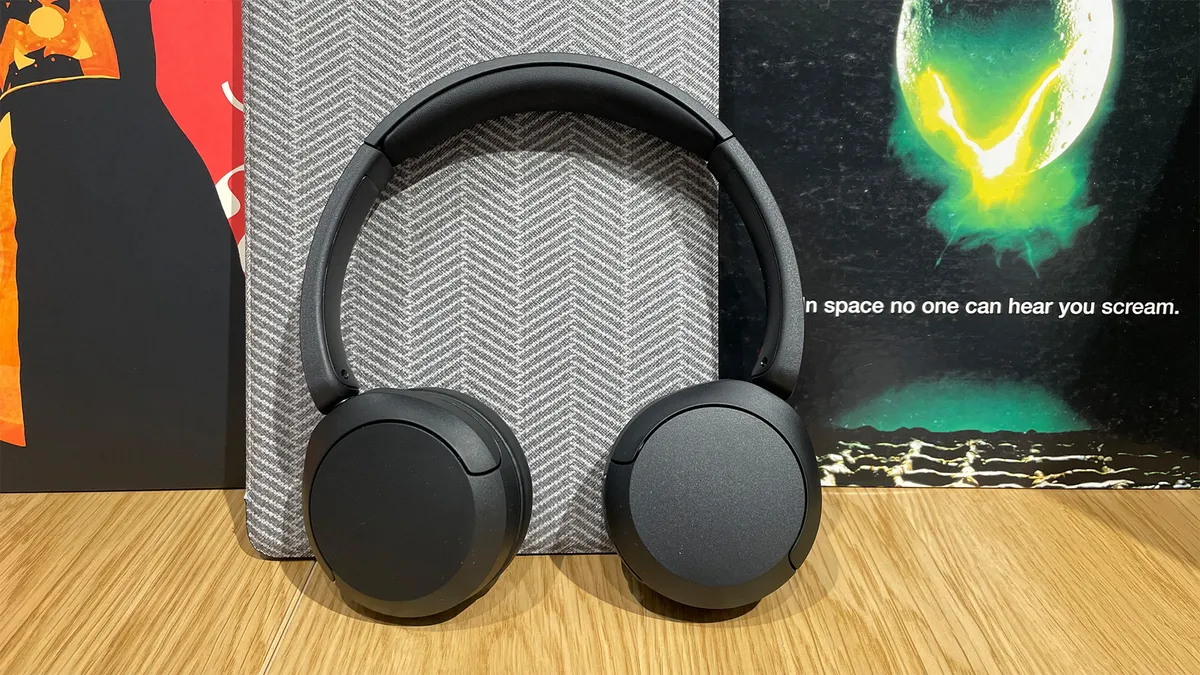
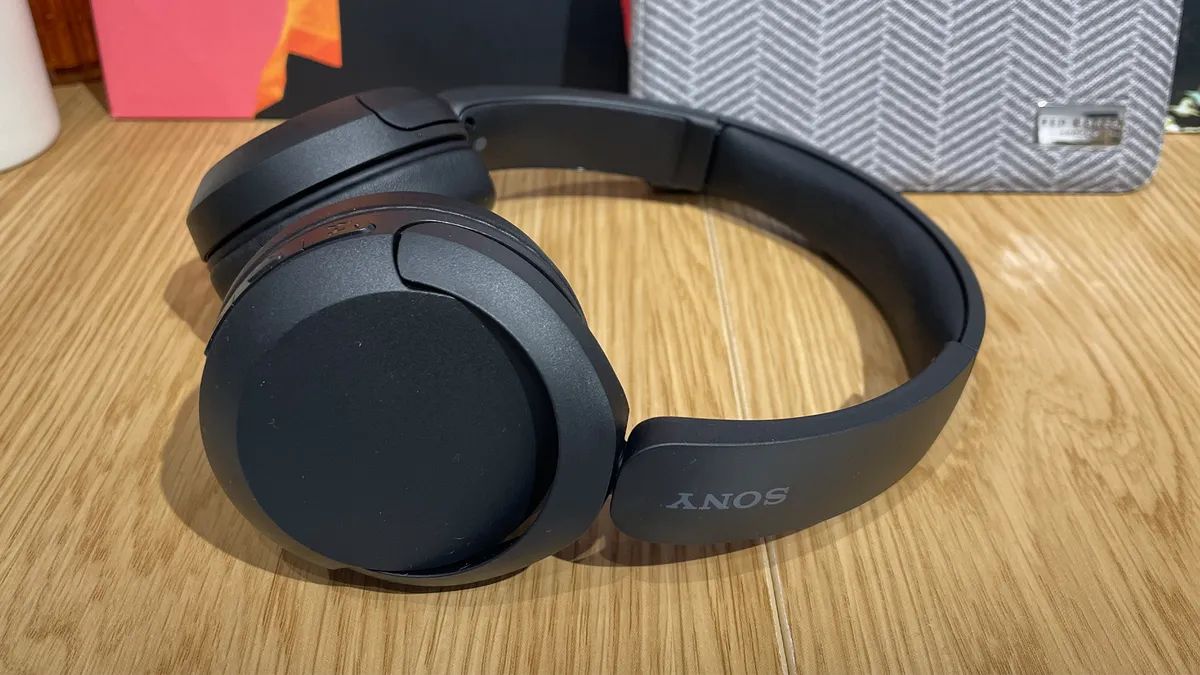


The WH-CH520 on-ear headphones are without doubt one of the less glamorous products in the Sony headphones lineup, but that doesn’t automatically mean they are not worthy of your attention. If you want value for money, they are one of very few pairs at this price point that make perfect sense.
They are certainly well put together, with a sturdy construction that feels built to last – the headband adjustment mechanism, for example, is robust and moves with reassuring solidity. There is mild padding on the inside of the headband and the earpads, and while it's not exactly lavish, it helps no end with comfort. An all-in weight of just 147g doesn’t do any harm in this respect either, and even though they are pleather-covered, the earpads resist returning your body heat for quite a while.
While there's no ANC, you do get a marathon 50 hours of battery life from a single charge as well as Bluetooth 5.2 (with ‘Fast Pair’ for Android devices) and a few companion app features.
Sonically, the CH520 aren't the most expressive headphones you have ever heard where low frequencies are concerned, but the low end they do generate is solid, deep and properly controlled at the leading edges. Better still, they hit reasonably hard, and keep bass firmly in its lane where it can’t interfere with the midrange activity above. "The midrange itself lacks ultimate clarity," notes our WH-CH520 review, "but by prevailing price standards it’s informative and actually quite eloquent where vocalists are concerned."
Despite a few very reasonable (at this price) sonic inhibitions, Sony's budget wireless headphones are a bit of a mini-marvel at a price level severely lacking in excellent competition.
That said, if active noise cancellation (ANC) is a must-have feature, your best bets are the next-model-up Sony WH-CH720N below...
Read our full Sony WH-CH520 review
Best cheap ANC headphones
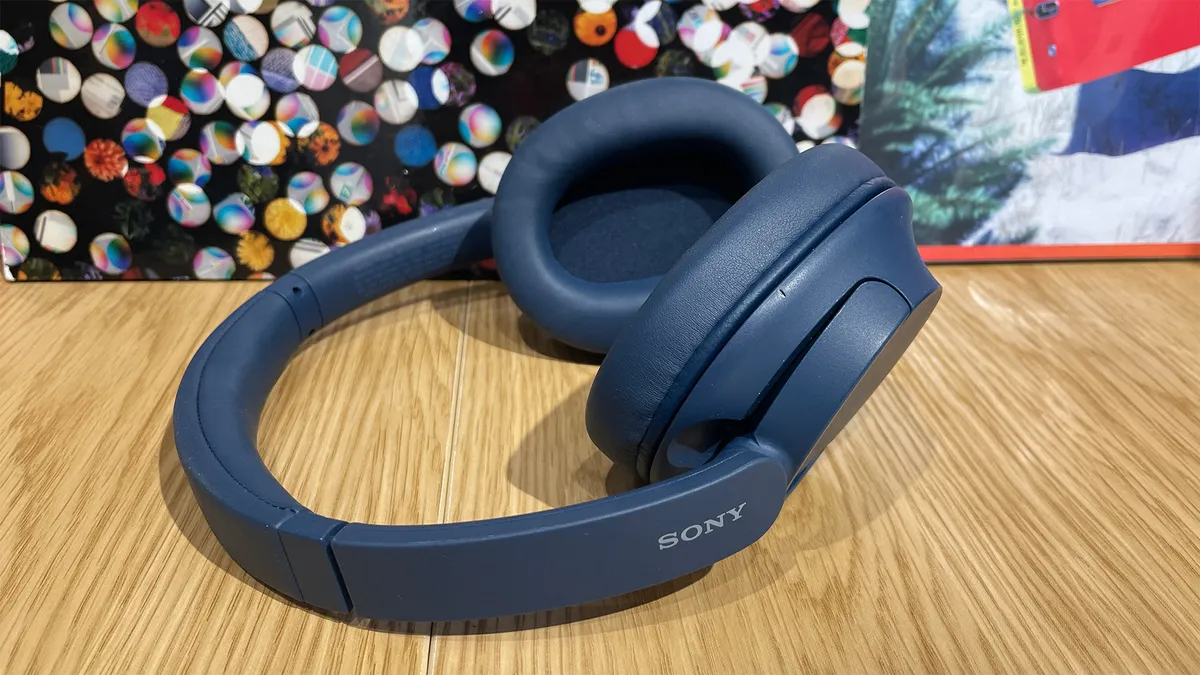
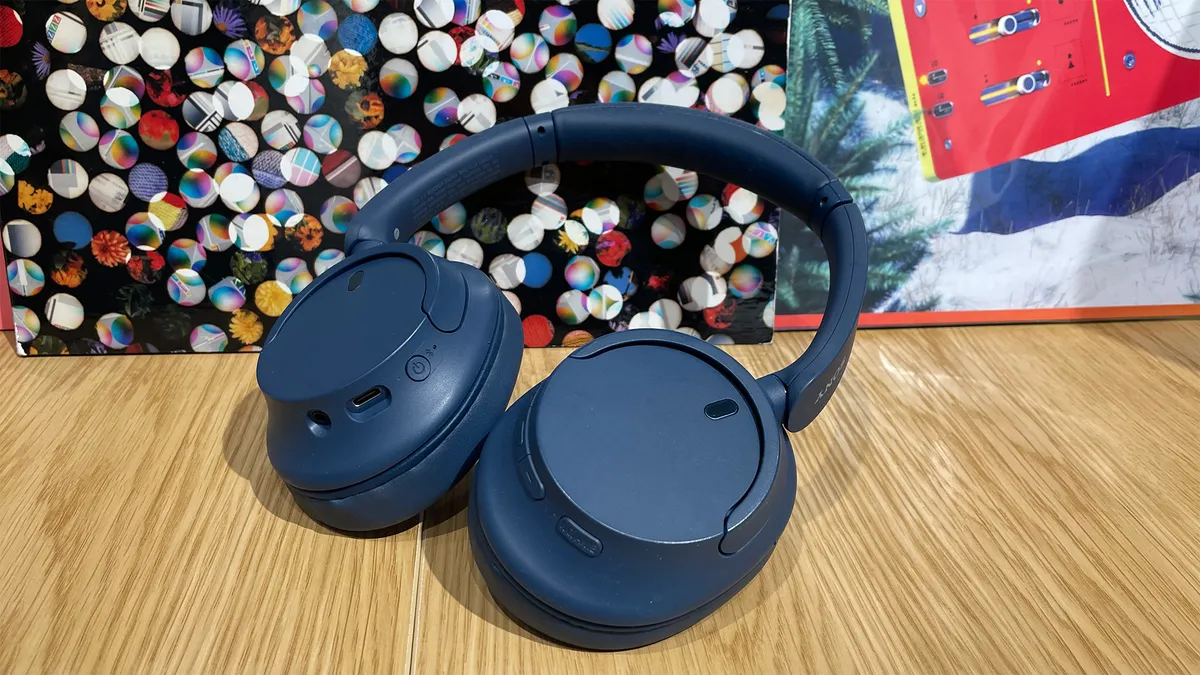
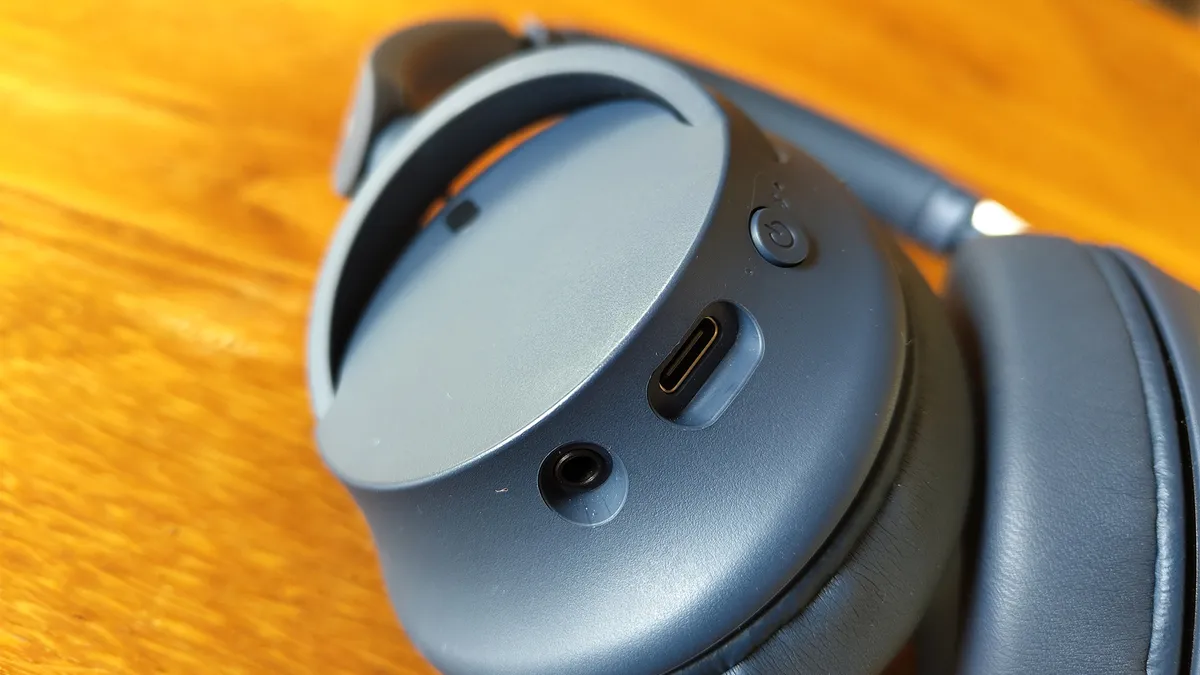


The Sony WH-CH720N aim to plug a gap in the wireless headphones market by offering active noise cancellation (ANC) and a premium-ish build quality at what is still a very reasonable price. In essence, they are designed for those who aren’t keen on forking out hundreds for premium noise-cancelling over-ears (like the Sony WH-1000XM6 below) but who equally don’t want to skimp on ANC or suffer a drop in audio fidelity by opting for a true entry-level pair (like the Sony WH-CH520 above).
The CH720N don’t fold up and away, nor do they come with a designated carry case, but they feel good in the hand and on the head; never do they feel as though they're about to be torn asunder by the wear and tear of everyday use. Battery life is excellent – 35 hours with ANC on, 50 with it off – and Bluetooth 5.2 support is a welcome inclusion too.
Sound-wise, we can’t think of a pair of over-ear headphones at this price that could keep up with such a spirited and energetic (if slightly bass-heavy) delivery. Hip-hop and rock fare especially well, greatly benefiting from the meat and texture these classy over-ears afford. Listen to the absolute percussive force you receive from Nirvana’s You Know You’re Right and you will hear exactly what we mean.
As our in-house reviewers penned in our WH-CH720N review, "the CH720N’s punchy presentational style feels tailor-made for the genres that can get the best use from it, namely rock, hip-hop, big orchestral numbers and peppy, energetic pop hits."
The WH-CH720N deliver exactly what Sony intended. For a very reasonable price, they are a dependably made, enthusiastic-sounding pair of headphones that, while occasionally straying into the realm of excessive bass, deliver good ANC and a strong feature set to the mid-to-low price bracket of the wireless headphone market. Hence they are current What Hi-Fi? Award winners.
Read our full Sony WH-CH720N review
Best overall wired headphones
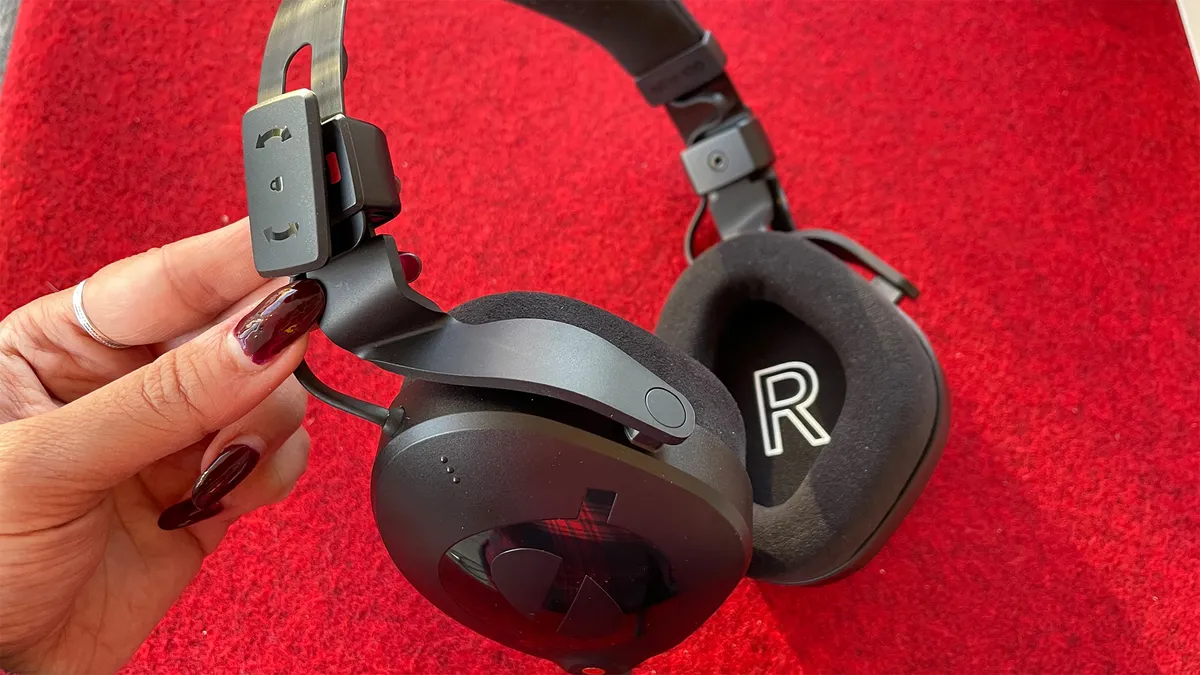
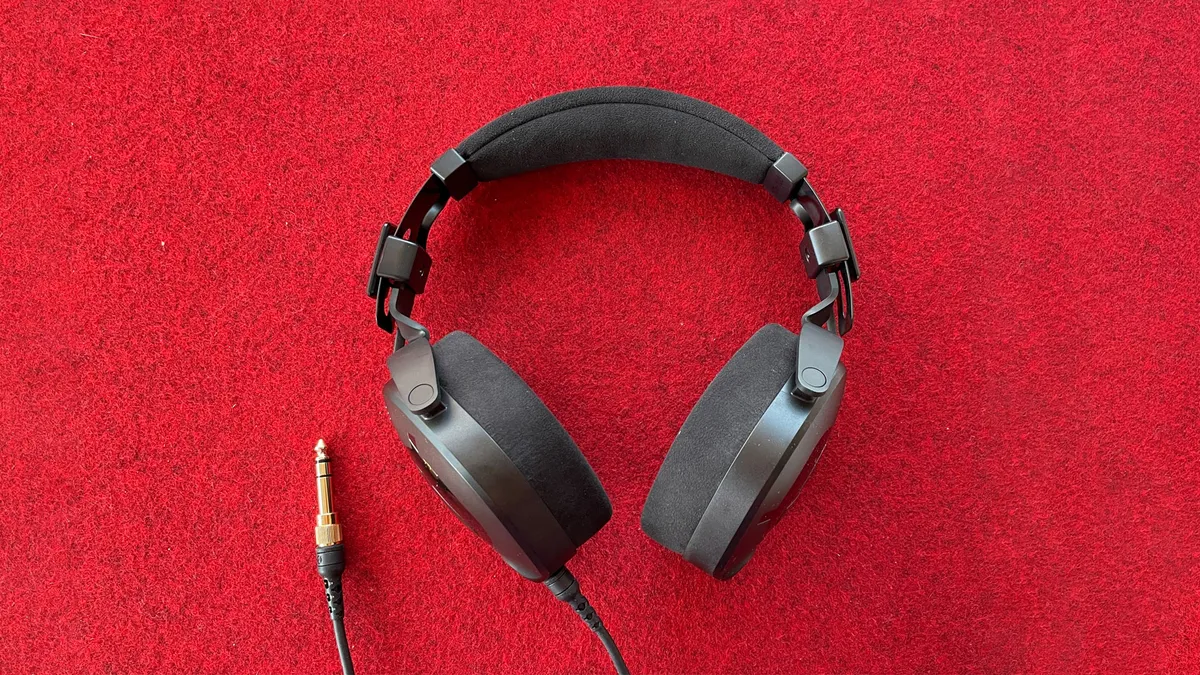
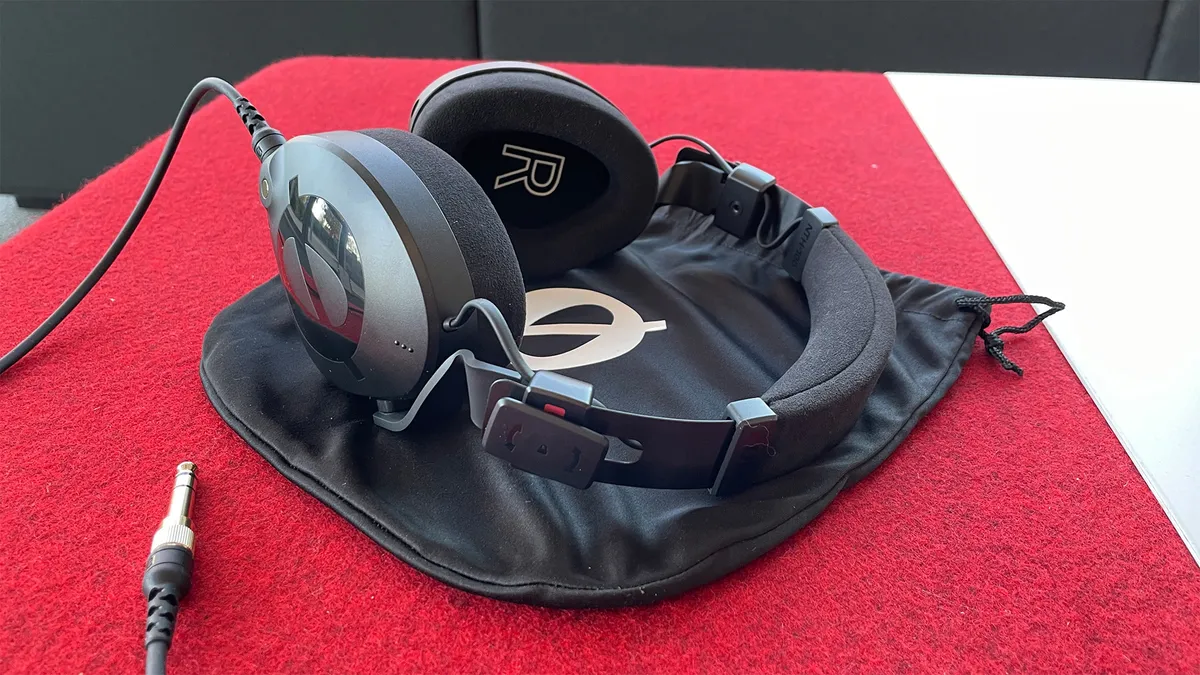


There are quite a few things that make the Røde NTH-100 something of a wonder. Firstly, they are the first consumer-ready headphones the Australian company (better known as a maker of microphones) has ever made. Second, they are a pair of wired cans trying to make it in a world dominated by the all-consuming Bluetooth behemoth. Thirdly, and most importantly, they sound truly stunning for the price.
Headphones are for one of two things: they are for either casual entertainment or critical, businesslike purposes such as monitoring or mixing. It's unusual to find a pair of headphones that can fulfil both roles adequately – and it's even rarer at the sort of money Røde is asking for with the NTH-100.
The mission is achieved with startling confidence, though. Detailed, dynamic and yet relentlessly well-balanced, you really can imagine using the NTH-100 as both a pair of casual listening cans or as a studio-grade model for monitoring or mixing. They are that versatile; they are that good.
Our expert reviewers praised their midrange in particular, which they called the "star of the show". "Add in considerable dynamic headroom, a big and solidly constructed soundstage and an overarching impression of ‘control’, and it should become apparent the Røde NTH-100 are deeply capable headphones," the NTH-100 review reads.
No, you don't get many features with a pair of wired cans, and yes, paying for an extra cable seems a little mean-minded, but these shouldn't be enough to dissuade you, especially if sound-per-pound value is your primary concern. Measured by that metric, the Røde NTH-100 are pretty much unbeatable, hence their current What Hi-Fi? Award.
You might consider another Award winner in the excellent and slightly more affordable Austrian Audio Hi-X15 if your budget is a little tighter, but the NTH-100 certainly justify their extra spend.
Read our full Røde NTH-100 review
Best overall wireless headphones


These Sony over-ears are our favourite wireless overall, replacing their three-time What Hi-Fi? Award-winning predecessors, which used to sit in this very spot.
The new headphones "deliver the most detailed, dynamic, precise and open sound we’ve heard from a wireless Sony flagship," to borrow a quote from our XM6 review. Sony has raised its own benchmark for sound quality and leads the class alongside the also new Bowers & Wilkins Px7 S3.
They are also at the top of the noise-cancelling game, offering a more natural and subtle but effective alternative to the Bose QC Ultra Headphones (2nd Gen).
Not only that, but they also bring back the hinge design that allows the headphones to neatly fold up in a ball, and are wonderfully comfortable thanks to a flatter, wider headband.
Add next-gen Bluetooth features such as LC3, LE Audio and Auracast support as well as 360 Reality Audio Upmix for Cinema, which adds Sony’s spatial audio processing to any content you’re watching in stereo, and you're looking at the most well-rounded premium model on the market.
If you're looking for a new pair of wireless noise-cancelling over-ear headphones, your auditioning should start here.
We had high hopes for the even more premium Sony 1000X The Collexion which launched recently, but they only scored four in our review, so we prefer the XM6 every time.
Read our full Sony WH-1000XM6 review

To Sony XM5 or to XM6? That is the big question while the former is still available. Obviously, we're enamoured with the current WH-1000XM6 Award winners, mainly because they set the benchmark for sound quality, rival Bose for ANC, and offer competitive features. That said, the outgoing XM5 still sound very good, and can be snapped up at a significantly lower price. If you can live with having an older model and love a bargain (who doesn't?), the old dogs still have plenty of great tricks. Want cheaper still? The even older XM4 are in their final months of shelf life and also excellent value.
Best headphones for home


Over its century or so in operation, German company Beyerdynamic has produced some outstanding pairs of headphones. The Award-winning DT 990 Pro X are another fine testament to that legacy.
They look like the kind of pair a hot shot producer would don in the studio (as evinced by the 'Pro' in the name), but at just £189 / $199 / AU$399, they're surprisingly affordable. And that's without sacrificing build quality – in our review, we found them "superbly comfortable and well-made" with the same circular earcups and generous headband as the DT 900 Pro X from 2021.
Those velour earcups are as cushioning and comfortable as ever, yet somehow manage to not generate much heat during extended wears. Which is quite an achievement. And while the headphones are just shy of 300g, the weight is distributed so well that they remain comfortable throughout our listening.
The open-backed design leaks sound, while allowing in outside noises for a more spacious performance. Great for at-home enjoyment in the private sanctuary of a listening room, not so for a busy bus on a Monday morning commute.
Beyerdynamic intended them to act as a "sonic magnifier", showing up a song's imperfections as much as its positive attributes. And in that regard, it's mission accomplished: "Their outstanding resolution levels are properly impressive, and if you’re planning on using the DT 990 Pro X for studio use, you’ll be thrilled by how much information they unearth," we noted in our Beyerdynamic DT 990 Pro X review.
The level of detail and clarity makes them perfect for home use, where you can focus on the music, free from distraction. The fact they sound clearer, more detailed and better balanced than their five-star predecessors says it all.
Just note that these will highlight any flaws in a recording. But be discerning with your source material and you're onto a winner.
Read our full Beyerdynamic DT 990 Pro X review
Best premium wireless headphones


Take the five-star Focal Bathys, add the magnesium driver from the (wired) five-star Clear Mg, and you get the Bathys Mg, an Award-winning pair of headphones that take wireless performance to a new level.
Their asking price of £999 / $1299 / AU$2300 sets expectations high – not many wireless pairs command such a high price, and for a very good reason. Thankfully, the Bathys Mg look and feel every inch the premium pair.
The leather-topped headband and memory foam earpads are high quality, while the aluminium and magnesium yokes are built to last. Focal's trademark detailing on the outer of the earcups help them stand out, as does the backlit Focal logo (though you can turn this off if you find it too attention-grabbing).
At 350g, they're heavy, but don't feel it in use thanks to fantastic weight distribution. As you would expect at this price, they support the aptX Adaptive Bluetooth codec for higher-quality listening, though their mobile app isn't as comprehensive as some. But you do get three modes of active noise cancellation (ANC) and the ability to personalise the sound.
They can also be used wired, and have a respectable – if unremarkable – 30-hour battery life.
But it's the sound quality that's remarkable. They make the standard Bathys sound a little unwieldy by comparison, such is the Mg's level of composure. The Mg "offer more across the board: a greater sense of refinement, expression and more precise deployment of notes throughout the frequency range," we wrote in our Focal Bathys Mg review.
It's a natural, balanced sound that doesn't feel like it's adding or subtracting anything from the music. Which is exactly as it should be.
Listen to Adele's Skyfall, you're struck by the spectacular level of insight and sheer amount of detail the Mg unearth. And as Adele shifts through the gears at the track's climax, you hear plenty of stretch in their dynamic range.
The ANC is also up there with the best over-ears we've tested across the frequency range. "Upper bass and lower midrange rumbles are handled well and traffic noise is subdued nicely too," we noted. The most intense mode of ANC ('Silent') isn't as suction-y as the equivalent mode on Bose's QuietComfort Ultra Headphones (2nd Gen), which many will welcome.
As we say, worth every penny.
Read our full Focal Bathys Mg review
Best premium wired headphones


The decade-old, original Beyerdynamic T1 models are a touchstone for us as far as premium headphones go. The main evolution from this third-generation model and its predecessor is that the new pair is far easier to drive for mobile devices and laptops: the old model had a 600ohm impedance, whereas this new one takes that down to 32ohms.
That said, the high level of transparency these Beyerdynamics deliver is such that they deserve to be paired with a high-quality source – not 'just' a phone.
The resulting sound is very similar to the originals albeit cleaner, clearer, slightly less bright and a little more rounded in the treble, making them a bit more forgiving of aggressive electronics and recordings. There's that same musical delivery with a palpable sense of power and authority, and vocals come through with nuance and clarity. Our expert in-house reviews team says they were "taken by the sense of control and organisation, but also the way in which these headphones entertain" in our T1 (3rd Gen) review.
The T1 are comfortable enough for long listening sessions thanks to a nicely shaped, Alcantara-covered headband and generous velour-trimmed earpads. These aren’t the kind of open-back headphones that impress on a short listen, but given a few days or even weeks, it’s hard not to be captivated by their spell.
Want closed-back versions of these headphones that don't leak sound? See our five-star Beyerdynamic T5 (3rd Generation) review. For anyone with more cash to spend, the Sennheiser HD820 and the Focal Stellia should be on your shortlist.
Read our full Beyerdynamic T1 (3rd Generation) review
Best for audiophiles


Best for audiophiles? From a wireless pair? Let us explain...
While it's true that wired pairs will sound better, the Sennheiser HDB 630 set new standards for wireless headphones thanks to a neat accessory that comes bundled in the box. This lets your sound source (for example a smartphone, tablet or laptop) to support the same high-quality Bluetooth codec as the headphones themselves (the highest being aptX Adaptive). Which bestows you with hi-res 24bit/96kHz listening.
Hence the 'best for audiophiles' moniker.
During our testing, we found it boosted the sound quality from a smartphone, with significant gains in clarity and solidity. As we wrote in our review: "These are wonderfully smooth and natural sounding headphones, full of shape and dynamism across the frequency range."
Listening to Christine And The Queens' Mountains (We Met), there's bags of midrange texture to the vocals, while the presentation is dynamic yet precise. There's plenty of scale, but it all remains musically cohesive, making for "the most informative and entertaining sound we’ve heard from wireless headphones at this price."
You can listen wired using the supplied cables (USB-C and 3.5mm), though you still need power in order to do so. But with 60 hours of life between charges (with ANC on; 45 hours when the dongle is in use), you'll have plenty of time to plan a recharge.
The ANC is one of the few negatives we could find. It's far from bad, but is merely good whereas some of its rivals are really great. It isolates you from your surroundings, but others are more effective at cutting off the outside world.
Still, the sound quality more than makes up for it. Audiophiles wanting the convenience of a wireless pair, these are the best over-ear headphones for you.
Sennheiser's Momentum 5 Wireless are another five-star pair (and are a little cheaper), but they just lost out to the Sony WH-1000XM6 for a place on this list.
Read our full Sennheiser HDB 630 review
Also consider
- Austrian Audio Hi-X20: Analytical Rode NTH-100 alternatives
Hugely revealing affordable wired over-ears which are exceptionally precise for the money. They have a lower-end leanness while the Rodes are fuller in the bass and more forgiving of lower-quality recordings. - Bowers & Wilkins Px7 S3: Excellent Sony WH-1000XM6 alternatives
With arguably the best design on the market and a sound performance that rivals the class-leading Sony XM6 in this list, these B&Ws are fantastic options – particularly if you find them at a discount. Just know that their ANC isn't quite as good. - Beyerdynamic DT 900 Pro X: Closed-back alternatives to the DT 990 Pro X
If you don't like the DT 990 Pro X's leaky design, you might prefer their closed-back siblings. - Austrian Audio Hi-X25BT: Better-sounding Sony WH-CH720N alternatives
If you can spend a little more and don't need active noise cancellation. These Austrian Audios deliver the best sound performance before you get to the premium Sony WH-1000XM6 level. - Bose QuietComfort Ultra Headphones (2nd Gen): More intense Sony WH-CH720N alternatives
Bose's ANC is the most intense around. That makes it incredibly effective, though some people aren't keen on the vacuum effect, preferring a more natural noise cancellation. These are much pricier than the Sony WH-CH720N, but much more effective at silencing the outside world. - Apple AirPods Max 2: iOS-centric Sony WH-1000XM6 alternatives
Not a five-star pair, admittedly, but for Apple users, the AirPods Max 2 are still a treat. Nothing works better than Apple's ecosystem, and the sound and ANC are improved, just not by as much as we were hoping. - Sennheiser Momentum 5 Wireless: Cheaper rivals to the Sony XM6
Sennheiser's newest Momentum headphones deliver a rich, refined and smooth presentation, expressive and detailed midrange and fantastic battery life, and all for less than the asking price of the XM6.
How to choose the best over-ear headphones for you
These days, over-ear headphones come in many styles. You have wired models with open-back (which leak sound) or, more typically, closed-back designs (which don't), predominantly for listening at home when portability isn't a priority – though wearing wires out and about is fine too, of course! You can read all about the closed-back vs open-back headphones differences here. Go wired for the best possible sound quality for your budget.
Prioritise convenience and features? Go wireless. These are best for portable, on-the-go listening, not only because of their wire-free nature but the fact that nowadays many throw in active noise cancellation (ANC) for more privacy with your music – a Godsend for listening in particularly noisy environments. For these Bluetooth pairs, you'll want to note battery life, Bluetooth codec and Bluetooth Multipoint support, all of which can affect your headphone user experience and/or audio quality.
Unsure which route to go down? Our wired vs wireless headphones guide traverses all the pros and cons of each.
Alternatively, if you know which style you want already, you can visit our dedicated Best Buys for more focused lists – best wired headphones, best wireless headphones and best noise-cancelling headphones. Want a pair of high-end headphones to plug into your desktop or component hi-fi system? As well as the pairs featured above, we also have a definitive list of the best audiophile headphones to satisfy healthier budgets.
But if you are still on the fence as to what sort of pair to punt for, the list above will give you a comprehensive overview of the best pair for each style and price point.
How we test over-ear headphones
Here at What Hi-Fi? we review hundreds of products every year, including bucketfuls of over-ear headphones. After all, the likes of Sony, Bose, Apple and Sennheiser often update their numerous pairs every 12 to 24 months, and that isn't even taking into account all the other renowned – and less so – headphones brands. So how do we arrive at our review verdicts, and why can you trust them?
We have state-of-the-art testing facilities, where our in-house team of expert reviewers, who have over 150 years of collective experience, carry out all our product testing. We have price-appropriate DACs to help us test wired headphones, and put wireless noise-cancelling over-ears through the wringer in working offices, out and about on city streets, and on public transport (including planes when we can), too.
We spend weeks living with every pair we test to ensure every aspect is reviewed thoroughly, from their comfort and build quality to features and performance. Our test tracks span a variety of music genres, too, from classical to hip-hop and everything in between. In line with how we test all products at What Hi-Fi?, all verdicts are agreed upon by the reviews team as a whole, helping to ensure consistency and avoid individual subjectivity.
As over-ear headphones come in multiple forms – wired and wireless, noise-cancelling, open-back or closed-back – and naturally span a wide price spectrum, we keep hold of current five-star class leaders of every type and budget to compare with each pair we review to determine its star rating and position in this eminent list.
Indeed, from all our reviews, we choose the products to feature in our Best Buys, such as this one. That's why if you take the plunge and buy one of the products recommended above, or on any other Best Buy pages, you can rest assured you are getting a What Hi-Fi?-approved product.
You can read more about how we test and review headphones at What Hi-Fi?.
FAQ
Are over-ear headphones better than on-ear headphones?
On-ear headphones have smaller earpads that sit 'on' your ears, and over-ear headphones have larger earpads that sit around and cover your ears – and the former is something of a dying breed. On-ears have their advantages: they are often lighter, inherently less obtrusive and isolating, and usually more physically compact and portable. But there is more choice of over-ear headphones, period, and they tend to provide more isolated and immersive listening.
In the over-ear camp is where you will find the very best-sounding headphones too.
Are over-ear headphones good for working out and at the gym?
Due to their innate bulk compared with earbuds, over-ear headphones aren't typically designed for exercise. They are more likely to move around on your head while running, for example, and for outdoor exercise in general, their isolating physical design could block out more external sound than is safe. That said, wireless pairs can be suitable fitness buddies, especially for use in the gym – though think about what your gym routine is. If you are doing weights in a horizontal position, over-ears are likely to slide around or, worse, slide off. We would look out for ones that are lightweight, water resistant and preferably have a fit that clamps on the tighter side. Alternatively, in-ear models are more suited to working out and sports.
Do over-ear headphones have mics?
Regardless of whether they are wired or wireless, most over-ear headphones have microphones integrated into the earcups or the in-line cable to facilitate voice and video calls. Nowadays, wireless pairs especially tend to complement that with clever voice clarity technology to help reduce wind and other external noise and put your voice in the limelight so it can be heard clearly on the other end.
If you want a pair with a mic solely for gaming, however, you might be better off with a gaming headset that has a dedicated boom mic.
Can over-ear headphones cause headaches?
If your over-ear headphones are causing headaches or head pain, it's likely down to one of two reasons: you're playing music too loudly for too long, or the headband is putting too much pressure on the top of your head. Fit is important when it comes to over-ears. You want the headband and earpads to clamp securely enough so that they don't move around on your head and leak sound; but if the earpads clamp too tightly, they can be uncomfortable and cause your ears to overheat. Too much pressure on the crown of your head may be down to insufficient headband padding.
Heads come in all shapes and sizes, of course, which is why more than one reviewer at What Hi-Fi? always tests the fit of every pair of over-ear headphones we review.
Are over-ear headphones noise cancelling?
As over-ear headphones clamp around your ears, they are generally the best type of headphones for 'noise isolation', which is a physical thing. The term is used to describe headphones that block out external sounds – and reduce the amount of sound leaking into your ears – achieved purely through build quality and design. So yes, many over-ears will block out some external sound when worn.
'Noise-cancelling', however, often refers to a technology – active noise cancellation (or ANC). It's an electrical feature that requires power to work and uses two tiny microphones on the outer housing of the headphones that 'listen' to the noise around you and quickly create a mirror image of the compression and rarefaction of the air (i.e. external sound). It essentially blocks out external noise far more effectively than a headphones' physicality alone can.
Most wireless Bluetooth over-ear headphones have ANC these days, though it is far less common to have it on wired over-ears.
Recent Updates
- July 2026: Added mentions of the Sennheiser Momentum 5 Wireless and Sony 1000X The Collexion, both of which we reviewed recently. Added the Momentum 5 Wireless to 'Also consider'.
- May 2026: Rewrote the intro to mention our recent AirPods Max 2 review. Added AirPods Max 2 to 'Also consider'.
- March 2026: Replaced 'The quick list' section with the new tabletop widget. Rewrote intro to mention AirPods Max 2.
- January 2026: As well as adding the Sennheiser HDB 630 to the main list, we've replaced the Grado SR325x with the Beyerdynamic DT 990 Pro X and the Dali IO-8 with the Focal Bathys Mg. The Bose QuietComfort Ultra Headphones (2nd Gen) have also made the 'Also consider' section. And we culled a couple of models from that section to reflect the updated main list.
- March 2025: The newly reviewed Sennheiser HD 505 make our Also Consider list as cheaper wired open-back alternatives to the Grados in this list. The new Beyerdynamic Aventho 300 miss out on our top sports but are solid wireless efforts nonetheless.
- January 2025: The new Dali IO-8 replace the Mark Levinson No.5909 as the best premium wireless headphones, proving the more compelling performers and overall package at this lofty price point.
- November 2024: Our newly crowned What Hi-Fi? Award 2024 winners in this list have been labelled as such. The excellent Austrian Audio Hi-X25BT are also new Award winners and have been added to our Also Consider section, having not quite made the definitive list due to their closeness in price to the Sony WH-CH720N and lack of active noise cancellation. Sadly, the also newly reviewed Earfun Wave Pro fall short and do not make the cut.
MORE:
The best headphones – all styles, all budgets
The best headphones deals on the internet right now
The best headphones amplifiers: the best way to boost your personal listening
Wired vs wireless headphones: the pros, cons, and which are best for you?

