It's not often that we get news of a whole lot of new audio products at the start of the year. About 12 years ago, when the Venetian Hotel was the home to all the high-end hi-fi brands during the annual CES show, the beginning of the new year meant feasting your eyes on very large, very shiny, very expensive hi-fi – from giant D'Agostino and McIntosh amps and Focal speakers to innovative new audio products from Meridian, Naim and more.
As the world changed and the consumer-tech landscape evolved, CES became home more to the latest innovations in the internet of things, smart home and AI tech, and, of course, new TV technology.
In the world of hi-fi however, things became a little less frantic and the start of the year has traditionally been rather subdued, with the Bristol Hi-Fi Show at the end of February traditionally (for the UK hi-fi press/industry, at least) kicking things off for the year. January is usually for catching up, reacquainting yourself with emails, and planning out the year ahead.
2026, however, has started right out of the gate, with a small horde of new hi-fi products from big-name brands that are genuinely exciting – and, more pertinently, priced sensibly for general consumers. In January alone, we had the official launch of Cambridge Audio's L/R wireless speaker systems range, two new NAD stereo amplifiers, Mission's half-width 778S music streamer and 778CDT CD transport, Onkyo's Muse streaming amplifiers, two affordable Sony turntables, and Roksan's Caspian 4G Streaming preamplifier and Power Amplifier.
Phew.

While we've had to admire the bulk of these new products from afar, I was lucky enough to see the new Roksan Caspian 4G pre/power duo in person at a London launch event a couple of weeks ago.
The team played a few songs during the demo (Misirlou/Ah Ya Zein by The Ayoub Sisters sounded particularly fluid and spacious), but I'll reserve judgement on the sound quality until we have a review pair in our more familiar-sounding test rooms.
But what stood out most to me during this preview was the Roksan's design – in terms of build quality, user-focused elements, and, yes, aesthetic looks.
As with most of our readers, the first time we ever encounter a new hi-fi product is through a press picture or two – and it certainly needs to make a first impression. While sound quality is undoubtedly what matters most in hi-fi products, the way a product operates, how well made it is and how nice it is to use are key factors as well. Even how it presents the playing information can be a point of interest – these are products we'll be using every day, after all, so all of this, to my mind, really matters.
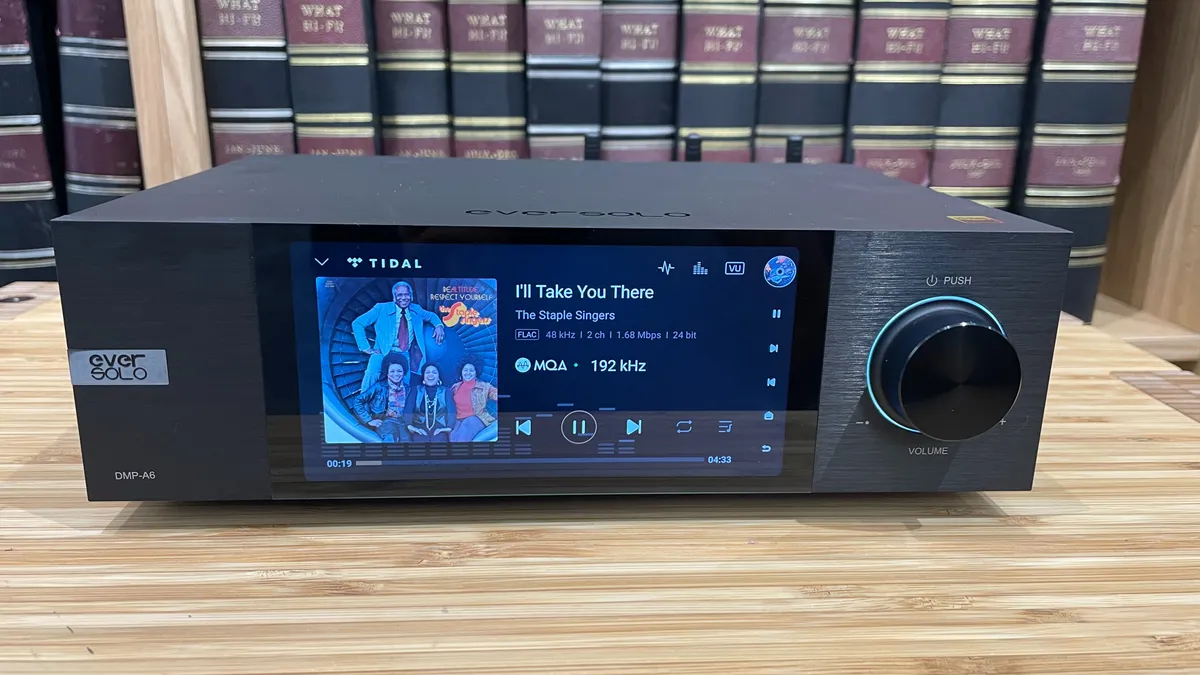
Most modern hi-fi, especially those products with wi-fi streaming built-in, tend to be seen in two forms. They are either minimal boxes with a large, front panel-dominating OLED display that shows off album artwork, track information, even digital VU meters – think of the Cambridge Audio 150 Evo SE, Eversolo DMP-A6, the new Onkyo Muse; or they go in the opposite direction and embrace the retro design and multi-button aesthetic – the likes of, for example, the NAD C 3050 with MDC2 BluOS module.
Some try to combine the large-screen demands with the retro aesthetic (Ruark Audio R610), while others, usually at the budget end, forego any screens, buttons or adornments altogether for tiny, anonymous box (hello, Cambridge MXN10 and WiiM Pro Plus).
While a screen is undoubtedly lovely to have, there are plenty of us out there who really don't require it. Things such as track information can be seen and more clearly read on the tablet or smartphone controlling the streamed music; many of us simply don't want to have any visual distractions from the all-important music being played, either.

Roksan takes a different middle-ground approach. It recognises that there needs to be some quick visual affirmation for checking the essentials – input, volume and power – but, instead of a full colour screen, it opts for what I think are simple but impactful orange strips of light that are both informative and look rather fetching.
It's the same design I encountered when we tested the Roksan Attessa Streaming Amplifier; but in the 4G Caspian pre/power duo, Roksan’s R&D team has taken a couple steps further into thinking about the relationship between the product and the end user. I like that, for instance, when you change the volume on the preamp, there are corresponding LEDs on the power amplifier that also shows the change. It stops the power amp from being what is normally a passive, anonymous product and makes it feel more integrated in the system. Interestingly, that LED connection between the two amps is done using Bluetooth.
I also like how the icons for the inputs are symbols, and can be customised to represent the source, such as a compact disc, a TV, a record, a games console and so on. It all adds a touch of personality in a way that doesn't intrude or distract overall.

The Roksan brand has always had a visual flair that made it stand out from the crowd – just look at the Caspian M2 amplifier and M2 CD player that we still hold in high esteem. They are so full of character and personality; and that goes hand in hand with their (usually) powerful, dynamic and fluid sound and well-engineered internals.
Roksan's new Caspian 4G streaming preamp/power amp (£6500 / $ 8250 for the pair) also don't quite feel the need to blend and disappear into the woodwork as much as many contemporaries. There is care taken with the machining of the chassis and overall look of the products. In the samples we saw at the demo, the way the extruded heatsinks are machined looks neatly done. There are no exposed bolt holes, and the front and top are made of one piece – a departure from most amplifiers we see, which are usually made as a thin aluminium box with a thicker metal front.
All of this is part of parent company Monitor Audio Group's “Transparent Design Philosophy”, which aims to “balance technical performance with practical usability and restrained industrial design”. It means the R&D team gives as much thought, care and importance to the product’s design and intuitive user-experience, as it does to the internal engineering for sound quality, and “one is never allowed to overpower the other”.
It's an approach that should be applauded in an era where classic hi-fi separates need to work a bit harder to justify themselves in a world with smarter, multi-functional products that cost less. And, of course, one where customers are becoming that bit more discerning and want the most value and reward for their money spent, across sound, design, and usability.
In hi-fi, the small things really do matter.
Of course, there are plenty of other aspects of the Roksan Caspian 4G flagship duo to get us excited – the use of an own-design discrete DAC circuitry, the reliable BluOS streaming platform, its premium price point that fills a gap in the market – and we can't wait to spend hours and days playing all kinds of music through it to get a sense of its sonic character once we get our hands on a review sample.
But it says a lot that, among the flurry of new product launches so far this year, it's Roksan and its thoughtful design points that have stayed in my mind. A first impression goes a long way, it seems.
In just over a week, however, I'm hoping to encounter even more new products that will occupy my mind, at the Bristol Hi-Fi Show 2026. It will be my first opportunity to see the new Dali Sonik speaker range, while Neat is promising a sequel to its quirky little Iota Alpha floorstanders – and Rega has teased a new turntable will be shown, too.
We'll be bringing you all the news and photos as we cover the show – see you at Bristol!
MORE:
This budget trio delivers a profoundly musical performance and is a great first step into hi-fi
Read the Rega Mercury/Solis pre/power amplifier review
Best hi-fi systems 2026: CD, vinyl and streaming music players for the home