
One of the great things about multi-room is you don't have to buy a whole system at once. Instead, you can buy one speaker, and see how it goes before adding more.
That way, not only are you ensuring you're getting a system that you actually like (as you can always change brand affinity after the first speaker), you're also spreading the cost out over months or even years.
Multi-room has other benefits, too. It can play the same song everywhere in the home, so it follows you from room to room, or a different playlist in each room to create different moods.
Multi-room speakers work as standard wireless speakers too, capable of playing tracks from all sorts of streaming services.
So which speaker should you buy?
It really depends on your needs, tastes and budget. Below are the best multi-room speakers to have graced our test rooms, from those costing hundreds of pounds to one that's just £50.
We've been testing speakers of all stripes for nearly 50 years now, and with over 100 years of combined experience between us, we know a thing or two about what to look – and listen out – for.
We agree on review verdicts as a team rather than one individual tester to avoid bias, and always listen to speakers against their main rivals in their price category, so we know how they stack up against what else is available.
For more information, check out our how we test section below.
- Love multi-room and Apple? It's worth checking out our list of the best AirPlay speakers
November 2026: We've replaced the Naim Mu-so Qb 2nd Generation with the Mu-so 2, and updated references to the winners of the most recent What Hi-Fi? Awards.

I'm a senior staff writer who has listened to and reviewed dozens of products during my time at What Hi-Fi?, from multi-room speakers to portable Bluetooth speakers to wireless headphones. The best multi-room speakers need to make set up and connection a doddle, and have plenty of features besides, along with easy app controls. But first and foremost, they need to sound great. That's always our priority with speakers of any type, and the below tick all our boxes.
The best multi-room speakers we recommend in 2026
Why you can trust What Hi-Fi? Our expert team reviews products in dedicated test rooms, to help you make the best choice for your budget. Find out more about how we test.
Best overall


The original Audio Pro C20 previously won a What Hi-Fi? Award, and now the most up-to-date model has repeated the feat for the second year running. The C20 W replaces its predecessor in the 'Best overall' slot in this list.
It's not a radical overhaul, but with an Award-winner, a few tweaks is often all that's needed. Audio Pro has subtly boosted the audio while making it even more versatile, making for a compelling multi-room offering that's unbeatable at this price level.
Aesthetically, there's very little separating the C20 and the W variant. The two have the same design and even the same dimensions, with the only difference being the back panel, which has changed from black on the old model to silver on the new. Oh, and there's a new walnut finish exclusive to the W, though it costs a little more.
Despite having the same drivers as the C20, the W's sound has been rethought "from the ground up". This includes improved input stages for uniform sensitivity and a better dynamic range, and changes to the speaker’s acoustical design. Those more mechanical tweaks are complemented by a tuning overhaul, too.
It certainly works. "The C20 W offers an expansive, open soundstage, granting a pleasing airiness to the likes of Ramin Djawadi’s choral Across The Oceans Of Time or Massive Attack’s Paradise Circus," we wrote in our Audio Pro C20 W review. It's an organised, cohesive sound that never sounds cluttered no matter how congested a track becomes.
The low end has plenty of heft without overshadowing the rest of the frequency range. And the whole performance is a touch richer and clearer than its Award-winning predecessor.
It has all the connections of its predecessor too, meaning it can work as a soundbar for your TV, as a Bluetooth speaker paired with your phone, or as part of a multi-room setup. And the app has been updated throughout, making it even easier to use. There's nothing to dislike.
Read the full Audio Pro C20 W review
Best for spatial audio

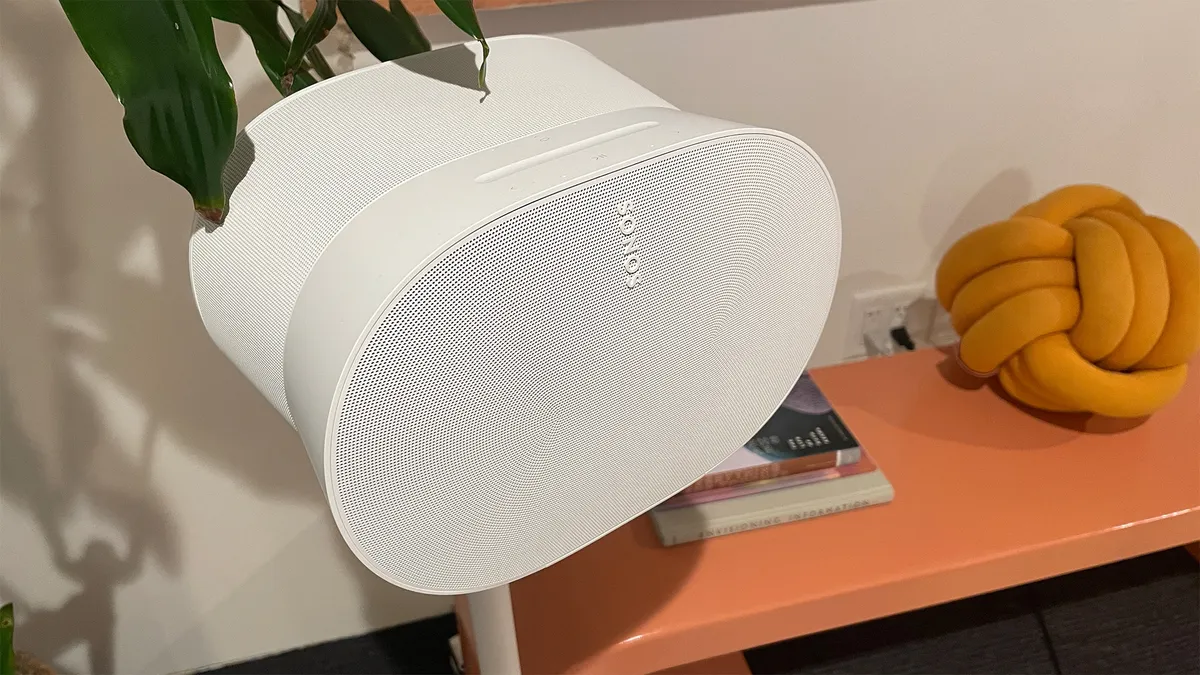

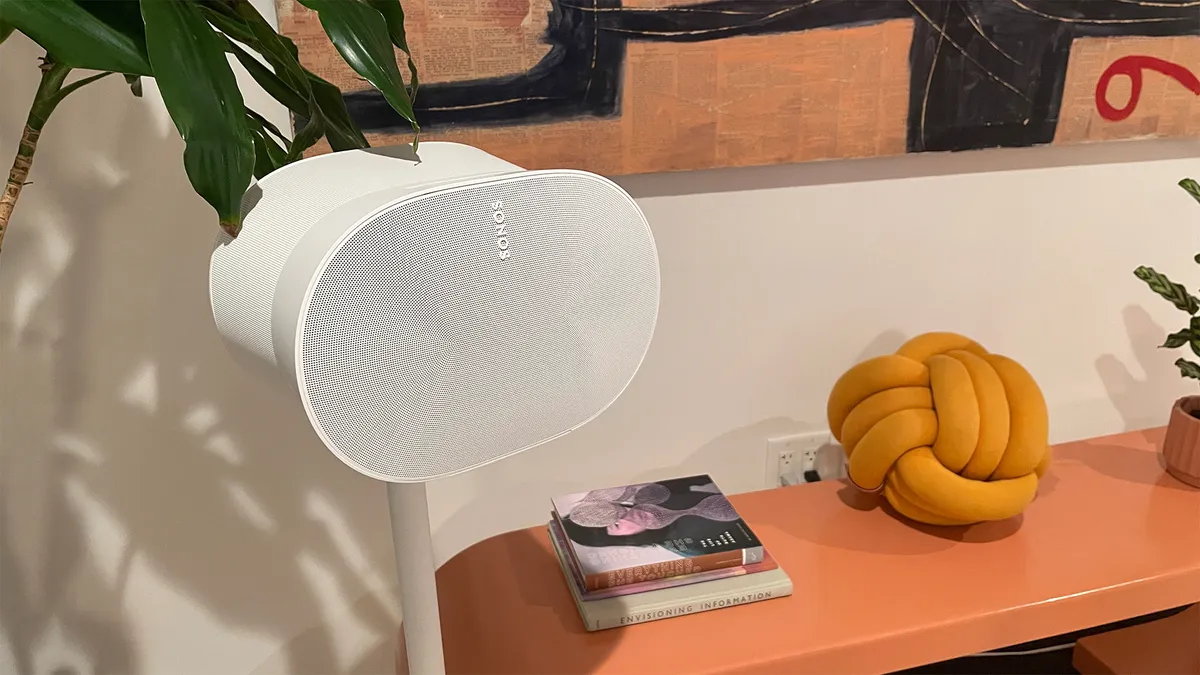


It seems that it isn't enough for the best multi-room speakers to just deliver great sound and a decent array of features anymore. Ever since Apple's mighty HomePod 2 landed early in 2023 with the ability to deliver the immersive spatial audio experience, the race has been on to see who could challenge the biggest dog on the block when it came to integrating the much-vaunted tech into their own speaker designs.
Enter the Era 300, Sonos’ more expensive rival to the HomePod 2 that looks to beat Apple at its own game.
With its unique, “cinched hourglass” shape, the Era 300 might be more of an acquired taste than most of the brand’s rather more conservative designs. But what isn't up for debate is how superbly the five-star Era 300 manages to perform.
In short, it is absolutely excellent.
Throw whatever you like at the Era 300, chances are it has it covered, filling our testing rooms with cohesive, spacious sound without a hint of a struggle.
Big choral numbers feel broad and immersive when playing spatial audio with Dolby Atmos tracks, but the Era 300 excels with all genres. Hip-hop, classic rock, soundtracks, it’s all covered with ease.
Yes, it’s expensive and yes, it smacks of a rip-off having to pay 20 quid extra for a wired connector, but the Era 300 has earned the right to be cheeky. It comes with all the bells and whistles of Sonos's exhaustive app, making multi-room playback a doddle if you have multiple Sonos speakers or soundbars around your home.
A truly five-star performer, and one of the best multi-room speakers we’ve tested in a good while.
Read the full Sonos Era 300 review
Best for Apple users


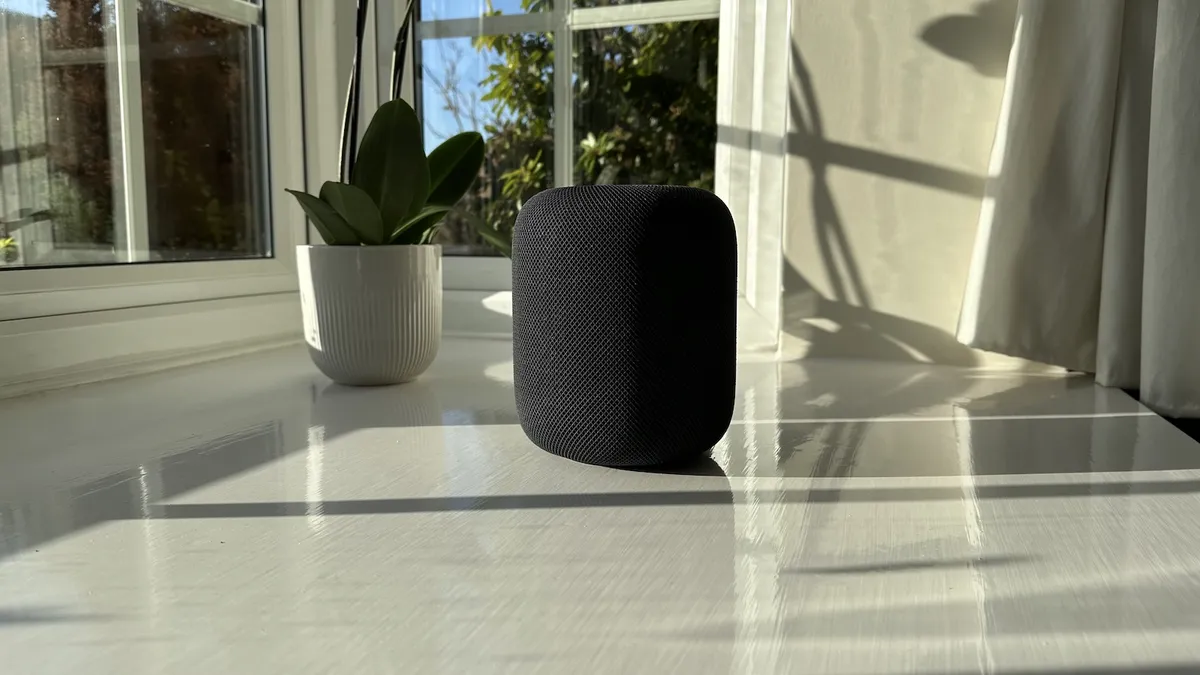
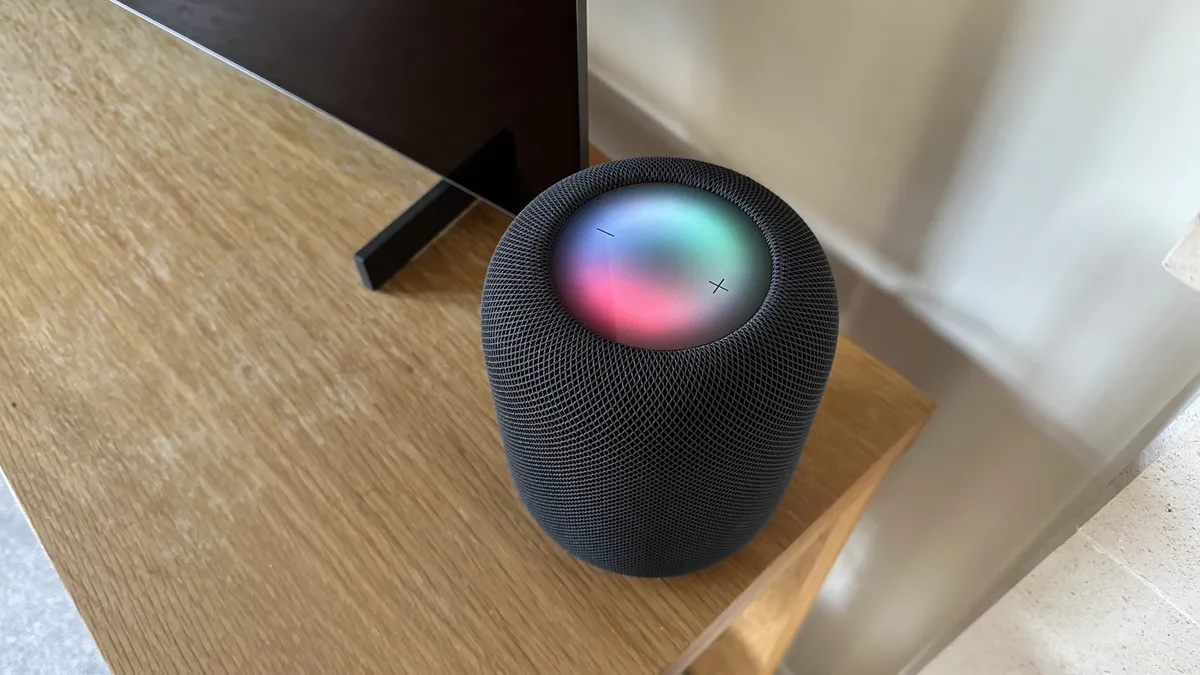


The HomePod 2 might look identical to its predecessor, but under the hood it's all change.
Sonically, it's a real improvement on the original, especially in the bass notes – they hit with a greater degree of precision than the first HomePod's.
It's better elsewhere too, with a more organised presentation in terms of both soundscape and rhythms, more solidity and greater tightness. All of which make it a more fun speaker to listen to.
And that's before we get to the multi-room element. It's beautifully simple to set up and manage, but as with most Apple devices, there's a caveat: you have to be deeply ensconced within Apple's ecosystem in order to reap all the benefits.
For example, its primary wireless connection needs Apple's AirPlay 2 protocol, the only music streaming service it natively supports is Apple Music, and Siri is the only virtual assistant you can use. If you're not an Apple fan, look elsewhere.
If you are an Apple fan, however, you're in for a treat. Especially when you experience its real-time, surroundings-based sound optimisation – move it to another room, and you can hear it adjusting its output to match the new layout. Very smart.
Read the full Apple HomePod 2 review
Best premium


This second-gen model might look near identical to its predecessor, but a lot has changed – Naim claims it's 95 per cent new. Which made us a bit nervous, considering how good the first-gen Mu-so was.
But we needn't have worried.
Its beating heart is still Naim's excellent streaming platform, which brings UPnP streaming of hi-res music up to PCM 32-bit/384kHz, all manner of streaming services, and a more stable wi-fi connection.
There's Bluetooth too, plus the ability to connect a TV, AV receiver, headphones or a CD player. App controls are seamless, which is no mean feat given the Mu-so 2's considerable skill set. Or you can use the on-unit controls, which are satisfyingly chunky and responsive.
Its new drivers make for a much improved sonic performance. "The Mu-so 2 effortlessly opens up The National's Hey Rosey, and everything in that more spacious soundfield – the pitter-patter of piano, the slicing strings, the Gail Ann Dorsey accompaniment – is clearer and more nuanced," we wrote in our Naim Mu-so 2 review. "The chorus's kaleidoscopic rhythm pattern sounds much more systematic, too."
There's no denying the Mu-so 2 is expensive, however. Kitting our your abode with multiple Mu-so 2s will be a pricey endeavour. But it is best premium for a very good reason – one listen and you'll know why.
Read the full Naim Mu-so 2 review
Best budget








Amazon's smart speaker range has become big business in the past decade or so, with Alexa becoming almost synonymous with the whole concept of integrated, domestic AI.
The latest addition to this wildly popular series of affordable smart speakers is the Echo Dot (5th Generation), a tempting performer that practically gives itself away thanks to its meagre asking price and five-star quality.
Not that the Dot feels cheap. Whereas once Alexa was a one-note performer capable of answering basic questions about the weather or what is the name of the capital of France, now it's as filled to the brim with skills and knowledge as Keanu Reeves after he's been uploaded with various handy computer programs (although it doesn't, as of yet, "know Kung fu").
The Dot's cybernetic assistant is more helpful than ever before, stuffed with so many tricks and quirks that you will often find yourself falling into the trap of speaking to Alexa as though it were a real person.
The audio has come a long way, too. We weren't hugely keen on the sound of Amazon's early Echo models, but the trajectory has been very much one of continual improvement courtesy of Jeff Bezos' tireless team of audio tinkerers.
Amazon's so-called “best-sounding Echo Dot yet” lives up to its billing thanks to a single 44mm front-firing speaker (4mm larger than the previous gen’s 40mm), offering sound that feels, for the size, weighty, listenable and surprisingly versatile.
At this price, you'd be hard pressed to find a better speaker capable of multi-room.
Read the full Amazon Echo Dot (5th Generation) review
Also consider
The best multi-room speaker alternatives we've tested:
Sonos Era 100: This replaced the excellent Sonos One, and while it lacks the spatial audio support of the Era 300, it is a very worthy Sonos speaker in its own right. It sounds better than the One – open with a keen sense of space, and plenty of detail and precision – and adds Bluetooth and a USB-C port for hooking up a turntable using a line-in adapter.
Apple HomePod Mini: For a taste of the HomePod 2 at under £100, the Mini is a wonder. It packs the same skills and effortless usability (for Apple users, that is), just with a smaller scale sound. The HomePod Mini 2 is out now, but we're yet to review it.
Audio Pro C20: The non-W model is a previous Award winner, and still a great option. It's an impressively multi-talented speaker with a large, detailed sound, great connectivity and a solid build. It's no cheaper than the W variant at present, so eyes peeled for a deal.
Audio Pro Addon C10 MkII: A redesigned bass port brings significant low end to this Audio Pro speaker, making it one of the best multi-room offerings at its price. It too picked up a What Hi-Fi Award in previous years.
Sonos Play: The Sonos Roam 2 was a little disappointing, but this portable model is much more up our street. The sound is much improved, and it fits seamlessly into the Sonos ecosystem, so it's ideal for home and away use.
How to choose the best multi-room speaker for you
You might have your eye on a complete multi-room system, but you don't have to buy it all at once. You can start with one or two speakers and expand from room to room, spreading the cost over months or even years.
You don't even have stick to one brand of speaker, but if you do mix and match, check that the speakers have the same streaming tech built in (AirPlay 2 or Google's Chromecast, for example).
Most systems are now compatible with voice assistants such as Siri, Google Assistant and Amazon's Alexa. You can opt to listen to the same song in every room, or a different song in each room, ensuring a harmonious home in more ways than one.
Sonos' multi-room speakers are the most recognisable, and with good reason. They're intuitive and generally sound fantastic. But there are plenty of rivals, too, all serving tempting features such as support for hi-res audio files or your favourite streaming service, Bluetooth connectivity and more.
How we test multi-room speakers
At What Hi-Fi? we comprehensively test and review every product we recommend, from soundbars to speakers, headphones and TVs. And it's no different for multi-room speakers.
We have state-of-the-art testing facilities where our team of experienced, in-house reviewers, test all of the speakers we review.
What Hi-Fi? is all about comparative testing, listening to one set of speakers up against the next, to figure out exactly how they differ and what each one does best. We keep class-leading products in our stockrooms so we can compare new products to ones we know and love.
We are always impartial and do our best to make sure we're hearing every product – including multi-room speakers – at their very best. So we'll use different partnering products, experiment with speaker positioning, try plenty of different types of music, and give them plenty of listening time (and time to run in).
Alongside sound quality, multi-room speaker systems are also tested for their various features, ease of set-up and use, including using voice assistants where included.
We aim to test multiple products in each family as well to gauge how it operates in a genuine multi-room experience, usually involving at least two wireless speakers and a soundbar, but this will vary depending on each system's product line-up.
All review verdicts are agreed upon by the team as a whole rather than an individual reviewer to eliminate any personal preference and to make sure we're being as thorough as possible. There's no input from PR companies or our sales team when it comes to the verdict, with What Hi-Fi? having decades of delivering honest, unbiased reviews.
For more, check out our how we test page.
MORE:
Sonos: everything you need to know
Here are the best wireless speakers for every budget
Bag a bargain: best speaker deals
F.A.Q.
Is multi-room audio worth it?
Yes. It allows you to listen to music throughout your home, so either the same track can follow you from room to room, or you can play different ones in each room to set different moods.
How much does a whole house sound system cost?
It depends on which brand you go for, how many speakers you want in each room and how many rooms you have. Multi-room speakers start from about £100 / $100 / AU$200 (though the Amazon Echo Dot is much cheaper), and can cost into four figures.
Which sound system is best?
Sonos has remained one of the most popular in the 20-odd years since it launched, and with good cause: it's simple to use, the app is a breeze and the speakers sound very good. Its range now includes soundbars, subwoofers, spatial audio speakers, portable models with Bluetooth and more. But other systems trump it for sound quality and price.
To see which other whole-home systems you should consider, check out our article on the best Sonos alternatives.
What is a multi-room speaker?
It's quite simply a speaker that can communicate with others on the same wireless network. While some Bluetooth speakers can form their own network, multi-room generally refers to wi-fi-enabled speakers that can simultaneously play the same or different audio on each speaker.
Recent updates
- 5th November 2026: Replaced the defunct Naim Mu-so Qb 2nd Generation with the Naim Mu-so 2. Updated references to reflect the most recent What Hi-Fi? Awards winners. Added mention of the Apple HomePod Mini 2.
- 19th June 2026: Replaced 'The quick list' with the tabletop widget. Added Sonos Play to 'Also consider'.
- 30th January 2026: Replaced the Audio Pro C20 with the newer, Award-winning W variant – the standard C20 has been moved to 'Also consider.'
- 17th July 2025: Added a new entry in the Q&A section. Updated intro to remove focus on Sonos' woes of the last year or so.
- 11th April 2025: Updated intro to reflect recent Sonos developments.
- 27th January 2025: Rewrote into to include Sonos' CEO resigning. Added mention of What Hi-Fi? Award winners to product descriptions.
- 16th September 2024: Rewrote intro. Deleted duplicate headings in 'The Quick List' entries. Bolded advisory text in 'How to choose'. Added more 'Back to the top' navigation tools.
- 24th June 2024: Transferred to new Best Buy format. Rewrote intro. Added Audio Pro C20, dropped Sonos Era 100, Sonos One, Audio Pro Addon C3, Audio Pro Addon C10 MkII, Apple HomePod Mini, Naim Mu-so 2, Sonos Roam and Bowers & Wilkins Formation Duo from main list.
- 18th January 2024: Rewrote intro.
- 3rd April 2023: Added Sonos Era 300 and Era 100. Dropped Amazon Echo Plus (2nd Gen) and JBL Link Portable.
Today's best multi-room speaker deals

