
For the past few years, thanks to the arrival of the PS5 and Xbox Series X/S, we’ve come to expect a lot from our TVs.
As well as delivering excellent picture quality, many of us now also want them to offer features traditionally reserved for specialist gaming monitors.
These include the ability to play games at higher, more responsive refresh rates, custom HDR standards and with significantly lower latency than they used to, even a few years ago.

On top of that, they still need to look and sound excellent for everyday use, which is a very tall order, especially if you don’t have a lot of cash to invest in your next set.
Here to help make sure you get the right gaming TV for your budget we’ve created this guide detailing the top options we’ve fully reviewed and recommend.
You can learn more about our comprehensive, comparative testing process and how we pick the best gaming TVs here.
29th May 2026
A big update: plenty of 2025 TVs (like the LG C5, TCL C7K and Samsung S95F) have taken the place of older models, while the LG G5 and Sony Bravia 8 remain.

I'm What Hi-Fi?'s TV & AV Editor, and I've been an avid gamer since the days of the BBC Micro. Gaming drives many TV technology enhancements and every TV I've ever bought – from a widescreen Sony Trinitron CRT in 2001 to a 32-inch HD-Ready Toshiba flatscreen for the launch of the Xbox 360 and on to my current 4K OLED – has been chosen with gaming in mind. Specs matter for gaming, so I'm looking for a TV that supports 4K/120Hz, VRR and ALLM, and I also expect very low input lag. Just as important, though, is overall picture quality, which needs to be brilliant but balanced, so that it can do justice to both the punchy, colourful games out there but also those grittier modern blockbusters. TVs that tick all of the boxes are rare, but I consider it my mission (or 'quest', if you prefer) to find them.
The best gaming TV overall
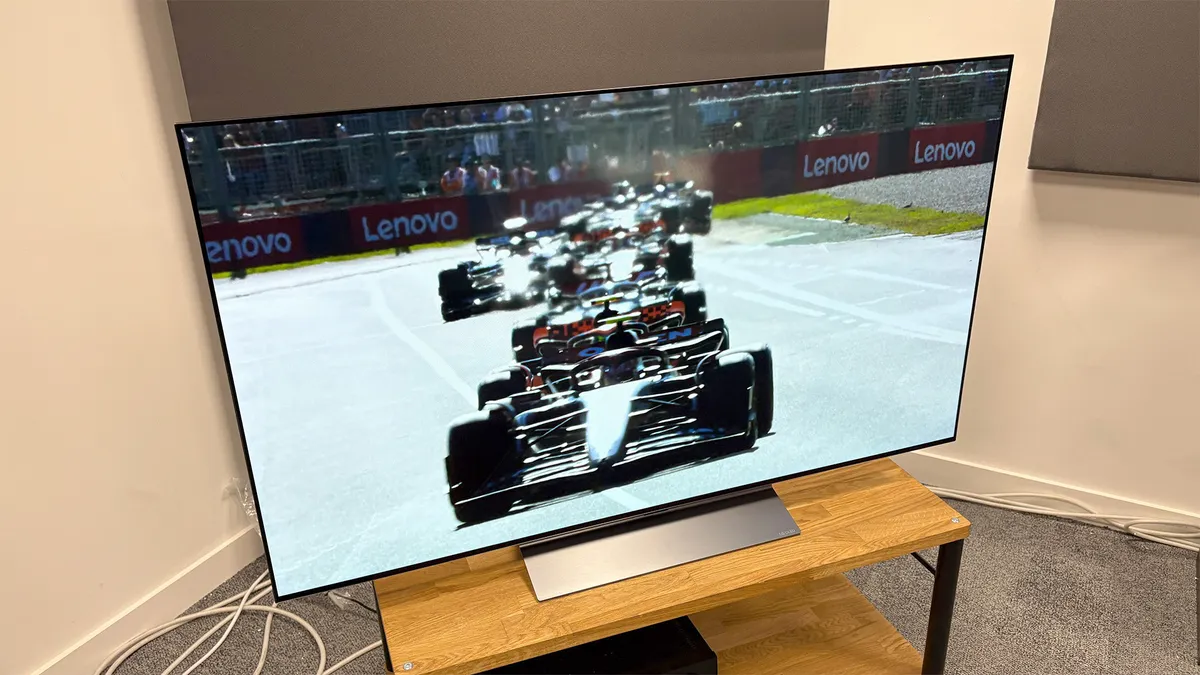


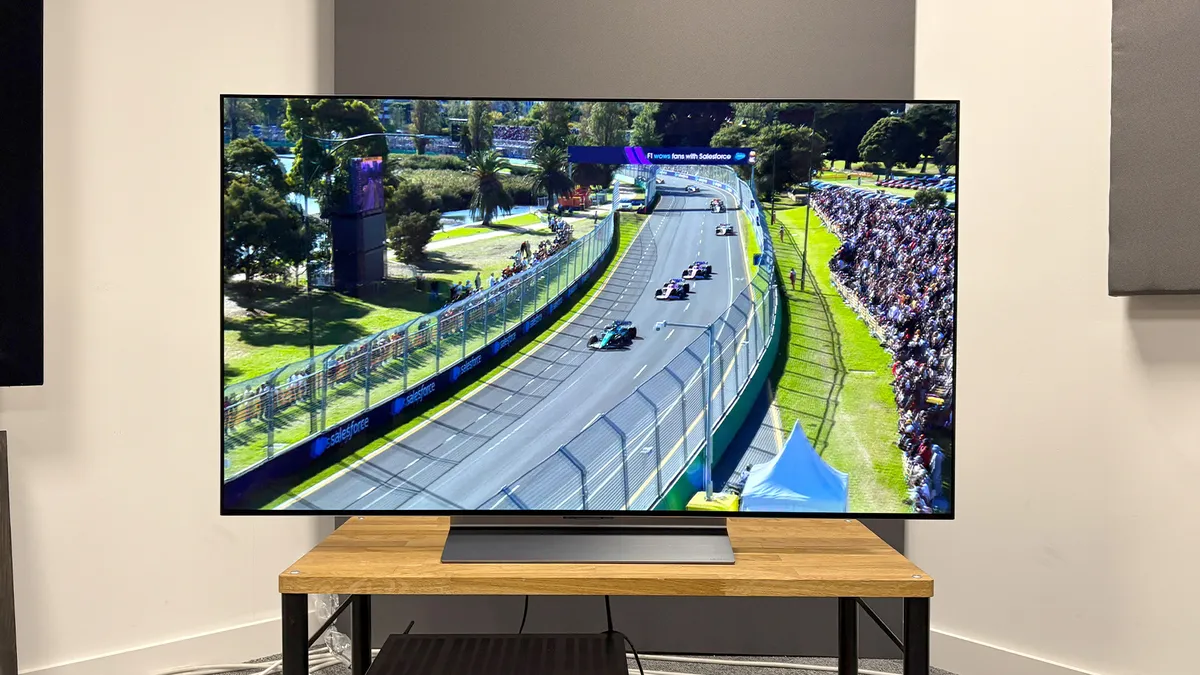
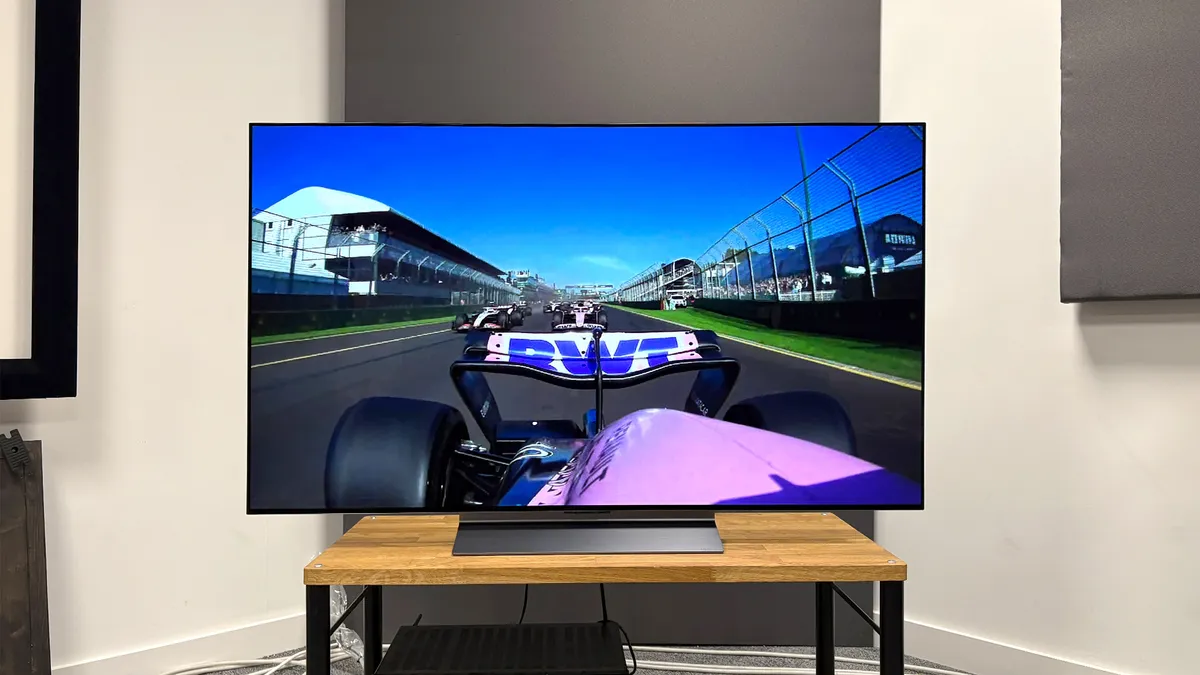
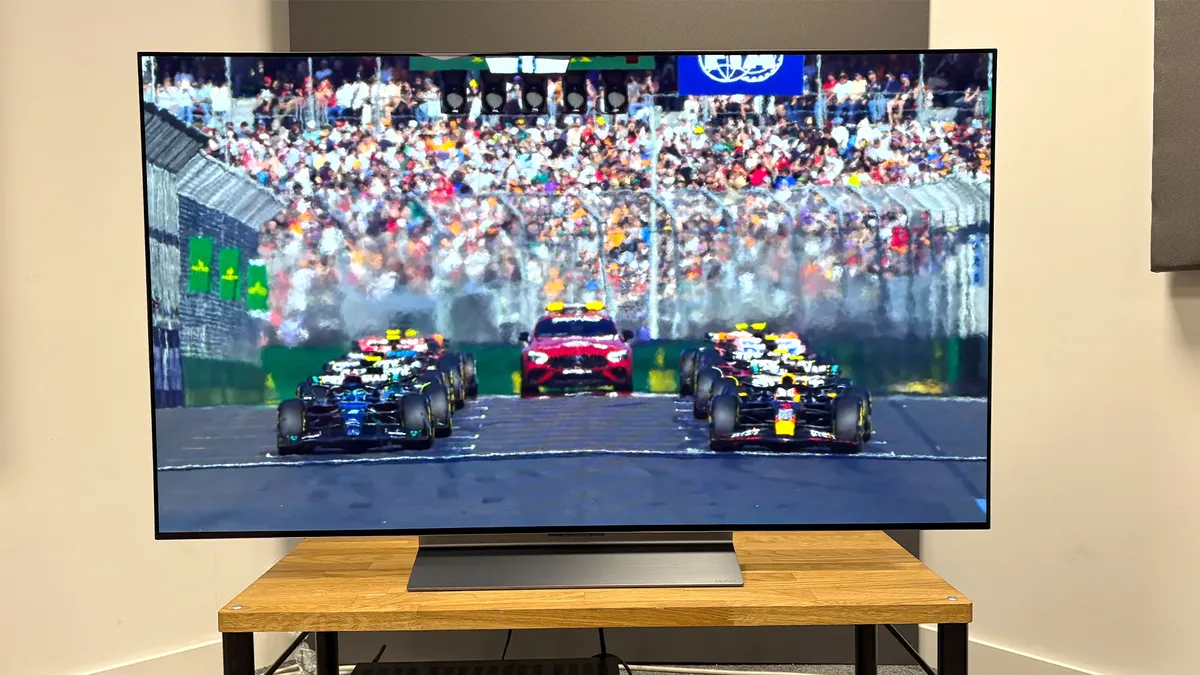


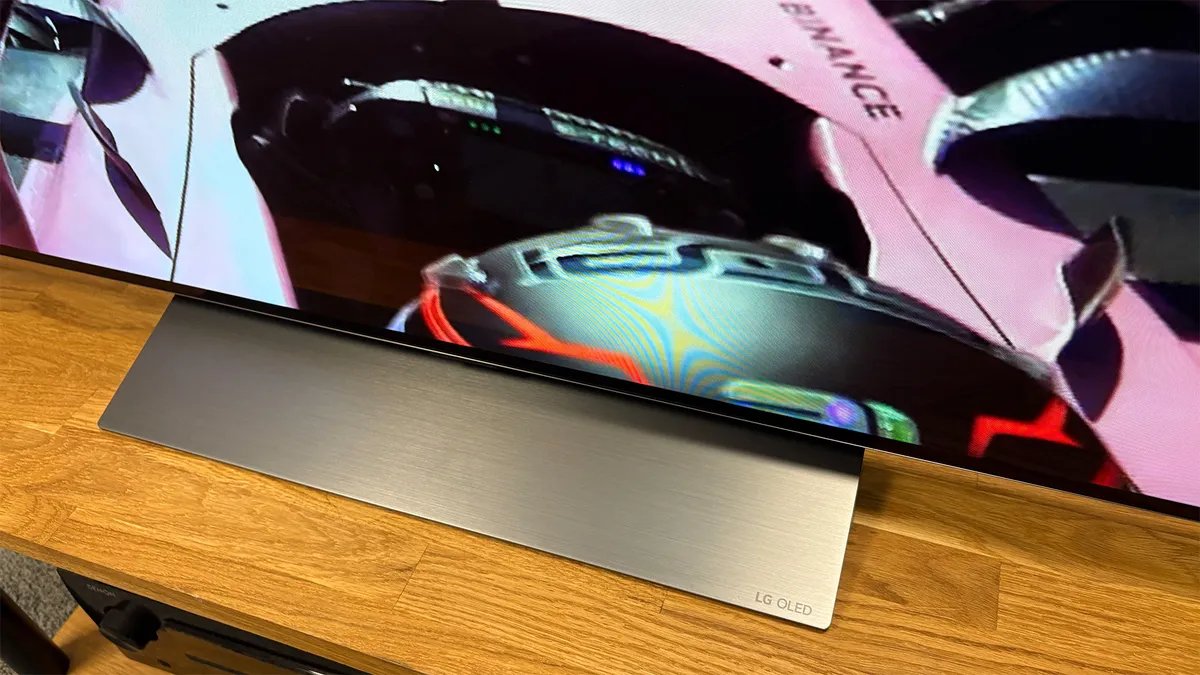
LG C-series TVs have long been the go-to for gamers, and the Award-winning C5 is no different. It offers great gaming specs (four HDMI 2.1 ports, Dolby Vision game mode, VRR and ALLM) along with plenty else besides. If you want a gaming TV but one that's also great for movies and TV shows, the C5 is the best all-rounder you can buy.
On paper, it's not much of an improvement on the C4. The picture is a bit brighter, and there are some new AI-focused software features. But in practice, there's a lot more to it.
Not that you'd know it to look at it. It bears an uncanny resemblance to every C-series TV since the C2 in 2022. But it's nice and slim and very easy on the eye. The feature set too is almost unchanged from its predecessor's, although it benefits from LG's latest Alpha 9 Gen 8 processor, which unlocks some AI-focussed features.
LG's webOS 25 too is very similar to the previous year's iteration, but that's no bad thing, packed as it is with streaming apps. Gamers also get the Xbox app, which lets you stream console-quality titles straight to the TV – you'll just need a Bluetooth controller in order to play.
The picture might not be huge strides ahead of the C4, but it is an improvement, and that should be recommendation enough. Colours are rich and punchy, while low light colour volume is very good.
Skin tones too are excellent. Watching Blade Runner 2049, "Both Ryan Gosling and Dave Bautista are presented with lively-looking skin tones, with a touch more red to their cheeks that makes all the difference," we wrote in our LG C5 review.
It fares well with regards to solidity, too. Subjects stand out against the background, and edges look sharp but never overdone.
The extra brightness is evident, especially when watching Pan, which has been mastered to 4000 nits. "The centre of each floating bubble of water glows with a vibrant greenish-blue hue, and the sunlight shimmers through the ship’s sails, illuminating the fabric patchwork to striking effect," we wrote.
Motion is free of any judder or stutter, and the set strikes a fine balance between looking natural and effectively combating any noticeable hitches.
Sonically, it's less positive – you will find much better-sounding TVs in this list. But considering that serious gamers will add a soundbar (made easier by the inclusion of four HDMI 2.1 ports as you won't have to sacrifice a console socket), this is maybe less important.
Our verdict? "Merely fine". Voices are clear and have a decent amount of warmth, but there's a lack of upwards projection, and the low-end heft is missing. Still, don't let that put you off what is undoubtedly the best all-round TV for gamers.
Read the full LG C5 (OLED55C5) review
Attributes | Notes | Rating |
|---|---|---|
Picture | Stunningly bright, sharp and solid, yet always natural looking | ★★★★★ |
Sound | Fine, but you will want a soundbar | ★★★☆☆ |
Features | Flawless gaming specs and a stacked choice of apps | ★★★★★ |
Best cheap gaming TV


Gamers on a budget will love the TCL C7K (known as the QM7K in the US). It feels like it should cost a lot more than it does, and gamers will love the anti-reflection treatment on the screen – that means you can see the action clearly when playing on a sunny day.
It also has a tidy central stand that keeps your cabling neat and tidy. Handy if you have multiple consoles hooked up.
This Mini LED TV has 1008 local dimming zones and TCL's AiPQ Pro processing, which combine to give you bright, punchy HDR peaks alongside deep, neutral blacks, with minimal haloing around highlights. That's impressive for a backlit TV.
There's an awesome amount of shadow detail, which will improve low-light games no end. Colours are excellent, with the Standard preset managing to be bold and cinematic but never garish.
"In its Standard picture preset, colours across a huge spectrum look radiantly beautiful, combining vivid intensity with a level of blend and tone subtlety that feels too good to be true on a TV as affordable as this," we wrote in our TCL C7K review.
Native 4K pictures are detailed, and even HD images look pretty great, thanks to the TV's upscaler adding density without exaggerating noise or unnaturally sharpening edges. Motion is nice and fluid.
As for the features, it's veritably bursting. Gamers benefit from 4K/144Hz, VRR (including AMD FreeSync Premium Pro), ALLM, a low-latency Dolby Vision Game mode, and a handy Game Bar. The only disappointment is the slightly meagre two HDMI 2.1 ports (one of which doubles as an eARC port), so you may need to do some port switching if you have multiple consoles.
The Google TV operating system is well stocked with streaming apps, and the TV has audio by Bang & Olufsen, which is clean and detailed, though a little light in the bass. But with the saving you make on this bargain TV, you might be able to shell out on one of the best soundbars to complement the visuals.
Read the full TCL C7K review
Attributes | Notes | Rating |
|---|---|---|
Picture | Bold HDR, deep blacks and impressive consistency for the price. | ★★★★★ |
Sound | Clean and detailed, but as with most built-in TV speakers, light on bass | ★★★★☆ |
Features | Strong gaming support, Google TV smarts, and two HDMI 2.1 ports | ★★★★☆ |
Best small gaming TV


If space is at a premium, this is the gaming TV for you. It's 42 inches of pure OLED brilliance that will liven up any bedroom or smaller lounge.
It's slim and light and easy to get into position, so you could happily move it to another room should the need arise. The feet are situated quite low though, so you'll need to pick a soundbar carefully. And the Magic Remote does feel a little dated.
There's nothing to complain about regarding the features. It has four HDMI 2.1 ports (which plenty of much bigger, much pricier TVs can't match), giving you access to 4K/144Hz (and the more console-friendly 4K/120Hz), VRR and ALLM, plus a Dolby Vision game mode and excellent HGiG implementation. Gamers, you're in for a good time.
The latest version of webOS is slick, and runs all the major streaming apps without a hitch.
And the picture? Exceptional, especially given the size. Whack it into Filmmaker mode, and you're treated to a wonderfully sharp and detailed presentation. "The TV’s slightly warm colours and solid peak brightness levels create a truly immersive experience despite the screen’s small size," we wrote in our LG C5 (OLED42C5) review.
The contrast is great, with blacks appearing almost imposingly deep and unfathomable, while the image's crispness and clarity makes it feel bigger than it is. Motion is handled with aplomb, while HD upscaling preserves detail while boosting the clarity.
Again, the sound is a letdown. While it's clear and balanced, it's lacking in the low end. We would definitely add a soundbar, especially to make games more atmospheric.
Read our full LG C5 (OLED42C5) review
Attributes | Notes | Rating |
|---|---|---|
Picture | Punchy, bright and very impressive for the size | ★★★★★ |
Sound | Lacking in the bass department | ★★★☆☆ |
Features | Flawless gaming specs | ★★★★★ |
Best premium gaming TV


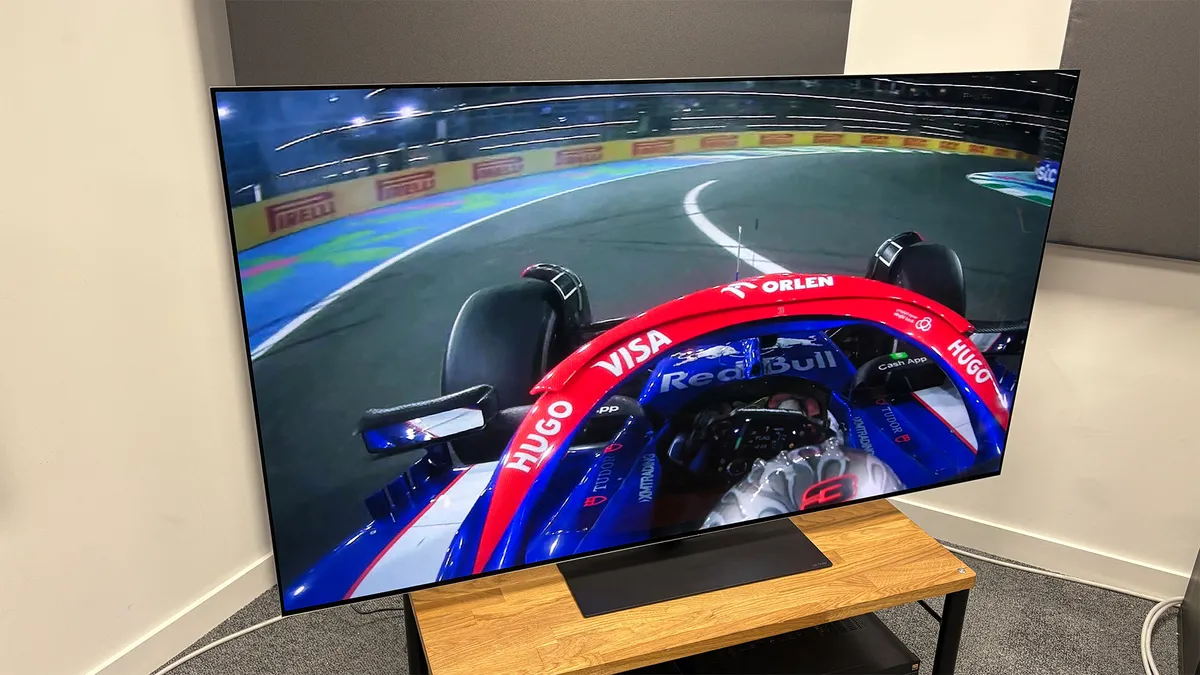


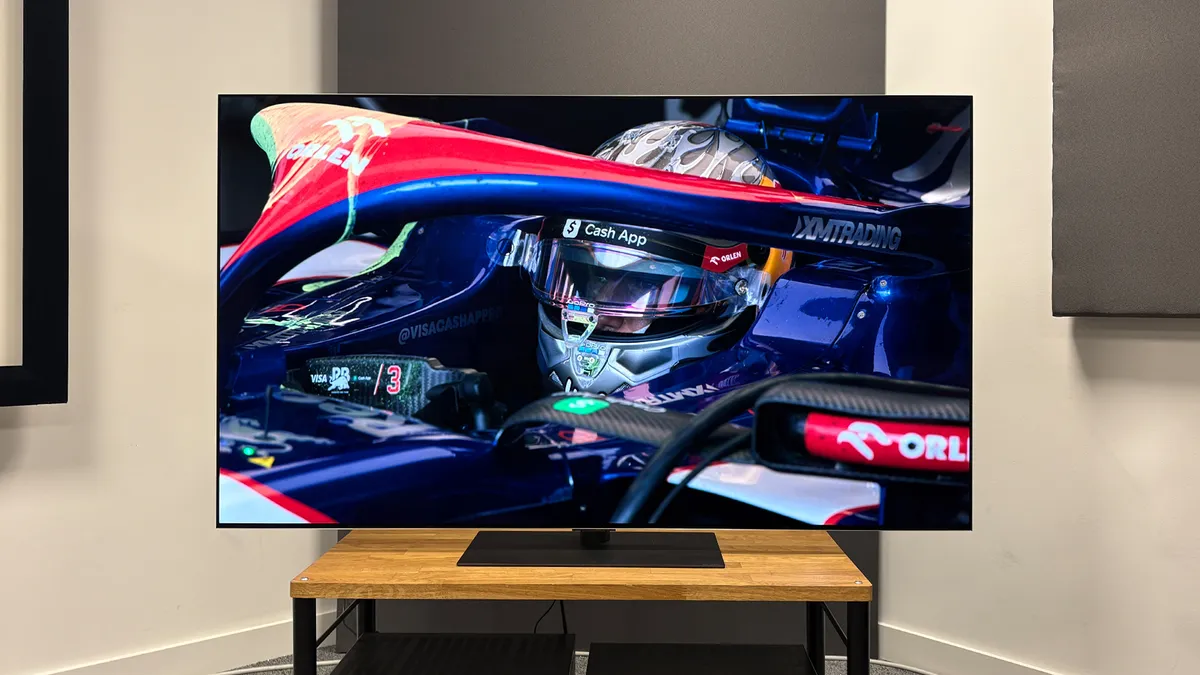


For the ultimate, no-expense-spared gaming TV that's also excellent at handling movies, the 65-inch LG G5 is the one to go for.
Its Primary RGB Tandem OLED panel tech increases the brightness while also improving colour accuracy and volume, especially during tricky low light scenes. And it works just as well for games as films: during our testing, streaming games on the Xbox app were just as full of detail and bright, spot-on colours as our test Blu-rays were.
Add to this its flawless gaming specifications, which include four full speed HDMI 2.1 inputs, Dolby Vision gaming HDR support and the ability to play games at 4K/165Hz and it becomes an easy recommendation. Hence our reviewers’ conclusion:
“It ticks every box we look for in a five-star TV and represents one of the biggest jumps in OLED picture quality since the technology first emerged as a real contender roughly a decade ago,” we wrote in our LG G5 (OLED65G5) review.
Just be warned, its audio is distinctly middling, even by TV standards. You will need to budget for a price appropriate soundbar – we’d recommend the Sonos Arc Ultra – if you want a truly immersive gaming and movie experience.
Read our full LG G5 (OLED65G5) review
Attributes | Notes | Rating |
|---|---|---|
Picture | Bright, punchy and responsive | ★★★★★ |
Sound | Middling audio mean we recommend getting a soundbar too | ★★★☆☆ |
Features | Flawless gaming specifications and app support | ★★★★★ |
Best Sony gaming TV


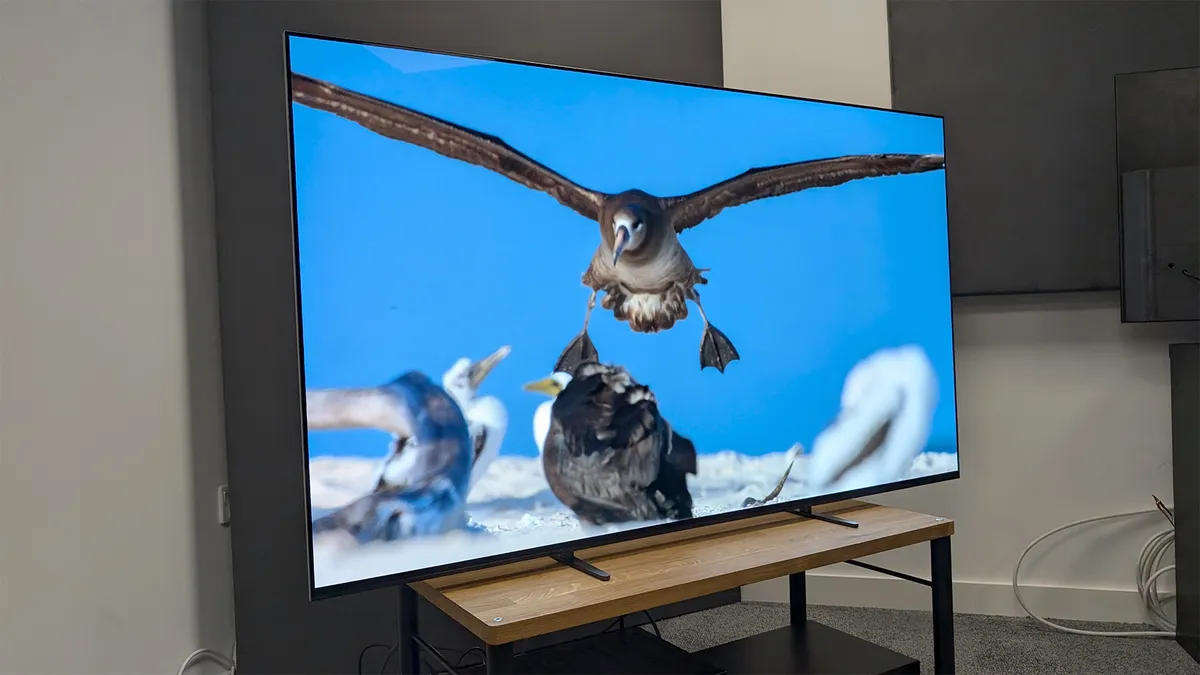


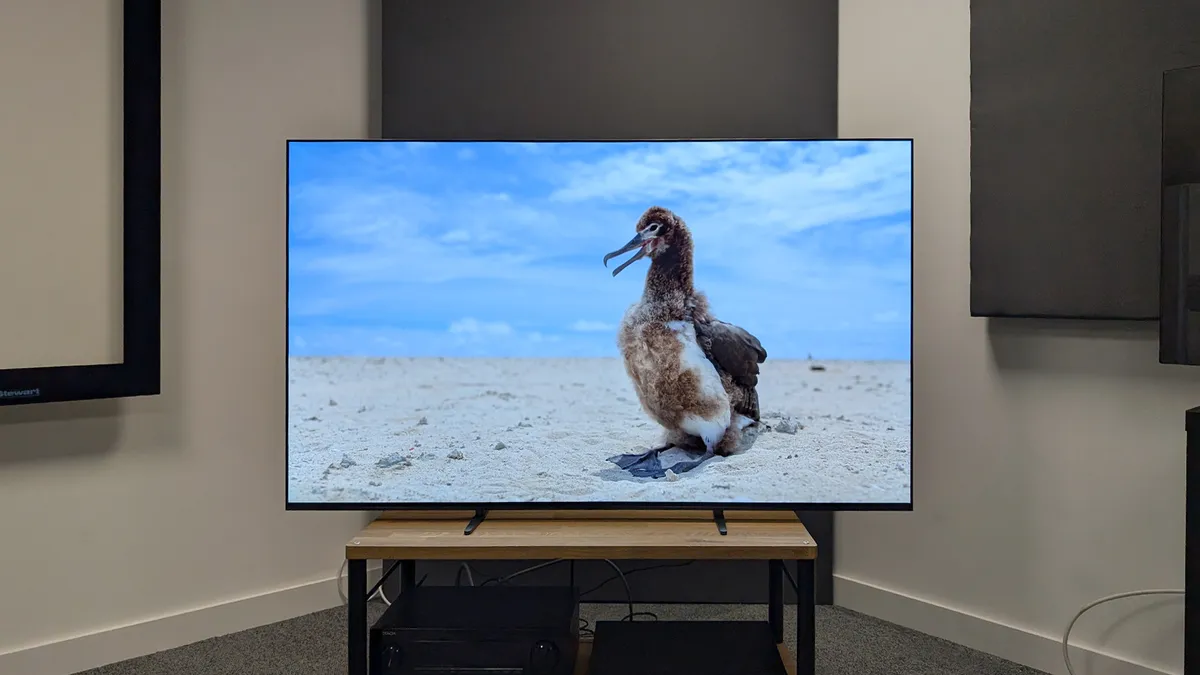


The Bravia 8 is a TV with big shoes to fill as the successor to the What Hi-Fi? Award-winning Sony A80L from last year. Thankfully, having put it through its paces against its predecessor and arch rival, the C4, we can confirm it’s a fantastic gaming TV, especially for PS5 owners.
Featuring a base OLED panel, the key selling points are its stellar picture quality and best in class (by TV speaker standards) audio.
If we were going from a raw picture-performance metric the Bravia 8 would be higher on this list. Whether for the incredible black level detail that will make any horror title shine or the wonderful peak bright segments of our tried and tested Pan test disc, the Bravia 8 delivered an authentic but vibrant and immersive picture that delighted our testers.
The TV’s atypical sound system, which uses Sony’s proprietary Acoustic Surface Audio+, is also the best we’ve experienced on a TV recently. This uses under-screen actuators, rather than traditional speakers, to create a virtual surround sound. During testing we found that, while Sony has undeniably had to sacrifice low-end heft for greater control, the system works a treat, delivering balanced audio with a suitable amount of space between each element of the soundstage.
This lets dialogue sound much better separated and audible over background noise than rival sets. For gamers, it also does a good job of giving the audio a sense of direction, letting our testers better hear where gunfire and the like was coming from on Atmos/surround-sound capable titles.
So why isn’t it higher on the list? That’s because for gamers specifically it has three minor issues.
First, the Bravia 8 only has two HDMI 2.1 inputs, one of which doubles as an eARC. So if you have two current generation consoles and a Dolby Atmos soundbar, you will have to do a lot of cable swapping – which is especially annoying as it has feet rather than a swivel stand mechanism.
Secondly, its max refresh rate is 120Hz, rather than 144Hz – though being fair, this will only be a problem for PC gamers.
Third, it isn’t available below 55-inches. So if you want to use it as a PC monitor or in a bedroom or study it’ll likely be too big. But even with these caveats it’s still a fantastic OLED TV and one well worth considering if you’re a Sony fan.
Read the full Sony Bravia 8 review
Attributes | Notes | Rating |
|---|---|---|
Picture | Wonderfully immersive | ★★★★★ |
Sound | Impressively atmospheric sound | ★★★★★ |
Features | Good, but not best in class for gamers | ★★★★☆ |
Best Samsung gaming TV


It's not just LG that makes superb TVs for gamers – Samsung does too. Behold the S95F, which boasts four full-bandwidth HDMI 2.1 sockets, all of which support signals up to 4K/165Hz, plus VRR and ALLM. It can also stream games using the built-in Tizen operating system. Samsung's Gaming Hub comes with the Xbox app preinstalled, while the TV is certified Nvidia G-Sync Compatible for smoother PC games.
It's basically a games machine that's also a TV.
It's also one of the best looking TVs of recent years, thanks in no small part to the One Connect box – a separate box that houses all the connections, power and processing, and connects to the TV with a single cable.
The screen's anti-glare coating is very effective, and handy for playing games on a sunny day. This is also helped by the TV going 30 per cent brighter than its predecessor, the S95D.
Samsung's NQ4 AI Gen 3 processor brings the AI Upscaling Pro feature, which sharpens up fine details while removing imperfections. While the Tizen operating system could be more user friendly, it does have all the streaming apps you could need.
In Filmmaker mode, the colours are stunning. Add the high level of overall brightness, and you've got an image that really pops, especially with a naturally bright film like Spider-Man: Into The Spider-Verse.
"Kingpin’s dimension-melding machine springs into life in gloriously vivid fashion, and the explosion that follows is dazzling in the best possible way," we wrote in our Samsung S95F (QE65S95F) review.
Skin tones do appear a bit redder than they should, though this is only noticeable when viewing side by side with a rival TV, and it does add to the picture's vibrancy when viewed in isolation.
Colours are consistent from dark to bright within the picture, and the sharpness and detail are off the scale.
Sonically, the S95F packs a surprising amount of bass. The tonal range is even, and sound extends way beyond the confines of the TV's frame. Crank it up, and you do get a bit of distortion, unfortunately, so we would recommend investing in a soundbar for movies and games alike.
Read the full Samsung S95F (QE65S95F) review
Attributes | Notes | Rating |
|---|---|---|
Picture | The best we've seen on a Samsung for both movies and games | ★★★★★ |
Sound | Good, but some fuzz during bassy scenes, and it is quiet | ★★★☆☆ |
Features | Excellent gaming support | ★★★★★ |
Also consider
LG C4 (OLED65C4)
The 65-inch C4 might not be quite as good as the C5 on the main list, but it recently dropped to an all-time low price, so is a great choice if you want a big gaming TV but are strapped for cash.
Amazon Fire TV Omni QLED (50-inch)
If you’re on a very strict budget that can’t stretch into Mini LED territory, then the 50-inch Amazon Fire TV Omni QLED is worth considering. Though its refresh rate caps at 60Hz, the inclusion of VRR support is atypical on a TV at this price. During our tests, though not perfect, this makes it the best gaming TV at this sort of level.
Sony Bravia 9
If you want a super-premium gaming experience but don't fancy an OLED, the Bravia 9 could be the TV for you. It goes significantly brighter than even the best OLEDs, particularly when said brightness is screen-filling (a big explosion, perhaps), and it has two HDMI 2.1 sockets that support all of the latest gaming features.
Philips OLED809
If the LG C5 doesn't quite tick all your boxes and you only have one console to connect, we'd recommend checking out Philips 2024 step down OLED (if you're in the UK or Europe). It has the same 144Hz refresh rate, a useful game bar and the firm's custom Ambilight bias lighting. The latter will delight any RGB fan...
How to choose the best gaming TV
Which gaming features you need to look out for depend a little on which of the current-gen consoles you plan to plug into your TV.
Both the Xbox Series X and PS5 support 4K/120Hz gaming, which translates to smoother graphics at full resolution, while that’s also boosted by the presence of Variable Refresh Rate (VRR), which matches the TV's refresh rate to the frame rate being output by the console in real-time. Auto Low Latency Mode (ALLM) is simpler: it just means that the TV will automatically switch to its 'game mode' to reduce input lag when it senses a game signal from your console, while HGiG generally results in a more accurate HDR picture with deeper blacks and more detailed highlights. Only the Xbox has Dolby Vision gaming, so if you own a PS5 you don’t need to worry about that one.
None of these are essential features, but they will help your games to look as polished as possible, so choosing a TV that also supports them is wise if you’re going to be using it to play a lot of games.
Whether all of these standards are fully supported also depends on which HDMI port you use. They require the extra bandwidth offered by HDMI 2.1, so if you’ve got more than one games machine to connect to your TV, make sure it has enough suitably-specced HDMI sockets for all your gear – and bear in mind that one of them will probably be taken up by your soundbar.
Things get a bit more complicated if you’re a PC gamer. Many of the technologies mentioned above are supported by some graphics cards but you also have even higher refresh rates, custom resolutions and ultra-widescreen ratios to consider, which is why many PC gamers prefer monitors to TVs. This guide is primarily aimed at current-gen console gamers.
With all consoles you should be looking for a TV with low input lag, which dictates how long it takes for your button presses to be reflected as on-screen actions. Lower is better, but anything below 40ms will be imperceptible to almost all gamers, and 20ms or less is lightning-fast.
Finally, but very importantly, you also want a TV with excellent core picture quality: sharp, bright, with excellent blacks and vibrant, accurate colours. Arguably, those elements are more important than the specs mentioned above, which should really be considered the icing on the cake.
How we test gaming TVs
To put it plainly, manufacturers aren't always as honest or forthcoming about gaming specs as they might be, so we ensure that we test every TV to find out whether it supports the next-gen specs we're looking for and whether it does so properly and effectively. We also measure input lag ourselves and don't simply reprint the figure given by the manufacturer.
But specs only tell half the story, so we also test each TV's real-life performance with a number of games from a number of genres, on both the Xbox Series X and the PS5. Here, we're not only making sure that the TV lives up to its spec sheet, but also that it delivers the core picture quality we're looking for, from sharpness to responsiveness, contrast to colour vibrancy.
For example, it needs to have the punch and saturation to do justice to brighter, flashier games such as Astro's Playroom, but also a natural balance that doesn't oversaturate tonally subtler blockbusters such as Elden Ring.
We're also testing the sound here: while most gamers will (and should) connect their TV to a dedicated sound system (such as a soundbar) or their console to a gaming headset, there are those who will rely on the in-built speakers, so we need to ensure those deliver a clear, spacious and engaging sound.
All of our testing is comparative, so every gaming TV is compared side-by-side with the best 4K TV for gaming at its size and price, and every test we conduct is collaborative, so no one member of the What Hi-Fi? team rates a product in isolation. The end result is a completely unbiased, exhaustively thorough review.
Gaming TV FAQ
Do you need HDMI 2.1 to game?
If you have a current generation PS5, Xbox Series X/S games console or gaming PC with a modern GPU, you’ll need an HDMI 2.1 input to take full advantage of their next-generation features. The biggest of these is the ability to play games at high refresh rates. But to do this the TV will also need a high refresh rate panel. Traditionally TVs have been locked to 60Hz, but since the latest consoles from Sony and Microsoft launched, many sets can now go up to 120Hz. The benefit of this is that it lets games run at higher frame rates, making animations smoother and games generally feel more reactive by reducing the delay between each new frame/image being shown. The downside is that outside of LG and some Samsung TVs, most sets only have two HDMI 2.1 sockets, one of which doubles as an eARC input. This means you can’t have more than one current generation console connected alongside an Atmos speaker system or soundbar as the latter requires eARC to run.
Is OLED or LED better for gaming?
OLED TVs are a common sight at the top end of the market, and as a result, they are more likely to have all the features and connectivity you need to take full advantage of the PS5 or Xbox Series X/S’ features – though this is not a given, especially if you’re buying a refurbished older model. But that doesn’t mean an OLED TV is always going to be better than a competing LED-backlit LCD in every area. The caveats here are largely the same as OLED vs LCD in general. OLED offers deeper blacks due to the way it charges individual pixels, as opposed to a full backlight, to create images. But we’ve seen plenty of great LCD sets pass through our labs that deliver better value for money and beat OLEDs in certain areas, like audio performance and max brightness. This is why you should always do your research, even when paying top-dollar for an OLED set.
Is input lag a problem on gaming TVs?
Input lag (sometimes also referred to as input latency) is a key annoyance that can ruin any gaming experience, especially ones where reaction time is key. The term refers to the amount of time that passes between an electrical signal being sent and the corresponding action being enacted. In the case of gaming, this refers to the delay between you enacting a command on your gamepad and it playing out on screen. Having checked TV input lag times for many years, while they have improved, it can still be a problem on certain sets – which is why we still test for it whenever we review a TV.
Should I get an 8K TV for gaming?
Both the PS5 and Xbox Series X can handle 8K in theory, but neither has the feature enabled at this point, and Sony has even removed the logo from the PS5’s packaging. The current focus is more on higher frame rates, with higher resolutions potentially coming later. Even then, native 8K gaming seems unlikely. It's broadly agreed that neither console has the processing power to run blockbuster games at that resolution, so there’s no real argument for buying an 8K TV now. Such sets will likely be much, much more affordable by the time 8K gaming becomes a serious concern – assuming it ever does.
Recent updates
- 29th May 2026
We've culled five TVs (LG OLED42C4, LG OLED65C4, Amazon Fire TV Omni QLED (QL65F601), TCL 65P755K and Samsung QE65S95D) from the main list as they were out of date. In their place come the LG OLED55C5, TCL C7K/QM7K, LG OLED42C5 and Samsung QE65S95F. We also added the LG OLED65C4 to 'Also consider' because of a recent price cut. - 28th July 2025
42-inch LG C4 copy rewritten to reflect how it compares to the newer C5 and the LG G5 added as the best premium gaming TV. - 11th March 2025
Removed the TCL C845K due to lack of availability and added the TCL P755K. Also removed the TCL C745K from the 'also consider' section and added the Sony Bravia 9 and LG C5. - 24th September 2024
LG C4, LG G4, Sony Bravia 8 and Samsung S95D added as entries. - 25th July 2024
Simplified the how to choose section and added a new entry about 8K to the FAQ. - 25th June 2024
Added the LG C4 as 'best 2024 gaming TV' and the LG G4 and Samsung S95D as 'also considers'. - 13th March 2024
Updated to feature Also Consider, FAQ sections and updated entries referencing new reviews.
- Looking for more of an all-rounder? These are the best TVs currently available
- Here are the best cheap TVs for those on a tight budget
- Best gaming TV deals: big discounts on 120Hz TVs for PS5 and Xbox Series X
- If you're still torn on which console to buy, check out our PS5 vs Xbox Series X shootout
