
How do we get more young people into hi-fi? It’s a question numerous audio engineers and What Hi-Fi?'s team of experts have pondered for many moons.
The answer is tricky to nail down because, as Bob Dylan famously sang, the times are changing, so what worked for one person, even a few years ago, may not be the silver bullet we need to help spread the gospel of good sound right now.
Which is why, when AudioQuest unveiled a new version of its DragonFly portable DAC at High End Vienna 2026 – a device that was the gateway to better sound and start of a lifelong hi-fi journey for many people when it launched in 2012 – I couldn’t resist the urge to chat with its director of marketing, Stephen Mejias, to see if the brand has similar aspirations for the device with Gen Z.
To my surprise, for the DragonFly specifically, the answer is no. But AudioQuest does have some thoughts on how brands should approach the challenge.
A happy accident in the early 2010s
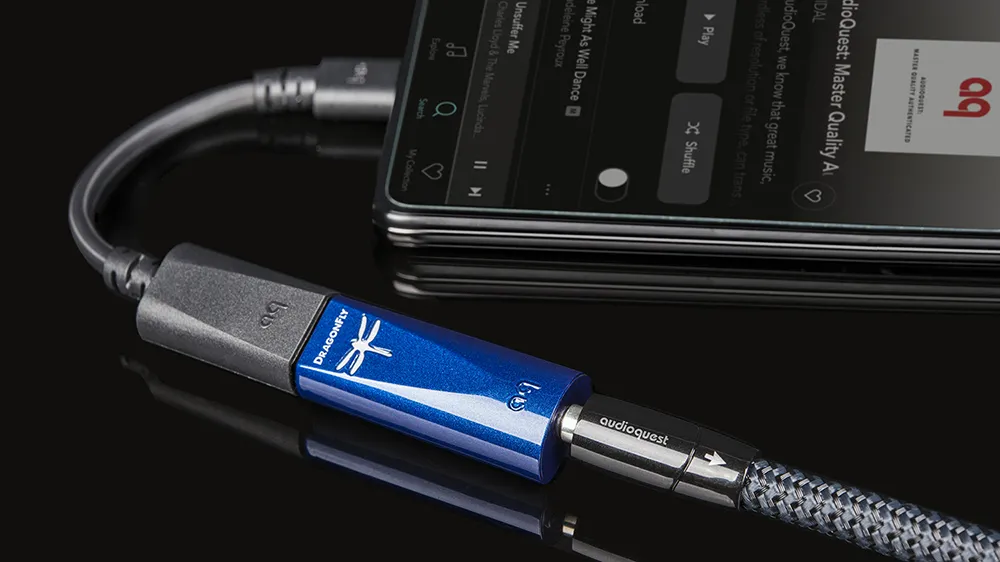
Talking to What Hi-Fi?, Mejias openly told us the original DragonFly’s success with younger listeners was more of a happy accident than an intentional effort.
“[We] are thrilled that DragonFly has reached as many people as it has, but we’re also realistic. We are not actively trying to attract younger music fans with any of the products we develop, but we’re certainly not trying to turn them away either. We want to create products that help as many people as possible enjoy their music, movies, and games to the greatest extent possible,” he said.
“Occasionally, as has been the case with DragonFly, that will mean reaching a relatively younger audience. We love that. But any success in reaching younger listeners was not so much the plan as it was a wonderful by-product of a job well done by everyone involved.”
He added this has not changed with the new DragonFly Copper, which the brand has designed with the same performance-per-pound (or dollar) focus.
“AudioQuest products are designed to represent outstanding value and performance within the context of their prices, and we do endeavour to create products that will appeal to anyone interested in enjoying more immersive, more emotionally compelling listening experiences. [But] it would be disingenuous to say that we have a plan for attracting younger music fans.”
But it does have a hot take…

Despite not overtly focusing on attracting younger audiences, Mejias told us AudioQuest does have some theories about why so many hi-fi brands are struggling to attract Gen Z – and what can be done to change the situation.
The main issue is that traditional hi-fi, which involves large racks and lots of excess space for products, according to Mejias.
“Young people are relatively active, their time is limited and spent doing multiple things at once [...] they are not just stopping all other activities to listen to music,” he told us.
“[They] do not have a lot of space that they control – that is, they don’t yet own their own homes, but rather either share an apartment or flat with roommates, live in dorms at school, or at home with their family – and they haven’t fully established themselves in the workforce. All these very important factors are in direct opposition to a pastime such as audiophilia that demands dedicated time, a controlled environment, and often lots of money.”
Which is why he thinks more affordable, portable, or at the very least plug-and-play systems are more likely to appeal to younger fans than traditional separates.
“The answer seemed clear to me then and remains so now: if we, as an industry, truly want to attract a younger audience, then we should make products that young people actually want to own, at prices they can actually afford, and that fit into their lifestyles,” he said.
“The fact that DragonFly is small, portable, works with mobile devices, makes an obvious and meaningful improvement to any music file played through it, is pretty to look at, fun to hold, and is relatively affordable does indeed make it attractive to a more diverse audience than, say, a pair of monoblock amplifiers and full-range loudspeakers.”
Mejias isn’t alone in his belief. US analyst firm Market Reports World, listed DACs, active speakers, and personal audio equipment as growing markets for the 18–34 demographic. Numerous traditional hi-fi firms have also cited systems, both active speakers and all-in-ones, as key growth areas. Cambridge Audio cited attracting younger music fans as a key reason it launched its new L/R Series of active speakers earlier this year.
Do you agree with Mejias? Let us know in the comments section below!
MORE:
These are the best DACs we have tested
We rank the best hi-fi systems
Our picks of the best wireless headphones

