In 1976, Steve Wozniak demonstrated his Apple 1 prototype computer a few months after he, Steve Jobs and Ronald Wayne founded the company; Peter Frampton released what would become one of the best-selling live albums in history; and JVC launched (and won) the video cassette format war against Sony’s Betamax with its VHS (Video Home System) player.
It was also a golden year for hi-fi – particularly in Britain – and not only because What Hi-Fi? arrived in newsagents for the first time, the debut (mostly black-and-white) issue claiming to provide the price of every piece of hi-fi equipment on sale in the UK.
Arcam and its debut A60 amplifier were born, KEF launched the first speakers to benefit from computer-aided design (CAD), and Pioneer released a new king in the ‘Watt Wars’ era with its SX-1250 receiver.
At that time, the main concerns of an electronics engineer were, according to Cambridge Audio’s head of engineering, Nick Brown, “analogue performance across a handful of inputs, whether the remote control worked across the room, and whether the packaging survived a drop test.” Amplifier design was, he says, already hard, but today it’s a different discipline entirely.
And the same can be said when it comes to wider hi-fi sources and electronics, loudspeakers, and audio-enhancing accessories that weren’t even necessary way back when. We asked several hi-fi brands to pick the technological groundbreakers that changed it all…
An expanding canvas of features and protocols

For Brown, the technological landscape has gone from balcony garden to sprawling arboretum, now that modern amplifiers must handle an array of analogue and digital connectivity, connect reliably to TVs, PCs, gaming consoles and Bluetooth devices, and sometimes incorporate networked and wireless technologies.
“Control might come via an IR remote, a Bluetooth remote, or a mobile app,” he adds. “Customers want sound profiles they can adjust. Regulators want the whole thing running in under half a watt in standby and waking up in seconds.
“Every one of those connections has to be tuned, verified and tested for consistency. Take eARC, for example: supporting it properly means testing against as many television models as we can get our hands on, because TV manufacturers implement the standard differently, and what works perfectly on one television can behave unexpectedly on another. The specification exists, but the real world doesn't always follow the rules.
“The knock-on effect across the whole development process is significant. Where product development once drew on a relatively small core team, it now pulls in software engineers, network specialists, UX designers, compliance experts and more – all working in parallel, all needing to get it right. Perhaps the most telling sign of where things have landed: our fastest-growing team right now isn’t electronics or software. It’s QA [Quality Assurance].”
Along Brown’s line of reasoning, it’s not one game-changing technology per se, but the nature of the game changing entirely. Not only has the hi-fi world expanded to accommodate the mushrooming features brought by digital and the internet, but it has also had to learn to play ball with the ever-expanding world of household electronics, ordinance and all.
Digital disruption on sound quality

Of course, the arrival and continual maturation of digital audio have played a pivotal role in how hi-fi has transformed not just logistically but also sonically in the past 50 years. QED engineer Jon Jeary highlights the Compact Disc as “the ultimate game changer” for democratising access to high-end hi-fi.
“Suddenly, a system costing only a few hundred pounds could potentially rival vinyl or reel-to-reel setups that had cost thousands just a few years earlier,” he says, recalling an experience he had between 1976 and the earliest years of the CD.
“The year What Hi-Fi? launched, I bought the latest Steve Miller Band album on vinyl,” says Jeary. “On the way home, the record warped slightly in the summer heat. Played on my father’s respectable and relatively expensive system – a Garrard SL75B, Trio KA2002 amplifier and Wharfedale Kit speakers – the first track on each side suffered audible wow, flutter and even a jump.
“Yet we still loved the music and accepted the limitations: pops, clicks, end-of-side distortion and a restricted soundstage. That skip simply became part of the song.
“Nine years later, I heard the same album on a friend’s Philips CD104 [player]. The difference was astonishing: no scratches or jumps, an inaudible noise floor, perfect stereo separation, negligible distortion and a ruler-flat frequency response.
“For the first time, I realised as a student I could realistically own a system capable of challenging my rich uncle’s prized Revox reel-to-reel setup.”
Digital audio formats and technology ushered in a different – and technically ‘better’ – sound, but their watershed innovation – network streaming – introduced problems of its own, and, according to Chord Company’s Patrick Mitchell, the quest to solve them has had a huge impact on the modern audio engineering landscape.
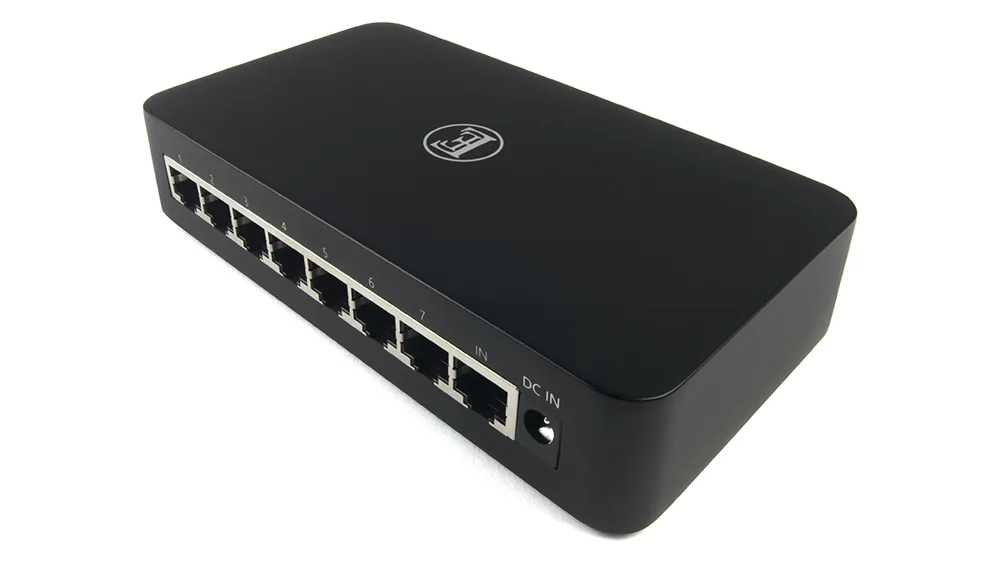
It has allowed hi-fi streaming to be the game changer it has become in the high-end space.
“Optimising a digital system has introduced a whole new set of environmental variables that simply didn't exist when we were spinning isolated discs,” says Mitchell. “When you introduce a network streamer, the audio system becomes physically connected to the broader domestic data network – an environment originally designed for office computers, smart TVs and home appliances; not delicate audio signals.
“Standard home networks are inherently noisy environments, and that hidden electrical noise can heavily mask the subtle details that make recorded music sound real.”
While hi-fi has always grappled with the detrimental effects of external noise, streaming has, Mitchell says, removed the natural isolation of physical media, which more or less has a self-contained playback loop.
He argues that in order to maintain audio quality in digital streaming systems, the network path needs to be treated “with the same care and engineering prestige traditionally reserved for premium analogue playback”.
For a cable company such as Chord, this has blown the windows wide open for creating devices that break that unhealthy electrical path and strive to reduce noise, such as network filters and switches.
Parts progression

While the same types of parts are by and large the same for analogue designs as they were 50 years ago, componentry has improved as techniques, materials and research have, and naturally you now have digital elements in the hardware mix.
“The list of improved parts and techniques is almost endless,” says Cyrus’s managing director, Nick Clarke, whose list of examples includes the use of phase change materials for heatsink bonding and a higher current handling in a given transistor package for an amplifier output stage.
For Jack Oclee-Brown, KEF’s senior vice president and chief technology officer, one specific part-progression stands out as particularly groundbreaking for the hi-fi market: the magnet.
Magnets are crucial elements of loudspeaker, headphone and phono cartridge design; they convert electrical signals into mechanical movement in speakers and headphones, and vice versa in cartridges.
“In 1984, a new type of magnetic material based on the element neodymium was developed, offering far higher strength than previous materials,” says Oclee-Brown, adding that neodymium magnets are still the strongest type commercially available today.
“Toward the late 80s and early 90s, neodymium magnets started to find their way into audio products and brought about a technical revolution. At KEF, we used this new type of magnet to allow us to miniaturise the loudspeaker tweeter, placing it at the centre of the midrange driver to create our famous Uni-Q driver array.
“Headphones could be made smaller, lighter and more portable; products like Apple’s AirPods could not exist without neodymium magnets. Whatever you might think of the sound quality, neodymium magnets allow tiny speakers to be buried inside our phones and tablets.”
Magnets in audio (and other industry) applications are also a ‘watch this space’ solution, says Oclee-Brown, who says that they need more research and innovation. “Neodymium magnet demand is rising year-on-year, and the search for greener and more sustainable alternatives is an important field that some companies, like Niron Magnetics, are already working on,” he adds.
From educated guesses to simulated trials

So we have the quantum leap from analogue to digital in how we consume and perceive sound, the many more features to engineer (and engineer around), advanced and innovative componentry, and the closer relationship to the wider technology of the home to accommodate.
But arguably just as significant are the ‘behind the scenes’ technological advancements that shape how audio design, engineering and manufacture look today.
In his 38 years as an audio engineer, during which time he has designed and built products for the likes of Audiolab, Arcam and Harman International, Nick Clarke calls out the impact of Computer Aided Design (CAD) as the biggest change.
“When I started in this industry [1988], there wasn’t any,” says Clarke. “We laid out circuits manually after sketching the idea on paper using black tape on a sheet of plastic at a 2:1 scale so that you had a chance of producing this by hand. This was then sent away and photo-reduced to a 1:1 master, from which the (usually) single-sided PCB was produced.
“There was no link to the mechanical parts of the product design, so that required a lot of work to ensure the PCB and the mechanics matched, and the components were large through-hole parts that were manually fitted and hand-soldered.
“The whole process was costly, labour-intensive, time-consuming and fraught with opportunities for something to go wrong, with absolutely no error checking other than either peer reviews, or building it, seeing what you had done wrong and going around the loop again.
“Today, you have extremely advanced CAD software for both the PCB and the mechanics, which link together in such a way with a vast amount of automated checks that it is virtually impossible to produce a PCB that has errors that would prevent manufacture or doesn’t fit in the casework.
“It is, too, like American mathematician and computer scientist Richard Hamming said: ‘The purpose of computers is insight, not numbers.’ Not only does the use of computer design allow for more accurate ‘doing’, but also more extensive experimenting.
“We can now use simulation tools for trialling circuit ideas or the thermal efficiency of heatsinks – tasks which in the past would have been very educated guesses at best or total blind alleys at worst,” says Clarke.
“It’s no substitute for clever ideas or innovative design, but they allow you to try a lot more things a lot more quickly and that collectively drives higher performance across products at every level of the market.”
Similarly, Peter Comeau, the IAG Group’s director of acoustic design for brands including Mission, Wharfedale and Quad, singles out the monumental impact of advanced measurement methodology and the arrival of simulation tools on speaker design.
“When I first became interested in loudspeaker design, as a teenager in the late 1960s, measurement typically consisted of hoisting a baffle high above the ground on a crane with a microphone suspended a yard or so from it,” Comeau remembers.
“Then, in the ’70s, anechoic chambers became more prevalent, and we had Bruel & Kjaer sweep [noise] generators and a pen graph response tracer to help view frequency response and harmonic distortion.
“Today, there’s a whole raft of measurement systems and software analysis and simulation to help, stretching from laser scanning of cones and domes to crossover software optimisation.

“Does this actually help us design better loudspeakers? The short answer is ‘yes’; we can make better diaphragms and motor systems, control cabinet vibrations successfully and simulate the power response of loudspeakers in rooms.”
Like Clarke, Comeau commends such technology’s ability to speed up prototyping and trialling, as well as facilitating a greater understanding of the problems involved in achieving good sound.
Despite that, however, he still champions what has, since and prior to 1976, been crucial to obtaining that end goal: using our ears: “The process of hours and hours of fine-tuning, experimentation and tweaking that is as relevant today as it always was.”
It hails back to Clarke’s point that, while technologies are advancing, they only work if, in his words, “you have the knowledge of how to use them and what they can do for you (and sometimes, more importantly, what they can't).”
The technological game has changed significantly in the past five decades, absolutely; but designer and engineer know-how remains at the heart of it all as much today as it was back then.
MORE: