If you told vinyl enthusiast John Smith in 1976, when the first magazine issue of What Hi-Fi? occupied coffee tables around the UK, that, in his lifetime, all of the world’s music could be accessed affordably at the touch of a screen and played without a cable in sight, he might well have asked what streets your dealer occupied.
Indeed, you would only need look at the cover of that first magazine side by side with What Hi-Fi?'s latest issue to see that the music and hi-fi landscapes have changed astronomically in the past 50 years.
Discussing those five decades’ worth of hi-fi evolution in a single 2000-word article might sound as ambitious as covering the history of Christianity in a 30-minute podcast. So, full disclosure, this isn’t that.
Instead, it’s the perspectives of some of the hi-fi industry’s longest-serving members on the biggest shifts hi-fi has experienced in their careers and lifetimes – and not just the many gains but also the losses that have occurred along the way.
Every album in your pocket
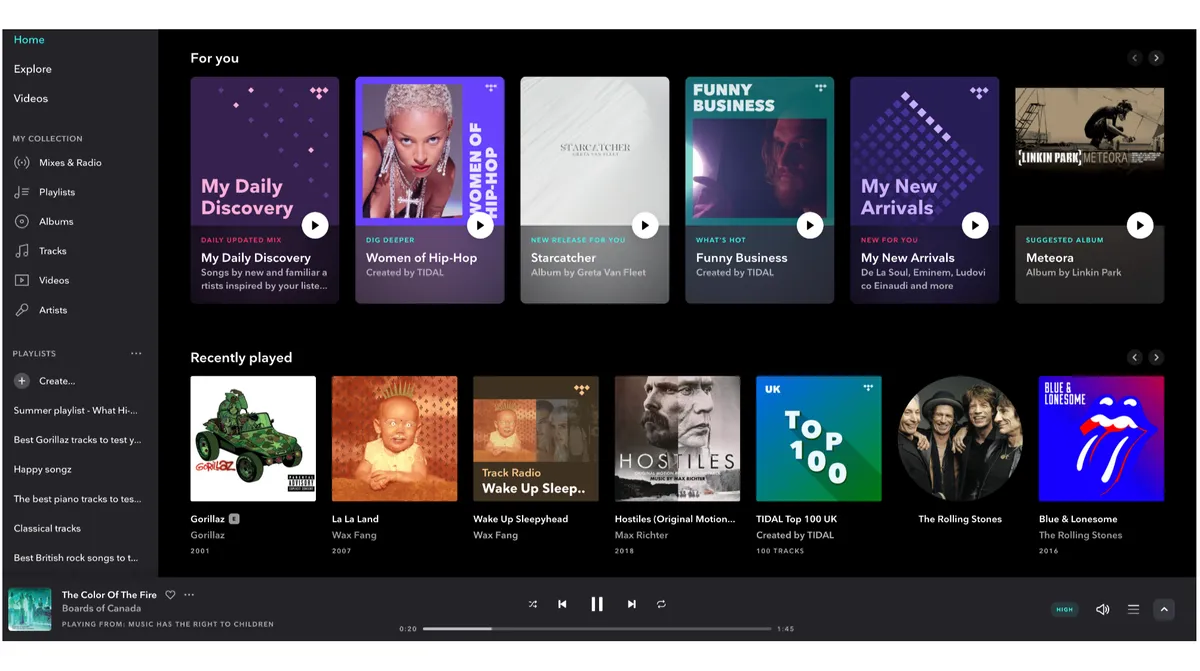
All hi-fi roads lead back to music, so it isn’t surprising that the astronomical change in how we consume it over the past five decades is frequently cited as one of the major causes behind, and indeed catalysts for, hi-fi progression.
“The last 50 years have seen 1000 songs fit into your pocket with the original iPod, and now more than 100 million available instantly,” remarks Steve Sells, technical director at Naim. “We can explore music so effortlessly these days – that certainly wasn’t the case back in the late '70s,” adds Alan O’Rourke, who founded Ruark Audio 40 years ago.
As it is difficult to imagine anything in the foreseeable future having as much omnipresent impact on life as the birth and evolution of the internet in recent decades, it is also hard to envisage something influencing the music world more significantly than streaming, although AI music creation will no doubt have a good crack in the coming years.
Eric Kingdon, who has spent over four decades at Sony, appreciates the modern coexistence of streaming and physical media, with today’s popularity of the latter somewhat a byproduct of the retro resurgence.
“Thanks to streaming and downloads, the doors have been blown open for people to experience and try new music,” he says, noting that some artists and recordings can now be remembered due to their renewed focus and attention.
“Any change which opens the ears of people to listen has to be a positive.” He points out that music fans are then going to music (vinyl) stores and interacting with and handling music.
Today’s retro revival and its promotion of interactive, tactile experiences is influencing not only music mediums (even CD is now experiencing a mini resurgence, it seems) but also product design, with touch surfaces and screens now somewhat making way for a return to ‘old school’ buttons and dials.
While the old (vinyl and analogue) fully and determinedly transitioned to the new (streaming and digital), has some back-pedalling since seen the industry now settle on a happy medium?
The social switch

That shift in music consumption media has impacted our interaction with it on a social scale. Fifty years ago, the act of listening to music was more deliberate, more limited. It was the choice between a few radio stations that didn’t necessarily cover all music genres, a weekly music television show like Top Of The Pops, and buying an album on vinyl.
Buying ‘a hi-fi’ was a financial and domestic decision akin to a sofa or telly, and an oft-planned listening experience between family and/or friends. It was listening to an album from beginning to end – an exercise that is now far from an everyday one for most, the decline of which has spawned the ‘album listening party’ community-promotional event.
It would soon start to become a more personal, insular experience as the Walkman encouraged private, portable listening, and today those kinds of encounters dominate our interaction with music. It’s not such an ‘event’; it’s everywhere, all the time, it’s short-form, and I couldn’t count on the What Hi-Fi? staff’s collective fingers how many times I’ve heard seasoned hi-fi hobbyists cite that change as “a shame”, or a phrase carrying similar sentiment.
Hi-fi has become more niche, existing on the sidelines alongside the headphone-wearing, portable speaker-owning masses of more convenient, accessible products. “Being a hi-fi enthusiast evolved into quite a lonely passion or hobby, certainly a very individual one,” says O’Rourke. “It became very insular and even nerdy.”
Flat-panel TVs arriving in the ‘90s arguably stunted hi-fi’s mass appeal further. “Music definitely lost its way a bit and became secondary for quite a while,” says O’Rourke, “with flat-panel TVs taking all the attention away from sound. People were happy to spend £6k on a 42-inch plasma TV, but spending that on a hi-fi system would seem crazy to many.”
That said, the Ruark CEO is seeing progress, arguing that the industry is now shifting to cater to that change by producing hi-fi that appeals to modern tastes and common budgets, and is now all the more sociable again for it.
“Now, it's probably more about hi-fi for the whole family, which is a bit like a radiogram being the centre of home listening again!” he says. “The market has moved towards making hi-fi more accessible and ensuring it has a wider-ranging appeal.”
We may not have come full circle – it isn’t back-to-back album listening on the sofa with mates, per se – but user- and domestic-friendly, high-appeal wireless speakers and systems are indeed encouraging social music listening again, whether that’s within the household or beyond it.
Hi-fi gains the computer

Naturally, we know more about psychoacoustics and the behaviours of materials than we did 50 years ago. There have been improvements in measurement tools and manufacturing processes, and technologies and materials that were once so costly that they were exclusive to high-end applications have become increasingly accessible, trickled down and experienced.
Software development is advancing, as is the hardware/computational power that facilitates that. Kingdon notes our deeper understanding of recording technology and technique, and the higher audio resolution we can now offer in both services and products. And, similarly, Arcam co-founder John Dawson acknowledges that “the advances in lossless digital audio across the signal chain – from studio microphone to point of delivery – have greatly improved overall sound quality”.
The technical ‘shift’ between the 1970s and today is both extensive and enormously valuable. “Five decades of steady technological progress have reshaped almost every aspect of audio design,” Sells puts it in a neat nutshell.
The direction many brains would’ve bolted towards in response to this article’s headline, however, would be the transition from analogue to digital. The ‘70s – the first full decade dedicated to stereo playback – was vinyl and turntables, reel-to-reel tapes and recorders.
Today, it’s cloud-based streaming and computer-based playback. Essentially, many of the talking points here exist within the giant technological and cultural gulf between them, created in what, contextually, was a very short timeframe. Dawson comments that “advances in the wider electronics industry, driven by the revolution in microelectronics and computers” have significantly improved product reliability and performance.
Actual, measured, objective performance… and perceived performance. Sells discusses how digital software has transformed how we perceive sound quality, too, with advances in DSP (digital signal processing) particularly allowing audio equipment to sound much bigger and deeper than its size would suggest.
“Where electronics once merely ‘matched’ speakers, ensuring compatibility in impedance and power, modern systems ‘know’ the speaker,” he explains. “DSP models the drive units’ behaviour in real time: it understands their mechanical limits, the music signal at any moment, the listening level and even the instantaneous position of the diaphragm.
“At low listening levels, its low‑frequency response can be intelligently extended beyond what the enclosure would normally allow. When that extended bass would exceed the driver’s safe limits, DSP anticipates the excursion and reshapes the signal to keep the driver within bounds, without audible distress. Crossover integration is equally precise, with minimal phase error and bit‑perfect time alignment between drive units.”
He also points out how certain technical hardware developments have literally changed how we perceive music. “Paradoxically, we have more ‘nothing’: silence,” he says. “Pre‑amplifiers, power amplifiers, and loudspeakers have been relatively low noise and low distortion for decades, but the overall noise floor of recording and playback systems has steadily fallen.
“In the 1970s, it sat around 70dB; by the 1990s, it approached 90dB, and today it has been pushed further still. Once noise falls below roughly 90dB and remains spectrally smooth, the auditory system adapts, and the noise itself can [with the right environmental factors] disappear from awareness.”
Casualty of change
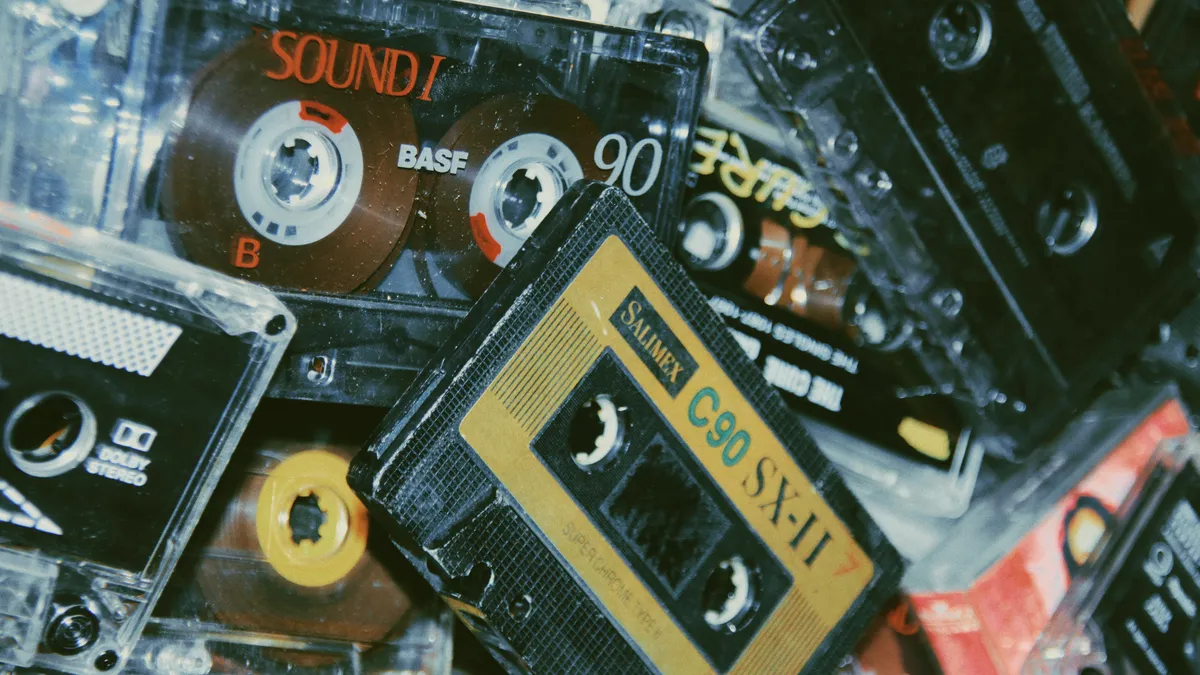
Expansive music discovery is one of streaming’s priceless gifts, and few would argue that generally having access to all the music on the planet for a little more than a tenner a month isn’t a blessing. But for all of its door-opening, the convenience of streaming has closed one that Harman’s Mark Hockey, who has represented brands such as JBL for over 30 years, fears will be closed forever: the traditional art of the mixtape.
“For the best part of three decades, the mixtape cassette was the only way to share music with friends, family and a possible new loved one – to present them with a lovingly prepared compilation that could, in some cases, have an encoded message hidden within the tracklist,” he says.
He explains how choosing the order of the tracks could convey that message, and that it was a skill to fit them just right on each side. You would need to source the desired tracks from your (or others’) collections, purchase the cassette (“‘normal’ for mates, chrome to show how much you care!”), balance the tracks’ tempo and pace, and even write the inset labels and perhaps design artwork for the cover. An art indeed.
“Every mixtape was a real labour of love, often completely unique. By comparison, sending a streamed tracklist mix only takes minutes to tick a few boxes and then ‘share’. This compilation might possibly carry the same sentiment, but the art of careful planning, time and uniqueness of a real mixtape may now be lost forever.”
Not a one-way street

Of course, hi-fi is, by its very nature, a compromise in that it cannot reproduce a recorded music signal exactly and is inherently impacted by the environment it operates in, but technological progression hasn’t prevented new compromises from being introduced, as one particular repercussion of digital audio shows.
“The advent of digital was not an unambiguous improvement,” says Sells. “It introduced a new family of distortions, often less sonically forgiving, and the subjective impact of their errors was underestimated.
“Non‑harmonically related alias products, jitter and signal‑dependent noise register as distinctly unnatural; we are typically an order of magnitude more sensitive to these than to equivalent levels of harmonic distortion.”
Fortunately, Sells explains, such artefacts, while still present, are now increasingly suppressed by advancing DSP, while AI-based systems are turning the focus from recovering an audio signal (by removing noise and distortion from it) to “reinterpreting” it.
“By learning the statistical characteristics of voices and instruments,” he explains, “they can infer what may have been lost, rather than simply stripping artefacts away.”
Kingdon recognises how many people who fly the sound quality flag are cautious that DSP can alter the original intention of the recording – and sometimes with good reason. “When done properly, however, it can be a revelation,” he says.
It’s a natural segue into another point he is keen to make: the great importance that we, as an industry, don’t chase technology for technology’s sake; that every technological improvement should meaningfully upgrade “the user’s emotional and physical experience”.
The word ‘convenience’ is a huge part of modern life as we strive for easier, uncomplicated experiences, and hi-fi hasn’t been exempt from this increasing expectation.
After all, Bluetooth speakers and lossy music formats haven’t prevailed in the 21st century because they bring sonic advancements over what came before! Dawson fears that convenience is commonly prioritised over quality today, “leading most people to accept ‘good enough’ rather than strive for excellence in music reproduction”.

That shift hasn’t been helped by what Heinz Lichtenegger, CEO and founder of Pro-Ject Audio Systems, calls “solution manufacturers”, who he says aren’t interested in good sound but pump the audio market with cheap products, pushing sound-prioritising hi-fi companies to the sidelines.
“Some of the worst times for this were the ‘90s,” he says, “when we saw cheap tower products (lots of us will remember those plastic midi systems!) made with poor quality materials for super-cheap prices. I believe we have regained a lot since then, but we must always be aware of cyclical market forces that work against those of us who still care.”
Kingdon, too, warns that we should avoid “treating music like a fast food experience” because we can. “Compression is a powerful tool to allow people to enjoy large volumes of content in a variety of environments. But as always, it’s the quality of music reproduction that counts in any environment the user chooses.
“As a famous impresario from the film The Red Shoes once said, ‘The music is all that matters. Nothing but the music.’” No matter how monumental the changes in music and hi-fi, past and present, when it comes down to it, that’s the sentiment we hope will never shift.
MORE:
15 of the very first turntables from iconic hi-fi brands
Apple at 50: how Cupertino changed the audio world time and again – and not always for the better