
As far as years go, 2016 was a tough one for music. In the space of just 12 months, music fans bade farewell to David Bowie, Prince, George Michael, Keith Emerson and Greg Lake of Emerson, Lake & Palmer, the Eagles’ Glenn Frey, A Tribe Called Quest’s Phife Dawg, country music pioneer Merle Haggard, and many others. For almost every conceivable taste in music, there was someone to grieve that year.
While the losses mounted, the October arrival of Leonard Cohen’s You Want It Darker seemed like a much needed reprieve. Although the album wasn’t exactly easy listening – with subjects of mortality and spiritual enquiry sprinkled throughout – for devotees, no matter how dark the godfather of gloom would make it, a new Cohen album was cause for celebration.
Just 17 days after the album’s release, however, Cohen, too, would join the list of lost legends.
This November, it will have been a decade since Cohen passed away. So, to commemorate pop’s poet laureate, we have compiled a selection of our favourite tracks from across his discography that we use when testing hi-fi and audio products.
The Hills (Thanks For The Dance, 2019)
The Hills is taken from Cohen’s posthumously released album, Thanks For The Dance, which was produced by the singer’s son, Adam Cohen, with engineering/mixing assistance from Michael Chaves (John Mayer, Iggy Pop, Marianne Faithful). Family collaborations can turn in mixed results, but in this case, the father-son dynamic produced some of Cohen’s most pristinely produced tracks that deserve to be heard on a capable hi-fi system.
As is typical of his later recordings, Cohen’s unfathomably deep vocal holds centre stage with a surplus of texture and expression, while pillowy backing vocals and a minimal bass and drum groove hold the verses together. When the chorus eventually arrives, in a blossom of brass and forthright backing vocals, it is unusually triumphant by Cohen’s standards. Rarely one to overdo an arrangement, however, the song soon slides back down to its sparse groove.
Traveling Light (You Want It Darker, 2016)
You Want It Darker embodies the sombre, minimalist style that would come to define Cohen’s later releases. Traveling Light, however, gives a nod to Cohen’s early years on the Greek island of Hydra, by way of a Greek Bazouki in its instrumental backdrop and backing vocals from Greek singer-songwriter Athena Andreadis.
Lyrically, Traveling Light hints at the pared-back lifestyle that Cohen once lived, while simultaneously alluding to the physical losses associated with death: “I’m not alone, I’ve met a few, traveling light like we used to do… I’m traveling light.” On the instrumental side of things, a Rhodes piano, subtle electronic additions and a steady, floor tom-driven drum beat push the song forward with a simple, blues-infused arrangement.
The Future (The Future, 1992)

Both the fall of the Berlin Wall and the 1992 Los Angeles riots took place during the writing and recording of The Future, and the album seems to reflect that political turbulence. The album’s title track epitomises the tone, in a dark and often prophetic meditation on societal overwhelm and collapse.
Lines such as “The blizzard of the world has crossed the threshold and it has overturned the order of the soul” leave little ambiguity about the singer’s bleak vision of the world. Yet, beneath this desolate outlook lies a persistent faith in love, which Cohen ultimately presents as “the only engine of survival”.
Like many of the songs that Cohen released through the ’80s and early ’90s, this track has a more produced, artificial sound than his earlier folk recordings, but textural intricacies in the arrangement make for entertaining listening on a capable audio system.
Paper Thin Hotel (Death Of A Ladies’ Man, 1977)
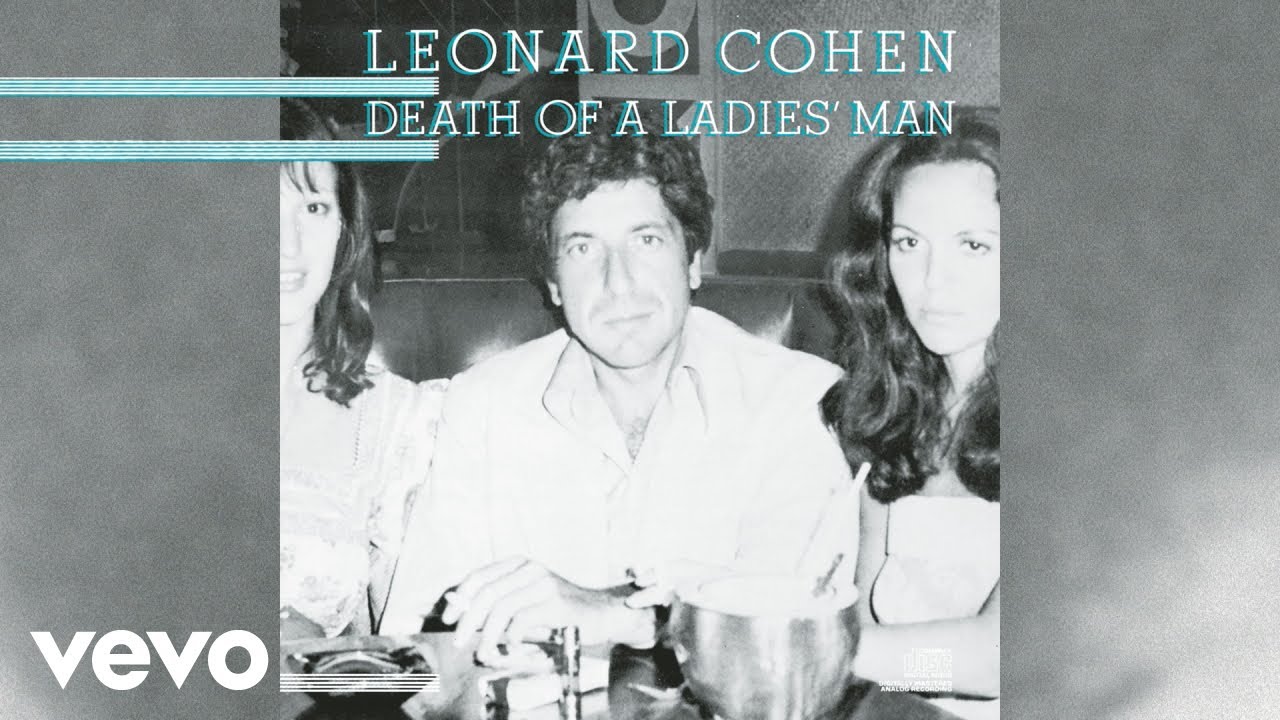
Paper Thin Hotel appears on Leonard Cohen’s 1977 album Death of a Ladies’ Man, which he co-wrote with famed record producer Phil Spector. Aside from his later murder conviction, Spector is best known for his ‘wall of sound’ production technique, which uses dense, large scale arrangements, instrumental doubling and heaps of reverb to create a larger-than-life ensemble (see Pet Sounds by The Beach Boys or Be My Baby by The Ronettes).
Here, Spector keeps things a little simpler. Nonetheless, the surreal, shimmering quality of this song does much to convey the torment of its protagonist as he listens to his lover cheating on him through the walls of a hotel. What’s more, all that high-frequency detail is sure to give your tweeters the workout they’ve been putting off for too long.
Is This What You Wanted (New Skin For The Old Ceremony, 1974)

Until New Skin For The Old Ceremony, Cohen had typically been a lone wolf. A guitar, some sparse backing instrumentation, his bass-baritone vocal, and that was generally it. Though many of the album’s songs followed that winning formula, Is This What You Wanted boldly went where no Cohen song had gone before, into the realm of the fully-fledged band.
With sharp staccato snare hits and hard-panned percussion, this song will highlight your system’s rhythmic acuity and transient response. The snares should sound crisp and clear, while the overall rhythm should drive the choruses forward despite being relatively sparse, overall.
A Singer Must Die (New Skin For The Old Ceremony, 1974)
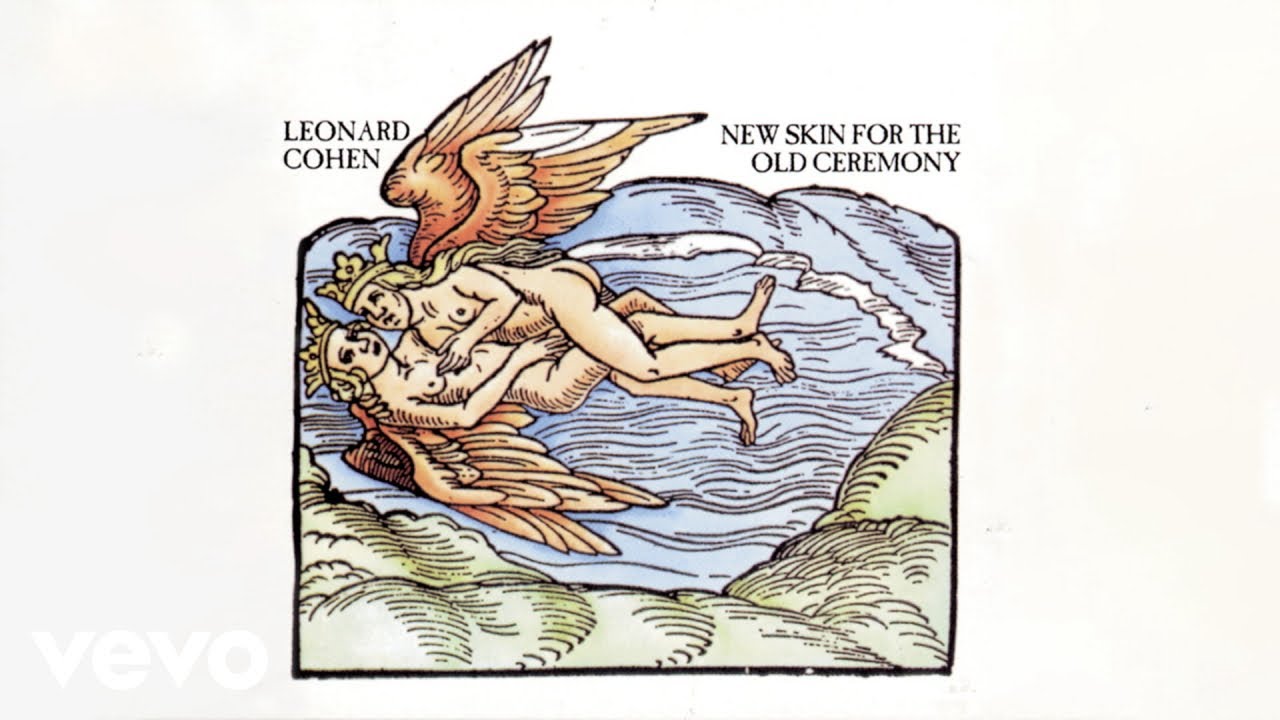
While some of New Skin For The Old Ceremony’s songs see Cohen spreading his musical wings, this album also contains some of his finest and most stylistically typical work. A Singer Must Die is one such song, with simple, fingerpicked chords, sombrely romantic lyrics and gently building banks of strings and woodwind, which provide an earthy sense of depth and texture.
A Singer Must Die explores the responsibility of the artist through a metaphorically dense court hearing in which the protagonist is scrutinised by the “keepers of truth” and the “guardians of beauty”. The song has a pitiful, self-effacing quality, with lines such as “your vision is right, my vision is wrong, I’m sorry for smudging the air with my song” setting the lyrical tone. What a joy it is to smudge the air with this one.
Avalanche (Songs Of Love And Hate, 1971)

Avalanche started life as a poem called I Stepped Into An Avalanche, which featured in Cohen’s 1966 collection, Parasites Of Heaven. It figures, then, that the song has gone on to become one of the singer’s most revered lyrical works, earning the affection of songwriters and musicians alike for its ambiguity and inscrutability. Among its admirers is Nick Cave, for whom we have also compiled a top-ten list of test tracks.
In classic Cohen fashion, the song centres around fingerstyle acoustic guitar and undulating, dramatic strings. Beyond the foreboding vocal, the strings do much of the heavy lifting in terms of setting the atmosphere. To get the most out of this track, we suggest listening on a system with a sensitive dynamic response, which will shine a light on the slow, creeping arrangement.
Sing Another Song, Boys (Songs Of Love And Hate, 1971)
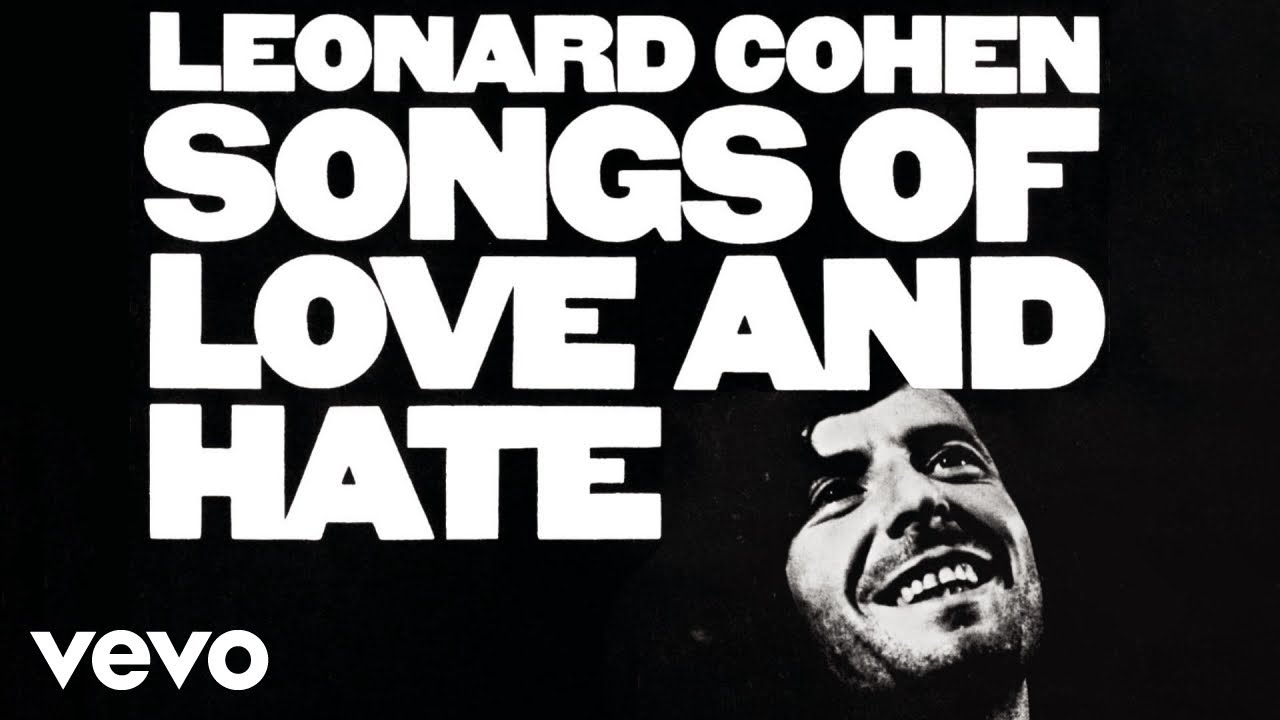
Sing Another Song Boys was recorded at the Isle of Wight Festival 1970, and is the sole live recording on Songs Of Love And Hate. Compared with the rest of the album, the live recorded sound is rich and pleasingly shambolic, featuring a plucky acoustic guitar, a broad, warm piano and an organ.
There are all sorts of recording imperfections here: when the piano is played vigorously, it begins to distort, and Cohen’s vocal, which rises to a chanting wail by the end of the song, is less detailed than you will encounter elsewhere on the album.
The overall ensemble, however, remains vivacious and impassioned, full of the adrenaline and commitment that live performances entail. Like many live recordings, this song will come to life on systems that can take the rough with the smooth.
Famous Blue Raincoat (Songs Of Love And Hate, 1971)

Famous Blue Raincoat is arguably one of Cohen’s most widely loved compositions. Structured as a letter written at “four in the morning, the end of December”, the song tells the story of a love triangle between Cohen himself, a woman called Jane and another person who he refers to as “my brother, my killer”.
The principal reason this song succeeds is that it so vividly evokes a dark and lonely December morning. Lamenting backing vocals are distantly reverberant and the track’s dynamic shifts are subtle but crucial to the overall journey of the piece. To get the most out of Famous Blue Raincoat, you will need a quiet, preferably candlelit room, a rainy night and a hi-fi system with a healthy dose of dynamics.
The Partisan (Songs From A Room, 1969)

The Partisan tells the tale of a French resistance fighter as he tries to evade detection by the German army. This track was Cohen’s first commercial recording of a song written by somebody else and features on his second album, Songs From A Room.
The original, La Complainte De Partisan, was composed in 1943 by Russian-born French singer-songwriter and guitarist Anna Marly, with lyrics written by French Resistance leader, Emmanuel d’Atier de La Vigerie. Cohen’s version shares many of the original’s features, with a haunting, bare-bones arrangement and ghostly backing vocals. Unlike the original recording, which is entirely in French, Cohen’s rendition alternates between French and English.
Overall, this is a nicely balanced, simple arrangement, which should give your system’s midrange an opportunity to shine with Cohen’s voice.
MORE:
10 of the best Nick Cave songs to test your hi-fi system
Why this distinctive 1999 album I’ve loved for 15 years is a fantastic test for your stereo speakers
The ultimate music tracks to test your hi-fi system – all our curated playlists compiled

