
There is no singular perfect album for testing a pair of headphones. Of course, certain recordings have earned a legendary reputation among hi-fi enthusiasts – Steely Dan’s Aja or Massive Attack’s Mezzanine, for instance – but it would hardly be appropriate, nor particularly enjoyable, to listen to the same tracks, time and time again, with each new product that enters the What Hi-Fi? test rooms.
A perk of the perpetual hunt for stimulating and effective test tracks is that you sometimes stumble upon pieces of music that leave a lasting impression. A recent personal example involves the avant-garde compositions of Ivan Wyschnegradsky.
Before we delve into Wyschnegradsky’s work, a bit of background on the man himself, who was almost as peculiar as his music.
Born in Saint Petersburg in 1893, Wyschnegradsky studied harmony, composition and orchestration as a young man, before entering law school. But before he would complete his law studies, at the age of 23, Wyschnegradsky experienced a ‘spiritual vision’, which is said to have inspired most of his later work.
Composition alone, however, would prove insufficient to convey his mystical experience.
Alongside music, Wyschnegradsky wrote theoretical articles. One of which, titled La Loi de la Pansonorité (The Law of Pansonority), outlined his belief that music represented a separation of sounds from a continuous fabric of the universe. This separation, the composer believed, rendered musical art "artificial and anti-continuous”.
In his efforts to rectify the situation, and draw closer to a “pansonorous” music, he adopted some interesting tactics, including tuning two pianos a quarter-tone apart – half the size of the smallest traditional step between piano keys.
And that is exactly what you can expect to hear throughout Étude Sur Les Mouvements Rotatoires, 24 Préludes.
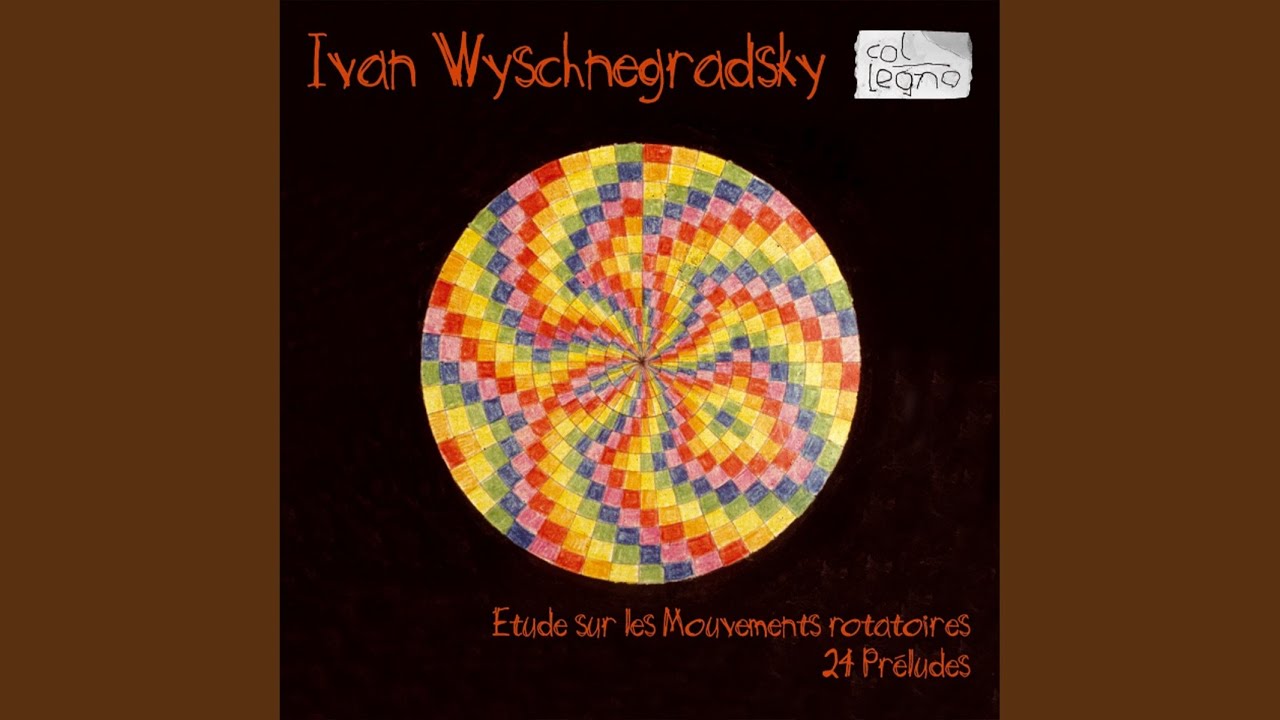
So, why does this strange product of divine afflatus make such a good test for a pair of headphones? I think it has something to do with unfamiliarity.
In the midst of unusual scales, chords that sound almost, but not quite, out of tune, and occasionally violent staccato rhythms, one's ear (at least for those accustomed to the western musical tradition) is drawn out of its comfort zone and into a state of heightened alertness.
Suddenly, properties of the music beyond the melody, such as rhythm, dynamics and the spatial qualities of the recording, become auditory anchors. Holding on to them for dear life, you are likely to notice certain crucial, but all-too-often overlooked features of your headphones’ performance.
In the first of the 24 Préludes Dans L'Échelle Chromatique Diatonisée À 13 Sons, Op. 22, En Quarts De Ton Pour Deux Pianos, the swelling glissandos ought to convey a pulse-like rhythm, if your headphones’ dynamic response is up to scratch. Similarly, busy parts in the bass and abrupt discordant stabs will test how your cans keep up with rhythms and fast transients across the frequency spectrum.
In the third Prélude, weighty, somber chords should drag you along with their galumphing rhythm. The main melody of this piece, which draws somewhat closer to conventional harmony, but with a jazzy slant, should let the headphones’ midrange sing, as rich piano notes interact, warbling and beating while their pitches converge.
The fourth Prélude provides an altogether more energetic test than the third, with a defined beat and booming low-frequencies. While the two pianos veer occasionally into more chaotic rhythms, there should be a clear sense of pulse here. If your toes are tapping, as they will surely be relieved to do after a sombre start, that’s a good sign that your headphones are providing a low frequency kick with plenty of rhythmic acuity.
Further on in the album, the 16th Prélude begins with a sparse, melancholic melody. Thanks to the conservative use of chords at the start of this piece, the reverberation surrounding each note is clear and provides a palpable sense of the space in which it was recorded. Dynamically sensitive and texturally detailed headphones will shine with this track, offering a moment of tranquil immersion.
It must be said that this is not exactly a workout album (besides the fourth Prélude, which could probably work quite well for those intent on pumping iron to 20th century classical music).
But for anyone looking to explore a particularly strange corner of avant-garde classical composition, or hoping to put a new pair of cans to the test with something more than a little bit different, Ivan Wyschnegradsky’s Étude Sur Les Mouvements Rotatoires, 24 Préludes could be just the ticket.
MORE
Why this distinctive 1999 album I’ve loved for 15 years is a fantastic test for your stereo speakers
10 of the best Nick Cave songs to test your hi-fi system
The ultimate music tracks to test your hi-fi system – all our curated playlists compiled

