
If you were to anthropomorphise wireless headphones, they would probably look a bit like Lady Gaga – possibly Harry Styles, if you’re Gen Z.
Why? Because they are constantly reinventing themselves to meet today’s tastes.
A new chipset here, reworked drivers there, the occasional complete reinvention (think the current rise of open earbud designs) – there’s always something new.
Earlier this year that continued with the launch of the Audio-Technica ATH-AL5NC, the firm’s first open-back wireless headphones.
Exciting? 100 per cent.
What Hi-Fi? has long championed the, at first glance, contradictory category, since New York-based Grado made it a thing in the early 2020s.
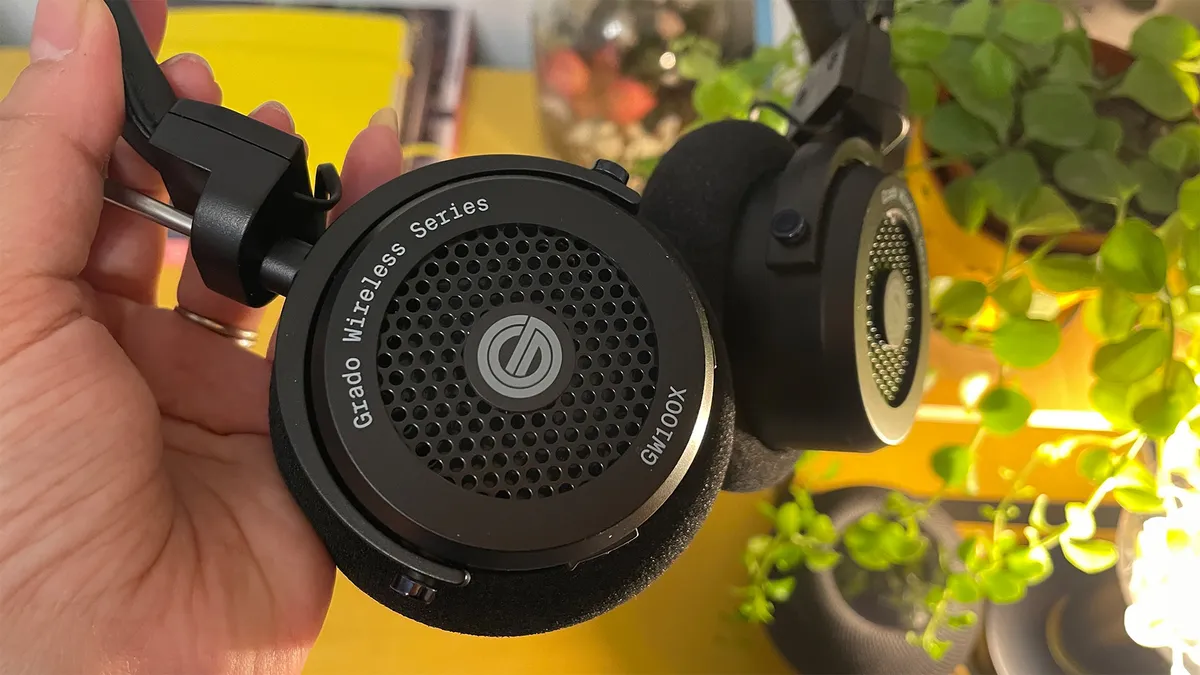
But as the team and I started to think about which rivals to compare with the new Audio-Technicas, it struck me: have there actually been any new open-back wireless headphones launched since the second-generation Grado GW100x we reviewed all the way back in 2022?
Dear readers, please correct me if I’m wrong, but among mainstream audio firms, I don't think there have been any. Even if there have, they haven’t been reviewed by What Hi-Fi?.
Which led me to another key question: why aren’t there more of them?
After revisiting the Grado GW100x and using them as my primary home headphones for a while, truthfully, I still don’t have an answer. For a specific type of listener, they still make complete sense.
Yes, there are some annoyances inherent to the form factor for people sharing your space, as we mentioned before. I listened to Gunship while my wife tried to read in the same room, and she did complain about the sound leakage.
But open-backs make up for this in multiple ways, chief of which is their audio.
Four years on from their launch, the GW100x still sound great – especially considering their sub-£250 price.
Clean, open and enthusiastic, the Grado’s rapidly became my go-to pair of home headphones after getting my feet tapping along to Peter Gabriel’s One by One (Darkside Mix) within seconds of connecting them to my phone.
Then they delighted me with their more natural soundstage when I switched gears to Eddie Vedder’s stellar track Hard Sun, giving it room to breathe, as good music deserves.
More than anything, though, it was the fact that a few weeks in, I realised I was wearing them for whole work days at a time without fatigue. No pinch, no distractions, just music throughout the day, uninterrupted and joyous to hear coming from the GW100x.
I couldn’t sum it up any better than our senior staff writer, Harry McKerrell, who said in our review, four years ago:
“The idea of a pair of Bluetooth-ready, and therefore supposedly portable, headphones that don’t fold away, leak sound and feature no noise-cancelling puts them in a strange, somewhat contradictory position compared with the market leaders from Bose, Sennheiser and Sony. But if it’s simply great untethered sound you’re after for quiet spaces, such as your garden, you’ll struggle to find better than these brilliant-sounding Grado on-ears.”
As I continued using them, however, I did come to wish for one thing to be added to the mix that would make them even better…
Better connectivity




Former What Hi-Fi? magazine editor Jez Ford, our current global technical editor, Ketan Bharadia, and I have all talked about the limitations of Bluetooth for some time.
It’s a format that is lossy, unreliable, heavily compressed, and often poor quality. There is a reason that serious music fans prefer wired headphones over wireless – even wireless cans that support hi-res aptX codecs.
In the past, we accepted Bluetooth as a limitation you had to put up with if you wanted to enjoy the freedom and convenience wireless headphones offer. If you’re out and about, it’s a fair trade.
But in 2026 and for the purposes of this article specifically, things are a little more complex.
Wireless open-backs make sense primarily for home use. And there’s no denying that, as good as the Grados sound compared with other wireless sets, you can get a much better experience if you remove Bluetooth from the equation.
Putting aside how they compare to my standard home desktop setup – which features a Chord Mojo 2, Hifiman HE400se and my laptop or phone streaming Tidal – just plugging the GW100x in using the included 3.5mm cable leads to palpable audio improvements, adding another level of sharpness and weight to the sound.
The groove of Funkadelic’s Good to Your Earhole became remarkably more infectious and fun the moment I added the cable, and it felt like a compromise removing it.
When the GW100x first came out, this was fine as Bluetooth or cabled were the only options available. The chips used by most headphone providers didn’t support wi-fi and even if they did, the connectivity is a power hog, so you definitely wouldn’t get a day’s full listening wirelessly that way.
So if you wanted wireless playback, that was the sacrifice you had to make. There was no middle ground.
A few weeks ago, though, Qualcomm unveiled some new technology that could fix, or at least alleviate the problem, in the shape of its Snapdragon Sound Elite Gen 2 platform. This is a new platform of advanced chipsets that have the XPAN tech we have talked about many times before.
The technology is designed to let headphones scale the quality they are streaming responsively, depending on network conditions.
So, in theory, if I had my GW100x in my lounge, next to the router, it could deliver 24-bit/96 kHz lossless audio over wi-fi; but then it could intelligently scale down when I move away and the connection becomes less stable, forcing it to switch back to Bluetooth – kind of how the SCL6, or Airia as it’s now called, tech from MQA works.
The tech is new, and we’re yet to test any headphones with it, and yes, it probably won’t bring the wireless performance in line with wired, but it could help close the gap between the two, making the switch less jarring. And that makes it a compelling idea, especially for wireless open-backs.
For me, this feels like an ideal launchpad for headphone makers thinking about dipping their toe in the open-back wireless headphone market – one I really hope they take advantage of given how much I have loved my month revisiting the Grado GW100x.
The idea just makes sense, at least for me.
MORE:
These are the best wireless headphones we have reviewed
We rank the best ANC headphones
Our pick of the best DACs

