
What’s next for wireless headphones? It’s a tough question to answer for a couple of reasons.
First, predicting the future is always tricky. Even the best sages and farseers, ranging from Nostradamus to Mystic Meg, don’t have a perfect hit rate.
Second, new technologies with the potential to change fundamentally how tech works – including portable noise makers – are appearing on a near-daily basis.
This week, then, we forsake our usual tea-leaf/tarot-card reading strategy and instead ask five experts from major companies just what music fans can expect from the field of wireless headphones in the next five years.
Somewhat to our surprise, they all seem to be singing from the same hymn sheet with their responses.
AI is the next big thing in wireless headphones

For Christian Ern, global product manager at Sennehiser’s parent company, Sonova Consumer Hearing, the answer is simple: artificial intelligence.
“The use of AI-powered sound processing can also create a significant experience difference when used in the right way: for example, allowing listeners to customise their experience and adapt to their own taste or hearing profile,” says Ern.
Outside this, the firm believes there will be gradual improvements to things such as battery life, fit and active noise cancellation, but Ern reiterates it will mainly be the advanced processing power that AI offers that will define the next five years, warning that outside this:
“It's easy to fall into the trap of a feature race, where brands add more and more gimmicky features to show they have a lot – but it's not always relevant to the user.”
Kazunori Otsu, director of headphone business at Technics, shares Ern’s opinion, telling us:
“One of the biggest changes over the next five years will likely be the expansion of AI-driven user experiences. Beyond improvements in noise control and call quality, AI will increasingly enable headphones to optimise audio performance according to the user’s environment and listening situation. We expect a growing range of intelligent features that make the listening experience better.”
Personal tuning isn’t a new concept. Numerous firms, including Nura, before it was bought by Denon, have experimented with the idea. Denon’s true wireless PerL Pro are still on sale and offer “personalised” audio profiles.
The difference here, according to Matt Dever, senior global product line manager at Harman Luxury Audio, is that future headphones will leverage AI processing to push performance even further across the board.
“Integrating AI decision-making into the processing chain will allow even faster results and improve things like adaptive ANC and Awareness functionality. Minimising the latency in those types of decisions will improve the overall user experience,” he says.
“With the increased processing power, the technology will customise the sound of the headphones and tune them automatically to your specific hearing attributes.”
But that’s not all

Despite the focus on AI, the experts argue that there are at least two other areas where wireless headphones will advance in the not-too-distant future.
First, Dever highlights sustainability as a key area that manufacturers will focus on improving over the next five years – “User-replaceable rechargeable batteries [for example],” he says.
“Today, when your rechargeable battery in the headphone has finally lost its chargeability, you must recycle the headphone even though the electronics and driver units may still be functional. Tomorrow, it will be a different story.”
The second is wireless connectivity. While all the experts are sceptical of scalable, lossless hi-res 24-bit/192kHz streaming becoming mainstream, they flag advancements in Bluetooth technology as another key upgrade that will define the next half-decade.
Category line director of headphones at Bowers & Wilkins, Steven Hoyle, flags Low Energy Audio (LE Audio) as a particular milestone he expects will help improve wireless headphones’ performance.
“LE Audio is coming! The Bluetooth Special Interest Group (the central group that owns the standards for Bluetooth, with input from stakeholders across various brands and technologies) is phasing out Bluetooth Classic and only focusing on advancing the Bluetooth standard with LE Audio,” he says.
“Once there are more devices supporting LE Audio, we expect that the functionality will be greatly expanded. The launch features for LE Audio focused heavily on broadcast and Auracast, but LE Audio does allow for higher data rates and therefore could support higher resolution audio. However, we are still at the mercy (in the short term) of compatible source devices.”
The ultimate goal won’t change
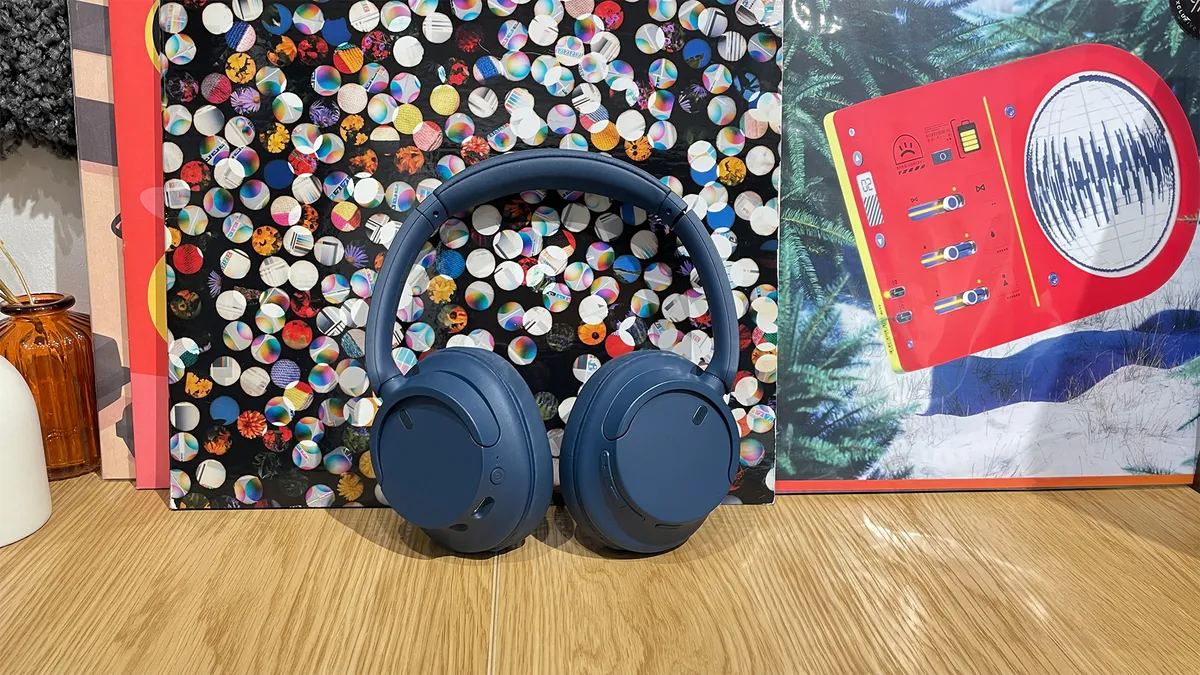
Despite the focus on what’s next, all of the experts agree that their core focus when creating wireless headphones will ultimately remain unchanged, regardless of what new tech appears: making them sound as good as possible.
This sentiment is summed up by Yusuke Wada, senior manager at Sony:
“Over the next five years, we believe devices and technologies will change significantly, and more environments will emerge that allow users to enjoy music more conveniently. While adapting to changes in how users enjoy music, Sony hopes to continue delivering the enduring value of bringing the emotion of music exactly as intended by the artist.”
Wada’s colleague Kenji Ide, acoustic Manager at Sony, adds, “Sony believes that delivering the music experience exactly as intended by the artist is of utmost importance, and we continue to pursue headphone sound quality to make that experience possible.”
Do you agree with audio pros’ comments? Are you excited about the prospect of easier-to-repair wireless cans? Or are you against the idea of AI-tuned wireless headphones? Let us know your thoughts in the comments below!
MORE:
These are the best wireless headphones we have tested
Our experts rank the best wireless earbuds
We rank the best portable music players

