
There is one element that is the bane of every home cinema: wires.
For those with a full surround setup – TV or projector and screen, AV receiver, Blu-ray player, games console and surround speakers – that's an awful lot of cables to manage. Especially if anything has to be moved – please spare a thought for the What Hi-Fi? home cinema testing team.
There have been a variety of responses to this from the home cinema industry – Samsung's rather convenient One Connect Box, for example. But a few companies have pushed what would, surely, be the ultimate solution: a wireless home cinema. One quick caveat: such a system is unlikely to be completely wireless – you have to get power to those products somehow.
Following the announcement of LG's 2026 TV lineup, it looks like the fully wireless home cinema could be becoming more common. LG has had wireless TVs in its lineup for some time as part of the M-series; but the fact that the Korean electronics giant has put the technology in the rebooted W6 Wallpaper TV suggests a vote of confidence in this trend.
This goes hand in hand with the unveiling of the LG Sound Suite, Dolby Atmos FlexConnect speakers that can deliver Dolby Atmos sound wirelessly from a variety of different positions. Together, the two promise a convenience that we home cinema fans are not usually accustomed to.
So could 2026 finally be the year that fuss-free wireless cinemas finally become a living room staple? Let's take a look...
The history of wireless home cinemas
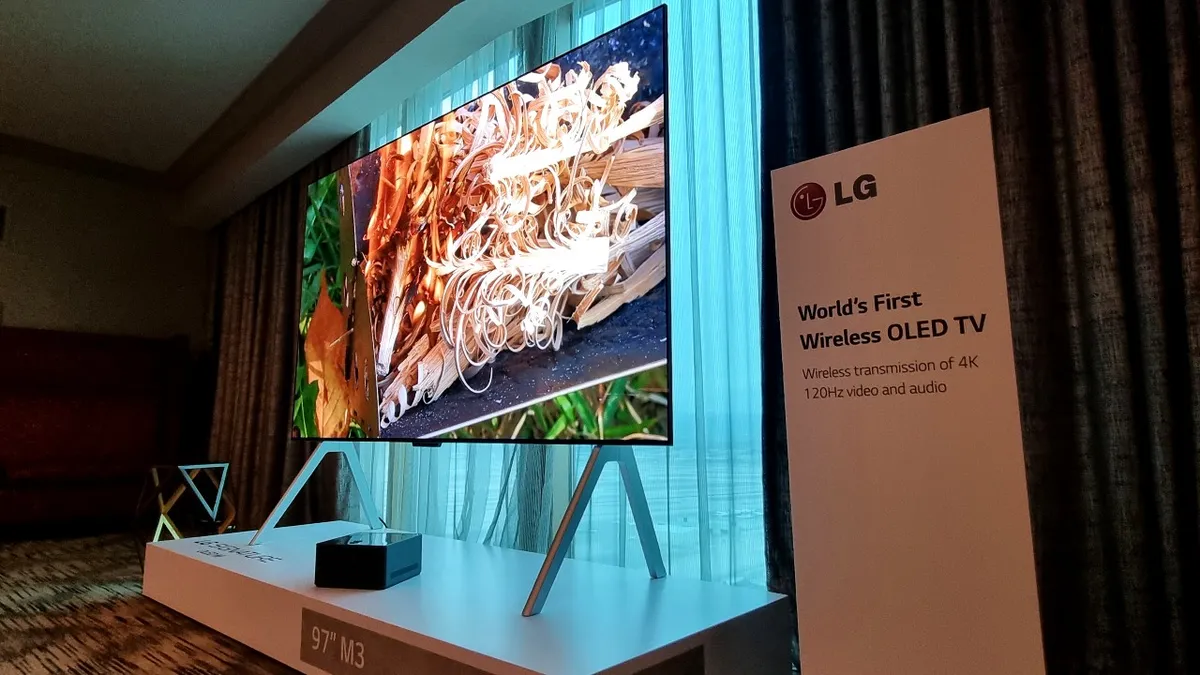
The history of the wireless TV goes back to 2023, when CES saw the arrival of not one, but two wireless TV sets.
One was the LG M3 OLED TV, which is not technically wireless, but has all its connections and ports in a separate Zero Connect box, which then wirelessly transmits content to the TV. It does still require a wired power cable, however, and has been the formula behind LG's wireless offerings going forward.
The other is more of a curiosity – US startup Displace unveiled the “world's first truly wireless TV” at CES, with no ports and rechargeable batteries for power. It certainly lived up to the name, though it has remained a cult choice rather than a mass-market offering (the gesture controls probably didn't help). The active-loop vacuum technology used to stick to walls certainly looks innovative, however.
Wireless speakers have been around much longer. The Samsung HW-F750, the first wireless soundbar, launched in 2013, with full surround-sound systems arriving shortly after. Now Bluetooth is common even among budget audio systems, though the quality of these offerings can still vary greatly.
Wireless home cinema: where are we now?

LG has committed to its ‘wireless’ M-series with new models every year, with specifications that largely matched the flagship G-series.
In our hands-on LG M5 review last year, we found the wireless technology to have no perceptible impact on picture and sound quality – even gamers can breathe a sigh of relief that input lag is only 1.3ms behind the wired G6.
The big change this year is, of course, the LG W6, which brings the wireless Zero Connect technology to a 9mm display. But the all-important Zero Connect box has shrunk and is now small enough to fit in a drawer – and refresh rates have now caught up to the 4k/165Hz of LG's G-series.
With the W6 set to match the flagship G6 in performance, including the second-generation Primary RGB Tandem OLED panel, wireless TV very much seems to be on a level playing field compared with its wired counterpart (if you count the Zero Connect box as wireless, that is).

So what's stopping wireless TVs from fully catching on, then?
Well, there's the price, for starters. The LG M5 launched at an eye-watering £3799, but can now be found as low as £2599. That’s certainly within the realms of consumer television prices, but it’s still a premium prospect above flagship OLEDs.
There is also a lack of choice. There’s Displace's curious offering, of course, but LG is still currently the only major television manufacturer offering a wireless option. This means consumers are limited to LG – no matter how impressive their wireless TVs are – and suggests that the demand simply is not there yet for other manufacturers to join in.
Wireless audio, on the other hand, seems to be in a much healthier shape. For some time, wireless audio systems fell into two distinct camps: premium or terrible. This all changed last year, however, when we reviewed the Hisense AX512H. Despite its budget origins at £249 (dropping as low as £189 on Black Friday), the Dolby Atmos system blew our socks off with room-filling, Award-winning sound, essentially heralding a new era of good, affordable wireless sound. With Dolby Atmos FlexConnect also on the horizon, exciting possibilities unbound by positioning or wires are on the horizon.
So is the fully wireless home cinema finally heading for the mainstream? It's certainly possible to get a wireless TV and audio component that's on par with the best out there, and mostly wire-free.
But as long as the price remains steep and choice remains limited, it's certainly set to remain a niche interest, even if the W6 is dazzling. Whether the TV will – or should – catch up with audio and go fully wire-free remains to be seen, but LG certainly thinks there's a future there.
MORE:
Check out our stories on the LG C6 and G6
Plus the brand's first RGB Mini LED model (the MRGB95)
Here are all of the best TVs you can buy right now

