
Driver Uni-Q driver array (25mm aluminium dome tweeter; 13cm magnesium/aluminium alloy mid/bass)
Max power 100W per channel
Bluetooth 5.4 (aptX Lossless, aptX Adaptive codecs)
Max resolution support 24-bit/192kHz PCM
Inputs HDMI ARC, USB-C, optical, RCA line level, MM phono
Outputs Subwoofer
Dimensions (hwd) 28.5 x 16.8 x 26.8cm
Weight 11.3kg (total)
Finishes x 5 (vintage burgundy, nickel grey, moss green, midnight blue, and dark titanium)
KEF's latest speaker system offers additional clarity, bass weight and detail compared to the LSX II LT, thanks in part to a larger cabinet, larger drivers and the latest Uni-Q driver arrangement. A built-in phono stage means they'll appeal to vinyl enthusiasts too, but unlike their more compact cousins, they come without any built-in network streaming smarts.
Pros
- Clear, detailed presentation
- Deep, controlled bass
- Excellent handling of dynamics
- Elegant build quality
Cons
- No built-in wi-fi streaming features
- No volume indicator on the speakers
- Phono stage performance could be better

Driver Uni-Q driver array (19mm aluminium tweeter; 11.5cm aluminium mid/bass)
Max power 100W per channel
Streaming features AirPlay 2, Google Chromecast, UPnP, Bluetooth 5.0, Spotify Connect, Tidal Connect, Amazon Music, Qobuz, Deezer
Max resolution support 24-bit/384kHz PCM, DSD128
Inputs HDMI ARC, USB-C, optical, Ethernet
Output Subwoofer
Dimensions (hwd) 24 x 15.5 x 18cm
Weight 6.8kg (total)
Finishes x3 (graphite grey, stone white, sage green)
Thanks to a sonic performance that belies their compact size, the LSX II LT are a great option for smaller listening spaces and have ample features. The LSX II LT has built-in network capabilities, so they're valuable to those that want to stream hi-res audio, but bear in mind the smaller units might struggle to fill a larger room as well as the newer Coda W.
Pros
- Cohesive, effortlessly balanced performance
- Full, well-formed bass
- Great value for most users
- Compact, desktop size
Cons
- No built-in phono stage
- Coda W sounds bigger, more detailed and dynamic
One manufacturer, two active speaker systems, both with a five-star rating. But which is the best? Well, the first thing you should be aware of is that, despite them both being made by KEF, the Coda W and LSX II LT are very different propositions.
So, to help you find out which is best suited to your hi-fi needs, we’ve taken a deep dive into everything you need to know and directly compared the two against each other. Let’s take a closer look, shall we?
KEF Coda W vs LSX II LT: price

- The Coda W are the cheaper option in the UK and Australia, with both sets costing the same in the US
- The older LSX II LT are more likely to have discounts around
While there isn’t a huge difference in price between these two speaker systems, the Coda W takes the victory in this round. They cost £799 / $1000 / AU$1450, so they’re cheaper in the UK and Australia than the LSX II LT, which is priced at £899 / $1000 / AU$1695. US customers pay the same whichever KEF system you opt for.
As the older speaker system (they launched in January 2024), we have seen the LSX II LT drop as low as £699 in the UK during sales periods. The Coda W are a newer set, so we wouldn’t expect to see any discounts just yet.
**Winner: KEF Coda W**
KEF Coda W vs LSX II LT: build & design

- The Coda W are larger in size, while the LSX II LT are suited to smaller spaces
- The Coda W feature larger drive units and 12th-generation Uni-Q
- Both have 100W of amplification per channel
The first thing you’ll notice about these two active speaker sets is their size difference. The Coda W are the larger set, measuring 28.5 x 16.8 x 26.8cm (hwd). They are substantially taller, wider and deeper than the LSX II LT by 4.5cm, 1.3cm and 8.8cm respectively. The Coda W are 4.5kg heavier too, weighing 11.3kg in total.
Due to their bigger size, we find the Coda W are most at home on a pair of speaker stands, and we imagine they are a little too large to fit onto desks – although that’s not to say you couldn’t.
The more compact LSX II LTs, on the other hand, are ideal for smaller spaces, and work well placed on desks and on either side of your laptop. They’re more than happy sitting on a set of speaker stands too, though.
Both speakers use KEF’s Uni-Q driver array technology. Uni-Q is where the tweeter sits in the throat of the mid/bass unit. The main advantage of this arrangement is that sound is dispersed more evenly throughout a room than a conventional driver positioning would allow, so you can be less fussy about where you sit. This rings true in use.
The Coda W have been fitted with a larger and newer version of KEF’s Uni-Q driver array. Its 12th generation Uni-Q array consists of a 13cm mid/bass driver made from a magnesium/aluminium alloy and a titanium dome tweeter measuring 25mm. The tweeter and mid/bass unit are smaller in the LSX II LT at 19mm and 11.5cm, respectively. Significantly, the more compact speakers also use the previous generation of Uni-Q technology.
Both, however, are configured in the same way: one speaker is connected directly to the mains and provides power and signal to its partner via a 3m USB-C cable, which KEF supplies in the box.

Both speaker systems are fully active and have identical amplification ratings: 200 watts of Class D power available in total, or 100 watts per channel. Breaking this down even further, each enclosure has two amplifier modules, one providing 30W to the tweeter and another giving the remaining 70W to the mid/bass driver.
In terms of looks, the Coda W’s squared-off edges are sure to tickle the fancy of those who prefer a more traditional speaker aesthetic. But that’s not to say these speakers look dated. Quite the opposite, in fact, owing to their clean lines and minimalist design.
The LSX II LT have a more obviously contemporary look and are designed to be more lifestyle-friendly with their curved edges. Another point of difference is that the Coda W have a panel of touch-capacitative buttons on top of the main speaker, providing access to input switching, playback and volume controls. The LSX II LT have no on-unit controls.
The choice of finish always boils down to personal preference, of course, but you do get five options to select from with the Coda W (midnight blue, vintage burgundy, moss green, dark titanium or nickel grey), compared to three different hues on the LSX II LT (graphite grey, stone white or sage green), so there’s plenty of chance to find a finish that you like.
Whichever look you prefer, we found the respective review samples of each speaker system had been finished with care, with each feeling sturdy and excellently made for the price.
Essentially, what you have here is two equally well-made active speaker systems, one larger than the other, and with different finish options. So, there’s no clear winner in this category – it all boils down to your preferences.
**Winner: Draw**
KEF Coda W vs LSX II LT: features & connectivity

- The LSX II LT have built-in wi-fi streaming capabilities, while the Coda W are Bluetooth only
- Coda W have a built-in moving-magnet (MM) phono stage, the LSX II LT does not
- Both can be controlled via the KEF Connect app, but there are more settings on the LSX II LT
One of the key differences between these KEF speaker systems is network connectivity. The LSX II LT has built-in network streaming capabilities, so they can stream audio directly over wi-fi or Ethernet from a host of streaming services, including Spotify Connect, Tidal Connect, Amazon Music, Deezer, and Qobuz. Streaming using Apple AirPlay 2, Google Chromecast and via UPnP-compatible NAS devices is possible, too. The music services are all conveniently available at your fingertips via the KEF Connect app, too.
The Coda W, by contrast, doesn’t have any network streaming features, but it has Bluetooth 5.4 on board for wireless streaming from a mobile device. Support is provided for the aptX HD and aptX Lossless codecs.
The LSX II LT also features Bluetooth, but it’s the older 5.0 version. We can’t imagine many using the LSX’s built-in Bluetooth, though, due to their more flexible wi-fi streaming capabilities. But it is handy to have as a back up.
Unlike the LSX II LT, however, the Coda W feature a built-in moving magnet phono stage, meaning you can directly connect a turntable to the speakers for a simple and neat vinyl system.
Both of these speaker systems have a decent selection of inputs and outputs, but the Coda W is the only one to feature a line-level RCA input. There is some commonality elsewhere, such as a single USB-C and optical input, so you can hook up a laptop or CD player to each of them. Both feature an HDMI ARC input as well, so either can be used to enhance your TV’s audio and work as a soundbar alternative.

When it comes to operating the two speaker sets, both can be controlled with a supplied remote and via the KEF Connect app. Using the remote or app is pretty straightforward, and you can select input and adjust the volume via both methods. The Coda W can also be easily operated via the aforementioned buttons atop the main speaker, too.
For those who like to fine tune their EQ settings, you’ll be pleased to hear the LSX II LT has a pretty extensive selection. This includes things like distance from the wall, whether they’re placed on stands or a desk, room size and frequency filters, so you can really optimise the sound to the room and position that they will be placed in.
EQ settings for the Coda W, however, don’t extend much further than four presets: bass cut, bass boost, treble cut and treble boost. These all make a noticeable but subtle difference to audio playback.
In terms of audio resolution, streaming via the LSX II LT supports hi-res audio up to 24bit/384kHz PCM. It, like the Coda W, is compatible with 24-bit/192kHz files through the USB-C input.
The headline difference between these speaker systems is the LSX II LT has built-in network streaming capabilities, while the Coda W doesn’t. The Coda W also has a MM phono stage, so it appeals to vinyl fans. The use cases vary and your choice will be guided by which playback priorities are more important to you, but for the wider streaming abilities, the LSX II LT take this round.
**Winner: KEF LSX II LT**
KEF Coda W vs LSX II LT: sound

- Both speakers have a similar sonic character with a relatively neutral tonal balance
- The Coda W sound bigger and have greater authority and dynamic handling
- Coda W’s phono input is decent-sounding but not as good as its other inputs
The good news is neither of these speaker systems skimp on sound quality, so rest assured that your music libraries are in good hands whichever you opt for.
Beginning with the bigger Coda W, their ability to handle large-scale dynamics is excellent. During testing, we played Beethoven’s Symphony No 7 In A Major – 2nd Movement – Allegretto, and found the louder moments “really wallop you, whilst the delicate ones are delivered with incredible subtlety”. This classical piece also showcases their ability to deliver a spacious soundstage.
But that’s far from all the Coda W can do: they’re richly detailed and when we played Pearl Jam’s Even Flow, their fantastic sense of rhythm and drive propelled us through the song like a hurricane.
The built-in phono stage is one of the key reasons why you might choose them over the LSX II LT, and we’re happy to report that it’s a clear and enjoyable listen, albeit lacking in terms of dynamics and clarity compared to the Coda W’s other inputs. It’s good enough for casual listening, but if playing records is your priority, we would recommend using an outboard phono stage that is at least as good as the Rega Fono Mini A2D Mk2, instead of using the speakers’ built-in one.
The KEF LSX II LT are also capable, no matter what input you decide to make use of. When we reviewed the LSX II LT in January 2024, we played Muse’s Madness and discovered a “solidity, crispness and breadth of bass that all belie a streaming system of this size”. We reported that they also offered “punch, focus and a snappy sense of propulsion without a hint of fuss or strain”.

We noticed much more than just bass and punch, however. They provide nuanced instrumental textures with plenty of detail. When playing Hans Zimmer’s Discombobulate, for instance, we said they “bend and flex to reflect the full range of strange, quirky timbres on display, be they the mischievous twangs of a cimbalom or the hurried, chaotic scratches of bows passing across the strings of a Victorian-style violin”.
As you may have gathered by now, both these speaker systems sound excellent for the money. Their sonic characteristics are also remarkably similar, with a relatively neutral tonal balance offering a balanced presentation across the frequencies.
The LSX II LT are smaller, and so naturally can’t match the bigger Coda W when it comes to bass depth and scale. We played Althea & Donna’s Uptown Top Ranking through both speaker systems and the bass on this reggae classic had more weight and solidity to it when played through the Coda W. The soundstage with Pearl Jam’s Even Flow felt more open through the larger speaker set, too. Finally, we compared their dynamic handling and clarity by listening to Bach’s The Art Of Fugue – Contrapuncus and the Coda W came out on top again.
The LSX II LT are still highly entertaining if your listening space requires smaller cabinets, but the Coda W have the edge in terms of clarity, bass and dynamics, thanks to their bigger drivers and cabinets, so they take the win here.
**Winner: KEF Coda W**
KEF Coda W vs LSX II LT: verdict
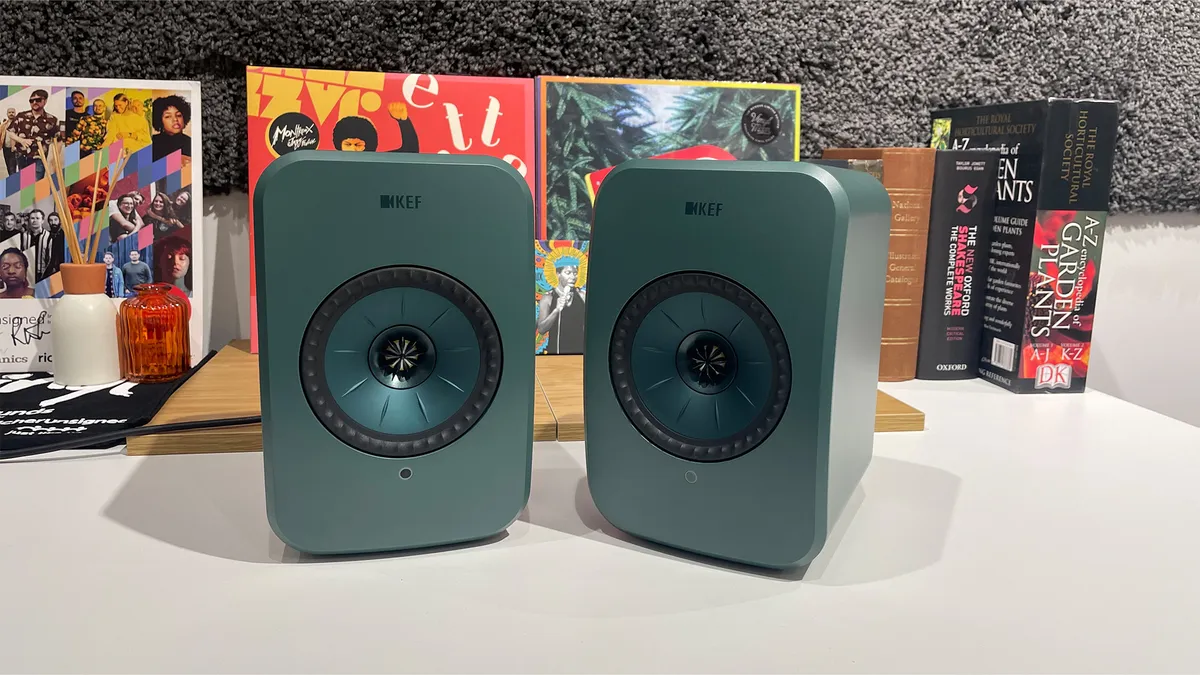
- The Coda W are larger and have a better sound overall
- But the more compact LSX II LT has a similar tonal balance
- LSX II LT has full wi-fi streaming abilities
You’ve got to hand it to KEF, the Coda W and LSX II LT are two excellent speaker systems, with the former boasting a great sonic performance and ample connectivity.
If built-in network streaming smarts are an absolute must-have, the LSX II LT are the best option for you. The same is true if you’re strapped for space, thanks to their more compact size.
But if space isn’t an issue and you’re happy just using Bluetooth to play music wirelessly, the Coda W are the better-sounding – and cheaper – speaker system. The built-in phono stage, whilst not on par with the Coda W’s other inputs, also means they’re the obvious choice if you have a turntable in your system. Either way, you’ll be in good hands with whichever KEF speaker system you opt for.
**Overall winner: KEF Coda W**
MORE:
Our guide to the best bookshelf speakers across all budgets
KEF LSX II vs KEF LSX II LT: which speaker system is best for you?
KEF wireless speaker systems compared, from LSX II to LS60 – which one should you buy?

