
Projector type Laser-lit LCD
Screen size Up to 300 inches (claimed)
Native resolution 4K (via pixel shifting)
Input lag 38ms (60Hz)
HDR support HLG, HDR10, HDR10+
Dimensions 19 x 52 x 45cm
Weight 12.7kg
The older and more affordable option delivers most of the QB1000's impressive HDR punch and colour vibrancy, though it can't quite match its sibling's black levels or gaming performance.
Pros
- Fantastically bright HDR pictures
- Lovely filmic feel
- 4K/120Hz gaming
Cons
- Dark HDR colours can look unrefined
- Really unhelpful menu system
- Some strange preset decisions

Projector type Laser-lit LCD
Screen size Up to 300 inches (claimed)
Native resolution 4K (via pixel shifting)
Input lag 19ms (60Hz)
HDR support HLG, HDR10, HDR10+
Dimensions 19 x 52 x 45cm
Weight 12.8kg
The premium model takes everything that makes the LS12000 great and elevates it with brighter HDR, deeper blacks and class-leading gaming specs – if you can justify the extra cost.
Pros
- Extra brightness is great for HDR and living room use
- Excellent gaming performance
- Deeper blacks
Cons
- Significantly pricier
- One or two non-Epson rivals go even blacker
- No built-in smart features
Looking for one of the best projectors to form the crown jewel of your home cinema setup? Chances are, then, that at least a few offerings from Epson are on your shortlist.
Offerings such as the EH-LS12000 and EH-QB1000, to be precise – both of which earned five stars in their respective What Hi-Fi? reviews.
With a cool grand separating their price tags, though, is the extra splurge for the latter model worth it? Read on to find out.
Epson EH-LS12000 vs EH-QB1000: price
The EH-LS12000 is the more affordable option, with a launch price of £4500 / $4999 / AU$8999, dropping down to £3699 in the UK at the time of writing.
That's still a substantial sum for most people, but it positions the projector as a relatively accessible entry point into serious home cinema territory – particularly when you consider the sort of picture quality it's capable of delivering.
The EH-QB1000, meanwhile, comes in at £4799 / $7999 / AU$11,900, making it significantly more expensive than its sibling.
The QB1000's extra cost brings with it several meaningful improvements, as we'll see below – but whether those upgrades justify the additional outlay depends on your priorities and budget.
For those keeping score, the QB1000 also faces stiffer competition at its price point. As we noted in our review, if you're looking to spend around £5000 on a projector, the Award-winning Sony XW5000ES deserves serious consideration for its native 4K support and exceptional processing.
** Winner: Epson EH-LS12000 **
Epson EH-LS12000 vs EH-QB1000: build & design

Both projectors are substantial pieces of kit, measuring an identical 19 x 52 x 45cm. These aren't models you'll be pulling out of a cupboard for movie night – they're designed for permanent installation in a dedicated home cinema space, preferably ceiling-mounted or on a solid shelf.
The family resemblance between the two is unmistakable. Both feature the same beefy footprint, with gentle curves softening what would otherwise be quite an imposing presence.
Both are available in either black or white finishes to suit your room's aesthetic. And both sport motorised lens covers that automatically open when the projector powers on and close when it enters standby – a small touch that adds a satisfying sense of occasion to every viewing session.
Look closer, though, and you'll spot the visual cues that mark out the QB1000 as the more premium model. While the LS12000 keeps things relatively understated, the QB1000 features an opulent gold metallic ring around its lens – a design flourish that hints at its higher position in Epson's range.
From a practical standpoint, both projectors benefit from extensive motorised lens adjustment, including optical zoom (2.1x on both), vertical and horizontal shift, and focus. This makes installation considerably easier and means you can fine-tune the image position without resorting to digital processing that might compromise picture quality.
The venting systems on both models appear substantial, but neither projector proves particularly intrusive in terms of fan noise, despite their impressively high peak brightness figures.
In terms of design and build, there's very little to separate these two projectors. They're essentially siblings from the same generation of Epson's projector engineering.
** Winner: Draw **
Epson EH-LS12000 vs EH-QB1000: features
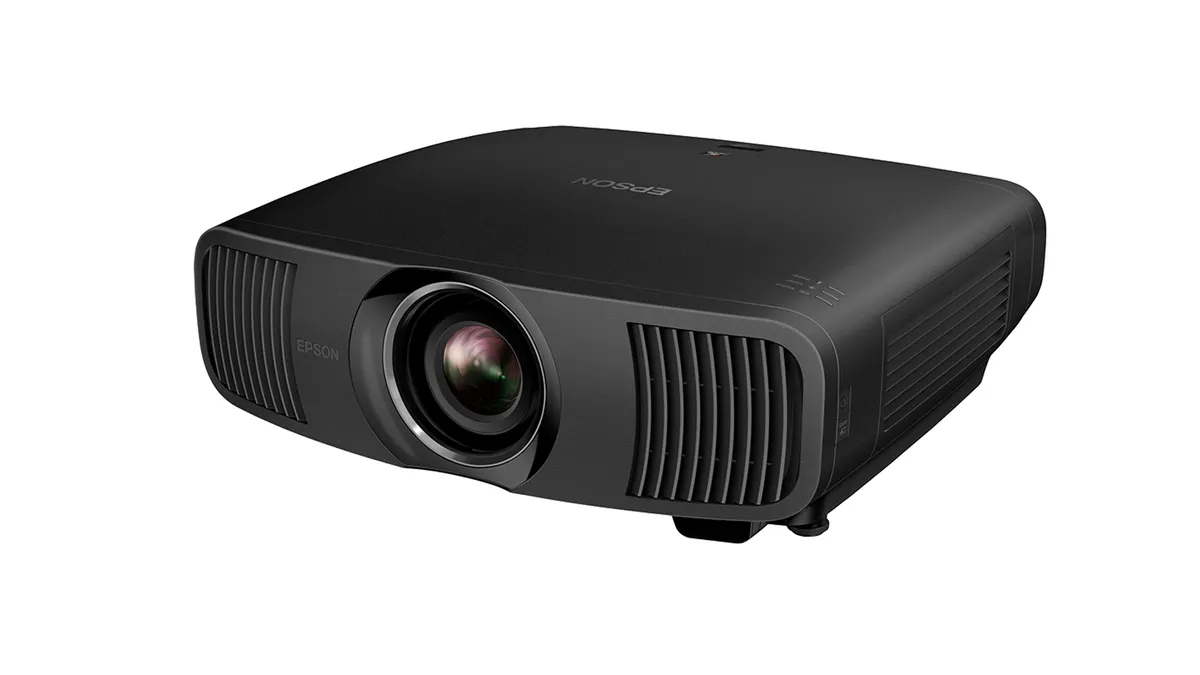
Neither of these projectors offers native 4K resolution in the way that Sony's SXRD models do. Instead, they both use pixel-shifting technology to create an effective 4K image from Full HD LCD chips.
While this approach won't quite match the ultimate sharpness and detail of true 4K, it does deliver pictures that look substantially denser and more textured than standard HD – and it keeps costs more reasonable than native 4K implementations.
The most significant spec difference between these two projectors lies in their brightness capabilities. The LS12000 musters a claimed 2700 lumens of peak light output – already a very respectable figure that places it well above most traditional home cinema projectors. The QB1000, however, takes things even further with a claimed 3300 lumens.
To put that in context, 3300 lumens is the sort of brightness you'd typically associate with living room projectors designed to punch through ambient light. For a dedicated home cinema projector intended for use in a darkened room, it's an unusually high figure that speaks to Epson's ambitions for HDR performance.
The company clearly believes that extra brightness will help these projectors make more of HDR's expanded light range – historically very challenging for projectors.
Contrast ratio claims tell a similar story. The LS12000 quotes a dynamic contrast ratio of 2,500,000:1, while the QB1000 pushes this to 5,000,000:1 – a figure that approaches OLED TV territory.
As always with contrast ratio specifications, the word 'dynamic' is doing considerable heavy lifting here, and you'll never see these extremes of light and dark in real-world viewing. But these numbers do suggest the QB1000 has more sophisticated dynamic contrast processing to optimise black levels alongside its higher brightness.
Both projectors support HDR10, HLG and the more advanced HDR10+ format, which adds scene-by-scene metadata to help projectors optimise their output. Neither offers Dolby Vision, but finding any dynamic HDR format on a projector counts as a win.
For gamers, there's a notable difference in capabilities. The LS12000 supports 4K/120Hz input over its HDMI ports, which makes it compatible with the latest generation of consoles and high-end PCs. However, its input lag with 60Hz feeds sits at 38ms – not terrible, but not particularly impressive for competitive gaming either. It also lacks a dedicated gaming picture preset.

The QB1000 addresses both these limitations. It also supports 4K/120Hz, but achieves an outstanding input lag measurement of just 19ms – exactly half that of the LS12000. It also includes ALLM (Auto Low Latency Mode) support, meaning it can automatically switch to its optimised gaming settings when it detects a game source.
Both projectors offer extensive calibration options for those who want to fine-tune their images, including white balance adjustments and colour management systems. The LS12000 supports calibration with ISF engineers and is compatible with Calman software. The QB1000 takes this further with an even more extensive suite of fine-tuning options.
One area where both projectors fall short is smart functionality – neither includes any built-in streaming apps or smart TV features. You'll need to partner them with an external streaming device such as the Apple TV 4K.
They both lack 3D support, too, but given the dwindling amount of 3D content and projector support for the format, this isn't likely to trouble many buyers.
The QB1000's superior brightness and contrast specifications, combined with its considerably better gaming performance, give it the edge in this category – though the LS12000 still offers a strong feature set for the money.
** Winner: Epson EH-QB1000 **
Epson EH-LS12000 vs EH-QB1000: picture

Both projectors deliver excellent picture quality, but they go about it in subtly different ways – and working out which approach suits you better will likely determine which one you should buy.
The LS12000's star attribute is its ability to deliver some of the brightest, most vibrant HDR pictures we've seen from a projector at this price point.
Fire up an HDR title such as Blade Runner 2049 on 4K Blu-ray, and the projector floods the screen with brightness that sells the benefits of the format. Bright image areas maintain excellent colour saturation rather than washing out, and there's a palpable sense of impact and dynamism to the presentation.
This high brightness proves particularly effective with content that fills the screen with light. Daylight scenes or bright interiors get an HDR lift that many similarly priced projectors simply can't match.
The LS12000's laser lighting system delivers a wider colour gamut than most traditional projectors, too, which helps maintain convincing saturations even when the projector is running near its brightness ceiling.
The projector's motion processing also proves more useful than expected. While such systems often leave film content looking too smooth and video-like, the LS12000's processing – used judiciously – can help reduce judder with 24p sources without obviously detrimental side effects.
Where the LS12000 stumbles slightly is with dark scenes. Black levels don't look completely neutral, with a degree of greyness creeping into what should be the deepest shadows.
The Cinema preset exacerbates this problem with noticeable black crush, where subtle details get lost in the darkness. Switching to Bright Cinema mode largely resolves the issue while also delivering more satisfying HDR punch, but it requires some experimentation to find the right settings for different content.
There are also occasional colour issues with the LS12000. In its Cinema mode, particularly with darker HDR content, colours can appear slightly off and prone to banding or clouding effects. This improves significantly in Bright Cinema mode, but with exceptionally dark titles such as Blade Runner 2049, you might still spot the odd colour inconsistency.

The QB1000 builds on the LS12000's strengths while addressing many of its weaknesses. The additional brightness – that jump from 2700 to 3300 lumens – proves immediately apparent when you fire up HDR content. There's even more punch and vibrancy to bright scenes, with highlights that really pop without losing colour fidelity.
More impressive, though, is what the QB1000 manages with darker content. Despite being substantially brighter than the LS12000, it delivers deeper, more convincing blacks.
While it can't quite match the inky black levels of JVC's D-ILA projectors (which cost considerably more), the improvement over the LS12000 is substantial. Dark scenes maintain excellent detail in shadows and highlights, and there's less of that slightly grey quality that affects the older model.
The QB1000's dynamic contrast system works brilliantly, too. Any adjustments to light output happen so smoothly and instantaneously that you never feel aware of the processing at work – you simply enjoy the beneficial results of deeper blacks and brighter highlights coexisting more convincingly.
Colour performance on the QB1000 is also a touch more refined. The projector maintains exceptional vibrancy and saturation across a wider brightness range, and you're less likely to encounter the banding or clouding issues that occasionally crop up on the LS12000.
Both projectors deliver sharp, detailed images that look substantially denser than HD, even if they don't quite match the ultimate resolution of native 4K projectors. Motion handling is solid on both, though neither is quite as convincing as Sony's True Cinema processing.
Testing with Thunderbolts reveals the QB1000's superior handling of mixed brightness content, with better shadow detail alongside those bright highlights. Switching back to the LS12000, you notice the slightly lighter blacks and occasional colour quirks more readily – though it's worth stressing that the older model still delivers thoroughly enjoyable images that punch well above most projectors at its price point.
The QB1000's Vivid preset proves harder to resist than most, delivering astounding brightness and fully saturated colours without looking overly processed – though you'll want to tone down the aggressive motion processing it applies by default.
The Cinema preset offers a more balanced presentation but sacrifices some of that impressive HDR punch. We found ourselves switching between these modes depending on the content, though it would be nice to have a middle-ground option that combines the best of both.
For pure picture quality, the QB1000 takes the win with its combination of higher brightness, deeper blacks and more consistent colour performance. But the LS12000 still delivers most of that core quality at a significantly lower price, which makes the victory here less clear-cut than it might appear.
** Winner: Epson EH-QB1000 **
Epson EH-LS12000 vs EH-QB1000: verdict
This is a closer contest than you might expect, given the pricier QB1000's superior specifications.
The EH-QB1000 is undoubtedly the better projector. Its extra brightness delivers even more convincing HDR than the already impressive LS12000, while its deeper blacks create a more balanced presentation that works across a wider range of content.
The significantly improved gaming performance – particularly that 19ms input lag – makes it a far more appealing option for console and PC gamers too. If you have the budget and want the best performance Epson offers at this level, the QB1000 makes a compelling case for itself.
But here's the thing – the LS12000 still delivers outstanding picture quality for its price point.
While it can't quite match the QB1000's black levels or ultimate HDR impact, it offers most of that impressive core performance – particularly when it comes to brightness and colour vibrancy – for considerably less money. For those primarily focused on movie-watching rather than gaming, and who can live with slightly lighter blacks, it remains a superb option.
It's also worth considering what else is available at each price point. At under £4000, the LS12000 faces less direct competition and represents excellent value. At nearly £5000, the QB1000 is up against formidable rivals such as Sony's Award-winning XW5000ES, which offers a native 4K resolution and exceptional processing.
If you're primarily a gamer or want the absolute best picture quality Epson offers at this level, the QB1000 is worth the extra investment. Its superior specifications translate into a noticeably improved performance, particularly with HDR content and in darker scenes.
But for film enthusiasts on a tighter budget, the LS12000 remains a brilliant projector that delivers some of the most enjoyable HDR pictures you'll find at its price point. Its combination of high brightness, vibrant colours and that lovely filmic feel makes it easy to recommend – even with a newer, better sibling now on the market.
Ultimately, both projectors excel at what they do. Your choice should come down to budget and priorities – if you can stretch to the QB1000 and value its improvements in black levels and gaming, it's the one to get. If you're more price-conscious and primarily focused on bright, punchy film watching, the LS12000B still offers exceptional value.
** Overall winner: Epson EH-QB1000 **
MORE:
Read our Epson EH-LS12000 review
Read our Epson EH-QB1000 review
Best projectors: budget, 4K and ultra-short-throw

