
The attraction of small speakers is obvious. They won’t dominate a room and can be tucked out of the way, maybe close to a wall, or – less ideally in a sonic sense – in a corner or a bookshelf. From this, it would be easy to conclude that opting for a pair of compact speakers is all about convenience and little else.
Physics certainly dictates that a speaker barely larger than a shoebox will have clear limitations compared with something more generously dimensioned. The disadvantages range from restricted bass-reach to compromised large-scale dynamics and lower volume limits.
Much of this can be put down to the size of the drive unit that can be fitted into a smaller, slimmer box.
It’s time for some maths: the radiating area of a 16.5cm mid/bass (as found in most larger standmounters and many of the floorstanders on the market) is around 60% greater than that offered by the 13cm drivers typically specified in smaller speakers. The smaller unit has to work proportionally harder to produce the same output as its larger counterpart; and a driver that has to work harder usually distorts more.
But there is another side to this coin, where small speakers turn the tables on bigger alternatives. The first benefit turns a limitation into an advantage and is centred around the lack of low-frequency extension.
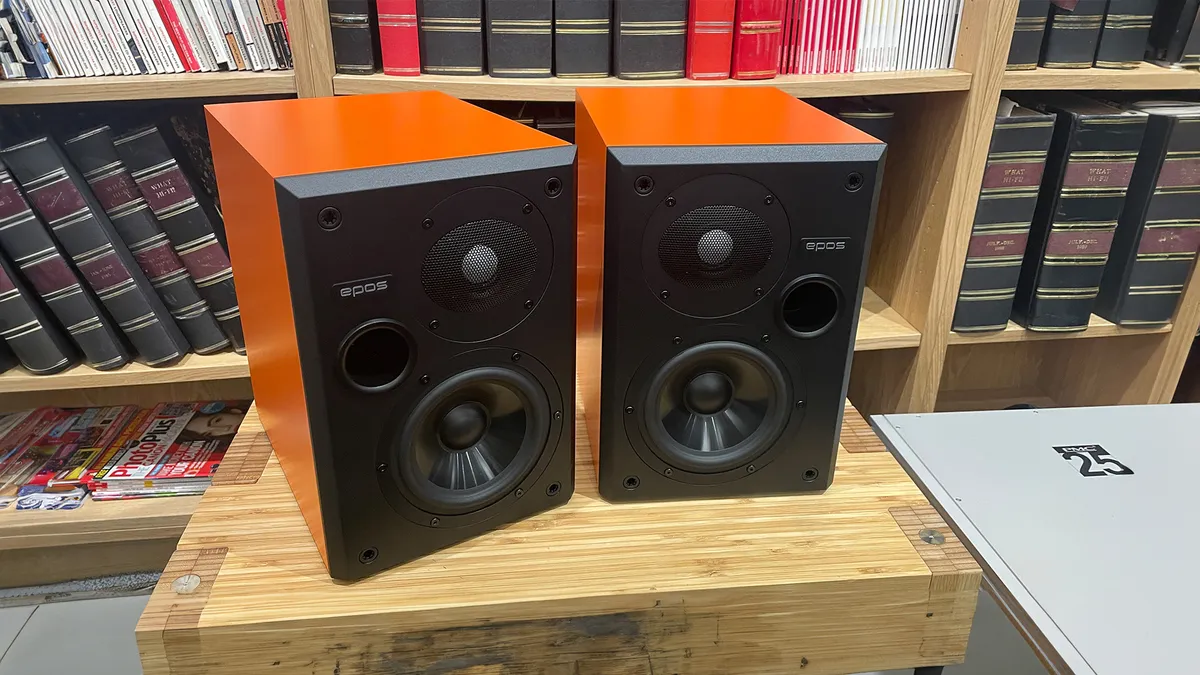
Most people, particularly in the UK, don’t have the luxury of large listening spaces, and smaller rooms can easily be overwhelmed by powerful low frequencies. If you use larger speakers with extended bass reach, it is easy to excite room resonances, leading to lows that are bloated and ill-defined. Such characteristics have knock-on effects across the board, from degrading midrange clarity to spoiling rhythmic drive and agility.
Small speakers produce less bass, but if they are properly engineered, the low frequencies they do generate will still sound balanced and properly integrated (Dali's new Kupid speakers are a fine example of this). The result in most modestly sized rooms will be more satisfying in the long run.
Another advantage of a compact speaker design is that the enclosure is inherently more rigid, giving the drive units a more solid base to work from. Remember, any movement of the driver’s chassis relative to the cone means lost information.
Also, the cabinet’s smaller surface area means that unwanted sound caused by panel vibrations will be at a lower level, so any negative impact on the speaker's performance is reduced. The benefits of this are plentiful, from a purer presentation to improved stereo imaging. PMC's Prophecy 1 deliver a superbly focused soundstage, and I strongly suspect that their rigid, well-controlled enclosures are a key factor in this.
Our ears are great at identifying the direction of sound, and if a cabinet resonates, we are adept at locating the source of that vibration. So, even with eyes closed, it is clear where the speakers are positioned, and the impression of a well-projected soundstage, floating free of the loudspeakers, is lost.

If you don’t think a cabinet produces much sonic output, put your ears on the top panel of your own speakers as music is playing. I suspect you will be surprised by the volume of the sound it produces.
A smaller mid/bass driver may struggle to dig out the lows or deliver large-scale dynamic shifts at higher volumes, but it does offer an advantage in terms of driver integration.
Most sensibly priced speaker designs tend to work in a two-way configuration, with a typical crossover point positioned around 2.5kHz. The smaller the mid/bass driver, the more comfortable it will be working up at this kind of frequency, and this gives the engineers greater leeway in choosing the partnering tweeter and the type of crossover filter employed.
This is the reason that small speakers tend to have a clearer, more articulate and expressive midrange performance than their larger siblings.
The successful design of all hi-fi components is invariably rooted in choosing the right compromises. There may be greater freedom at higher price points, but in the end, it is all about the engineer choosing their priorities with care.
Designing a small speaker isn’t easy, but the format also offers plenty of inherent advantages over bigger designs that shouldn’t be overlooked.
MORE:
How to build the perfect hi-fi system
Our guide to the best speakers we've tested across all budgets
Goodbye, 2025! Check out 7 of our favourite test tracks of the year

