
Nostalgia is a powerful force.
In the 50 years of What Hi-Fi?'s lifetime, we've seen the rise – and occasional fall – of several innovations, trends and fads, from Betamax to widescreen to, yes, 3D.
But are we looking back with rose-tinted 3D glasses? Are we, in fact, living in a golden era of home cinema, complete with perfect-black OLEDs, convenient HDMI eARC connections and affordable soundbar systems?
In honour of Home Cinema Week, I asked the What Hi-Fi? team what they thought about the matter. And it prompted quite the response, with some rather strong opinions popping up on both sides of the divide.
You can see their responses below – and feel free to add your own thoughts in the comments...
Yes – we are in a golden age of home cinema


While premium systems are still going to set you back a fair bit of cash, I still think this is a brilliant time to find a home cinema system if you are on a budget.
Of course, you are not going to get the same level of performance from an affordable TV screen compared to a model that costs thousands more. But the number of options out there for all price points feels like the best yet.
You can get a complete home cinema system for under £1000, which can include a bunch of five-star products that have performed brilliantly in our test room. For instance, the 50-inch TCL C6KS is available for about £429. The budget 4K model offers excellent brightness and contrast, and is an absolute bargain for the money. You could pair that with the Sonos Beam Gen 2 soundbar (£449) to upgrade the TV’s audio performance, delivering impressive Dolby Atmos effects and expressive vocals.
Budget systems might not suit everyone, but it’s great to see home cinema becoming more and more accessible.


I think it's incredibly hard to argue that we're not in a golden age of home cinema.
Home cinema has never been more accessible, whether in terms of price or practicality. At the same time, technologies such as Dolby Atmos and increasingly sophisticated room optimisation have made genuinely immersive sound achievable in spaces that simply wouldn't have supported it a decade ago.
All of this means that someone with a small budget and equally small and/or misshapen room can add an inexpensive, compact soundbar to their TV and find themselves audibly transported to the world of their movie, TV show or video game.
These days, you can even do this via certain tablet/phone and headphone combinations.
Of course, my argument depends on your definition of home cinema including soundbars, headphones and the like, which mine very much does, but even if yours doesn’t, the quality of ‘true’ home cinema has never been higher, either.
Sure, competitors in the AVR market have dwindled somewhat of late, but this hasn’t hindered quality, with Denon and Sony offering awesome entry-level models, Denon and Marantz producing the most feature-packed and user-friendly high-end models we’ve ever reviewed, Arcam and JBL producing uncompromising premium alternatives, and the likes of Anthem and McIntosh catering for the custom install and luxury markets.
Away from sound, meanwhile, the projector market has exploded with designs of all shapes, sizes, prices and technologies. For only a few hundred pounds, you can now buy a projector capable of producing a surprisingly watchable 150-inch image, and thanks to ‘coffee table’ and UST models with increased brightness and adaptive technologies, a projector can now be a viable option for a typical living room as well as a dedicated light-controlled space.
Still not right for you? TVs 100 inches and larger are now readily available and in many cases surprisingly affordable, allowing for a projector-sized experience with typical television convenience.
Essentially, whether your idea of home cinema is a £300 soundbar, a dedicated projector room or a six-figure custom installation, the choice and performance on offer today are unlike anything we've seen before. If that's not a golden age, I don't know what is.
No – we are not in a golden age of home cinema

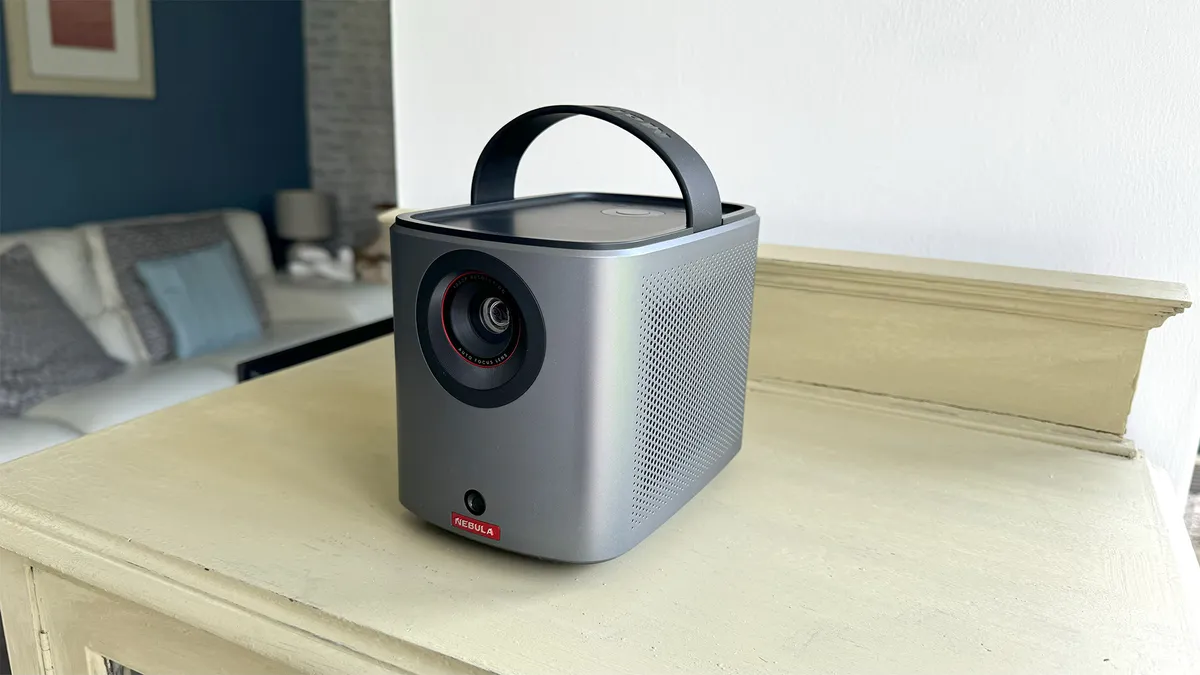
There are lots of arguments to support the idea we’re living in a golden age of home cinema. New giant TV panel technologies are boosting performance, and the arrival of amazing wireless surround sound systems makes it much easier to get decent audio in the comfort of your own home than ever before. The list goes on.
But for me, there’s one reason I don’t think it’s fair to call it a golden age: the cost of living crisis. Yes, we are seeing a lot of great new tech appear. But the truth is most people are struggling with the price of groceries. So the fact that £5000 projectors and £2000 surround sound systems are better than ever is a bit of a moot point for most of us. I’m a firm believer we could only call it a “golden age” when the benefits of a proper, big-screen home experience are more openly available to people with regular sized bank accounts.
Which, outside of a few rare exceptions, still isn’t the case. Look at our best projectors, or best TV guide, and you’ll still see a number of four-star products with the strap “best cheap”. That’s because, while we’re seeing lots of innovation, it’s yet to trickle down to the mid, let alone the affordable end of the market. Until it does, I’m going to belligerently stick to my guns and refuse to call it a golden age. We only succeed when we all succeed, after all.


Even if we do live in an era of accessible 4K TVs and Dolby Atmos soundbars, there's little point if people aren't able to use these features properly.
This is, of course, due to the rise of streaming. And while there are plenty of upsides to streaming – it is highly convenient after all, providing thousands of films and shows at our fingertips – the cracks are beginning to show. Exclusive content is disappearing forever, with no legal way to watch it anymore. More and more services are springing out of the woodwork, and there seem to be monthly price increases at this point, making costs exorbitant if you subscribe to even just a few streaming services at a time.
This is especially true if you go for the premium tier on each service for 4K streaming and Dolby Atmos, which is now £17.99 a month on Netflix alone. This does mean the overwhelming majority of people are likely watching on the middle or lower tiers, which cap out at HD and 5.1. And even if you do shell out for the premium tiers, it's still a step down from the quality of 4K Blu-ray discs thanks to lower bit depth and compression.
Which wouldn't be a problem if physical media were still accessible, but it's becoming increasingly harder to watch 4K Blu-rays. Sony and Panasonic are the two mainstream manufacturers still offering 4K Blu-ray players, and neither has released a brand-new player in years. And with Sony ending physical disc production for the PlayStation, it seems highly unlikely that the next generation of consoles will have disc drives for 4K Blu-rays, or any other form of physical media for that matter.
Even if our actual home cinema systems are getting better all the time, it's becoming increasingly harder to use them at their full potential. As good as upscaling is these days, it's entirely possible that the average household has not actually watched their 4K TV at that resolution, let alone made use of HDR and all the other home cinema technology.
MORE:
These are the best AV receivers you can buy right now
Check out the best Dolby Atmos soundbars
And here are the best projectors
