
With a claimed 751 million users, streaming giant Spotify is by far the most popular streaming service and has become a go-to for many music lovers worldwide.
And I can see why; the vast music library, combined with its endless catalogue of audiobooks and podcasts, makes it a great hub for all your listening needs. Plus, after many years of waiting, the service finally started offering its Premium subscribers 24-bit hi-res audio quality.
Until earlier this year, I had been a loyal Spotify subscriber for about 10 years. But sometimes you have to throw caution to the wind and try something new.
The streaming service that called to me the most was Qobuz – a French platform that has existed almost as long as Spotify and claims to be "the artist-first, independent streaming platform for music lovers who care".
Offering a 100 million-strong music catalogue, Qobuz offers all of its tracks in at least CD quality, plus higher hi-res audio sampling rates, which together sets it apart from Spotify.
It earned five stars when we re-reviewed it a couple of years ago. So, after taking the plunge and transferring my many Spotify playlists over to the more niche platform that's favoured by audiophiles, it was time to compare the two and see which one served my needs better.
Here are two features on Qobuz that I loved, and two that I wish it did a little better. Let's get cracking!
Qobuz's superior sound quality
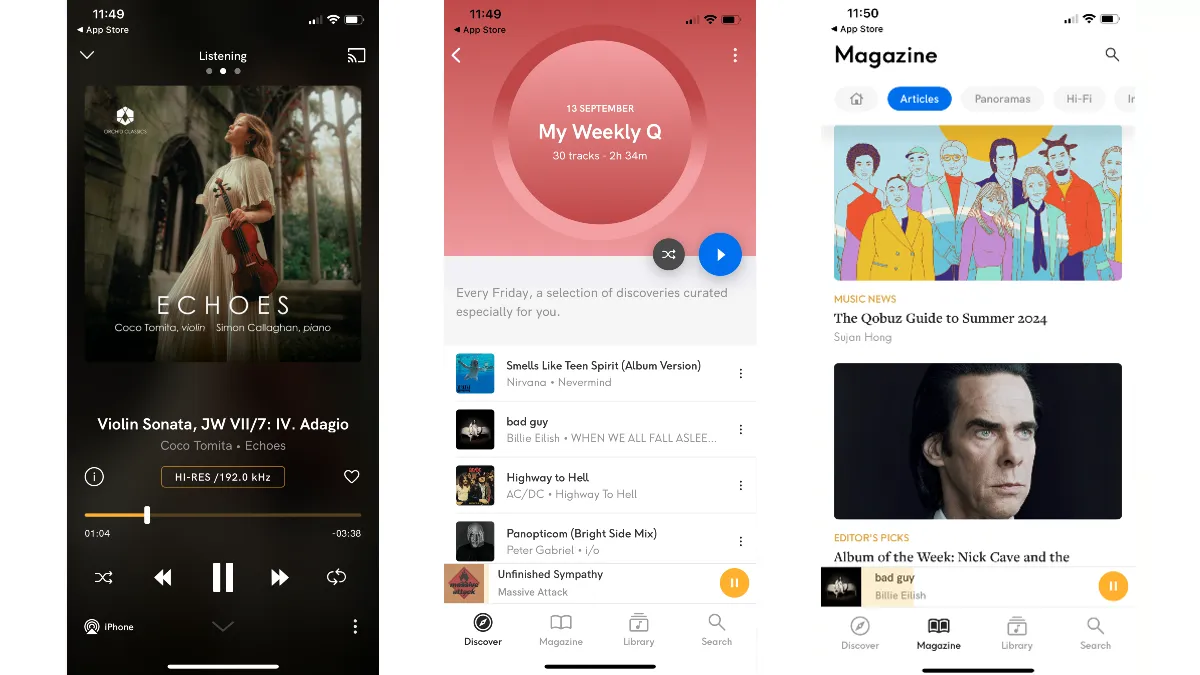
There's immediately a clear difference between Qobuz and Spotify's audio quality that is hard to deny. Listening with the Award-winning Sony WH-1000XM6 headphones, Qobuz delivers a more engaging, detailed and dynamically interesting music performance.
When playing Aurora's Some Type Of Skin, Qobuz offers a more impactful dynamic range than Spotify, which sounds rather flat and uninspiring by comparison. Its handling of bass is incredibly nuanced yet punchy as well, giving each track a great sense of timing that will get your toes tapping.
It just feels like Qobuz puts more care into its music sounding the best that it can, with a genuine passion for top-quality audio.
I should caveat that my daily listening experience is with Bluetooth headphones connected to my phone, so I am technically not getting full hi-res quality without using a DAC and wired headphones.
But, even with this compressed listening experience, Qobuz still stands out as the cleaner, more detailed performer. A big tick for the underdog, here.
Well-written and detailed content on albums

The French platform's sense of passion and care for music is carried on when it comes to the written content on the site. With the Magazine feature, you can access a range of thought-provoking articles that discuss the latest music events or reflect on older artists.
From features on the importance of Bad Bunny's recent Super Bowl performance to weekly round-ups of new must-listen albums, it feels like a slower, more intentional navigation experience through the service.
Even the descriptions of artists are well-researched and packed with plenty of ideas for where to start if you have yet to listen to any of their content.
Qobuz is run by a relatively small team (especially when compared to Spotify), which helps the recommended content feel more personal than its bigger rivals.
Spotify has faced a fair amount of backlash recently over its distribution of streaming income to artists, whereas Qobuz is the first streaming platform to officially disclose its average per-stream royalty rate.
That makes the smaller platform an easier pick from a music lover's perspective, in terms of access to passionate content and more transparent artist income.
Less intuitive user interface
Where Spotify still has an edge, however, is with its more intuitive user interface, which makes finding music you want that much easier.
When you use Qobuz's search feature to find a song or artist, you have to be quite precise. Misspelling just one word can skew your results completely, which can be quite cumbersome, especially when you are using the app on the go.
Spotify, on the other hand, is able to work out what you are searching for with more accurate results. So searching for artists when you don't know the precise spelling is less of an issue.
We have found a similar issue with Tidal, so it is far from just an issue with Qobuz. But it does mean Spotify is easier to navigate in this respect.
Spotify has more accurate recommendations

What's more, Spotify's algorithm-led curations (such as ‘Picked for you’ and ‘Made For’) are based on your listening habits and can recommend more accurate tracks as a result.
Music discovery mixes such as the ‘Discover Weekly’ and ‘Release Radar’ are also at the forefront of the Spotify experience and are arguably where the service still just about gains ground on its rivals.
We said in our review of the streaming service: "Generally, such playlists are pretty spot-on, offering a good mix of both old and new, and even including new remixes of songs from artists you have listened to."
As we mentioned, Spotify has a much larger team behind it than Qobuz. Its algorithm-led experience differs from Qobuz's approach which is based more on top picks from the editorial team.
Qobuz does offer its own curated playlists with a mix of tracks you listen to regularly and recommended discs. These are called the DailyQ and WeeklyQ playlists, and they do a decent job of working out what kind of music you might be in the mood for, although it is not perfect.
For instance, I've been listening to a whole lot of musical soundtracks since having Qobuz (don't judge me), but none of the tracks are included on either list.
Spotify, however, includes a specific playlist including a whole lot of musical tracks that I listen to regularly, along with similar tracks that suit my tastes better than Qobuz's recommendations.
There is the argument that Qobuz's tactic helps introduce me to more songs, but with a personalised playlist, I expect to hear a few more tracks that the service knows I listen to a lot.
Still, I'm very glad I took the leap from Spotify to the more niche Qobuz platform.
Simply put, the superior audio quality is well worth the slight compromises in terms of UI and accurate personalised recommendations.
Qobuz is available with a one-month free trial so, if you find your eyes straying from Spotify and you're wondering what other options are out there, I recommend giving it a go.
MORE:
Here is our full review of Qobuz
Check out our guide to the best music streaming platforms
And this is our review of Spotify

