
It's not even worth dwelling on how far back 1996 was. We hate to break it to you, but the twelve happy months which gave us the first-ever flip phone (the Motorola StarTAC), the first Pokémon game and the birth of Dolly the Sheep were 30 whole years ago.
Instead, distract yourself from time's relentless march forwards by looking defiantly back in the opposite direction. 1996 was one heck of a year for music – an era which served up a mix of acid house ravers, Britpop swaggerers and post-grunge sleeve-chewers, all smashed together to craft the intoxicating cocktail of those hopeful pre-Millennium days.
COVID? Social media? Economic downturn? Dude, wake up – it was all just a bad dream.
1979 by The Smashing Pumpkins
The Smashing Pumpkins are an iconic band, especially if you’re a grunge fan. Their third album, Mellon Collie and the Infinite Sadness, is often viewed as a key reason why.
The album took the Pumpkins in a different direction from their contemporaries. Featuring an eclectic mix of tracks full of textured compositions and an overarching ethereal feel, Mellon Collie... was a radical departure from the raw, punk-inspired despondence the grunge movement was famous for.
So it makes sense that 1979, which frontman Billy Corgan describes as the most personally important song on the album, is pretty awesome and one of the most iconic tracks of 1996, at least for me.
Chronicling Corgan’s feelings as he turned 12 in, you guessed it, 1979, it’s a dreamy, intentionally dirge-like, slightly euphoric song that still tugs at my nostalgia strings whenever I hear it and one that I’ve loved since I was a teenager.
Like many of us of a certain age, there was a time when a copy of Mellon Collie on CD or MiniDisc was always in my bag, and I must have played the song at least once a day between the ages of 14 and 15.
Yet the thing that makes it all the more special is that it very nearly didn’t make it onto the album. Stories suggest Mellon Collie was composed and recorded at a feverish pace, and 1979 was a particularly turbulent entry to it.
Originally a demo Corgan made based on the opening melody without lyrics, the album’s producer didn’t think it was “good enough” and didn’t want it included. In response, Corgan locked himself away and worked on it overnight, crafting its lyrics and finishing it with samples and effects the band had never used before.
The result is a complex track that feels entirely different to the rest of Mellon Collie, which itself was very experimental, hinting at the more textured, synth-pop direction the band would take on its subsequent, and much more controversial among fans, album, Adore.
Hence I feel it deserves a place on this list, not just as one of my favourite songs of all time, but as a piece of music’s history.
Words by Alastair Stevenson
Forty Six & 2 by Tool
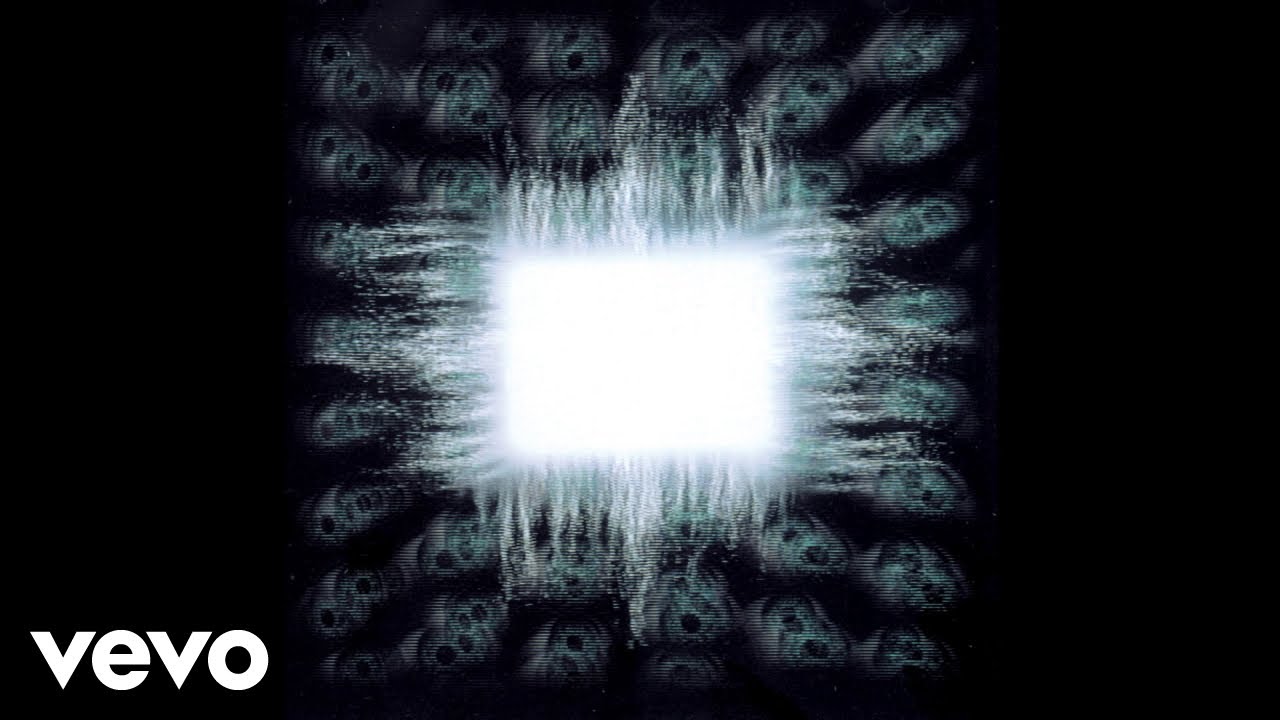
Tool are a terrific provider of test tracks at the best of times, with the entirety of 1996’s Ænima stuffed to the brim with lush, hi-fi ready goodness for music keenos and sonic tinkerers to obsess over.
Forty Six & 2 is a relatively easy track to get a handle on if you’re a newbie, and while it clocks in at around six minutes long, it’s not hard to see why it’s become such a perennial favourite among headbanging stud-wearers and basement dwelling engineers.
Cohesion, organisation and detail are all up to the test, but it’s your systems sense of dynamics – both small scale and full range – that Forty Six & 2 is most adept at spotlighting. The tune’s ever-chuntering bassline will give you a keen sense of how your hi-fi is adapting to small volume changes on the go, while intermittent thumps of energy as the entire ensemble erupts are perfect for assessing those massive, thunderous swings.
Words by Harry McKerrell
Bulls on Parade by Rage Against the Machine
“They don’t gotta' burn the books they just remove ’em / While arms warehouses fill as quickly as the cells”.
The ‘Rage’ part of Rage Against the Machine feels even more relevant today than it did 30 years ago. Bulls on Parade was written in 1996 to criticise the U.S. military and arms industry, and has been used as a protest song ever since, with lyrics that remain just as pertinent today worldwide.
Explosive, razor-sharp and inciting, Zach de la Rocha doesn’t mince his words and we feel every brunt of the unflinching political lyrics. It’s an incendiary track with a powerful, muscular driving rhythm and full-throttle energy that never takes its foot off the pedal.
Of course, Tom Morello’s wrangling of his guitar to make a vinyl record scratch effect is another highlight of the track – one that still sounds unique three decades later.
Words by Kashfia Kabir
Midnight In a Perfect World by DJ Shadow
Back in 1996, DJ Shadow released Entroducing….., and took hip-hop in a whole new direction. The album was much more cinematic that what had come before, with a much wider range of influences than your standard “hands in the air” fare. And that was encapsulated with the lead single, Midnight In A Perfect World.
Its samples might be diverse – rock, soul, funk, spoken word, film dialogue – but they all have one thing in common: obscurity. Whether it’s that floating female vocal (taken from Baraka’s Sower Of Seeds), the main piano hook (from David Axelrod’s The Human Abstract) or spoken word from an interview about drums, you could spend hours hunting down the various nuggets that make up this track.
Yet it all gels together surprisingly well, like it was somehow meant to be. On release it was categorised as the new genre of trip-hop, along with British bands Portishead and Massive Attack, but Midnight In A Perfect World was something else entirely – the sound of a new voice that would continue to take hip-hop to new places throughout the ensuing decades.
True, with its breakbeat drums, soulful vocals and looped-up samples, it set the template for all that chillout ephemera that was farted out around the turn of the century. But as a snapshot of a bold new era of hip-hop in the 90s, it stands alone.
Words by Joe Svetlik
Firestarter by The Prodigy
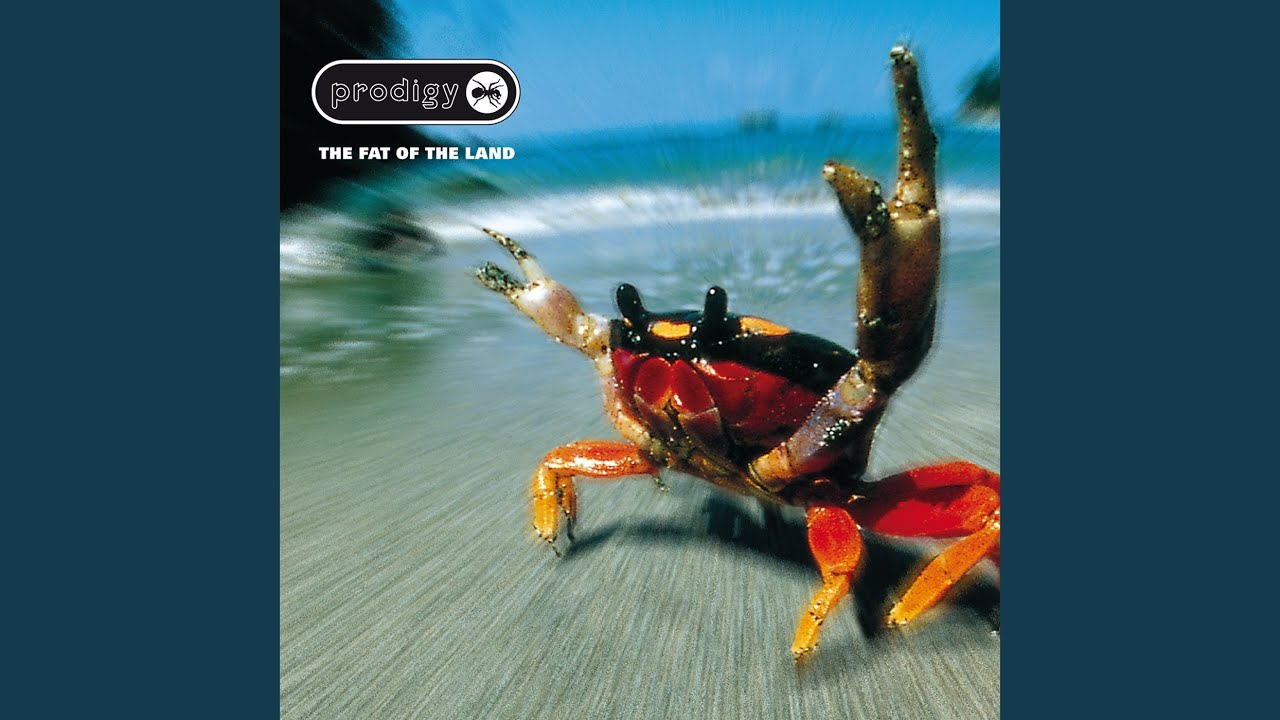
It's hard to overstate the impact The Prodigy's sneering techno anthem had on 1996's musical landscape. At a time rock was making a half-arsed chart comeback via Britpop Dad-rock, watching Keith Flint tear it up on the Firestarter video on Top Of The Pops, looking every bit the living, snarling embodiment of acid-induced psychosis, was just magnificent.
And people actually complained to the BBC that the video was scaring their kids. The track itself though is the real beast; invigorating breakbeat techno infused with snarling punk attitude, ominous synths and freakish samples.
Through the right system, it's a great test of timing and your hi-fi's handling of all the frequencies, as Liam Howlett's brain-searing electronic hooks and loops, dipping and swelling to create multiple 'drop' moments, is underpinned by monstrously gut-gripping bass and body-blow beats.
And it still sounds awesome.
Words by Chris Burke
Sandstorm by Cast
Sandstorm is, perhaps, one of Britpop’s lesser-known singles, despite being released at the height of the movement and climbing as high as eighth in the UK Singles Chart. Released in January 1996 as the third single from All Change (1995), the debut album from Liverpudlians Cast, Sandstorm is another fine example of Liverpool’s rich musical history.
Like a lot of Britpop, it’s clearly taken some inspiration from the sixties. The breakdowns and guitar solo certainly have an ethereal, psychedelic quality to them, as do the backup vocals, but the rest of the song has a wonderful drive to it: piercing lead notes, crunching guitars and a bouncy rhythm section that beautifully propels you from one point to the next and eventually to the song’s striking, but not sudden, conclusion.
With a playtime of just over two and a half minutes, it definitely falls into the category of short, but it’s a track that is almost certainly sweet.
Words by James Cook
Don't Let Go (Love) by En Vogue

I have loved this song ever since I heard it as a pre-teen, even if I completely misheard some of the lyrics in the chorus when it was on repeat on MTV.
But it’s a dramatic love song that sits a mature step above the usual saccharine pop fare from that era. En Vogue were one of the defining female R&B acts of the 90s (alongside TLC, Salt-N-Pepa, Toni Braxton and Aaliyah), and Don’t Let Go is a deliciously smouldering and empowering ballad that allows the quartet to flex their considerable vocal skills and lush harmonies to the max.
The arrangement is fantastic, with an agile, sultry bass underpinning the track with hints of funk; but really, it’s the soaring, commanding vocals and endlessly sing-a-long chorus that will grab you from the first note and won’t, well, let you go.
Words by Kashfia Kabir
Born Slippy. NUXX by Underworld
1996 will go down in history (well, my history at least) as the year I first got into dance music. My newfound thirst for bpm was predominantly powered by two things: the Ministry of Sound: The Annual II album, which, to this day it still contains its fair share of bangers, and the closing track to one of the best movies of the year: Trainspotting.
Okay, so Born Slippy. NUXX might have first appeared on a B-side in 1995, but its reissue in July ‘96 rode the wave of Danny Boyle’s cinematic masterpiece, catapulting it not only into the mainstream, but my ears, too.
The slow, synth-y start sets a thoughtful tone and sets the mood for the end of the film perfectly as Renton summons up the courage to leave his chums behind for a brand new start. Little did I know the track was about to explode into an assault on the senses, the march led by a pounding kickdrum that never fails to get my foot tapping.
A club classic.
Words by Andy Madden
Valley of the Shadows by Unknown Origin
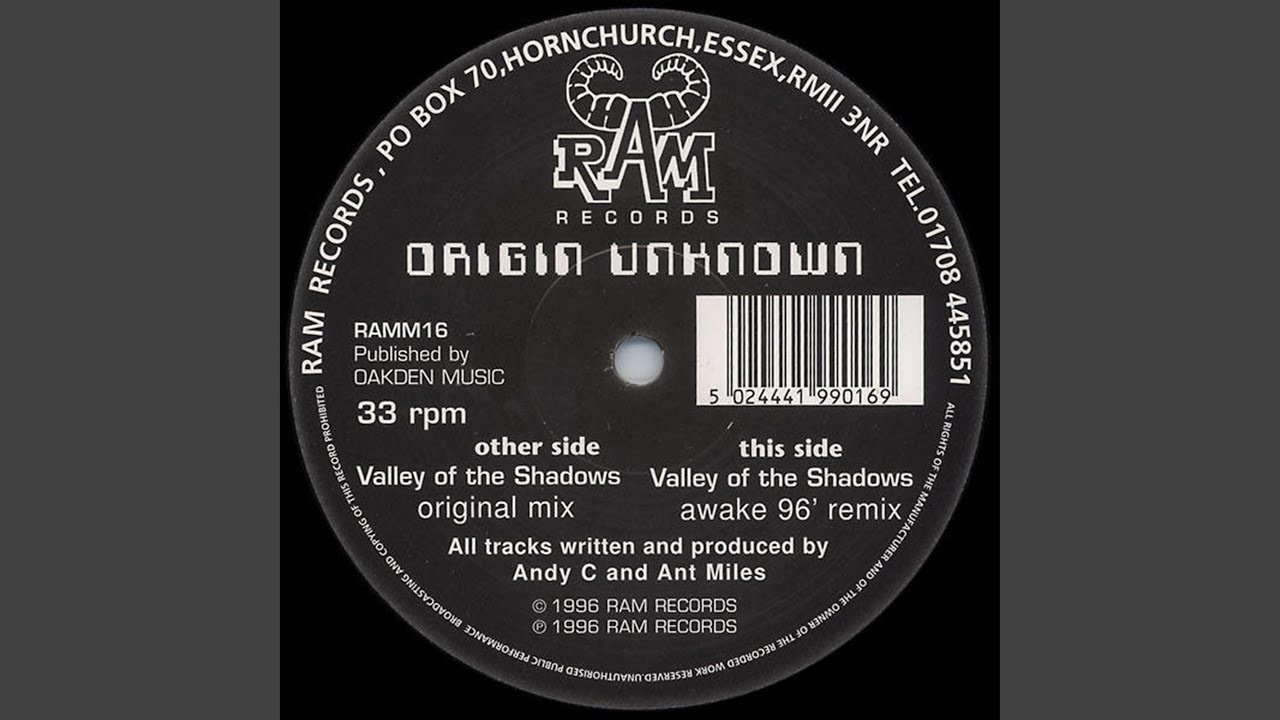
OK, so it originally came out in 1993, but Valley of the Shadows went from underground to overground upon its re-release in 1996, and quickly became one of the biggest jungle tracks of all time. Some 30 years later, it remains instantly recognisable to anyone with even a passing interest in the genre.
The epitome of being ahead of its time, Origin Unknown (Andy C and Ant Miles) married the iconic “long, dark tunnel” vocal sample (taken from the BBC’s QED TV show) with shuffling breakbeats and a necessarily deep and ominous bass line. Eerie synths completed the magic and ultimately brought jungle to a whole new audience, kickstarting the rise in global popularity of drum and bass.
In 2026 it still provides an excellent test of rhythm and timing, while you will certainly get an idea of how well your system delivers bass. Don’t be scared; turn it up and enjoy.
Words by Joe Cox
Virtual Insanity by Jamiroquai
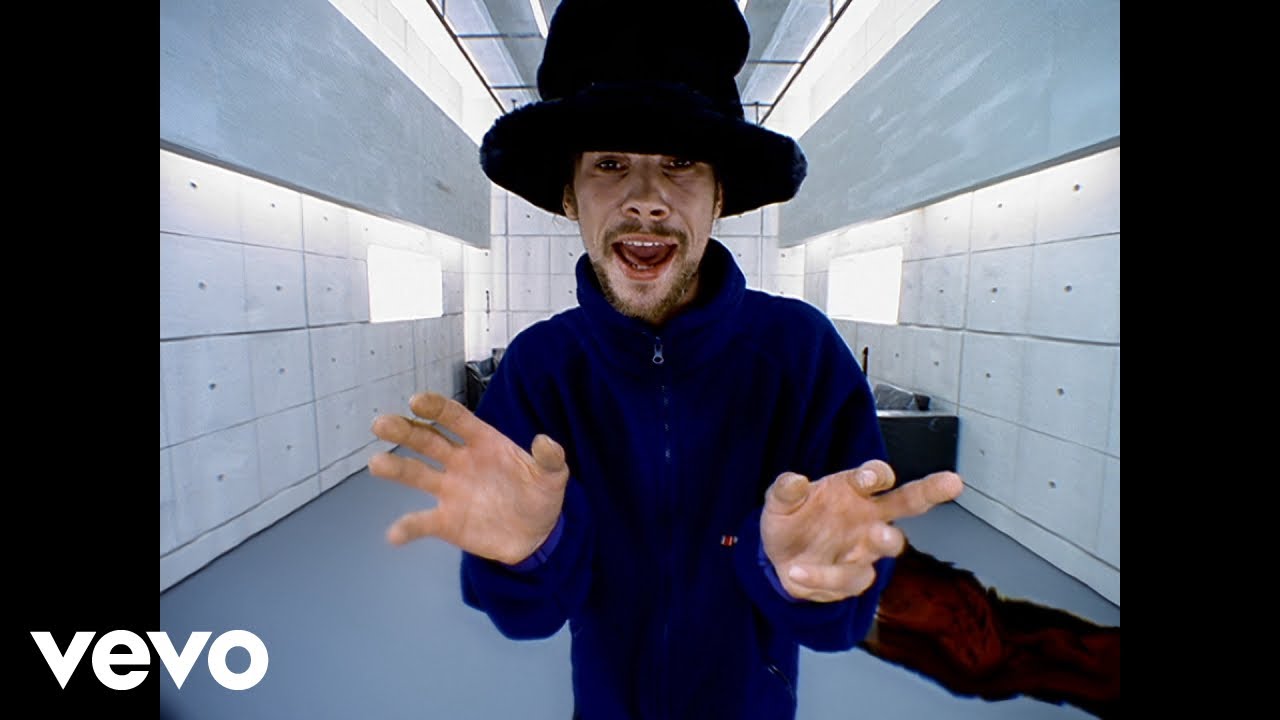
It’s fine, not everybody likes Jamiroquai. The Jay-Kay fronted group were a major force in the the development of acid and jazz fusion across the 1990s, blending cheeky, occasionally provocative lyrics with crisp production and a keen ear for a catchy chorus, gaining notoriety from danceable, fleet-footed hits such as Space Cowboy, Cosmic Girl and Canned Heat. Oh, and let's not forget Jay Kay’s endearing disco-dad dancing and assortment of outlandish headwear.
Whatever your disposition towards one of the defining funk acts of the decade, there’s no escaping Jamiroquai’s test room credentials. Want proof? We’re the proud owners of the group’s Greatest Hits CD, regularly giving it a spin whenever we want to see how well a CD player or hi-fi setup handles rhythms, cohesion, and Jay Kay’s flighty falsetto.
As one of Jamiroquai’s biggest hits, Virtual Insanity is a great place to start, with its breezy vibes belying darker concerns regarding the creeping encroachment of digital alienation. Funky!
Words by Harry McKerrell
The Distance by Cake
There is no other band that really sounds like Cake. That mixture of college rock, alt rock and singer John McCrea’s sardonic tone is unmistakably recognisable the second you hear it, and their standout single, The Distance, from the second album Fashion Nugget (which is filled with great tracks) is a perfect testament to their musical talents.
McCrea’s deadpan delivery shouldn’t work so well with the driving, snappy rhythm section, but it all contrasts and melds together in a melodic, cohesive way. It is, quite frankly, a bop.
McCrea’s lyrics take centre stage in the verses before the crunchy guitars and trumpet flourishes kick in for the big chorus, and coupled with the backing vocals and the odd synth sounds, it creates this wonderful melange of noise that is arch, inventive, rocky and, simply, just a great tune that never loses momentum.
Words by Kashfia Kabir
MORE:
Kick off your 2026 in style with our list of the 7 best test tracks getting us through January
8 of the best Bruce Springsteen tracks to test your hi-fi system
Check out our ultimate test tracks collection

