
The FIFA World Cup is one of the biggest sporting events in the world, if not the biggest: a staggeringly popular celebration of sport, teamwork and international co-operation.
But it's also one of the most-watched events across the globe, requiring an awfully complex behind-the-scenes operation to broadcast – and this often leads to breakthroughs and firsts when it comes to audio and video in our living rooms.
So, down below, we're going to give you a history of the World Cup, What Hi-Fi? style. There won't be any goal statistics or player rankings here. Instead, we will go through all the World Cups that saw notable advances in TV and broadcasting technology.
How many of these do you remember? Have a look below...
Switzerland 1954: the first televised World Cup
Although the World Cup started in 1930, it wasn't until the fifth tournament, in 1954, that television cameras turned up. The BBC broadcast matches live here in the UK thanks to the recently installed Eurovision network, which could relay television signals across Europe.
ITV joined the coverage for Sweden 1958, but the Eurovision network's limitations became apparent in 1962 when the World Cup moved to Chile. With no practical way to transmit live pictures across the Atlantic, footage had to be physically transported instead, and British viewers often had to wait days to see the action.
Mexico 1970: the first World Cup in colour
While some of the 1966 World Cup had been filmed using the technology, the 1970 World Cup in Mexico was the first produced and distributed internationally in glorious colour.
It was also the first World Cup held outside Europe to be broadcast live around the world via satellite, allowing fans thousands of miles away to watch matches as they happened rather than waiting for film reels to arrive days later.
Football fans will remember the tournament as the last World Cup to feature Pelé, as well as a memorable save from England goalkeeper Gordon Banks after a header by the Brazilian striker.
Germany 2006: the first World Cup in HD
While parts of the 2002 World Cup were available in HD in Asia, 2006 was the first time every match of the tournament was filmed and broadcast in HD.
It was also the first World Cup produced entirely in the 16:9 widescreen format, after the technology had been introduced for the 1998 World Cup in France.
South Africa 2010: the first World Cup in 3D
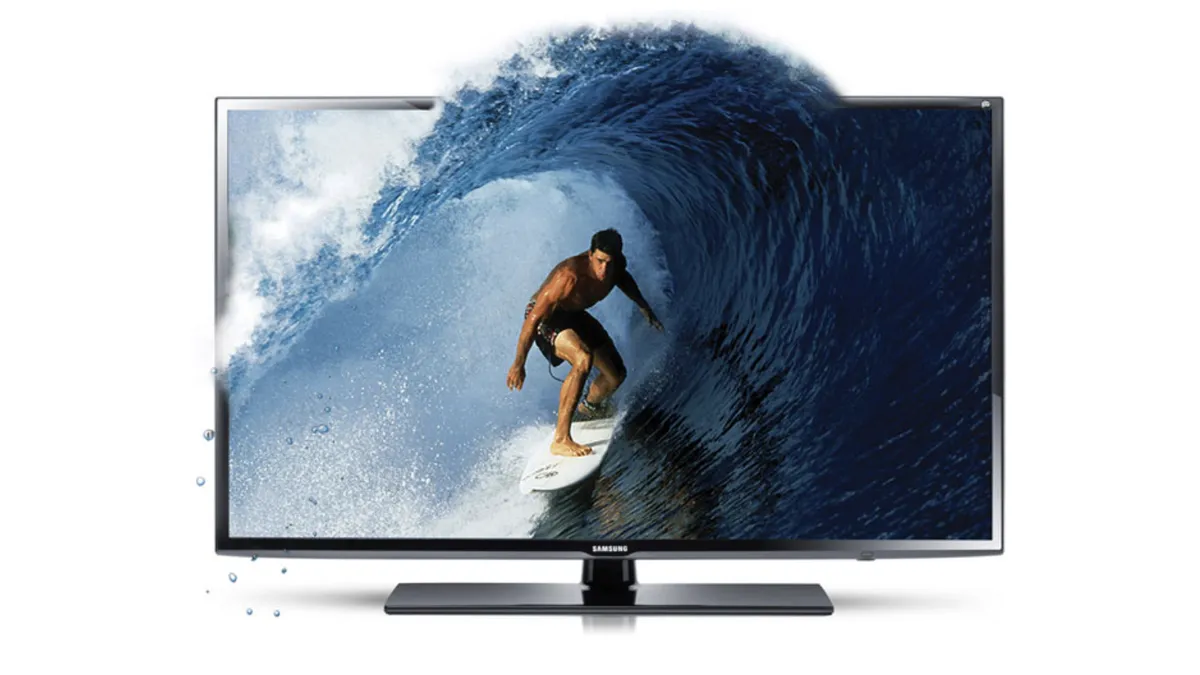
Now here's a throwback: fresh off the success of Avatar, the FIFA World Cup joined the 3D craze for the 2010 tournament in South Africa thanks to a partnership with Sony.
25 matches were broadcast in 3D, but only to select public viewing areas across the world, and the technology did not return for the next World Cup.
HD TV sales had exceeded 24 million in the UK by this point, and the advent of Freeview HD meant over half of UK households had access to HD-quality broadcasts.
2010 also saw ITV's first widespread HD coverage following trials in 2006 – though an ill-timed error meant HD viewers missed Steven Gerrard's opening goal against the USA.
Russia 2018: the first World Cup in 4K (and VR)
While there had been earlier trials, this was the first time every single match had been produced in 4K UHD and HDR.
In the UK, selected viewers could watch matches in 4K HDR via a limited-capacity BBC iPlayer trial.
The broadcaster also trialled virtual reality coverage – those with a smartphone or compatible VR headset could watch from a virtual private box, complete with a pitch view and a coffee table complete with stats.
North America 2026: The future?

While matches have been filmed in 8K as far back as 2014 (Japanese broadcaster NHK recorded nine matches in 8K to show on massive 330-inch screens), it looks unlikely to be adopted as a tournament-wide format anytime soon, especially with yet more manufacturers leaving the 8K TV market.
While some international broadcasters are offering the tournament in Dolby Atmos (Peacock in the US, for example), UK viewers – even those watching in 4K HDR via BBC iPlayer – miss out on immersive audio.
Given that 4K streams over BBC iPlayer still come with a delay of 30 seconds or more, it seems there are still some flaws to iron out before the next big AV development hits the World Cup – at least for UK-based football fans.
One day, though, I surely won't have to choose between watching in 4K and having my neighbours spoil an England goal...
MORE:
The headphones World Cup: from Beats to Bose, which audio brands are winning over football's elite?
What's better for a World Cup TV – size or quality?
We've built an awesome playlist that features a local artist from every World Cup 2026 host city

