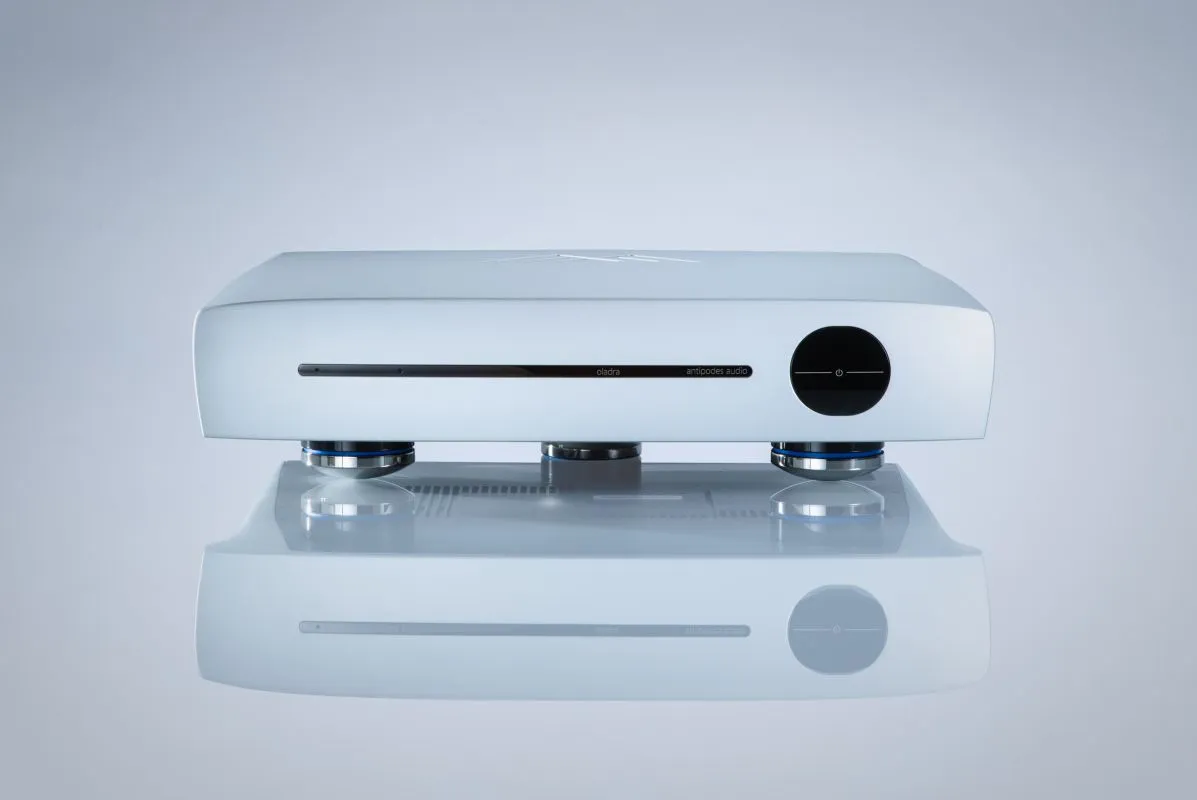
When you think of New Zealand you probably see Kiwis (both the bird and the fruit), Lord of the Rings, and sheep doing the Haka, but it might be time to add something new to the list: the Antipodes Oladra.
As you might have guessed from the name, Antipodes Audio hails from New Zealand – the Kapiti Coast of the North Island to be exact – and the new G4 edition of the Oladra is its latest flagship audio server.
Don’t tell De La Soul, but four is very much the magic number for this high-end song silo. Inside there are four separate processing engines, each with its own specific job. The first runs the server app, the second takes care of the player app, the third isolates and regenerates the output signal, and the last one reclocks the output signal that goes to the DAC.
It’s this four-step process that Antipodes reckons sets the Oladra apart from other similar products, because it means that all the data arrives at the DAC with impeccable timing, ensuring the signal is as clean as a recently washed whistle. Just to make sure, there are also two levels of isolation from the custom-made motherboards and Intel chipsets that power everything, with 64GB of RAM to help it cope with the massive number of songs you can store inside.

The Oladra actually comes without any storage as standard, but there are three SSD slots available, meaning you can fit it with as many terabytes as your music collection demands. It supports native DSD512 and 32-bit/768kHz PCM hi-res audio, and those files aren’t small, so you can also upgrade to add more digital room at a later date if required. You also have a choice of playback options including Roon, Plex, Squeeze and UPnP/DLNA, so it’s compatible with plenty of other kit.
All of that tech doesn’t come cheap, so you’re looking at £28,888 before you’ve added your storage. That’s about the same as around 23 separate flights from the UK to New Zealand, but don’t worry, you don’t have to go and collect it. Antipodes products are now being distributed by Absolute Sounds in the UK, and if you can’t afford an Oladra there’s also the slightly cheaper Kala range of servers. It includes four products: the Kala 50 (£18,888), which is second only in the Antipodes family to the Oladra, the Kala 41 (£9998), Kala 22 (£8998), and Kala 21 (£6998).
MORE:
How to build your own digital music library
Where can you buy hi-res music? Here are the top download sites

