
I've recently been testing the iFi iDSD GR 2 DAC/headphone amplifier, and while it's a perfectly decent performer, it has left a question buzzing inside my mind like a wasp trapped in an upturned glass: why does a DAC need a Bluetooth input?
A seemingly innocuous question, perhaps, but one that won't leave my brain. Let's be clear that the iDSD GR 2 will set you back £529 / $529 / AU$849 at the time of writing, a product that's likely going to be driving all manner of respectable wired headphones.
If you're buying a DAC to improve the sound of your laptop-stored digital music files, then sound quality is likely to be top priority, so what's the appeal of throwing much of that out of the window on a less efficient means of audio transmission? Why have a Bluetooth option at all?
The curse of the unticked box

Part of the answer stems, I imagine, from one very simple motivator: consumer expectation. As we've seen with the rise of wireless headphones and Bluetooth speakers, customers expect a well-stocked spec sheet, and as soon as certain boxes aren't ticked, alarm bells are set ringing.
It feels as though Bluetooth speakers now must have Auracast, while wireless headphones must deploy in-depth noise cancelling and some form of spatial audio. If they don't, a rival brand will, and that's where a potential buyer might instead head.
Omitting a given feature, even on a more premium or audiophile-centred DAC, might smack of an oversight on the part of the manufacturer, even if said omission was actually a strategic one designed to redirect resources elsewhere.
Try explaining that to an increasingly voracious customer base.
Let's not ignore the fact, either, that having a Bluetooth input is exceedingly convenient. As a means of wire-free transmission from your source (such as a Bluetooth-equipped laptop or smartphone), it's incredibly easy to access and generally very stable, and many users enjoy the freedom of having a source that isn't tethered to headphones or, in this case, their DAC. Like William Wallace fighting at the Battle of Stirling in Braveheart, it's all about freedom.
Bluetooth is also a universal language, and that extends beyond the purely technical. If you've got a friend who wants a quick connection to your fancy new DAC to hear your Tidal playlists in better quality, it remains the king of convenience. Everyone knows it, everyone uses it, and everyone understands how it works.
Plus, the quality is good, and getting better. The iDSD GR 2, for example, offers Bluetooth 5.4 with higher-quality codec support in the shape of aptX Lossless, aptX Adaptive and LDAC, which essentially means the chance of streaming files up to 24-bit/96kHz using Adaptive and 32-bit/96kHz via LDAC. Such files can be accepted via Bluetooth, but as we’ll see, this is still a compressed and lossy streaming method which comes with serious drawbacks.
It’s still worth pointing out, though, that the DAC is still the thing doing the audio decoding, not your phone or laptop, so you're still getting some of the benefit of your dedicated device when playing via Bluetooth. Note, of course, the word "some".
Bluetooth(less) audio
No matter the strides that the likes of Qualcomm and Sony have made in improving Bluetooth as a means of audio transmission, there's no question that those trusty old wires still rule supreme when it comes to listening to hi-res files, as it guarantees lossless audio transmission.
As we wrote in our review, "the iDSD GR 2’s (Bluetooth) performance is perfectly capable, as evidenced by its sure-footed handling of a 16-bit/44.1kHz rendition of Goose’s Dripfield, but if you want to make the most out of your DAC – and indeed, the headphones you’ll be partnering it with – (it) should be seen as a nice bonus rather than a primary means of listening."
The problem is, when the DAC is wirelessly connected to your source, the Bluetooth part becomes the weak link in the audio transmission chain. No matter how good your wired cans are, how high the file resolution is, and how firmly you've got them jammed into the very real, very physical headphones socket, this lossly wireless connection to the source will become your limiting factor.
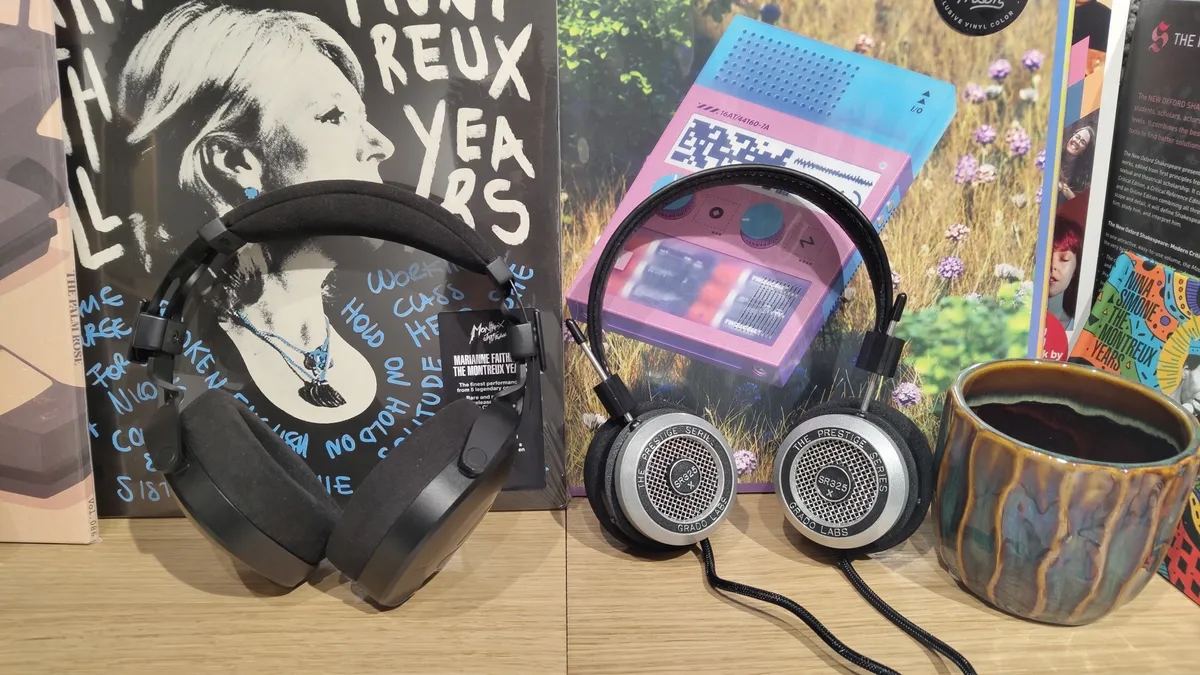
Plus, if you've spent all this money on a DAC, you're likely to be using a decent pair of wird headphones to partner with it, from the Røde NTH-100 (£149 / $149 / AU$249) to the open-backed Beyerdynamic DT 990 Pro X (£189 / $199 / AU$399), the Grado SR325x (£330 / $295 / AU$419) or, at a push, the Beyerdynamic T1 (3rd Generation) (£899 / $899).
Bluetooth has drawbacks which can rob the audio of its initial lustre, the main one being the problem of compression. LDAC, for instance, has a data rate of 990kbps, and while impressive compared with the 328kbps rate of standard SBC, it’s a lot lower than the 1411.2kbps provided by CDs.
Plus, if you've bought your not-inexpensive DAC to use primarily with wired headphones, not using a wire between source and said DAC seems somewhat redundant when the headphones provide a physical tether anyway. The supposed freedom provided by wire-free Bluetooth rather goes out the window, as you're still using a physical connection between your DAC and headphones anyway.
The question you have to ask is whether you'd miss Bluetooth if it weren't there. The Award-winning Chord Mojo 2 DAC doesn't have a Bluetooth input, but for sound quality, it's a cut above, and not once have we listened to the Mojo 2 and wished for wireless connectivity. That, in itself, tells you all you need to know.
It's admirable that iFi, or any other brand, would want its products to be as feature-laden as possible, but the idea of Bluetooth on a premium DAC designed to service the ‘sound-first’ market doesn’t make sense to me.
If you’re willing to spend what is still a considerable amount of cash on a DAC such as this, you’re going to want to get the best sound possible for the money. Bluetooth may be convenient, but the sonic sacrifices you’ll make feel unjustifiable given that the purpose of a DAC such as the iDSD GR 2 is, ultimately, to make your music and headphones-based listening sound as good as possible for the money spent.
MORE:
Read our review of the Chord Mojo 2
From legendary turntables to cutting-edge DACs: 33 debut products that defined hi-fi history
Best DACs: USB, desktop and portable digital-to-analogue converters

