
There are very few celebrities who can match the universal popularity of naturalist Sir David Attenborough. So I hope you all have your party poppers and balloons at the ready, because today marks his 100th birthday.
This milestone is almost as impressive as his incredible career, which has spanned eight decades and mapped the beauty of nature, as well as the destructive impact of climate change.
It all started in 1954 with his first appearance in Zoo Quest, where you can see a bushy-tailed Attenborough presenting the opening segment.
Since then, his calm, good-humoured tones have elevated countless documentaries and imparted knowledge on everything from elephants to eucalyptus.
He is also known for his pioneering approach to documentary filmmaking. In 2015, for instance, he and his team dived 1000 feet in a submersible off the Australian coast to film previously unseen parts of the Great Barrier Reef.
During our testing of AV and hi-fi kit, we often find ourselves reaching for a release in Attenborough's back catalogue.
That's because they invariably look absolutely stunning (especially the ones available in 4K), and offer exciting yet emotive soundtracks that can truly challenge a sound system. It's no wonder that David Attenborough's more recent work has been at the forefront of the BBC's expansion into 4K Ultra HD content.
It seems only fitting, then, that we highlight our top five Attenborough documentary scenes to mark his 100th birthday, each of which delivers a fascinating insight into the world around us.
Life on Earth – Gorillas (1979)
Words by Jonathan Evans
The one where it all began.
There were two major documentary series of the 1970s that had a profound effect on me, as a child and young teenager.
One was 1973’s The World At War, the astonishing history of the Second World War, narrated by Laurence Olivier.
(I suspect I must have watched a rerun of that one later in the decade – I would have been seven when it first aired, and I’m not sure my mum would have allowed me to watch it at such a tender and impressionable age).
And the other, of course, was Life On Earth, presented and narrated by another unique voice in UK entertainment – David Attenborough.
There hadn’t been anything like Life On Earth before it hit Britain’s television screens in 1979: its vast scope and scale; its ambition; its stunningly brilliant cinematography; and, of course, its driving force, the incomparable Attenborough.
The series came together with a mesmerising synergy that had the nation glued to its TVs every week, and discussing, at school or at work the next day, the wondrous sights they had borne witness to.
In the world of nature-documentary filming, nothing would be the same again, of course. After this groundbreaking series, every other nature-film creator had a benchmark that they had to strive to reach. It was almost unfair. For Life On Earth was a monumental, awe-inspiring achievement.
And this scene, of course, is the one to top them all. An impressively calm Attenborough lies in the Rwandan jungle near a family of gorillas, ready to do his trademark soft-voiced piece to camera.
Then he is astonished when a pair of baby gorillas come over and, literally, sit on him – quite comfortable with his presence, seemingly welcoming him into their home. And all under the watchful eye of their mother, who also seems keen to communicate.
The engagement is remarkable, and still – nearly 50 years later – is quite likely to bring a glisten to my eyes. As the great man himself said of the encounter: “Extraordinary, really. I mean, it was one of the most privileged moments of my life.” Truly iconic.
Frozen Planet – Criminal Penguins (2011)
Words by Joe Svetlik
Attenborough’s documentaries span the full gamut of genres, from drama to tragedy, romance to comedy. This one falls firmly in the latter category.
It centres on two penguins in Antarctica who are gathering rocks to build a nest. Or rather, one who’s doing that, and the other who’s stealing from him.
Having a good nest is important to attract a female penguin – think of it as having a nice pad (as Attenborough says in the narration: “an impressive property demonstrates your worth as a mate”). And while some penguins are happy to put in the effort that goes into making a place nice, some would rather freeload off of others’ hard work.
Which is exactly what we see here. Because while Penguin A is hard at it collecting a stone at a time and arranging them into a kick-ass bachelor nest, every time his back is turned, here comes Penguin B on the rob – the stone is in his beak before you can say “P-p-p-p-p-purloining penguin”, and he quickly adds it to his nest while looking nonchalant.
The opening vistas of Antarctica will showcase your TV’s shadow detail, but after that it’s penguin close-ups all the way.
Can you see the fine detail of each animal’s fur? The shades of black within their irises? The difference in texture between the various rocks? If not, upgrade your TV and make your own pad nice. Just look out for purloining penguins.
Wild London – Peregrine Chase (2025)
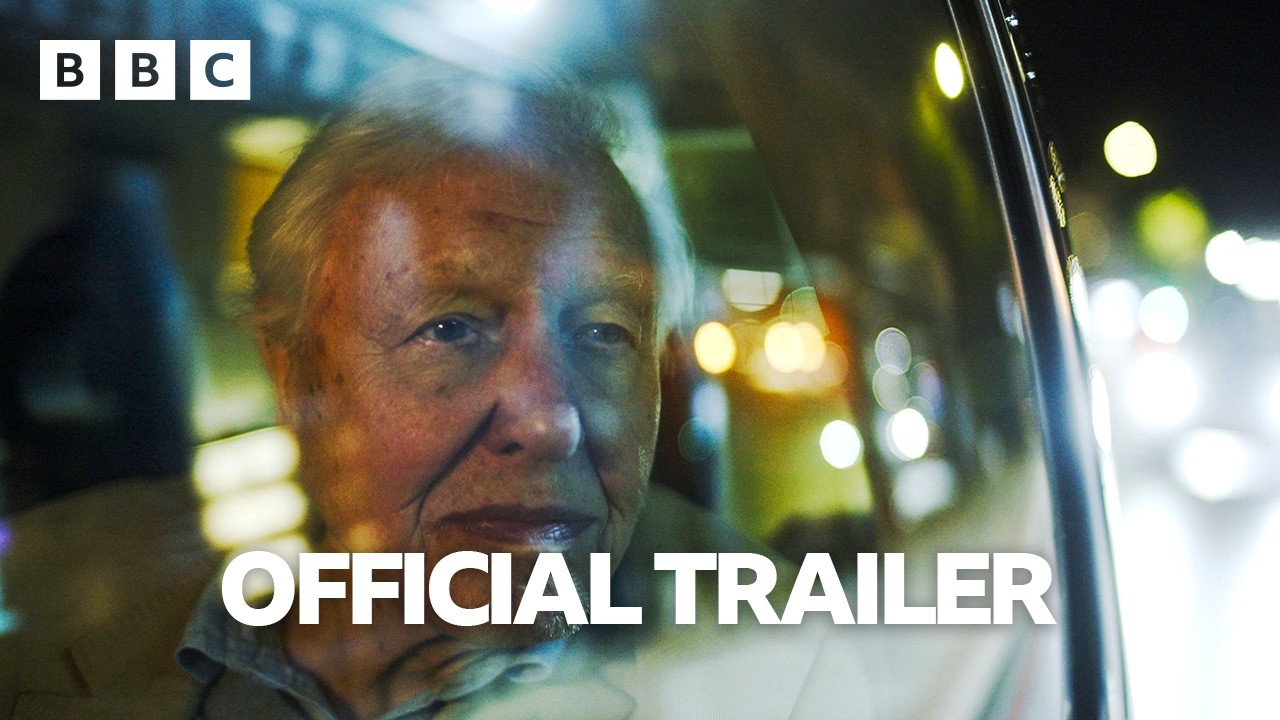
Words by Robyn Quick
Ah, the humble pigeon. Disliked by many Londoners, but trust good old David to put their ingenuity and adaptive nature on show. After all, it is his home town.
In a sequence from Wild London, one of the naturalist's latest narrative entries, we see the cheeky birds hopping onto the tube to move around the city – but also being targeted by the predatory peregrine falcon.
This battle culminates in an epic chase, as the bird of prey targets a flock of pigeons to try to feed its growing family.
As the peregrine soars effortlessly around the London skyline with the likes of the Gherkin in the background, your screen's motion handling is truly put to the test. The scene is filled with smooth panning shots across the sky, which will reveal if a TV or projector struggles with juddering motion.
But the frantic flapping of pigeon wings challenges screens differently – a more unpredictable movement compared to a classic panning shot.
Jasha Klebe provides the heart-pounding soundtrack, as he did with the excellent Blue Planet II score. The tension is elevated by the music as the peregrine plunges suddenly in an effort to pick off its dinner.
If you're a Londoner looking for an insight into the wonderful city wildlife that lives with us side-by-side, or just want to hear Attenborough's dulcet tones, then Wild London is a great watch.
Blue Planet II – Humboldt Squid (2017)
Words by Alastair Stevenson
Blue Planet II is full of wonderful test scenes, thanks in no small part to how great it looks in 4K HDR, as evidenced by our review of the 4K Blu-ray.
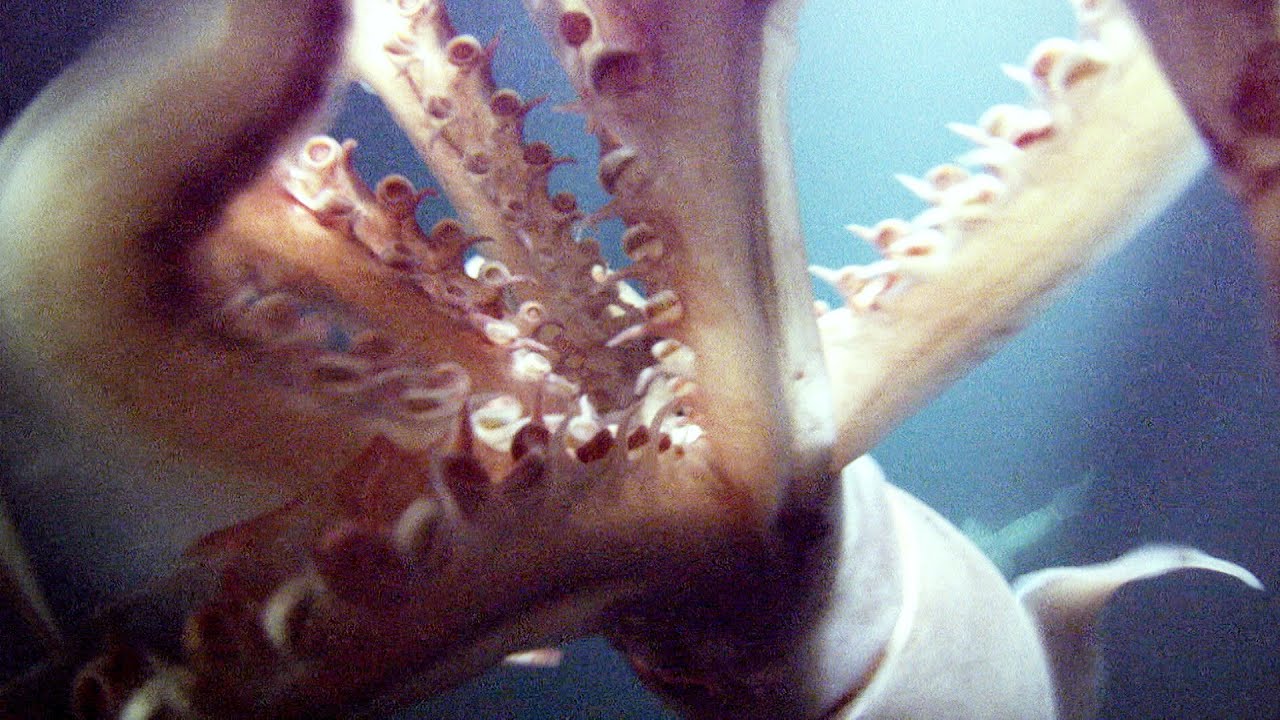
But the squid scene from series one, episode two, The Deep, is particularly iconic for the What Hi-Fi? team. Specifically, the deep-sea segment where we see a submarine descending into the depths following a swarm of krill and Humboldt squid in Chile.
It’s atypical among some of the other episodes, as nearly all of it is set in the pitch black, deep sea, at depths of up to 1000 metres.
As well as offering a fascinating insight into the mysterious creatures living there, showing the squid's effective hunting techniques and occasionally cannibalistic practices, it remains a fantastic test scene to this day.
Shots of the sub descending beneath the surface, its sole light throwing up a rare look at the life surrounding it, offer an excellent gauge of a TV or projector’s ability to deliver dark detail (as well as if they’re prone to banding, or the dreaded rainbow effect).
The swarms of krill racing through the water, avoiding the predatory Humboldt stalking them, also offer an excellent gauge of the hardware’s motion handling, with the rapid mix of smooth then violent movements proving taxing for even the best hardware.
And as a cherry on top, it’s narrated by David Attenborough himself, who draws the viewer into this hidden, rarely seen part of our planet in a mesmerising but educational way, that makes you feel like you're down there with the crew.
Even though it came out all the way back in 2017, when watched in 4K, there’s still nothing quite like it.
Planet Earth II – Iguana vs Snakes (2016)
Words by Kashfia Kabir
There was an Avengers: Endgame-level of anticipation in the What Hi-Fi? office after Planet Earth II was announced in 2013, as the series would be the first BBC programme to be filmed in 4K ultra high definition resolution. 4K was in its nascent stage then, barely a household name, and the prospect of seeing this next-generation picture resolution technology on broadcast was beyond exciting. When the first episode of the series – Islands – aired in 2016, the day after was one of those universal water cooler moments where we could talk of nothing else.
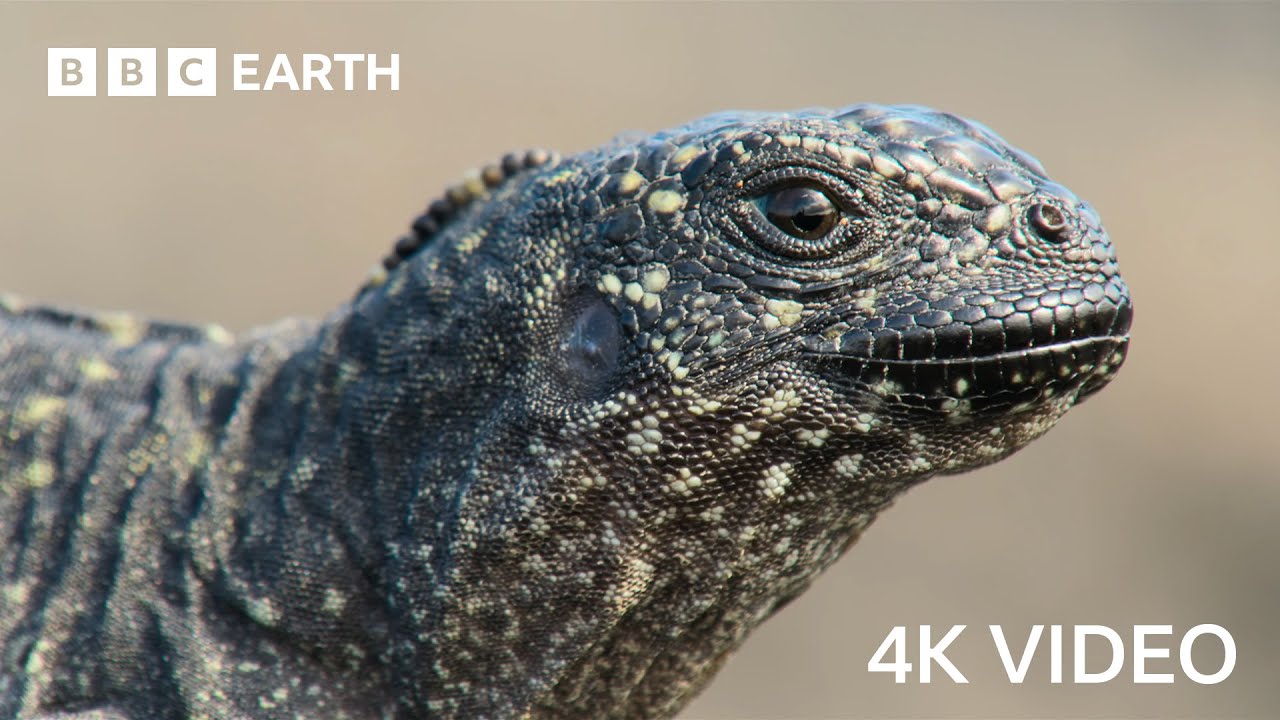
The highlight is the tense, nail-biting chase between a newly hatched marine iguana and a gaggle of deadly racer snakes on the Galápagos Islands. This four-and-a-half minute clip has everything: danger, suspense, tragedy, "a near-miraculous escape" and the kind of hair-raising, high-octane action that would put Christopher McQuarrie to shame.
It's a fantastic test scene, too. The entire landscape is various browns and greys that both reptiles can camouflage into, but the devil's in the details: the dark rocky terrain, the glistening multi-hued shingles, the leathery texture of the iguana skin, the smooth underbelly of the sleek snakes – it's a beautiful mix of textures that should be distinct and feel almost tactile on a sharply-detailed screen. The crisp picture quality of the 4K resolution really shines through here.
And then there's the score. Composers Jacob Shea and Jasha Klebe deliver this most intense chase scene with music that melds with and heightens the action on screen, emphasising the sheer terror of the snakes moving in tandem, punctuated with heart-stopping dramatic silences during the near-misses. We watched this scene repeatedly in our test rooms when we got the Planet Earth II 4K Blu-ray disc, and were also struck by how stable the motion was, especially as the snakes' speedy movements could easily have been marred by judder.
Attenborough's narration takes a backseat here as the chase sequence stands on its own, and it remains one of the finest cinematic moments I've seen on screen – as well as being a trailblazer for cutting-edge picture quality.
MORE:
These are the best scenes to test your Dolby Atmos system
Here are the best Dolby Atmos soundbars
Check out the best OLED TVs

