
TL;DR:
• For its 2026 flagship TVs, Sony has introduced its pioneering True RGB panel technology, which replaces single-colour white LED backlighting with independently driven red, green and blue LEDs.
• The innovation raises True RGB performance beyond traditional LED-LCD televisions, providing panels that compete with OLED on blacks and shadow detail while delivering far greater brightness and dynamic range.
• The Bravia 9 II and Bravia 7 II televisions offer exceptional versatility across usage scenarios, and range from the affordable to giant cinephile TVs.
• Sony’s proprietary technologies for control and panel design combine with True RGB LEDs to approach the quality of Sony’s own professional mastering monitors used by Hollywood colourists.
What is True RGB technology?

Sony’s new 2026 Bravia 7 II and Bravia 9 II flagship TVs bring True RGB to the LED market. This replaces the single-colour white backlighting found on older LED TVs with dedicated red, green and blue LEDs that work independently to produce richer, more accurate colour. Compared with traditional LED or hybrid-phosphor RGB systems, Sony’s three dedicated LEDs allow True RGB to deliver wider colour gamuts and enhanced colour purity.
True RGB’s unique ability to reallocate input current between the three LEDs also overcomes a longstanding limitation in traditional displays that can lose colour depth with rising brightness. With True RGB intelligently allocating power to the separate LEDs, colours remain strong and punchy even as the new panels rise to their higher levels of brightness.
For high dynamic range (HDR) material, both the Bravia 7 II and Bravia 9 II support Dolby Vision, further enhancing brighter highlights and deeper contrasts, the hallmarks of real cinematic performance at home.
So True RGB can claim to narrow the traditional trade-off between OLED black-level performance and LED brightness; the days are over when you had to choose between OLED for deep blacks or LED for sun‑soaked living spaces. True RGB is now promising reference levels of performance at both ends of the luminance scale.
Sony provides the reference

As for True RGB “bringing Hollywood to the home”, Sony has a home-turf advantage here, being a company also at the heart of movie making and mastering. Top Hollywood colourists use Sony’s industry-standard BVM-HX3110 professional mastering monitor, and True RGB’s greater accuracy and the controllability of independent RGB LEDs has enabled the Bravia 7 II and 9 II to achieve similar grading and contrast levels to those defined by the original filmmakers.
Streaming content from Netflix, Prime Video and other providers also benefits from integrated ‘Studio Calibrated’ modes that are optimised to each specific service. Colour banding is reduced by the wider available colour gamut, while white ‘blooming’ around bright objects has been greatly curtailed by the replacing the old white backlight by the individually-coloured LEDs of True RGB, which are all under the algorithmic control of Sony’s newly evolved RGB Backlight Master Drive Pro, further enhanced by Sony’s flagship colour-processing technology RGB Triluminos Max.
This combination of accurate colour, wider dynamic range and tighter control at an LED level enables Sony’s True RGB panels to faithfully reproduce the fine tonal details that bring a filmmaker’s vision to life on the screen. Following a hands-on session, the reviewing team at What Hi-Fi? has already suggested that the Bravia 9 II could be the finest backlit TV to date.
And in addition to outright performance, Sony’s new Bravia 9 II and Bravia 7 II herald previously unseen versatility – and surprising affordability, with the Bravia 7 II starting at just $2799.
Why is True RGB more versatile?
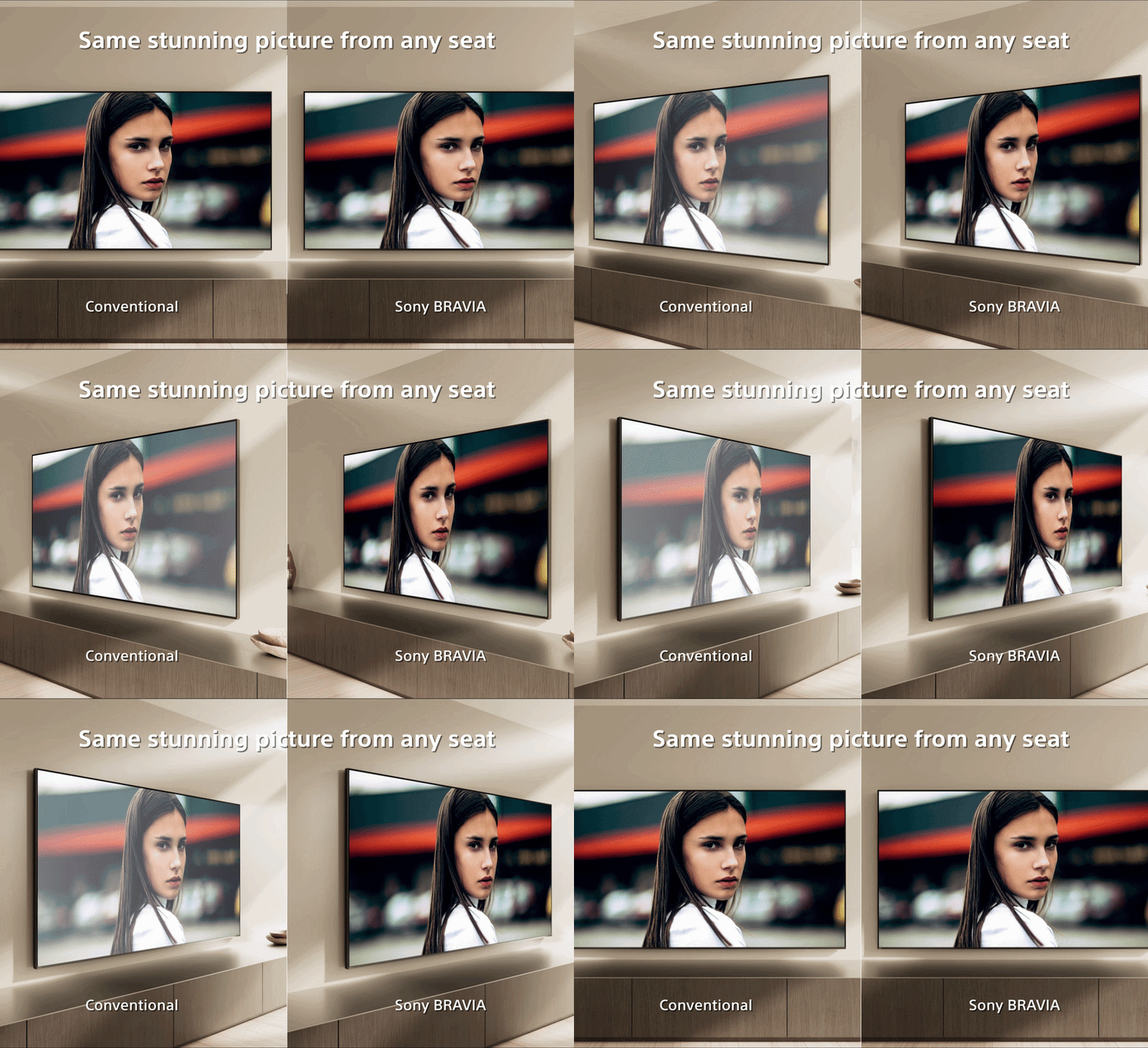
Whatever your viewing scenario, this new technology has raised the performance stakes. True RGB is great for night-time viewing because of the high contrasts achieved by the individual RGB LEDs, alongside Sony’s control processing of deep shadows and bright highlights. In our early What Hi-Fi? testing, the Bravia 9 II delivered near-perfect blacks in the movie 1917, even for the bright movie logo shining against a pure black background.
True RGB is also ideal for day-time viewing because its inherent brightness levels beat those of OLED competitors (we measured the Bravia 9 II at close to 4,000 nits), while Sony’s Ambient Optimisation is ready to tune both the images and sound output automatically to your room conditions.
It’s also great for big, spread-out lounge rooms, because wider viewing positions will benefit from Sony’s panel-level X-Wide Angle Pro optical treatment, and also because the RGB colour is built into the backlight itself, removing additional layers of older LED technologies which would cause colour shift and brightness drop-off when viewed from the side. An anti-reflective “Immersive Black Screen Pro” treatment (exclusive to the Bravia 9 II) also deals with direct lamp reflections that might otherwise appear in the screen.
Is True RGB good for gaming?
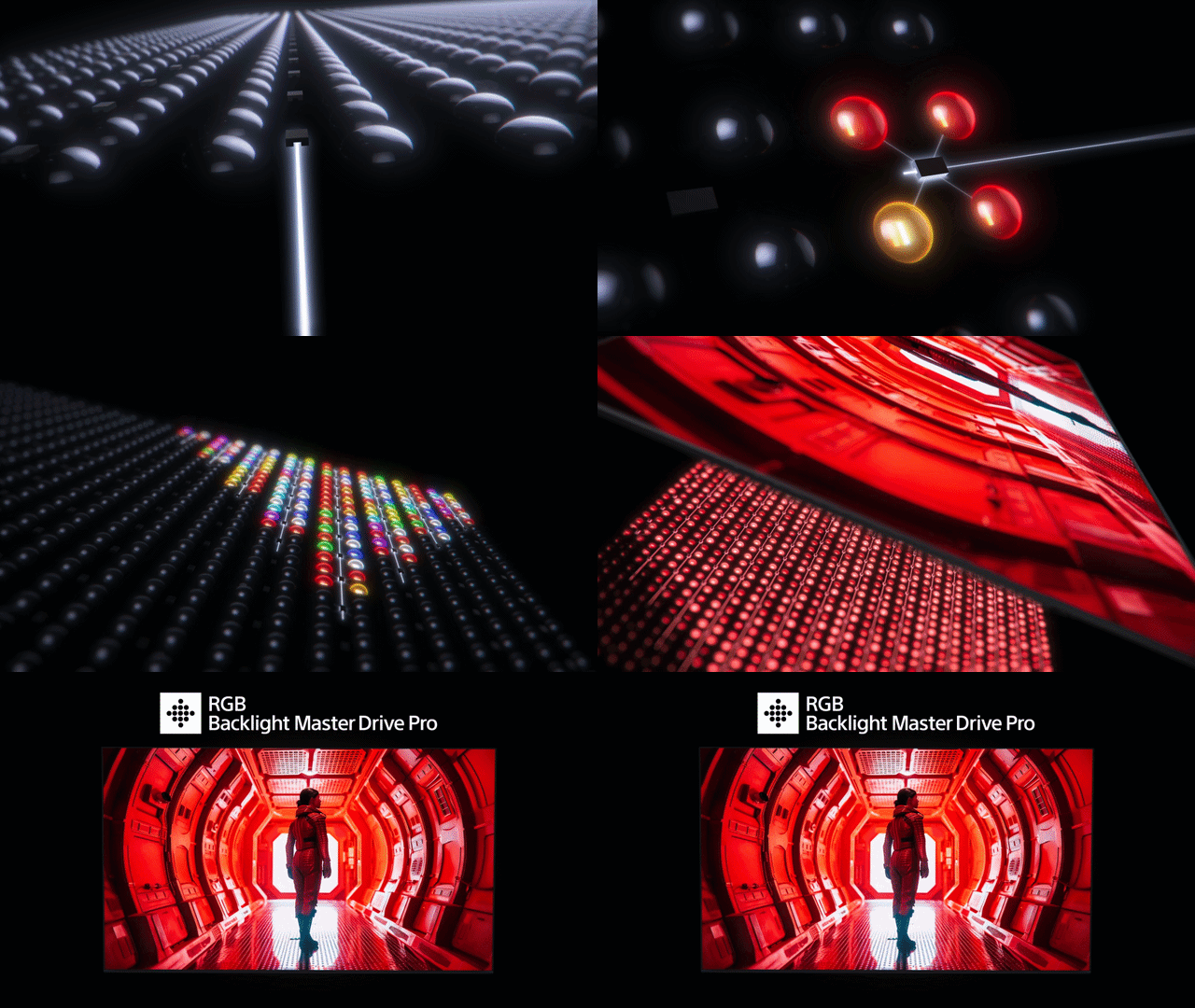
True RGB is also great for gamers, as the improved brightness and colour accuracy will benefit visuals, especially with high dynamic range (HDR) gaming content. Both Sony’s Bravia 7 II and 9 II offer a Game menu and dedicated game picture modes (FPS Game and RTS Game), with an XR Contrast Booster to assist visibility in shadow detail for darker game environments.
They amply cover the essentials checklist for a modern gaming TV too: 4K/120Hz gaming via two HDMI 2.1-equipped sockets, with Variable Refresh Rate and Auto Low Latency Mode, and there’s even PS Remote Play built in, allowing PlayStation 5 games to stream directly to the Bravia TV, even if your console is located in another room.
Sony True RGB TV range: Australian sizes and pricing

There’s a wide variety of options when it comes to pricing and sizes for Sony’s new flagships, too. In Australia, the relatively affordable Bravia 7 II goes from 50-inch to 98-inch, priced from $2799 to $12,999. The flagship Bravia 9 II is the choice for true cinephiles, starting with the $5999 65-inch model, rising to the vast 115-inch model priced at $44,999. All have a Google TV interface and sound via Sony’s Acoustic Multi-Audio+ technology, which positions audio to match the on-screen action. Full details of all models can be found at Sony Australia’s True RGB hub.
