
It’s been three years since Christopher Nolan’s Oppenheimer hit the big screen. Since then, fans of the director have been waiting with bated breath for his next venture, and this time he is taking it back to basics.
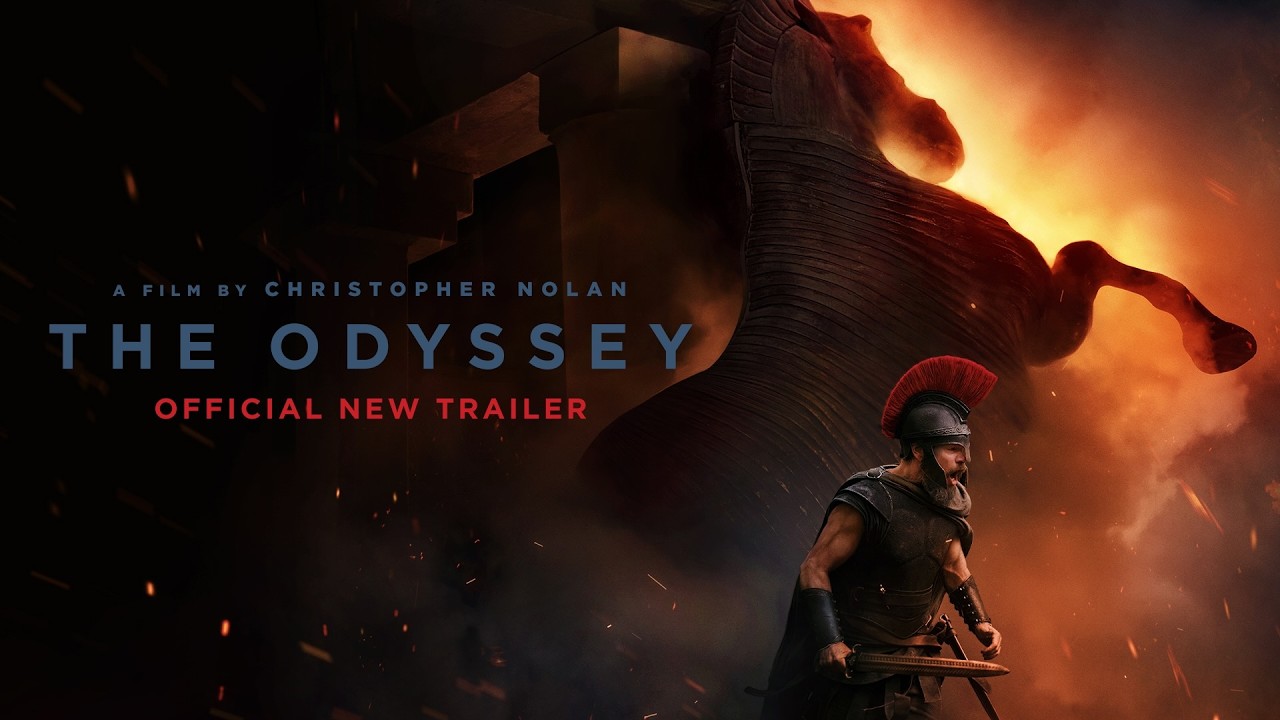
Nolan is taking on one of the most well-known stories of ancient history by adapting Homer’s The Odyssey, throwing a star-studded cast (Matt Damon, Anne Hathaway, and Tom Holland all feature, just to name a few) into the perilous land of Troy.
But buying a ticket for Nolan’s latest release is not as straightforward as it probably should be. Depending on your local cinema, you could be choosing between IMAX 70mm, ‘standard’ IMAX, Dolby Cinema, 70mm film, 35mm or Premium Large Format.
The movie social platform Letterboxd has even released a digital punchcard to tick them off.
Let’s be honest, though, the majority of people will not be forking out the extra cash to watch the film more than once or twice in the cinema. So which of the many versions should you pony up for?
While we await the film’s release (17th July), let’s run through each of the available formats.
The aspect ratio basics
The biggest differences in the various presentations are the aspect ratios – how tall and wide the image is. This can be quite tricky to get your head around, so let’s start by trying to make sense of that.
Your TV at home has (assuming you’re not still rocking an old CRT model) a 16:9 aspect ratio, which ‘normal’ people tend to refer to as simply ‘widescreen’.
In the cinema, aspect ratios tend to use a different format. Converted to that format, your widescreen TV's aspect ratio is 1.78:1. This simply means that for every centimetre of height there is in the image, there’s 1.78cm in width. Bear that in mind as we outline the other aspect ratios below.
IMAX 70mm
The Odyssey is the first film to be shot entirely using 65mm IMAX film cameras (they’re called Keighley cameras), building on Nolan’s tradition of using the format for sections of even some of his earliest films.
Watching it in this original format means finding an IMAX 70mm cinema, where the movie will be presented in a 1.43:1 aspect ratio.
Compared with your TV screen, this will look much taller and is closer to a square than the more familiar rectangle. It’s the tallest aspect ratio on the list, which should give you a brilliant level of immersion when watching on the big screen.
In an explainer video on The Odyssey’s website, Matt Damon says: “Each film frame has 15 perforations, runs horizontally through the projector, making it the largest format available. Every frame was shot in IMAX, and when you’re in the theatre, you’ll feel the full impact of how it was shot.”
If you value cinematic authenticity, have the means to get to an IMAX 70mm cinema, and have the budget for what will be a very expensive ticket, this is the version to seek out.
You will need to travel to London or Manchester if you’re in the UK, though, as those are the only two places where you will find one of these very special cinemas. They are the BFI IMAX, the Science Museum IMAX Cinema and Vue Manchester Printworks.

At What Hi-Fi?, we are always looking for the movie experience that will get us as close as possible to watching a film the way the director intended. From the specifications provided, it seems that the IMAX 70mm should deliver the most authentic experience. That’s why I’ll be heading to the BFI IMAX to watch the film, even though it’s a bit of a trek and will be a bit of a costly outing. Only for you, Nolan…
IMAX
If you can’t watch the film in the 70mm format because of its price or inaccessible locations, then our second choice would be the standard IMAX presentation. As with the above format, this is only available in IMAX cinemas that combine the right screen design and use the brand’s proprietary picture and sound technology.
This changes the aspect ratio of the film to 1.90:1. That means you will get an image that's quite similar to the 16:9 ratio you're used to at home (although a touch wider), which sacrifices quite a lot of the top and bottom of the originally filmed image.
While this is a more widescreen format than the full-fat IMAX presentation, it's still a fuller image than you get from a standard cinema screen (more on that later).
Dolby Vision
You can also watch the film in Dolby Cinema, where it is presented using Dolby Vision. There are only eight Dolby Vision cinemas in the UK, so you will have to bear that in mind when considering your options.
Dolby Vision's high dynamic range generally allows for brighter highlights, deeper blacks and more visible detail at both ends of the brightness scale. On top of that, the dual-laser Dolby Vision projection system claims a 1,000,000:1 contrast ratio, helping it deliver much deeper blacks than conventional cinema projection.
It's unclear to what extent Christopher Nolan supervised the Dolby Vision grade, so we cannot say how close this Dolby Vision version gets to Nolan's intended presentation.
Depending on whether your local Dolby Cinema has a widescreen or flat screen, the film will be presented in either 2.39:1 or 1.85:1. The first is much wider and shorter than your TV screen, whereas the second is only a little bit wider than the common 16:9 ratio.
Dolby Cinema prioritises contrast, black level and HDR, whereas IMAX is primarily about image size and expanded aspect ratios, and you might prefer one approach over the other.
70mm film
With the 70mm film version, you will see the film in a 2.20:1 aspect ratio. This is wider but narrower than the standard 16:9 aspect ratio of your TV.
The movie’s site claims that it delivers a bright, clear image up to three times the resolution of standard digital projection formats, with rich analogue colour by projecting light through celluloid. There’s no IMAX on the cards with the version, though, which means you won’t be treated to the huge screen that the more premium format offers.
35mm film

35mm film is the most commonly used format for movies at the cinema – effectively the typical cinema experience offered by most multiplexes and independent venues. It offers an aspect ratio of 2.39:1, which, as we mentioned in the Dolby Vision section above, is wider and shorter than your TV screen.
It has four perforations with the film running vertically through the projector, and the site claims: “It projects light through the entire 35-millimetre frame to deliver clear, high-resolution images with rich analogue colour.”
Premium Large Format
Finally, you can watch The Odyssey in Premium Large Format. As with Dolby Vision, this is available in either the 1.85:1 or 2.39:1 aspect ratios – which one you get will depend on your cinema’s capabilities.
If you want to feel even more immersed, you can choose to watch the film in a 4DX or a D-Box cinema. These specialised cinemas throw a bunch of special effects at the viewer, including swaying seats, water sprays and bubbles, as well as pumping out different scents to match what is happening in the film.
This might not be everyone’s cup of tea (we can’t say we are tempted to get tossed around by a cyclops from the comfort of our seats), but some people love this unique experience.
The What Hi-Fi? recommendation
We must caveat this section by saying that we have yet to watch The Odyssey in any format, so we are purely going off the specifications and marketing materials we have for now.
That said, IMAX 70mm is clearly going to be the truest, purest version of Nolan’s vision, given the way he shot the movie.
Standard IMAX instinctively feels like the next best thing, whereas the Dolby Cinema version is more of an unknown quantity. After that, we’d be seeking out the 70mm version.
The standard 35mm version is your typical cinema experience, so that would be our backup option.
4DX isn’t really our kind of thing – at least not for a movie such as The Odyssey – but if it’s something that appeals to you, have at it!
MORE:
These are the best TVs
Check out the best scenes to test your Dolby Atmos sound system

