Many of us may have succumbed to the convenience of wireless headphones and using our phones as our primary music source.
But, for the elite, who value sound quality above all else, a pair of reliable, wired headphones backed up by a source bespoke designed for music with proper amplification and a decent DAC is essential.
Which is why, despite the market not being as big as it once was, our team of reviewers continue their never-ending quest to find the ultimate headphone amp to this day.
These include affordable, portable models designed for use on the go, partnered with a smartphone or laptop, as well as more serious desktop units designed for home or office listening sessions.
Trust us, we’ve tested more smartphones, tablets and laptops for audio quality than we care to count and can safely confirm a decent headphone amp will night and day elevate their audio performance.
So, if you want to get the best audio possible, we’d strongly recommend considering one of the options on this list, especially if you already own a decent pair of wired headphones.
You can get a detailed breakdown of how we test headphone amps using the attached quicklink, or jump straight into our recommendations.
On the off chance you need a set of cans as well, also make sure to check out our best wired headphones guide!
January 2026: AudioQuest DragonFly Cobalt replaced with the iFi Go Link Max. Cambridge AudioDacMagic 200M replaced with the Audiolab D7.

I have over 14 years of experience in reviewing and writing about all kinds of hi-fi, including turntables, amplifiers and wired headphones. During that time, I’ve tested my fair share of headphone amplifiers, both in our test rooms and in my home desktop system. Headphone amps vary wildly in terms of form factor and features, so below I’ve picked class leaders of each kind and price level that set the benchmark for sound quality, connectivity and usability.
Best overall
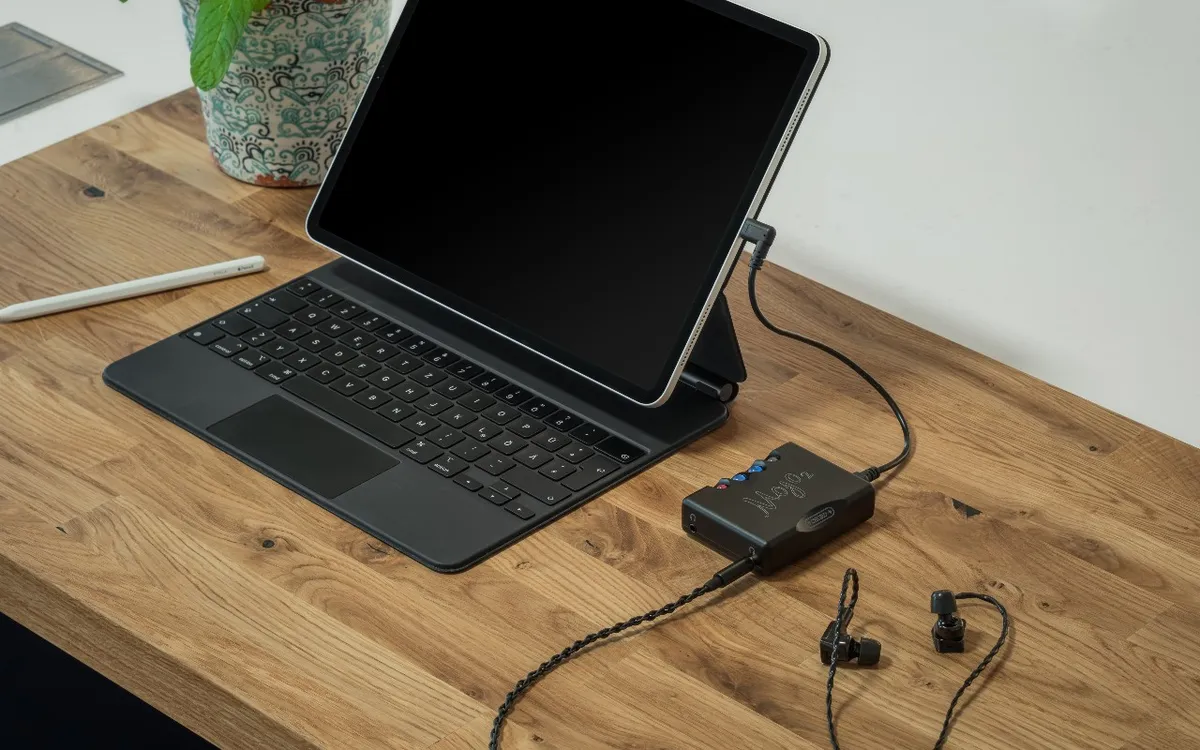


The fittingly named Mojo 2 is the long-anticipated, re-engineered replacement to the 2015-released original, which burst onto the scene as a real benchmark-setting game-changer in the then-fledgling world of portable DACs/headphone amps.
And with the addition of a slightly modernised version recently, adding a 4.4mm headphone connection and USB-C charging input, it's the best option for most people right now.
While the aesthetic hasn’t exactly been overhauled for the sequel, significant progress has been made elsewhere to protect its position as the pinnacle of portable headphone amps at this price point.
All told, the performance of the Mojo 2 isn't massively far away from that of Chord Electronics' considerably pricier Hugo 2. Such is its capability, it can raise a hi-fi system’s game just as confidently as it can a phone's or laptop's.
At this price, you might reasonably prefer a dedicated system alternative with more suitable connections, such as the Cambridge Audio DacMagic 200M.
But for those who are after a primarily portable or desktop DAC solution in this price region, we believe the decision to Mojo 2 or not to Mojo 2 is an easy one.
And what about existing Mojo owners? Honestly, Chord has left us no choice but to recommend the upgrade.
As our expert reviews team found during our Mojo 2 review testing, "The Mojo’s soundstage has been opened up for the sequel and that extra depth and dimension has been filled with greater resolution that is not only unmistakably present thanks to a big boost in clarity but also more precisely placed."
Our current Product of the Year DAC/headphone amplifier for several years on the trot, the Mojo 2 will suit – and transform – portable phone, desktop computer/laptop and even modest hi-fi separates setups. It is that good.
Read our full Chord Mojo 2 review
Best budget portable






For the longest time, we recommended the AudioQuest DragonFly Cobalt as the best budget, portable option for most people.
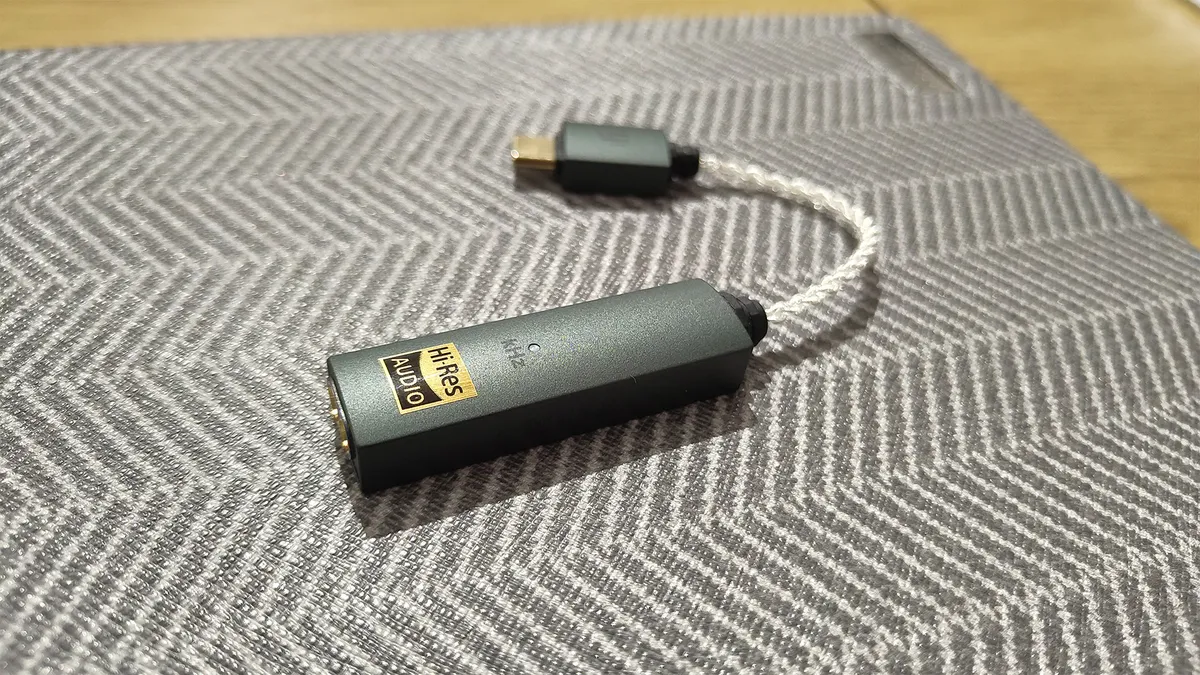
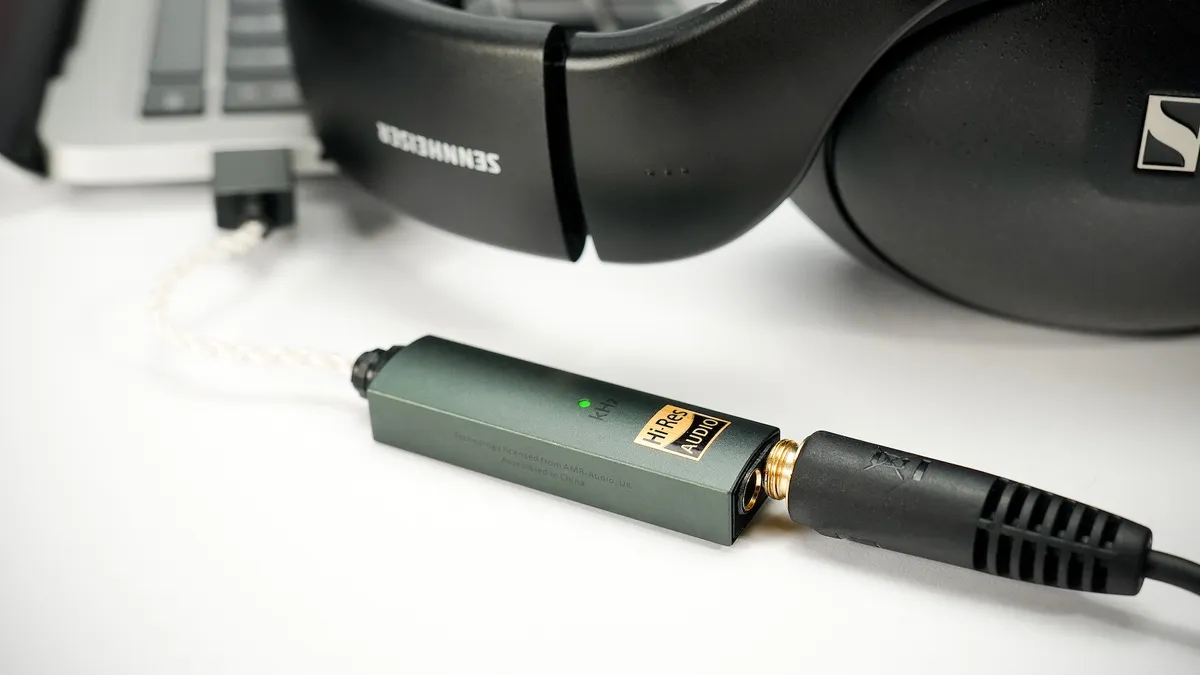
But, with it now having gone to the big hi-fi farm in the sky, the iFi Go Link Max is the closest like-for-like replacement we recommend that’s still on sale. Hence, its elevation from the 'also consider' section in this guide into the main list.
The tiny, affordable unit is a convenient way to improve any device with a USB-C, USB-A or Lightning input’s audio, based on our testing.
Sitting above the slightly more modest, base Go Link in iFi’s current lineup, the device is about as plug-and-play as it gets.
Connect it to a device, and you’ll add hi-res PCM audio playback up to 32-bit/384kHz and DSD256 – which is as good as you’ll need, even when subscribed to the max tier of Tidal, Qobuz and their ilk.
As an added perk, despite its basic design, it does have a few nice quality-of-life features. The biggest of which is a single light LED interface, which lets you know when it's running and what quality it's playing at.
But the main selling point is the tangible audio gains it brings when playing hi-res tracks, especially on most smartphones.
Featuring twin ES9219 DAC chips and balanced audio circuitry that aims to reduce noise and improve sound quality, we found it offered palpable improvements when paired with a variety of different hardware.
During our checks, these included everything from a Windows Surface laptop to Android smartphones as sources, and the Award-winning Grado SR325x and five-star, closed-back Røde NTH-100 headphones.
In every instance, the unit delivered a pleasingly assertive, punchy sound.
Hence, our recommendation and glowing verdict: “The Go Link Max is a compact yet powerful weapon for your headphones, bringing impressive sonic improvements at an affordable price.”
Read our full iFi Go Link Max review
Best premium portable
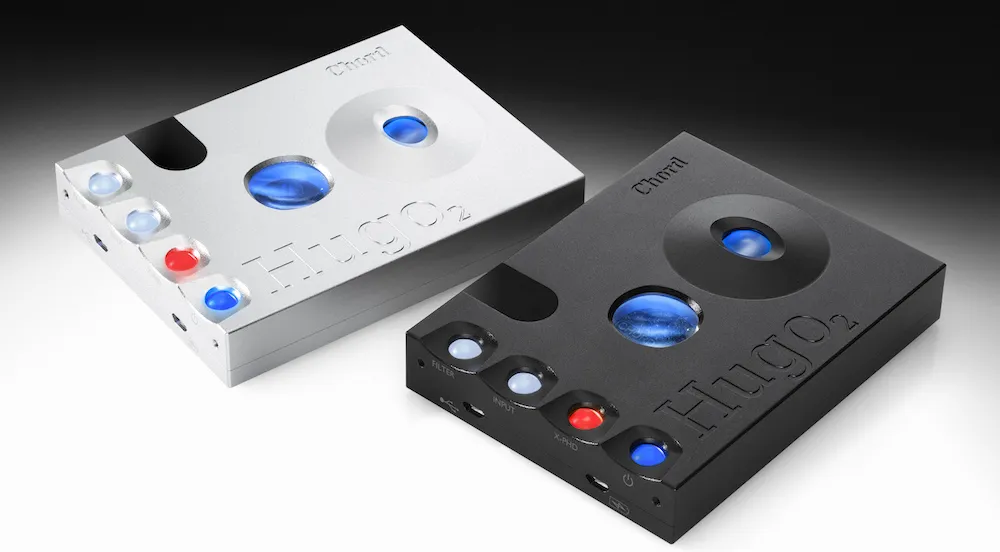


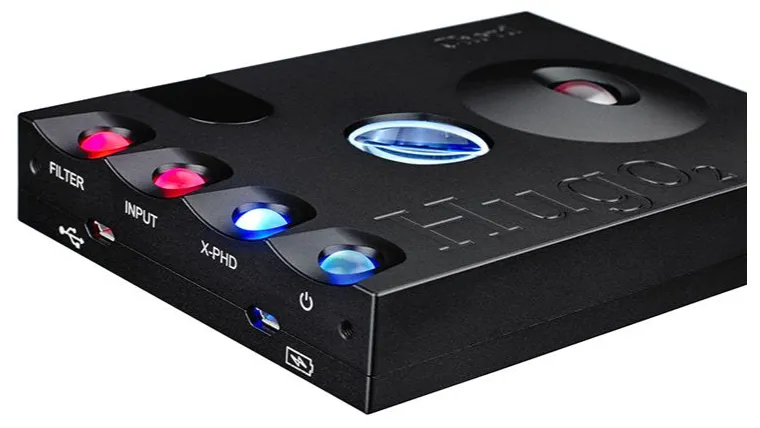

The Hugo 2 is a strange one.
It's just about small enough to take with you (this is clearly the intention, as it has its own built-in battery), but a little too large to sit in a pocket, so it is portable... but more in the sense that you'd carry it from room to room as opposed to out and about with you on the daily commute.
It's also not the easiest device to use at times, mostly thanks to its system of coloured lights, which can get confusing.
It's also at the higher end of the price scale, so entry-level users seeking a bargain may want to consider a cheaper alternative.
So what's it doing on this list, you might wonder? Two words for you: sound quality.
It's very difficult indeed to fault the way Hugo 2 converts and delivers your digital audio files. And not just sparklingly hi-res ones but also lower-quality files too – whatever you feed it, Hugo 2 serves your headphones a detailed, dynamic and punchy performance.
"Timing is perhaps Hugo 2’s strongest suit of all," notes our Hugo 2 review, "it brings absolutely believable unity to ensemble music."
This is the most headphone amp most audiophiles will ever need – honestly, it really is that good.
There are plenty of inputs to take advantage of – optical, coaxial and (the admittedly slightly dated) micro-USB inputs, 3.5mm, 6.3mm headphone and RCA system outputs and aptX Bluetooth as well.
See past its quirky looks and operation, and you'll be rewarded with a hugely insightful, musical performer.
Read our full Chord Hugo 2 review
Best budget desktop


“Neat, capable and packed with features.” Three words you always want to hear when considering a desktop headphone amp and the exact ones we used to describe the Audiolab D7 when we reviewed it.
A pseudo successor to the 2011 Audiolab M-Dac (a key bit of hi-fi history that many of our reviewers have fond memories of), the small, unassuming-looking black box ticks all the boxes you’d expect from a modern headphone amp.
Connectivity-wise, there are two coaxial and two optical inputs, USB Type B and USB Type A inputs, alongside single-ended RCA line level and balanced XLR analogue outputs.
There’s also Bluetooth 5.3 wireless connectivity with aptX HD codec support for streamers. So whatever you want to connect it to, or play music from, it has you covered.
Crack its hood, and its specifications continue to impress, for the price. Audiolab has designed its digital and power supply circuitry to work as well as possible with the SS Sabre’s ES9038Q2M DAC chip at its heart.
The chipset means the headphone amp offers hi-res compatibility with up to 32-bit/768kHz PCM and DSD512 music files, which is good enough considering its price and target market.
Running it with a variety of hardware ranging from a Naim ND555/555 PS DR music streamer to a MacBook Pro loaded with Audirvana music software as its source, and numerous different headphones, it performed admirably.
In each instance, the amp delivered an even-handed performance with fluid dynamics, and pleasing levels of insight, clarity and spaciousness.
Hence, our verdict: “If you are looking for a well-specified and talented outboard DAC at this level, it would be remiss if you didn’t consider this one seriously.”
Read our full Audiolab D7 review
Best premium desktop


Look at this tank. Unsurprisingly, it's very much a desktop headphone amp – and you'll need a sizeable desktop, at that! Indeed, if you're looking for something portable, best to look further up this page.
But if it's home headphone listening you're after, whether that's primarily through a separates or desktop system, this Audiolab could well be the one for you.
Sonically, it will be a valuable addition to your home audio setup. It’s an overtly neat and tidy listen, showing a slavish attention to detail when it comes to the delineation of the soundstage.
That’s a trait we wholly admire, and few other comparably priced headphone amp/DACs describe a stage quite as explicitly as the M-DAC+.
Even the densest, busiest recordings are laid out openly – in terms of staging, focus and sheer three-dimensionality, the Audiolab dishes out the details like a bar room gossip.
It's rhythmically adept too, as our reviewers were keen to highlight in our M-DAC+ review: "Timing is good, the interplay and integration between instruments sounding natural and unforced."
Add to that consistency across the system and headphone outputs (of which there are several, even including an AES/EBU balanced digital input for those with pro-studio aspirations), and you've got a solid, versatile headphone amplifier that truly justifies the outlay.
Read our full Audiolab M-DAC+ review
Best analogue
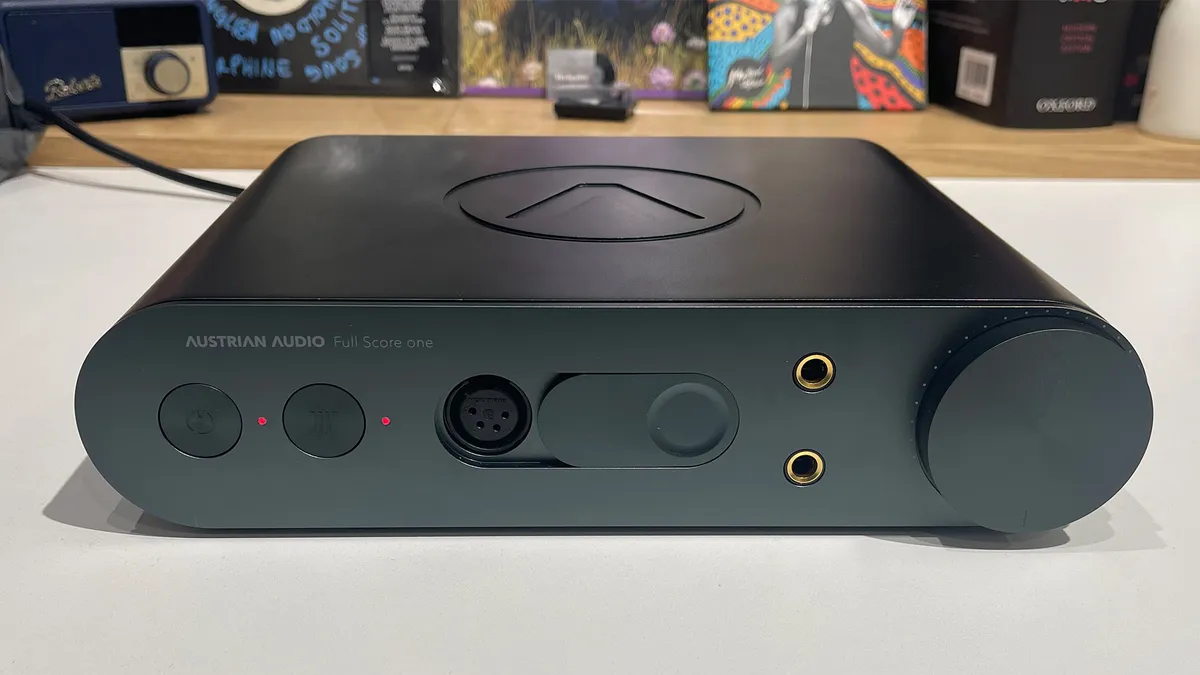


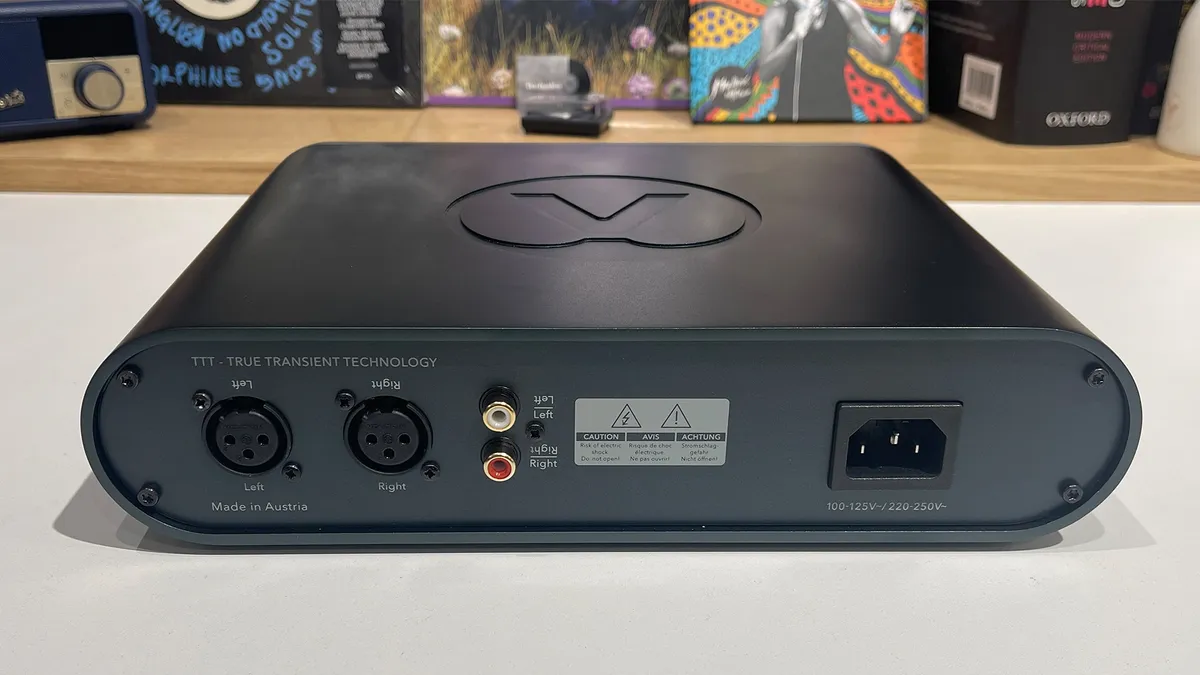


Analogue headphone amplifiers aren't very common nowadays, and more the reserve of the very high-end (like the analogue-only SPL Phonitor xe below).
But the debut headphone amplifier from Austrian Audio, a company which has made a wave in the headphones space in recent years, is a rare example of a mid-priced amplifier that eschews digital inputs and prioritises enhancing performance between analogue sources and headphones.
The compact desktop-friendly unit, about the size of a hardback book, is beautifully made and lovely to use.
The curved metal casework's front panel hosts a pair of 6.3mm sockets and, beneath a sliding flap, a 4-pin balanced XLR output. At the rear is where you'll find the RCA and XLR inputs for connecting your analogue sources.
While the Full Score One has natural partnering headphones in the Austrian Audio range, the excellent The Composer, the amp has been designed to work well with the majority of headphones on the market, able to drive impedances from 10-600 ohms.
Just note that there isn't much travel room for the volume dial when more sensitive models are connected.
In addition to The Composer (22ohms), our in-house review experts used the Sony MDR-Z1R (64ohms), Focal Stellia (35ohms), Grado RS-1x (38ohms) and early-generation Beyerdynamic T1 (600 ohms) during testing, and all were a great match.
At the other end it also pays to use decent equipment, with our reviewers using everything from a Cyrus 40 ST music streamer to a Technics SL-1000R/Vertere Dark Sabre/ Cyrus Phono Signature/PSX-R2 turntable package.
"Given the company’s strong studio heritage, it should come as no surprise that this amplifier has a warts and all presentation; one that prefers the unvarnished truth to trying to make every recording sound good," reads our Full Score One review.
This is a headphone amplifier with obsessive attention to detail and a presentation that is very easy to listen to and admire.
Scale, authority and organisation are top drawer; stereo imaging is crisp, layered and stable; and despite its neutral tonality, rhythmic drive and dynamic expression are in full supply.
It's another Austrian Audio success, then.
Read our full Austrian Audio Full Score One review
Best high-end
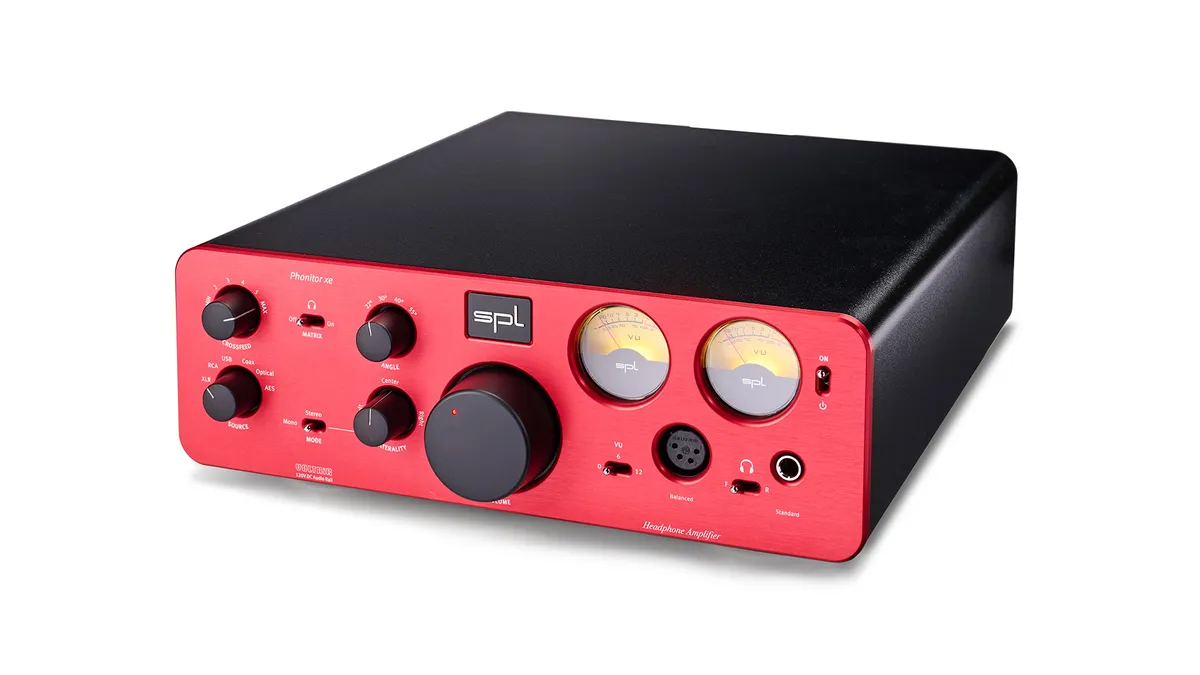
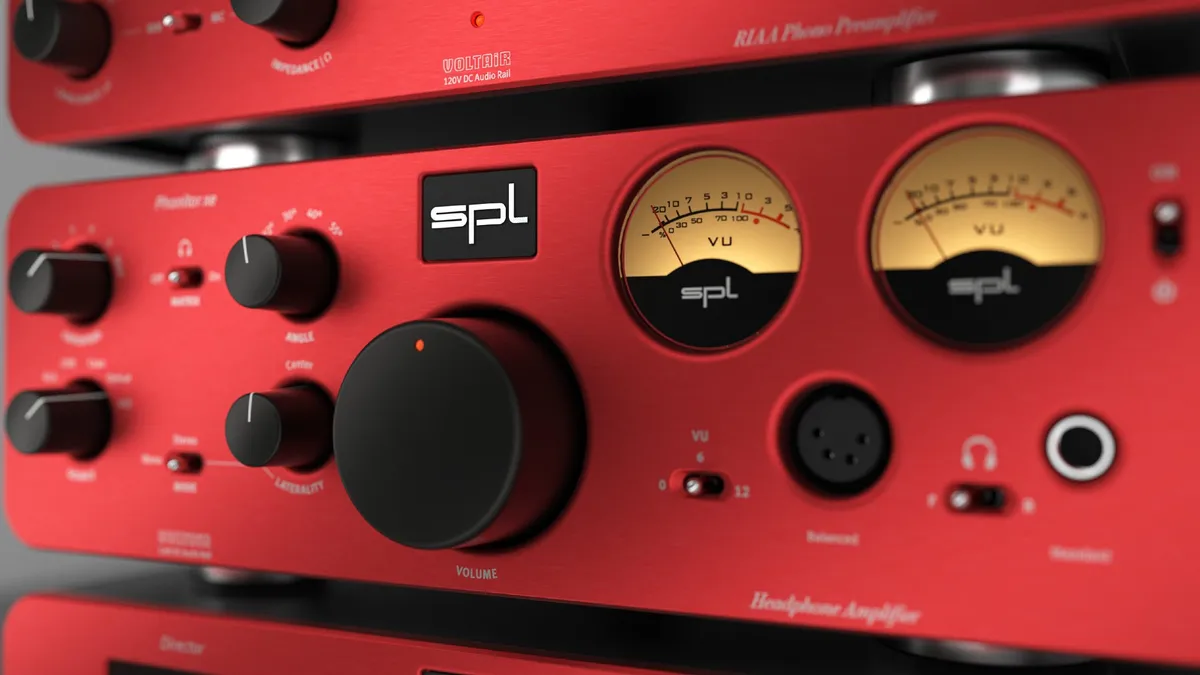


The Phonitor xe marked the first time we'd reviewed a product from the German audio manufacturer SPL, but it didn't take long to make an impression.
At the higher price end of the headphone amp scale, the handsome and well-made analogue-only model certainly looked the part and had a chunky price tag to match, leaving us interested to see just how much it could enhance our headphone listening experience.
Played from a top-quality source, the Phonitor xe is a smooth, articulate performer. The premium amp feels fluid and full-bodied without losing detail or dynamics, excelling when it comes to bringing out voices with their natural warmth and passion.
There is an optional digital module available that offers digital inputs and hi-res compatibility, but it costs an additional £875 / $850 / AU$700.
If you are after a high-end DAC-and-headphone-amp combo, then the class-leading Chord Hugo TT2 (£3995 / $5795) that delivers exceptional transparency, articulation and dynamic expression should be on your list.
This SPL headphone amplifier does require some decent accompanying kit to get the most out of it, but provide the Phonitor xe with an appropriately talented source and headphones, and it will deliver some of the finest sound quality you'll hear for this price.
Read our full SPL Phonitor xe review
Also consider
- NuPrime DAC-9X: While not quite as insightful as the class-leading Chord Hugo 2 above, this headphone amp hardly puts a foot wrong – it still sounds terrific, is generous in the connections department and works well in a wide range of systems.
- iFi hip-dac 3: AudioQuest's DragonFly Cobalt edges the rivalry, but it's a very closely fought battle – not something many of the competition within this burgeoning market can claim. This portable DAC/headphone amp is a pleasure to listen to.
- Cambridge Audio Dacmagic D200M: Until the arrival of the Audiolab D7, the D200M was our recommended budget, desktop headphone amp. Though we prefer the D7 overall, the Cambridge Audio is still a valid alternative.
- iFi Zen DAC 3: Not better than its five-star predecessor in every way, yet still an attractive option for those who are after an affordable desktop DAC/headphone amp to improve audio quality from, say, their laptop.
- Chord Alto: This desktop-sized high-end amplifier can drive four headphones at the same time, and can also be used as an amplifier for nearfield speakers. Niche use case perhaps, but it sounds immaculately clean, clear, detailed and neutral, with a great handle on rhythms and dynamics.
How to choose the best headphone amp for you
Analogue or digital?
So what should you look for in a headphone amplifier?
Analogue inputs are the most common and mean you can plug in any source that has analogue outputs (which is most of them).
These days, though, analogue-only headphone amplifiers like the Chord Anni and SPL Phonitor xe are a rare breed, as most headphone amps also boast built-in DACs (digital-to-analogue converters) that feed digital inputs for broader compatibility – ideal if, say, you are listening to music stored on a computer.
This means many headphone amplifiers are also DACs (and can be called such, or, commonly, 'DAC/headphone amplifier'), although be aware that you can get DACs without headphone sockets, such as the Chord Qutest, which only improve sound between sources and speaker-fronted systems.
These digital-savvy headphone amplifiers typically play ball with all manner of digital audio these days, from PCM to DSD to MQA, but it's worth checking file support if you own niche hi-res music.
Size and portability
Size and portability are also key considerations. Some of the headphone amplifiers below will happily slip into a jeans pocket and, with the right cables and perhaps even an adaptor, can be paired with a phone.
Bigger models, whether they are battery- or mains-powered, command that you clear your desk or make some room on your hi-fi rack (like you'd need to for the new and rather large Yamaha HA-L7A).
In short, you'll need to decide whether you'll be listening to your headphones on the move or solely at home before committing to a purchase.
For portable models, check battery life and whether it can be powered by the source it's plugged into.
Partnering equipment
Then, of course, there's the matter of price and, related, the quality of the equipment you'll plug into your headphone amplifier in the first place.
Your headphones need to be of a pretty decent standard before you get the benefits of a dedicated amp – we would say the £330/$295/AU$419 Grado SR325x are decent starting benchmarks – so you might not want to bother if you're currently rocking a pair of £50/$50/AU$100 headphones.
Conversely, you may decide that your headphones are performing well enough as it is, and that you like the sound just fine without needing any extra oomph or refinement.
If you've just forked out many hundreds of pounds for some decent wired over-ears, you may not be that keen on parting with even more cash to make some noticeable, but possibly incremental, audio gains.
That's a totally reasonable position, and you can always upgrade down the line if you change your mind.
FAQ
Why do you need a headphone amplifier?
Any audio device with a headphone output socket (jack) has a headphone amplifier inside, so in those cases you don't need a dedicated, external one.
That said, those inside laptops and other every day devices such as phones will likely be of significantly inferior quality than the circuitry you'll find inside the best headphone amplifiers on this list – yes, even the budget ones.
A dedicated headphone amp's performance will often trump that of a stereo amplifier in a hi-fi system, too, though that may not be the case if a manufacturer has put greater care than is typical in its stereo amp's headphone stage.
How does a headphone amplifier work?
A headphone amplifier is different to a conventional amplifier.
Headphones require less power than a pair of speakers (which makes sense if you think about the difference in the size of space each operates in), so their vastly lower power requirement means that a headphone amplifier circuit has to be engineered to excel at low signal levels.
The electrical loading of headphone drive units is different to that of speaker drivers, too.
Most speakers have a nominal impedance of around eight ohms, with some falling to half of that, while headphones tend to have a wider spread, typically ranging from 16 to 600 ohms.
The amplifier designed to drive them must be happy working with such a range of electrical loads. It isn’t uncommon to find a stereo amplifier where the headphone feed is simply an attenuated version of the signal coming out of the speaker terminals.
This is a cheap, easy and ultimately limited way of doing things, whereas good headphone amplifiers take great care to solely drive headphones and get the best out of them.
Head over to our what is a headphone amplifier? article for more detail.
Is a headphone amplifier the same as a DAC?
No. Headphone amplifiers drive low-level signals, while DACs convert digital audio to analogue so that it can be output and understood by headphones.
But many headphone amplifiers have DACs built into them, and vice versa, and these DAC/headphone amplifier hybrids are more common nowadays than either component without the other integrated.
Suppose you're looking to put a headphone amplifier between headphones and a digital source (such as a laptop). In that case, you'll need a headphone amplifier with a DAC chip inside to handle that necessary conversion process.
Headphone amplifiers are wholly analogue devices in their most basic form, though, often with a handful of line-level inputs to receive analogue audio.
If you don't need a DAC because you don't play digital audio, or have another DAC-toting component handling digital-to-analogue conversion, landing a purist, analogue headphone amplifier isn't a bad idea.
How we test headphone amplifiers
The What Hi-Fi? in-house reviews team, with over 150 years of collective experience, has unique state-of-the-art testing facilities in London and Reading, in which pretty much every hi-fi, audio and AV component you see reviewed on www.whathifi.com are put through their paces. Those include headphone amplifiers.
Portable and often desktop headphone amplifiers don't often require such facilities, of course, so instead we test those in real-world scenarios – at our office and home desktops and/or out and about with our phones.
If a headphone amp is portable, we test its battery life claims and ruggedness, while the various inputs and headphone sockets offered by more substantial home models are tested with price-suitable source components and headphones.
Indeed, we test each headphone amplifier using several pairs of our favourite headphones to ensure sonic compatibility.
We compare every headphone amplifier that passes through our test rooms to the best in its class, which is typically a current What Hi-Fi? Awards winner, allowing us to gauge how good a newcomer is in the context of the best-in-class competition and wider market.
We are fortunate to be able to keep a well-stocked kit room that gives us access to these award winners (and many other products) when we need them for comparative purposes, all year round.
We are always impartial and ensure every headphone amplifier is tested within controlled, optimal conditions. We'll use music of varying genre and quality, and give them plenty of listening time – and time to run in too.
You can read more about how we test and review products at What Hi-Fi? here.
Recent updates
- September 2025: Added the five-star Chord Alto to our Also Consider list, and updated the DragonFly Cobalt entry.
- April 2025: The just-tested iFi Zen DAC 3 makes our Also Consider list as a four-star DAC/headphone amp, although its predecessor, the Zen DAC V2, remains our choice pick while it is just about still on shelves (and for a discount).
- January 2025: The newly reviewed iFi Go Link Max makes it onto our Also Consider list as an ideal portable DAC/headphone amplifier for USB-C devices as well as Lightning and USB-A ones. Meanwhile, Austrian Audio's new debut headphone amp is so impressive that it has been added to our main list as the Best Analogue option.
- November 2024: The newly crowned What Hi-Fi? Award 2024 winners have been labelled as such. In this category, those are the Chord Mojo 2 and AudioQuest DragonFly Cobalt, two class-leading and affordable DAC/headphone amplifiers.
- August 2024: No new entries this time, although DAC/headphone amp specialist iFi has recently launched new headphone amps that look promising on paper.
- June 2024: We've added an Also Consider section to give you more choice when it comes to recommendable headphone amplifiers, plus FAQs for extra buyer advice.
- March 2024: Added 'how to choose' and 'how we test' sections to help readers make more informed buying decisions.
- January 2024: The number of entries was reduced for a more focused selection.
- November 2023: Our newly crowned What Hi-Fi? Award winners were labelled as such.
MORE:
Check out the best DACs – including ones without headphone amps
And the best headphones for all occasions
Read all about the closed-back vs open-back headphones differences
