
Screen size 65 inches (also available in 42, 48, 55, 77 and 83 inches)
Type OLED
Backlight N/A
Resolution 4K
HDR formats HLG, HDR10, Dolby Vision
Operating system webOS 26
HDMI inputs 4 (all 48Gbps HDMI 2.1)
Gaming features 4K/165Hz, 4K/120Hz, VRR, ALLM, Dolby Vision game mode, HGiG
ARC/eARC eARC
Optical output? Yes
Dimensions (hwd, without stand) 83 x 144 x 4.5cm
The LG C6 is the more versatile of the two, offering brighter, more dynamic images alongside class-leading gaming features and connectivity. It’s a modern, well-rounded OLED that’s particularly appealing if you want performance and flexibility in equal measure.
Pros
- Brighter, richer and more refined picture quality
- Much-improved sound
- Typical awesome gaming specs
Cons
- Design now very familiar
- Limited audio volume
- The best picture quality requires some tweaking

Screen size 65-inches (also available in 55 and 77 inches)
Type OLED
Backlight N/A
Resolution 4K
HDR formats HDR10, HLG, Dolby Vision
Operating system Google TV
HDMI Inputs 4 (2 x 48Gbps HDMI 2.1)
Gaming features 4K/120Hz, VRR, ALLM, Dolby Vision game mode
ARC/eARC eARC
Optical output? Yes
Dimensions (hwd, without stand) 83 x 144 x 3.7 cm
The Sony Bravia 8 focuses on delivering a natural, cinematic image, with superb motion handling and some of the best built-in sound you’ll find on a TV at this level. It may lack the gaming flexibility of the LG, but for film fans, it's hard to beat – particularly now it's been discounted.
Pros
- Balanced, immersive picture
- Great motion handling
- Good audio by TV standards
Cons
- Not a huge upgrade on last year’s model
- Good, not great upscaling
- Only two HDMI 2.1 inputs
On the hunt for one of the best OLED TVs? Then models such as the LG C6 and Sony Bravia 8 should be on your shortlist.
The LG C6 is the latest evolution of LG’s hugely popular C-series – a step-down OLED that promises improved brightness, better processing and stronger sound than its predecessor.
The Sony Bravia 8, meanwhile, is a What Hi-Fi? Award winner that builds on the legacy of the superb Sony A80L, focusing on natural colour reproduction, excellent motion handling, and a more refined audio experience.
We’ve fully reviewed both TVs and compared them in detail below to help make your choice that little bit easier.
LG C6 vs Sony Bravia 8: price

The 65-inch LG C6's launch price is £2500 / $2699/ AU$3999, and because (at the time of writing) it's brand-new, you'll be lucky to get any kind of discount on it.
The Sony Bravia 8 launched at £2699 / $2800 / AU$4495 for the 65-inch version, but that was over a year ago, and you can now get it with some massive discounts.
For now, then this round goes to the Sony model, but do keep an eye on prices – LG tends to go pretty early and pretty big on the discounts, and it might not be too long before the two TVs cost similar money.
** Winner: Sony Bravia 8 **
LG C6 vs Sony Bravia 8: design

The LG C6 sticks with a familiar formula. It features an ultra-thin OLED panel across most of its surface, paired with a central rear housing that contains the electronics and connections.
It’s lightweight, easy to manoeuvre, and works well both on a stand or mounted on a wall.
The Sony Bravia 8 takes a slightly different approach. It uses a twin-foot stand design rather than a central pedestal, with adjustable positions that make it easier to accommodate a soundbar. It can also sit very low to the surface or be raised for extra clearance.
The main practical advantage for Sony is its stand flexibility, while the LG arguably looks more striking thanks to its extremely thin panel.
** Winner: Draw **
LG C6 vs Sony Bravia 8: features

Both TVs are well equipped, but the LG C6 has a clear edge when it comes to gaming and connectivity.
It features four full-bandwidth HDMI 2.1 ports, for a start, all supporting 4K/165Hz (and 4K/120Hz), VRR, ALLM and Dolby Vision gaming. This makes it one of the most versatile OLED TVs available for gamers.
In contrast, the Sony Bravia 8 offers four HDMI ports, but only two of those HDMI 2.1 spec, and one of those doubles as the eARC connection.
That can be limiting if you’re connecting multiple current-generation consoles alongside a soundbar – a surprising omission given Sony’s PlayStation heritage.
The Bravia 8 also caps out at 4K/120Hz rather than the higher refresh rates supported by the LG, though this is only likely to matter for PC gamers with powerful rigs capable of pushing higher framerates.
Elsewhere, LG uses webOS 26 on the C6, while Sony runs Google TV. Both platforms are strong on app support, though Discovery+ is absent on the LG, and BBC iPlayer failed to launch on our early review sample.
As for HDR support, it’s identical – both TVs support Dolby Vision, HDR10 and HLG, while HDR10+ is absent.
Under the hood, the C6 uses LG’s Alpha 11 Gen 3 processor with a 12-bit processing pipeline and AI-driven upscaling improvements. The Bravia 8, meanwhile, uses Sony’s Bravia XR processor, which focuses on delivering a more natural, cinematic image.
This is a fairly close round overall, but thanks to its additional gaming chops (most notably the extra HDMI 2.1 sockets) and slicker smart platform, we're giving the win to the C6.
** Winner: LG C6 **
LG C6 vs Sony Bravia 8: picture quality

The LG C6 delivers a brighter, richer image than previous C-series models. Highlights are more intense, colours are more vibrant, and the overall image has a stronger sense of depth and dimensionality.
Watching Pan, for example, the C6 shows clear improvements in highlight intensity and colour gradation. Reflections on water appear brighter and more vivid, while sunsets display smoother tonal transitions and richer hues in the surrounding clouds. The result is a more dynamic and three-dimensional image without sacrificing naturalism.
Upscaling is improved too, particularly with lower-resolution sources, which appear slightly cleaner and more refined, with subtle gains in edge definition and texture compared with previous C-series models.
The Sony Bravia 8, however, takes a slightly different approach. Rather than chasing maximum impact, it focuses on accuracy and naturalism.
Skin tones are a particular strength. Watching Dune Part Two, characters’ complexions appear warm and lifelike, with more realistic colour balance than many rivals. Subtle tonal shifts in skin and clothing are handled with care, helping the image feel more authentic.
Motion handling is another standout area. In Blade Runner 2049, fast-moving shots of vehicles crossing dusty landscapes are handled beautifully, with no obvious artefacts and excellent clarity throughout.
The Bravia 8 also delivers impressive contrast and depth. In darker scenes from Blade Runner 2049, fine details – such as textures in furniture and shadowy backgrounds – remain clearly visible, contributing to a strong sense of three-dimensionality.
Brightness is strong for a standard WOLED panel, and in challenging material such as Pan, the Bravia 8 produces punchy highlights with good detail retention, though it doesn’t quite match the added intensity and punch delivered by the LG C6.
Ultimately, though, while the Bravia 8 is a lovely, cinematically consistent performer in its own right, the newer C6 offers an extra bit of sparkle without deviating meaningfully from creative intent, and that's why it takes this round.
** Winner: LG C6 **
LG C6 vs Sony Bravia 8: sound quality
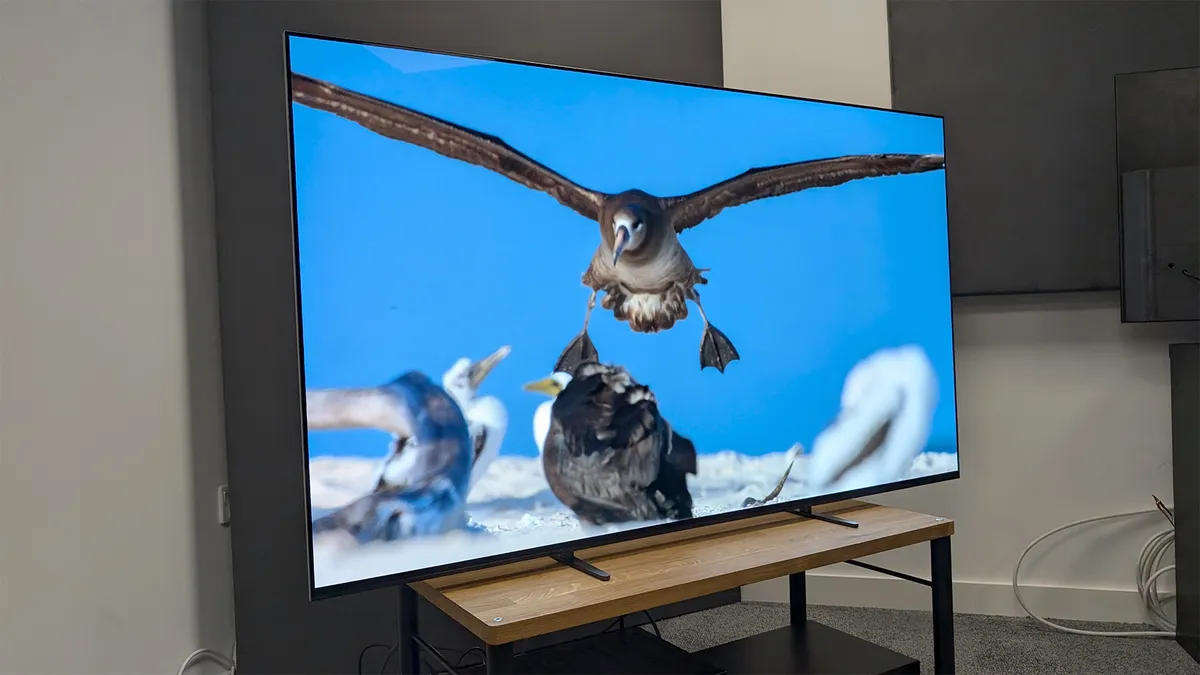
The LG C6 improves on previous C-series models with cleaner, more controlled audio, tighter bass and clearer dialogue. It’s a solid performance by TV standards, but it will still be comfortably beaten by a dedicated sound system, such as one of the best soundbars.
The Sony Bravia 8, however, is one of the best-sounding OLED TVs we’ve tested – and the clear leader in this step-down OLED class.
Its Acoustic Surface Audio+ system uses actuators behind the screen to produce sound, which helps audio feel more directly tied to the on-screen action. Dialogue is well placed, effects track movement convincingly, and the overall presentation feels more spacious and precise.
It does lack some low-end weight, but its control and cohesion are excellent, and it avoids the distortion that can affect many TV speaker systems.
While we still recommend a soundbar for the best experience, the Bravia 8 clearly offers a more capable and immersive built-in audio experience.
** Winner: Sony Bravia 8 **
LG C6 vs Sony Bravia 8: verdict

The LG C6 and Sony Bravia 8 are both excellent OLED TVs, but they cater to slightly different priorities.
The LG C6 is the more versatile all-rounder. It offers stronger brightness, more impactful visuals and class-leading gaming features, making it a great choice for a wide range of users.
The Sony Bravia 8, meanwhile, is the option for purists. It delivers a wonderfully natural and cinematic picture, exceptional motion handling, and some of the best built-in sound you’ll find on a TV.
All of that said, if the two TVs were the same price, we would confidently point you towards the newer LG C6.
The thing is, they're not the same price, and the fact that you can currently get the Sony for hundreds of pounds/dollars less than the LG rather complicates things.
For that reason, we're calling this one a draw for now, but should the C6 be discounted to similar levels as the Bravia 8, that's the model we recommend.
** Overall winner: Draw **

