Prog rock is a staple in hi-fi circles, and for good reason. Explore it, and you’ll find everything from experimental, album-length tracks chronicling epic space wars to short and sweet, gentle ballads celebrating young love on a UK council estate. The only connecting factor between them is a progressive virtuosity focused on pushing sonic boundaries.
And, when done right, this means it's a genre that can really stretch any hi-fi system, which is why it makes sense you all talk about it so much on our forums and social media pages. It’s also why more than a few of the What Hi-Fi? team have a soft spot for the genre and frequently listen to it for fun as well as work (testing).
But, its eclectic nature can make it tricky to navigate for newbies. Here to help offer our two cents on the top prog rock albums for hi-fi fans, we’ve created this list detailing our personal favourites.
On the off chance you think we’ve missed one, or just want to flag one for us to check out, get involved with the conversation using the comments section below, or let us know on our social media and forums. We’re always on the hunt for new music to check out!
The Moody Blues – Days Of Future Passed (1967)

The Moody Blues may technically not qualify as “prog” in many circles. But the band’s 1967 masterpiece Days Of Future Passed is often viewed as a proto-prog album that helped create the genre – kind of how MC5’s Kick Out The Jams helped make punk what it is, despite not being punk.
Though it’s the band’s second album, we’d argue it’s the point they really found their sound. It’s the first one where they recorded using a Mellotron keyboard, a unique sonic signature that has since become synonymous with The Moody Blues. Add to this a stellar mix of songs that set a consistent tone and flow from one to another, and it’s a delight to listen to from start to finish.
From the opening Dawn Is A Feeling right up to the closing note of the final track, Nights In White Satin, once you get Days Of Future Passed spinning, it’s hard not to fall in love with it.
Buy The Moody Blues, Days of Future Passed (1967) on Amazon
King Crimson – In The Court Of The Crimson King (1969)

If you asked any pundit to name a prog rock band, there’s a strong chance King Crimson would be the first name you hear, and there’s a very good reason for that.
The band is often viewed as one of the starting points for the genre, with its 1969 masterpiece, In The Court Of The Crimson King, continuing to be touted as a high point for prog to this day. Forgoing the heavy blues and rock influences of the other big bands of the time, it’s an eclectic album that mixes elements of psychedelia, jazz and classical music.
21st Century Schizoid Man remains a particular favourite among the What Hi-Fi? team. The seven-minute epic has stood the test of time remarkably well, with its complex, textured composition really pushing the limits of any hi-fi set-up.
Listen to it on a poor set-up and you’ll lose half the track, especially during the more cacophonous sections. But spin it on a decent one, and you’ll be treated to a tour de force, showcasing prog at its experimental best.
Buy King Crimson, In The Court Of The Crimson King (1969) on Amazon
Yes – Close To The Edge (1972)

Most people will likely think of the radio-friendly single Owner Of A Lonely Heart when asked about Yes. But if prog is your jam, the band’s fifth studio album, Close To The Edge, is where you want to start. Despite some of the band describing making it as a “torturous” experience, akin to “climbing Mount Everest”, there’s no denying the work paid off in spades.
With tracks inspired by classical music and JRR Tolkien’s The Lord Of The Rings books, the iconic album is a masterpiece, both in composition and recording. Side one’s titular track is the most interesting, and one that our team frequently favours.
The 18-minute epic starts slow, featuring a textured intro with nature sounds and a gentle keyboard part, before exploding to life as the band launches an improvised “jam” section. The rapidly changing dynamics and frequent shifts from 10, 12 and 16 bar sections make it an exciting listen that will keep you on the edge of your seat from start to finish.
Buy Yes, Close To The Edge (1972) on Amazon
Emerson, Lake & Palmer – Brain Salad Surgery (1973)

Emerson, Lake & Palmer are a band we know our readers love. Mainly because whenever we write about what test tracks we’re using in our regular Now Playing column, at least one of you will suggest the band’s much-loved, From The Beginning, from the trio’s Trilogy album.
But, it’s actually the band’s fourth studio album, Brain Salad Surgery, that remains a favourite among the What Hi-Fi? Team. On the one hand, this is because of its eye-catching artwork, by H.R. Giger. But it’s mainly thanks to its stellar three-part track, Karn Evil 9, which saw the band expertly utilise synthesizers to create an, at the time, mind-blowing dystopian sci-fi epic that continues to influence prog bands to this day.
The groundbreaking use of synths, intermingled with the trio’s inherent musical virtuosity, makes for a sonic experience that any music fan should listen to, from start to finish, at least once. Trust us, there are far worse ways to spend half an hour.
Buy Emerson, Lake & Palmer, Brain Salad Surgery (1973) on Amazon
Genesis – Selling England By The Pound (1973)

Genesis was the starting point for both Phil Collins and Peter Gabriel, two powerhouse performers who went on to global acclaim with decades-spanning solo careers. But, if prog is what you’re after, it’s their work on Genesis’s fifth album, Selling England By The Pound, that really shines.
Though the album received mixed reviews at the time, it remains a favourite amongst What Hi-Fi?’s staff. Shamelessly British, crammed with cheeky inside jokes, it can be a lot to take in all at once, and it definitely jumps around a lot.
But it remains a quintessential piece of prog history that’s full of stellar, thoughtfully composed, experimental tracks, ranging from the whimsical The Cinema Show to the mind-blowingly complex Firth Of Fifth. Even if you don’t like all of it, newbies to prog are sure to find at least one song they like.
Buy Genesis, Selling England By The Pound (1973) on Amazon
Carmen – Fandangos In Space (1973)

What happens when you combine flamenco and prog? Fandangos In Space, that’s what. It’s the debut album for flamenco-rock sensation Carmen.
Produced by Tony Visconti, who worked with numerous big names, including David Bowie, over his career, there’s nothing else quite like it. Mainly composed by singer/guitarist David Clark Allen, the album merges classical flamenco guitar and percussion, with rock guitar and Mellotron keyboard parts.
Add to this bombastic lyrics about everything from bullfights to gypsy curses, and it becomes quite the spectacle and an enthralling, albeit atypical listen, even for prog fans, who are used to some degree of experimentation.
We’re particularly big fans of the album’s main ballad, Lonely House, which has powerful vocals and a pure, emotional depth that sounds sublime when played through a decent system. If you’re a fan of either genre, we’d strongly recommend giving it a listen, as a result.
Buy Carmen, Fandangos In Space (1973) on Amazon
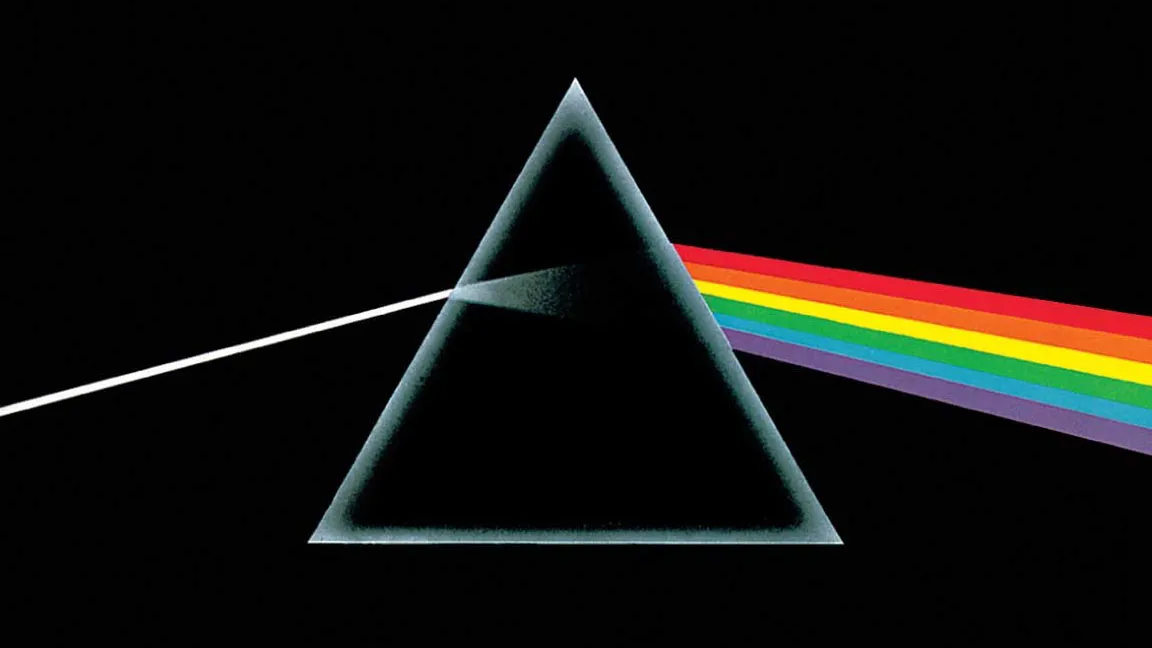
Pink Floyd – The Dark Side Of The Moon (1973)

Yes, fine. The Dark Side Of The Moon is probably the cliché to end all clichés at this point, so much so that it’s nigh-on impossible to attend a single hi-fi show this side of the western hemisphere and not hear a cheeky slice of Gilmour and co. floating out from one of the exhibition rooms.
The thing is, some things become clichés because they deserve to be, and few records have earned the right to be overplayed quite like Floyd’s timeless opus. Both a brilliant test album and a stellar musical work in its own right, TDSOTM is the quintessential prog classic, tackling those big, meaty themes such as greed (Money), mental instability (Brain Damage) and existential dread (Time) with exhilarating confidence infused with a hazy, dreamlike quality that enraptures and unsettles in equal measure.
Just about the moodiest, most melodic and masterful release of that golden ‘70s era of classic rock, Dark Side Of The Moon truly deserves its flowers. There’s a reason everyone from your nan to your teenage nephew has it in their collection – if it isn’t there already, it’s time to make it a part of yours.
Buy Pink Floyd, The Dark Side Of The Moon (1973) on Amazon
Rush – Moving Pictures (1981)

There are very few bands around with as big and diverse a music library as Rush. And because of that, we know full well that picking 1981’s Moving Pictures as the best the band’s ever done will cause some debate. But here we are, it’s our favourite, and we’re not ashamed to admit it.
For starters, it has one of the most iconic songs in history on it. We speak, of course, of Tom Sawyer. Frontman, bassist and general prog rock legend Geddy Lee describes the track as "the quintessential Rush song", and we get why.
Featuring an iconic groove percussion section that intermingles with spacey guitars and the track’s now-iconic fuzzy synth parts to its rapid shifts in dynamics and rhythm make it a delight that’ll keep your feet tapping from start to finish. And that’s just one track from this holistically amazing album.
Buy Rush, Moving Pictures (1981) on Amazon
Marillion – Clutching At Straws (1987)

A lot of prog rock has fairly lofty themes; intergalactic space wars, the meaning of life, those sorts of things. Which is why English neo-prog rock band Marillion’s masterpiece Clutching At Straws feels like such a breath of fresh air for the genre, despite releasing all the way back in 1987.
Telling the story of Torch, a normal man who’s failed in nearly every aspect of his life, it chronicles his musings, usually in a pub or bar, as he numbs himself with alcohol.
Though the band’s previous album, Misplaced Childhood, and its iconic single Lavender, often gets more attention, for the What Hi-Fi? team, Clutching At Straws is a more concise, mature, holistically solid body of work that showcases why the band is still talked about and active.
Whether it’s the bittersweet Sugar Mice, which features lofty yet vulnerable vocals, expertly showcasing singer Fish’s range, or the explosive, seemingly jubilant Incommunicado, the entire album is a complex rollercoaster ride for your hi-fi system and emotions.
Buy Marillion, Clutching At Straws (1987) on Amazon
Dream Theater – Images And Words (1992)

30 years after forming in college, Dream Theater remain at the forefront of prog rock, having released a steady stream of increasingly complex, sometimes mixed, albums that showcase the raw virtuosity of the Berkeley-trained band. But, for the What Hi-Fi? team, while it may not be the most “proggy” of the band’s work, it’s Dream Theater’s breakout album, Images And Words, that gets the most playtime.
Whether it’s the iconic, atmospheric, and radio-friendly Pull Me Under, or our personal favourite, Metropolis - Part 1: The Miracle And The Sleeper, the album is a stellar listen. One that’s full of tracks with difficult arrangements delivered with laser precision by the band, which is as tight as Scrooge McDuck from start to finish.
Buy Dream Theater, Images And Words (1992) on Amazon
Tool – Lateralus (2001)

If you like your prog with a slice of metal, rather than rock, Tool’s Lateralus is a fantastic option. It’s the album where the band cemented its iconic sound, fully stepping away from its grunge (especially Alice In Chains) inspired origins, into its conceptual, progressive metal style.
Though you’d never describe it as an easy listen, due in part to the complex, thought-provoking nature of the songs, it’s a carefully curated album that merits repeated listening.
From the opening track, The Grudge, you’ll be treated to a challenging album full of songs showcasing Tool’s iconic propensity for complex rhythm changes, booming breakdowns and haunting vocals. This, plus the album's clever arrangement, which sees each song sweep over you, taking you on a reflective journey with the band, makes it one of the most iconic releases of its time – and a pretty good stress test for any hi-fi system's dynamics and rhythmic precision to boot.
Buy Tool, Lateralus (2001) on Amazon
The Mars Volta – De-Loused In The Comatorium (2003)

Featuring two founding members of post-hardcore legends At The Drive In, The Mars Volta’s 2003 debut album, De-Loused In The Comatorium, was a big deal at the time. And while it was a marked departure from guitarist Omar Rodríguez-López and singer Cedric Bixler-Zavala's past work, it remains one of the best prog rock albums of all time.
The concept album is based on a short story written by lead singer Cedric Bixler-Zavala and sound manipulation artist Jeremy Ward, about a man who falls into a coma after overdosing. The album features an eclectic mix of inspirations, ranging from Latin jazz to psychedelia and heavy metal, throughout its playtime. And while the rapid genre changing jumps between each track did create a Marmite divide between At The Drive In fans, for prog fanatics it’s a great showcase of what makes the genre great.
It’s also a particularly sad album, whose magic, for us, hasn’t been replicated – since Ward, who contributed heavily to the sound, tragically died of a heroin overdose a month after the album was released.
Buy Mars Volta, De-Loused In The Comatorium (2003) on Amazon
Coheed And Cambria – Good Apollo, I'm Burning Star IV, Volume One: From Fear Through The Eyes of Madness (2005)

If you like your prog with a heavy dose of over-the-top sci-fi plotlines, then Coheed And Cambria are well worth a listen.
The band is famous for basing its albums on epic stories, many of which have been detailed in comic books and novels, full of twisty turns and occasional stomach-churning moments. And as the numbers in the title suggest, Good Apollo, I'm Burning Star IV, Volume One: From Fear Through The Eyes of Madness is part of one such epic; The Amory Wars.
As a cohesive piece, it’s a fantastic listen that showcases why Coheed are often viewed as the shining stars for prog that helped reignite mainstream interest in the genre during the early 2000s.
Whether it’s Claudio Sanchez’s wailing, Geddy Lee-inspired vocals, or the tight, interlinked rhythm and lead guitar parts, which expertly navigate between chugging rock riffs and noodling prog excess (adding the occasional emo-esque breakdown in between), you’re sure to find something to love.
And as a bonus, it’s also the first Coheed album with decent production value, losing the fizzy compressed sound of the previous two albums, which held the band back in more serious hi-fi circles.
Porcupine Tree – Fear Of A Blank Planet (2007)

There are few names as synonymous with prog as Porcupine Tree, and its frontman and founder, Steven Wilson. Go into any hi-fi show and there's a strong chance you'll not only hear at least one of the band’s tracks playing, but also see him speaking about sound quality. He’s a smart man who likes his hi-fi, after all.
But of the band’s long catalogue of work, which dates all the way back to 1987, it’s their 2005 album, Fear Of A Blank Planet, that gets the most love from the What Hi-Fi? team. In part, this is because its concept, which explores the impact modern tech, and the general state of the world, is having on young people, remains more important than ever.
However, it’s mainly due to the fact that it was intentionally composed not to have a “radio single” and is instead designed to be listened to from start to finish. This gives it a more polished, flowing structure than past Porcupine Tree albums. Featuring rapid mood and genre swings, that mix classic 1970s elements with post-grunge and general rock, we’d strongly recommend it to any music fan, prog or not, as a result.
Buy Porcupine Tree, Fear Of A Blank Planet (2007) on Amazon
Anathema – Weather Systems (2012)

Having started life as a doom metal band in the 1990s – one that toured with Cannibal Corpse – Anathema has slowly developed into a staple favourite within the prog community. And while the band's eighth album, We’re Here Because We’re Here, may be generally considered the pivotal moment that cemented the change (with the aforementioned legend, Steven Wilson, having mixed it), its follow-up ninth album, Weather Systems, is the team's favourite.
Despite not having any of the immediate, jump-out singles of its more famous predecessor, the album feels deeper and more joined together, with the band claiming it’s intentionally been written to “deeply move the listener” and take them on an explorative journey – one covering all the big questions we have around life, regret and, eventually, death.
Starting from the slow-burning acoustic intro, Untouchable Part 1, the album ebbs and flows, creating a dream-like, ethereal state. The constant shifts in dynamics, ranging from anguished, shouted pleas to sombre reflections that will truly move even the most stoic of listeners, continue all the way up to its masterfully recorded conclusion, Internal Landscapes.
Buy Anathema, Weather Systems (2012) on Amazon
MORE:
These are the best hi-fi systems we’ve reviewed
We rank the best albums for hi-fi fans of all time
Our picks of the best speakers for serious music fans

