
Everyone on the What Hi-Fi? team knows that I am an absolute sucker for animation. Whether that’s the endearing adventures of Wallace And Gromit or the beautiful offerings from Studio Ghibli, there is an animated film for every mood.
A few of my favourites have made it into our AV room as test discs for the latest home cinema kit, including Spider-Man: Into The Spider-Verse and the motion capture extravaganza Kingdom Of The Planet Of The Apes.
And there’s one brilliant animated film that has just celebrated a special milestone, and I decided to revisit it to mark the occasion.
Kubo And The Two Strings is the fourth feature from Laika Studios, best known for its adaptation of Neil Gaiman’s Coraline, and it just turned 10 this year.
Apart from having a spunky teen as its titular character, the two films could not be more different. Set in Ancient Japan, Kubo is searching for his late father’s mystical suit of armour. With the help of his companions Monkey and Beetle and his magical musical powers, he must vanquish evil spirits hell-bent on foiling his plans.
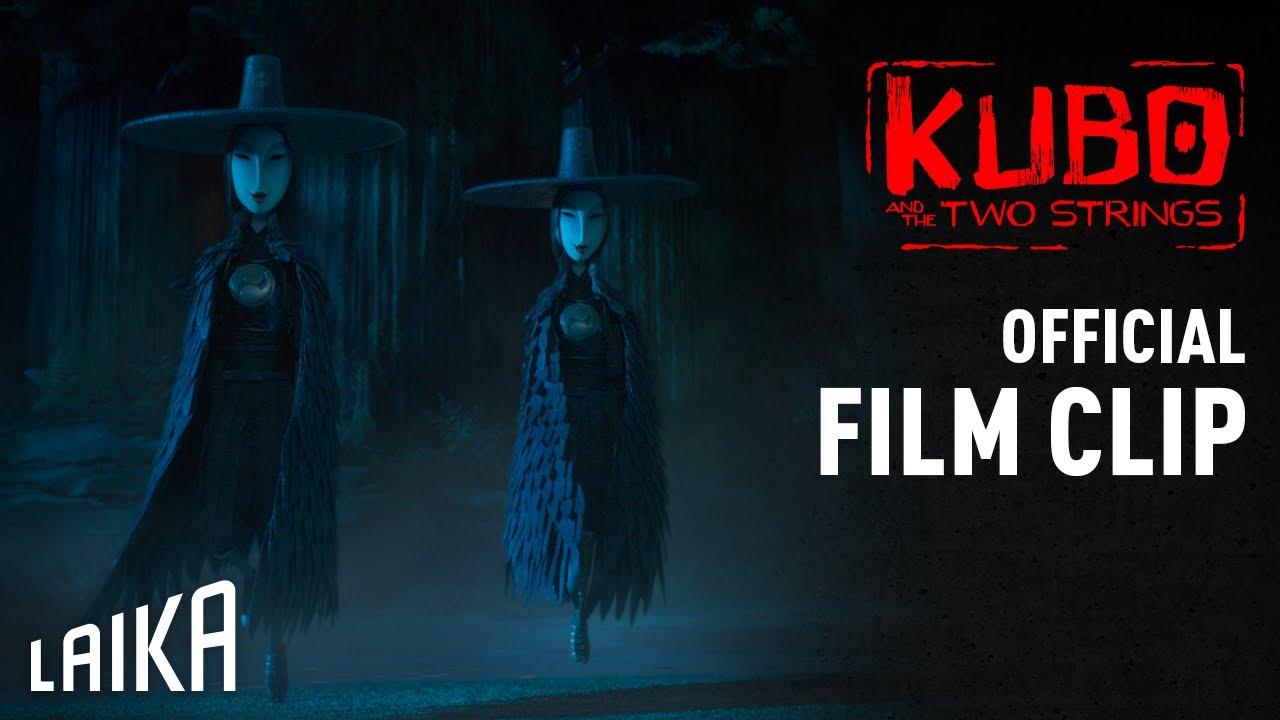
Like all of Laika’s films, Kubo is created using stop-motion animation, where the filmmakers incrementally change the position of physical objects between frames.
This hard work certainly pays off, as every frame is packed with creativity and beauty. Its colourful aesthetic makes for a great test of brightness and vibrancy for your TV or projector.
It’s not afraid to go dark, either. When the evil twin spirits catch up with Kubo in a spooky forest, the atmospheric shadows of the trees and the swooping of their black capes challenge your system’s ability to portray dark detail. Without the right handling, the spine-tingling scene can be tinged with a black crush or disappointing greys.
The score is also an excellent test of your sound system. Dario Marianelli’s soundtrack incorporates instruments from Japan such as the stringed shamisen, which Kubo plays in the film, as well as more traditional Western instruments. Kubo shows off to the townspeople his talents for controlling the world around him with his shamisen, and the score calls for careful handling of dynamics to capture the energy of the scene.
After re-watching the film for the first time in a while, I will now be reaching for it more often when in the test room. It might not offer the same realism as live-action movies, but the stunning colours and expressive soundtrack still mean it holds its own among our test discs.
Laika’s much-anticipated new release, Wildwood, is coming to cinemas at the end of the year, and I will certainly be watching to see if it can reach the same glorious heights as Kubo.
MORE:
Check out the best scenes to test your Dolby Atmos system
Here are the best TVs
And these are the best soundbars we recommend

