
Thought we had finally hit the upper limit of OLED? Think again!
LG Display, which produces the OLED panels used in all OLED TVs sold by LG Electronics and in many TVs sold by brands such as Samsung, Sony and Panasonic, has just announced a new “dream” panel technology called ‘FLiPP’.
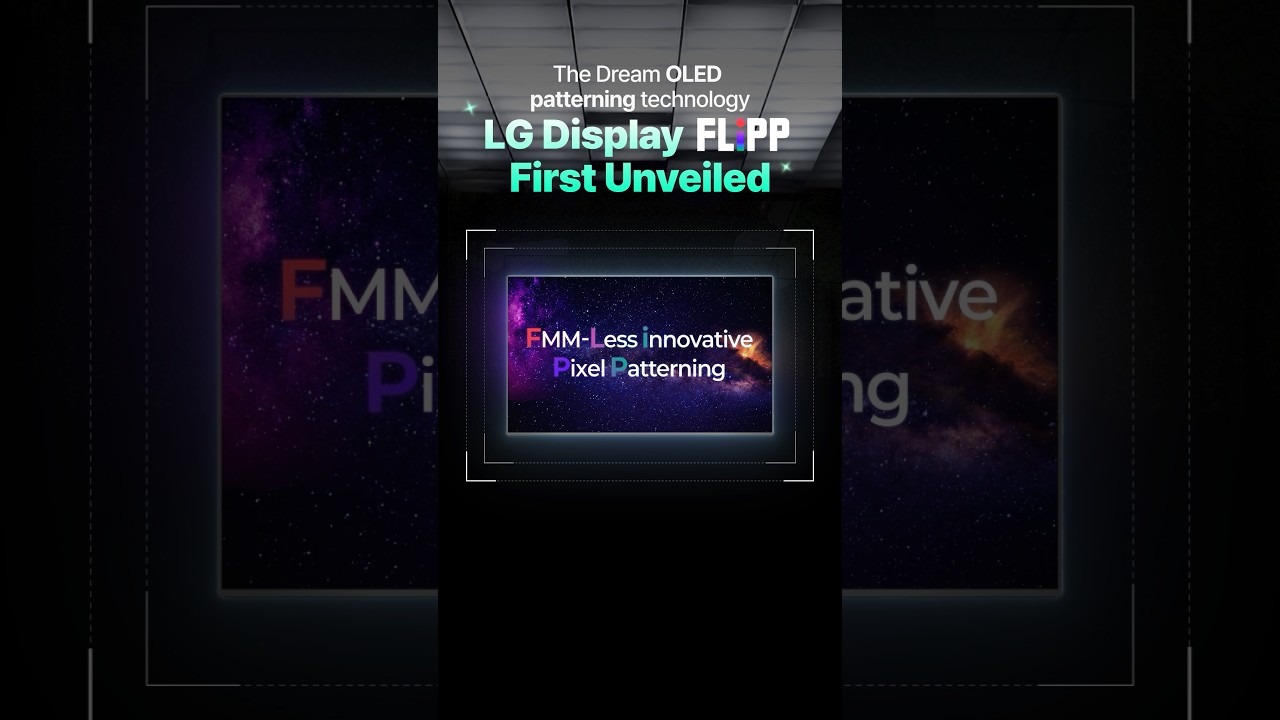
That funky name stands for the decidedly less funky ‘FMM-Less innovative Pixel Patterning’, which actually explains how this new technology works.
For the past decade or so, OLEDs have been manufactured using fine metal masks (FMMs). These are essentially sheets covered with microscopic holes, through which the red, green and blue OLED materials are placed.
The problem with these FMMs is that they add cost and they are hard to manufacture, particularly at very large screen sizes.
Now, “after a year of concentrated R&D”, LG Display says it has managed to develop a manufacturing method that eradicates the need for these FMMs.
More affordable super-sized OLED TVs?
Why should you care? First up, LG Display claims that because FLiPP improves the aperture ratio of OLED, it can “increase display brightness by 1.6 times, extend lifespan by 2.4 times, and reduce power consumption by 13 per cent”.
But I think there is potentially a more interesting point here. FLiPP apparently reduces material costs and significantly improves the efficiency of using large OLED sheets to produce panels for different products, and that means that manufacturing costs should decrease, potentially resulting in cheaper OLED TVs.
This could be particularly beneficial where very large OLED TVs are concerned. Big OLED panels are difficult and expensive to produce, so very large OLED TVs tend to be disproportionately expensive. FLiPP could change that.
LG Display flags that FLiPP is “free from panel size and resolution constraints”, and can be used for producing panels from 1-inch in size (for AR/VR headsets, for example) right up to 100 inches.
But when will we start to see FLiPP-based OLED TVs in shops? Not for a while, it seems: the tech is being officially unveiled at the International Meeting on Information Display (IMID) this week, and LG Display says it will first be used in “IT applications such as tablets and monitors”.
Rollout for “ultra-large TVs” is explicitly promised in the press release, though.
We have contacted LG Display for more information, and have reached out to TV manufacturers for their thoughts on the announcement.
We’ll follow up with more on FLiPP as we get it. In the meantime, those who want more of an explanation of how it works should check out LG Display’s own video explainer:
MORE:
Here are the best OLED TVs you can buy right now
Check out our LG C6 review and LG G6 review

