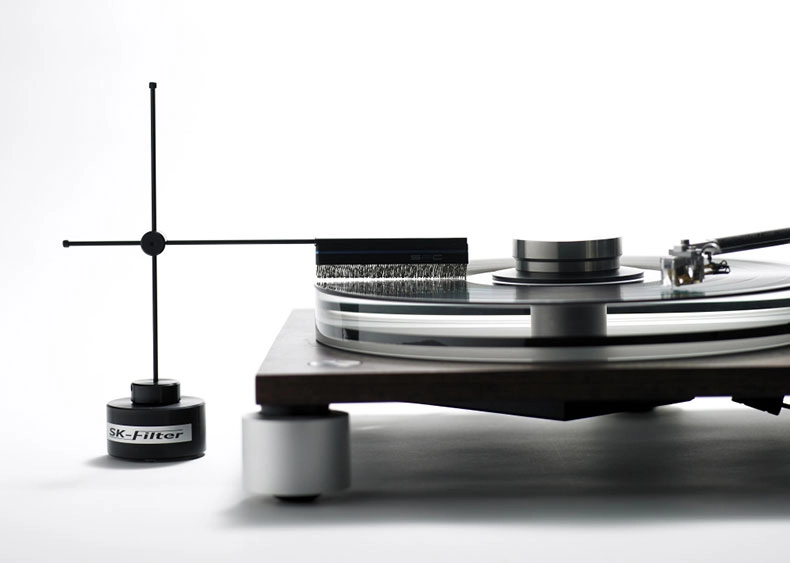
more 'snake oil'
a note lasting 2.723 sec on one system via a certain interconnect on one surface as opposed to 2secs flat, thats what we hear and thats what the differences are
If one interconnect made a note last 36% longer than another, something would be dreadfully wrong with one of them. You've used a fantasy example.
No....
WHF talk of it all the time in their reviews, - transients, space, full bodied - all this to discribe whats been heard fron one source to another. In general we hear whats a note does the body of a note, but some frequencies can get lost, hence on one interconnect you pick up reverbe on the end of a voice or follow a note to the bitter end instead of just the main body of the note/voice.
its why some will say a piano does not sound like a piano through most speakers, some detail is lost, we hear the differences, our brain notes the differences but our concious minds will argue otherwise. its the fine detail that seperates the good from blah
Thats maybe why it cannot be measured, maybe the tools used to measure only recognise the main body of sound as opposed to the actual note in its entirity which the brain can percieve
No.
I did once suggest some time ago on here that perhaps the brain can recognise differences that we'd not yet figured out how to measure, and to say that I was rubbished is an understatement. My personal opinion is that it's always a good idea to remain open minded about things because I really genuinely do not think puny humans know 100% about absolutely anything.
Eloquently put Cno, and I had misunderstood Frogs point to a degree. I'm open minded to the fact that other sensory inputs can affect the primary one, there was an interesting BBC Horizon documentary on how the brain cleverly fills in the spaces that our eyes and ears simply cannot assimilate quickly enough in daily life, so literally self delusion is highly probable. But, that does not mean that there is never any difference, and soemtimes quite a big difference, mostly I think for me then impressive hi fi usually has very good spatial cues rendering the original 3D drectionality that makes it sound realistic. Frequency response for example probably plays a less important role.
Some things I can hear, others I can't: cables, interconnects, dammit even some 16/44 to 24/96 tracks where I have both are difficult to identify which one is which. But, just becase I don't hear it, it does not mean that it doesn't exist; from a listening perspective therefore it's not relevant to me, though the science of it might be, but is a separate issue, unless of course subconcioulsy if I KNOW there should be a difference, then my brain will detect it.
Could someone just tell us exactly what equipment passes all DBX tests and is totally delusion free? Preferably at a number of popular system price points...
£300
£500
£1000
£2000
etc.
Domestically acceptable options preferably (no 'highlighter pen yellow' speaker cones or studio rack handles or anything else that is more befitting a teenager's bedroom 'studio' set-up).
I appreciate that listening to, and comparing different options - in the traditional shop demo/home demo manner - just invites expectation bias and that full-blown, scientifically rigorous, supervised auditioning is a near impossibility at any hi-fi outlet, department store or Pro-shop (and a total impossibility when buying online).
Obviously magazine guidance is a no-no because of their dogged subjectivity. (Even the ones who bench test the gear still listen, sighted, to the reviewed items.)
So most of us will need to be told what has already passed such testing and is therefore deemed superior to all that other hi-fi 'froo froo'/snake oil/foo etc. that we are suffering from now.
Seriously, we can't do the (scientifically validated) testing anywhere on the high street or online before purchasing, so we need a list of what has already undergone the testing, passed and is guaranteed to be 'foo' free.
Thanks
.Arguably, the problem with your approach is that it is analogous to the Christian fundamentalists in America saying creationism ought to be taught in schools in the interests of 'balance'.
Edit: I should say, I don't think you're wrong in arguing there are differences in SQ when it comes to sources with analogue outputs and amps (which was Fr0g's point); I do think the way you make the argument is hazardous, and that it can be used in relation to things like digital cables, which I do not think make a difference.
I think that can work both ways, depending what side you are on.
Of course I'm not arguing that something that flies in the face of "proven" scientific fact should be upheld. The problem lies where "known" fact is proved to be wrong. When Galileo argued that the earth wasn't the centre of the Universe but in fact orbited the Sun, he had to retract his statement on pain of death, as it flew in the face of what was known.
Now this is extreme, but no more so than pushing my argument into creationism vs evolution, which was not what I was getting at. All debates have two sides, and some arguments stand scrutiny and some do not, but as ever, logic and common sense have to be applied. My point is that if all one's research directly supports one's viewpoint, it "could" be unbalanced.
All I'm asking is that people don't get put off by a dogmatic approach and keep an open mind.....One should not readily dismiss the findings of so many people on here (and elsewhere).
With regard to digital cables, I'm open minded, but sceptical, so if my dealer had a wonder cable, I would at least try it.
I was part of The Big Question almost 3 years ago, when we compared a budget stereo amplifier with 3 AV recevers at different price points.
When the first song was played, I could not make out any difference between system A & system B. Yet, the other 2 participants commented on the "separation of sound" etc. So I had to concentrate really really hard, when I started noticing some differences. Somehow, I could pick up that the stereo amplifier was effortless while the others struggled a bit. How did I notice that difference? I do not know.
Yes, the differences were quite small (which brings to the question if the tiny difference was worth the extra expenditure, which I could notice only on extremely careful listening. I never listen to music that way normally!).
.....
IDC, if I remember correctly (btw no malice intended), used to have a different view, and heard beneficial differences of mains cables, until he submerged himself in the whole area of "correct" testing and and expectation bias. Now he will (probably as soon as he sees this) make exceedingly informed and well written arguments to support his side of the debate, and there is nothing wrong with that; but it is my worry that it's like studying only one side of the argument and so is building in an imbalance.
.....
I did have a different view and heard cables sound different and was happy to be a believer or whatever term was being used. I started to look in more detail as even I, an enthusiastic cable debate contributor got fed up with their cyclical nature.
Not being a scientist, I started collecting evidence and putting it into a thread (initially posted here, but there were too many forum rule issues to do with links, copyright etc that it was not able to run) on a hifi forum to see where the evidence and discussion went. That thread has now been running for 2 1/2 years and as of today there have been 1,440 posts and 101,140 views, with contributions from all sides of the debate. It is an ongoing meta study on the subject of audio blind testing, peer reviewed and the present conclusions have come from that. To blow my own trumpet, it was the first time such testing had been gathered in once place, so giving the opertunity for them to be studied together, it has since been copied by others (I have stolen stuff back off them, so that is OK!) and it is by far the biggest and longest running of its type.
So all sides of the argument have been considered and it is from that (and some other smaller threads on side matters that have arisen) I strongly believe I can evidence the theory that sighted testing compared to the two types of blind testing shows how SQ is greatly influenced by factors outwith actual sound itself. That conclusion gets stronger the more studing and evidence gathering that takes place.
CnoEvil, all I did was sit for literally thousands of hours searching the internet, reading and learning about blind testing and posting tests with enough information to show they were properly conducted. I listened to thousands of hours of superb music whilst doing that, so don't feel sorry for me, it was and still is fun. The evidence was the key to the conclusion.
Incidentally, it is not just hifi which is has SQ affected by sight and knowledge of what your are listening to. There are a number of blind comparison tests of violins which find the same thing. When people cvannot see the violin they are listening to, the Stradivarius can come last as the least favourite sounding violin, the cheapest 'no-name' comming top.
Cable believers say they're open minded but never submit themselves to blind tests, often saying that they listen for enjoyment and that science should stay in laboratories.
How is that being open minded?
Could someone just tell us exactly what equipment passes all DBX tests and is totally delusion free? Preferably at a number of popular system price points...
£300
£500
£1000
£2000
etc.
Domestically acceptable options preferably (no 'highlighter pen yellow' speaker cones or studio rack handles or anything else that is more befitting a teenager's bedroom 'studio' set-up).
I appreciate that listening to, and comparing different options - in the traditional shop demo/home demo manner - just invites expectation bias and that full-blown, scientifically rigorous, supervised auditioning is a near impossibility at any hi-fi outlet, department store or Pro-shop (and a total impossibility when buying online).
Obviously magazine guidance is a no-no because of their dogged subjectivity. (Even the ones who bench test the gear still listen, sighted, to the reviewed items.)
So most of us will need to be told what has already passed such testing and is therefore deemed superior to all that other hi-fi 'froo froo'/snake oil/foo etc. that we are suffering from now.
Seriously, we can't do the (scientifically validated) testing anywhere on the high street or online before purchasing, so we need a list of what has already undergone the testing, passed and is guaranteed to be 'foo' free.
Thanks
All I can say is that speakers and bit rates have the best change of being identified in an ABX test, cables have no success what so ever. But speakers and bit rates are not guaranteed passes.
Amps have had some successes and fails, DACS and CDPs all fails.
But, whilst I would argue there have been enough tests to reach an overall conclusion about how sight and bais can affect SQ, there have not been enough tests conducted to definitively answer your question.
One area where there is still a big issue is to do with people hearing or not hearing differences and the results from tests. I do not know how honest people have been in their answers. I wonder how many have just guessed, not wanting to admit they cannot hear any difference. One of my favourite tests was an Australian one, where true to the stereotype they set up the test, ran it until someone admitted they were guessing, then they all admitted they wewre guessing and so they gave up and drank beer instead!
Not so long ago I challenge all none believers to a cable diffrence sounding ...er...challenge.
I'm more than happy to do blind test, if I recall right mainly the none believers were the ones making excuses.
Not so long ago I challenge all none believers to a cable diffrence sounding ...er...challenge.
I'm more than happy to do blind test, if I recall right mainly the none believers were the ones making excuses.
I would be happy to take part as long as it was "Double blind", ie the person running the test didn't know the difference between the cables as well as those listening and as long as it was statistically significant, ie you have to run the tests a number of times with a number of subjects and you have to randomise them. So we'd need to find a disinterested third party to run the tests and a number of subjects to listen. I'm happy to be proved wrong!
Chris


Hi,
There is another debate on another Hifi magazine website about NAS (Cat5 and Cat 6 UTP) cables making a difference in sound quality.
Whether you believe this or not is up to you.
Science does show us that expectation will affect your judgement on whether you hear a difference - remember the green felt tip pen on the edge of the CD saga that was stated to make a difference to sound. People willingly believed this and stated that they heard a difference.
I think the post title "Snake Oil" is an apt name for what this is about - if someone claims that their new specially treated piece of material imbibes a positive listening effect (improve sound quality) on a CD player (digital output to a DAC) all for the small sum of £500, then you are highly probably being tricked.
If this is about a cable costing less than £20 is better than another costing £15, then it does not really matter - in general this is not a lot of difference for £5.
What is worrying is that cable to connect equipment which are digital (Ethernet UTP etc. on a NAS drive to a NAS player), costing many hundreds of pounds is stated to provide an improved listening experience - people should be aware that this is probably not good value for money.
Regards,
Shadders.