
We are only a couple of months into 2026, and it’s already shaping up to be an interesting year for headphones of all shapes and sizes.
New competition from industry titans such as Apple, Sennheiser, Bose and Sony, has arrived and already made an impact – you can find new entries from all these brands in our best headphones guide below.
Shopping for a new pair of headphones is tough after all. You have to make several choices, starting with whether you’d like immersive over-ear headphones, small ultra-portable wireless earbuds, and whether you’d prefer the convenience of wireless headphones or the better-value sound performance of wired headphones.
That’s a lot of choice, which is why this all-encompassing guide will hopefully help you decide.
We cover the very best class-leading pairs across a variety of styles and budgets. Whatever you’re after, there’s something for everyone here.
This definitive list has been chosen by our expert in-house reviews team, who thoroughly test over 100 models every year, comparing them against relevant class leaders so we can gauge exactly where they sit within the competitive market.
So after some exhaustive testing, here are our top picks below…
February 2026: Added Apple AirPods Pro 3 as best AirPods and Bose QuietComfort Ultra Headphones (2nd Gen) as best noise-cancelling headphones. Sennheiser HDB 630 are our pick for the new ‘best wireless for audiophiles’ category. The Sony WF-1000XM6 replace Technics EAH-AZ100 as best premium earbuds.

I've been writing about headphones – not to mention other corners of the wide and wonderful consumer technology market – for over a decade and am one of What Hi-Fi?'s go-to reviewers for both wired and wireless models, having heard and lived with more pairs than I care to count. Thanks to my accumulated years of market knowledge, I consider myself an expert at picking the highest-performing and best-value options across the headphones spectrum. My picks below offer something for everyone, to satisfy every taste and budget.
Best overall


It can be tricky for a manufacturer to push the sound performance of a product consistently from generation to generation, but that is what Sony has managed to do with the WH-1000XM6 wireless headphones, our new Bluetooth noise-cancelling over-ear favourites.
Although the XM6 obviously share DNA with their predecessors, the XM5, Sony has made multiple changes to the design based on its own perceptions and customer feedback. They bring back the hinge mechanism that allows the earcups to fold flat for easy storage; the headband is flatter and wider for added comfort; and the clamping force has been increased to improve isolation and help the ANC work better.
Speaking of which, active noise cancellation is superb thanks to a higher mic count and more advanced processing, including an adaptive feature that automatically blocks sound based on your environment.
"Stood in the garden listening out for passing traffic, the Sonys isolate you extremely well," our expert test team noted in our XM6 review. "They present you with a nice, clean, rumble-free background through which you can listen to music. Low-end and midrange noise are contained exceptionally well, especially as we try to navigate London's underground system."
Thankfully, sound quality has been taken further too, despite the XM5 having remained competitive up until the XM6's launch. Our review experts praised them for delivering "the most detailed, dynamic, precise and open sound we’ve heard from a wireless Sony flagship".
"The headphones just seem capable of diving into any track you play and extracting an unbelievable amount of information," reads the review. All in all, the exceptional Bowers & Wilkins Px7 S3 are more or less equal to the Sonys on the sonic front.
Ultimately, if you are looking for a new pair of wireless noise-cancelling headphones and your budget can't stretch to the next-level pairs such as the Focal Bathys or T+A Solitaire T, your auditioning should certainly start here. The previous WH-1000XM5 were already the best around – and are still very appealing if you can get them at a discount – but the XM6 are undoubtedly better for those who can afford them.
Competition comparison
The Apple AirPods Max can only be considered competition to the XM6 if you’re an Apple user, and even then you need to be pretty committed to the brand, because these headphones are not cheap. They’re undoubtedly a step up from the Sonys when it comes to delivering that premium feel, though, and the sound quality really is superb.
Read the full Sony WH-1000XM6 review
Best budget earbuds
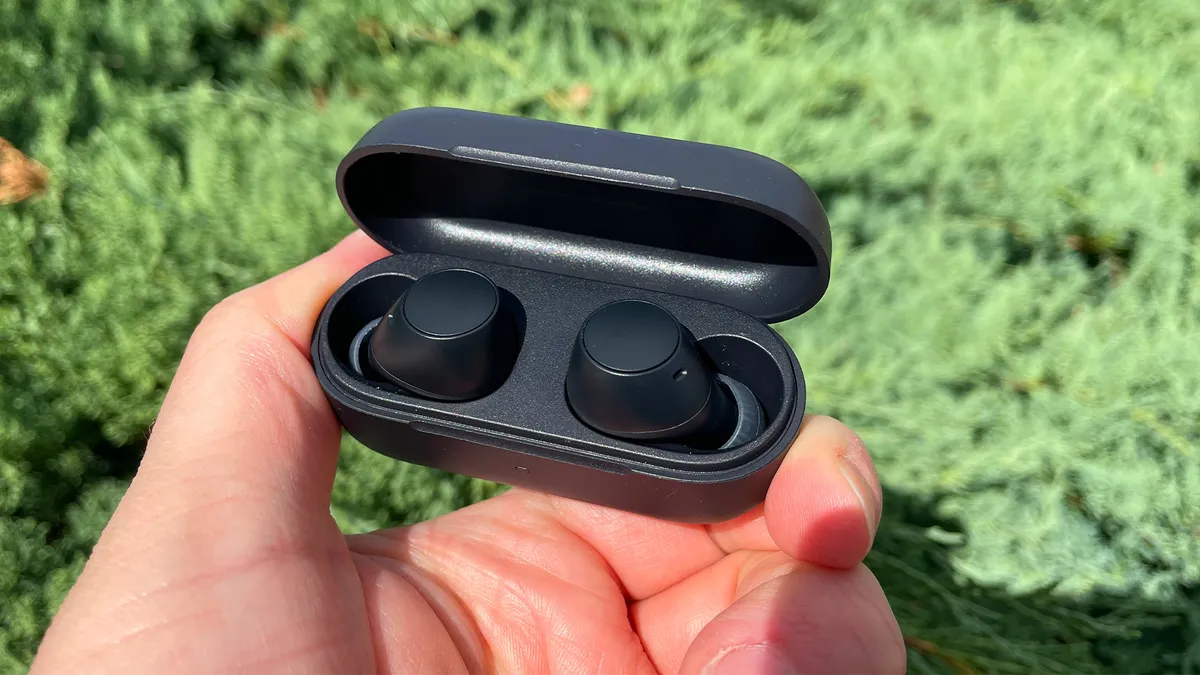


Building affordable true wireless in-ear headphones is a different discipline from building expensive ones, but it’s no less tricky. In the WF-C510, Sony has managed to bring a lot of what makes its established premium true wireless in-ears (such as the flagship WF-1000XM5 further down this list) such a success without cutting too many obvious corners.
The WF-C510 replace the former Award-winning WF-C500 and are What Hi-Fi? Award winners themselves, continuing the brand’s freakishly hot form in every corner of the wireless earbuds category.
Indeed, it’s hard to pile on too much expectation at this modest price point, but Sony’s previous track record has us doing just that, and the WF-C510 don’t disappoint. They do feel and look a little cheaper than their predecessors, but they impress in every other aspect.
Firstly, they are small, lightweight and comfortable. This makes them a great option for smaller ears. During testing, our expert reviews team found that the Sonys slot into their ears "with zero fuss and are easy to position... there aren’t any extra elements to help keep them in place bar the silicone eartips, but they do a great job in this regard".
There are also more features than you might expect at this level, including Bluetooth Multipoint, IPX4 water resistance and, interestingly considering they don't have active noise cancellation, an Ambient Sound Control that allows some external noise in so that you can hear your surroundings. It works OK, albeit not if you're listening to music at decent volume levels.
Most importantly, the WF-C510 sound great for their price. "The key at this price point is to be fun, engaging and musical, and the Sony WF-C510 deliver all of this and more," reads our WF-C510 review. They are a touch fuller and richer-sounding than their predecessors, even.
Competition comparison
Again, they don't have active noise cancellation, which isn't surprising at this price, so if that feature is a must-have, we would point you to the slightly pricier, next-model-up Sony WF-C700N or, if you have a healthier budget, the new Bose QuietComfort Earbuds (2024).
Both alternatives are five-star earbuds, but if you don't need ANC or are willing to sacrifice it for a bargain buy, then the Sony WF-C510 are your best bet. Want more options? Check out our list of the best cheap wireless earbuds.
Read the full Sony WF-C510 review
Best budget headphones

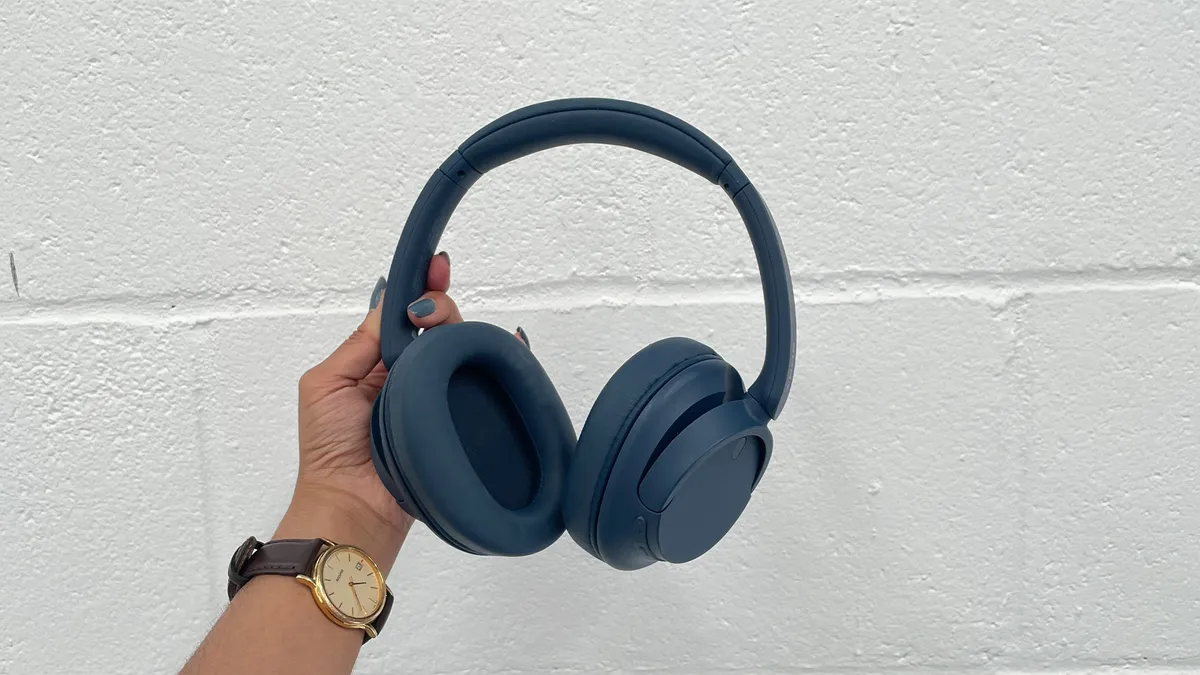

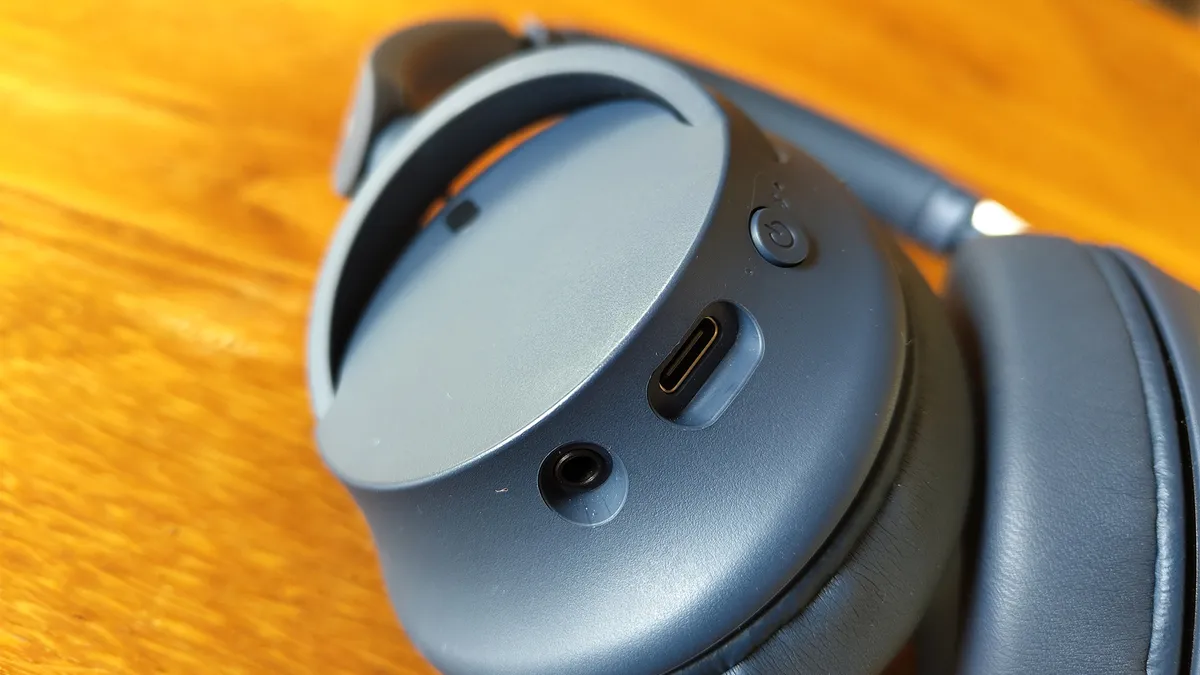
For a very reasonable price, the Sony WH-CH720N are a dependably made, enthusiastic-sounding pair of headphones that, while occasionally straying into the realm of excessive bass, deliver good noise-cancelling (a rare thing at this price) and a strong feature set to the mid-to-low price bracket of the wireless headphone market.
These are designed as a pair of cans for those who aren’t keen on forking out a few hundred quid for a more premium pair of over-ears like the Sony WH-1000XM5 or Apple AirPods Max, but equally don’t want to skimp on active noise cancellation or suffer a significant drop in audio fidelity by opting for the cheapest over-ears we can recommend, the entry-level WH-CH520. And they nail their brief.
The WH-CH720N are hardly a lavish affair and certainly don’t make the heart flutter with excitement every time you set eyes upon them, but they’re solid, substantially made and reasonably comfortable for their price.
Throw in effective ANC that dampens noise pretty well and a sound that is lively, energetic and detailed (in our review, we noted that "we can’t think of any rival headphones at this price that could keep up with such a spirited delivery"), and you have a job well done.
Competition comparison
Truth be told, there isn't much recommendable competition for the WH-CH720N. We have tested other mid-range options, such as the Sennheiser Accentum Wireless, and haven't been impressed. That said, if you don't need active noise cancellation and can stretch your budget a little further, the Austrian Audio Hi-X25BT are fantastic alternatives that sound notably better than the WH-CH720N.
Read the full Sony WH-CH720N review

I noticed that these capable budget headphones sometimes sounded a little overwhelming, with a bass response that might be a touch too enthusiastic for some. If you feel the same, dive into the Sony Headphones app and adjust the bass EQ down a notch or two – you'll take away some of the warmth without losing any of their likeable assertiveness.
Best premium earbuds


Overtaking the Technics EAH-AZ100 as our favourite premium wireless earbuds, the long-awaited Sony WF-1000XM6 are breathtaking all-rounders that should worry every rival at this level.
The overall package – brilliant call quality, broad customisation options, noise-cancellation up there with the best, and, dare we say it, benchmark-setting sound – pushes the brand ahead once again despite the premium wireless earbuds market being wider and more varied than ever.
The buds have a more natural sound than the previous WF-1000XM5, and it's all the better for it, making their predecessors sound lean and blunt in comparison.
As we said in our Sony WF-1000XM6 review: “Everything that you expect to be present in a pair of flagship wireless earbuds is there: a fantastic sense of timing, an expressive midrange, weighty yet well-defined bass and crisp, nicely controlled highs. The Sonys cover all the bases and then some.”
Noise-cancelling is now aided by a new QN3e processor and four mics in each earbud. On the London underground and on flights, we’re impressed with how both low-frequency rumbles and high-pitched screeches are consistently extracted.
Call quality is strong also, with voices coming through loud and clear thanks to a mix of AI beamforming, bone conduction sensors and a wind noise reduction design.
Battery life is a solid eight hours, and you also get Bluetooth Multipoint, fully customisable touch controls and a 10-band graphic equaliser which will help you fine-tune their performance.
So long as you can get along with the eartip fit (we’d like an extra large size to cater for more people), the WF-1000XM6 are serious contenders – Sony has done it again.
Competition comparison
There’s no shortage of competition in the premium wireless earbuds space. The major players are 1) the Technics EAH-AZ100 which offer a longer battery life, three-way Bluetooth Multipoint and a slimmer case and 2) the Bose QuietComfort Ultra (2nd Gen), which offer slightly better noise-cancelling and comfort. The 3) AirPods Pro 3 could win over iPhone fans with their iOS-friendly features and not-too-far-off sound quality.
Still, as the best premium all-rounders for most people, we're sticking with the Sony WF-1000XM6. You can see a longer list of recommendations in our round-up of the best wireless earbuds.
Read the full Sony WF-1000XM6 review
Best AirPods


The AirPods Pro 2 made history as the first AirPods earbuds to receive a five-star rating, putting the Pro series on par with competitors sonically. And the third generation has followed up with improvements in most areas for another top score.
Among the key upgrades for the AirPods Pro 3 are a revamped ‘multiport acoustic architecture’, which promises more precise airflow control to deliver greater bass and a wider soundstage.
“The greater sense of space and power results in a more exciting and confident performance, and allows songs to breathe in an airy soundscape,” our AirPods Pro 3 review reads, adding that: “No matter what track or genre we play through them, the AirPods Pro 3 handle it all with panache and care.”
Apple has also invested heavily in active noise-cancelling this time around, with new ultra-low noise microphones, advanced computational audio, and the new foam-infused eartips to offer twice the noise-cancelling capability as the Pro 2. Whether it was the mid and low frequencies of a flight or environmental noises on our daily commute, we found that noise was damped down in a natural, airy way.
Add in the usual Apple smarts and intuitive user experience, which now includes a heart rate sensor and IP57 water resistance, and you have a very tempting proposition for iOS users.
Competition comparison
What if your budget doesn't quite stretch? The Apple AirPods Pro 2 lack some of the sound and ANC upgrades of the Pro 3, but they’re still great earbuds and have seen some strong discounts since their successors were released. The more affordable AirPods 4 with ANC are also worth considering for Apple users for their iOS friendliness and spatial audio support, though the price-matching Bose QuietComfort Earbuds (2024) sound and block noise better.
Read the full AirPods Pro 3 review
Best wired earbuds


Shure has plenty of experience with wired in-ear headphones, and it shines through in the Aonic 3. They're comfy and lightweight for starters. The headphone cable hooks over the top of your ears and keeps them secure at all times – there is a slight knack required to get the swivelling buds in place, but it'll become a habit in no time.
Nine different eartip choices allow for excellent isolation, while an in-line remote and mic can control your tunes and answer calls.
Best of all, the Shures absolutely nail sound quality. "In the nicest possible way," we say in our Aonic 3 review, they "are the kind of headphones you can put on and just forget about. There isn’t a single element that sticks out – bass notes don’t protrude and highs don’t cut too deep. The Shures are honest, transparent and true to the original recording."
We love the level of detail they offer too, and their sense of rhythm and timing needs to be heard to be appreciated. We simply can't think of any pair of in-ear headphones at this price that even comes close, and that's why they're What Hi-Fi? Award winners.
Competition comparison
That said, they aren't exactly cheap and therefore may be out of reach for some buyers. If that's the case, the multi-award-winning SoundMagic E11 should be a first consideration. They offer the best-value performance below the Shure's asking price, despite being significantly more affordable, and have the bonus of an in-line remote.
At the other end of the scale, if your in-ear ambitions and budget surpass that of the Aonic 3, may we point you to the next-model-up Aonic 5 – the best in Shure's catalogue and indeed musical masters at their high-end level.
Read the full Shure Aonic 3 review
Best wired headphones
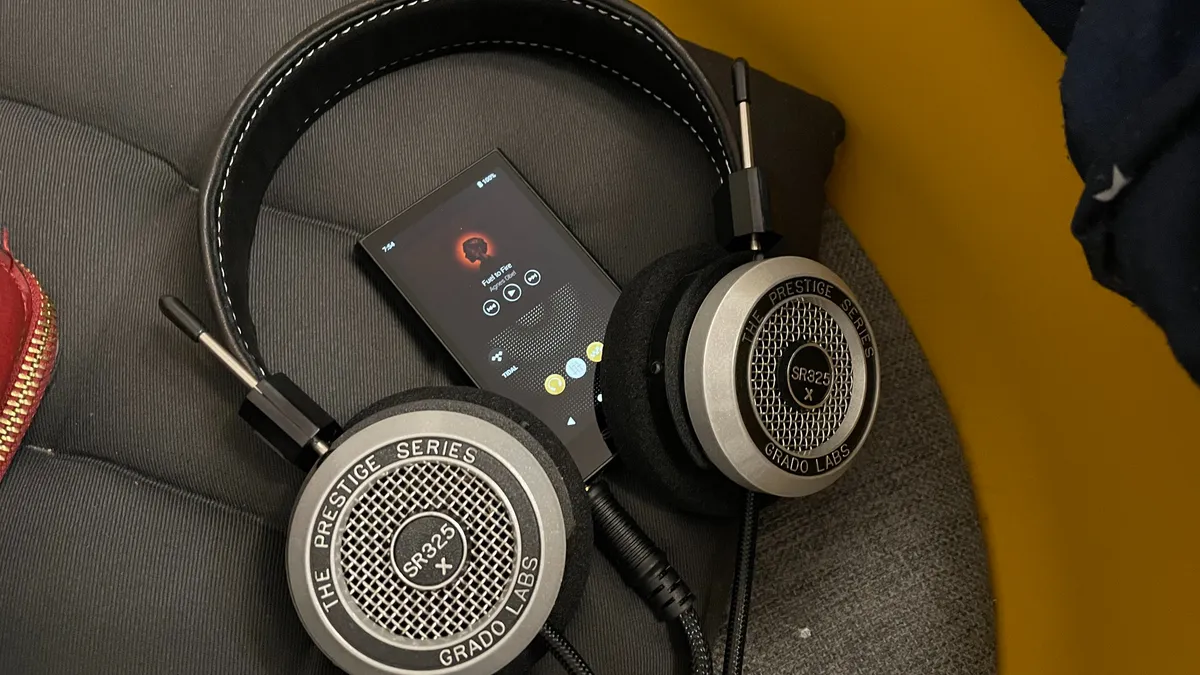


The Prestige range of headphones has been at the core of Grado’s output since it was first introduced three decades ago. While the series has developed over the years, Grado has always done so in small evolutionary steps. The story remains the same for this new ‘x’ generation.
These headphones have always been detailed and articulate performers, and that hasn’t changed, but the ‘x’ generation sound that bit more precise and insightful than the previous SR325e – cleaner and clearer too.
Our SR325x review notes that you can "follow low-level instrumental strands with more ease, especially in more densely produced tracks" while "the newfound sense of refinement makes it easier to relax when listening too."
It's important to note, however, that these are open-back headphones, meaning they leak sound both in and out and are therefore best for listening in quiet environments as opposed to on, for example, public transport. Many of the best wired headphones sport this design, which allows soundstages to feel more open and spacious.
Competition comparison
If preference or practicalities would see you hunting for a closed-back design (which doesn't leak sound), we would heartily recommend the closed-back Beyerdynamic DT 700 X Pro – also talented five-star performers that deliver a wonderfully rounded performance. The open-back versions, the DT 900X Pro, are also a great option if you really can't get over the Grado's somewhat dated design.
If your budget doesn't quite stretch to either of these, your best bet are the Award-winning, one-model-down Grado SR80x (open-backs) or five-star Austrian Audio Hi-X15 (closed-backs). Got more to spend? The Rode NTH-100 are also Award winners, and simply fantastic.
If you are looking for a quality pair of wired headphones around the Grado SR325x's price level, though, and are happy with an open-back design, put them at the top of your shopping list. Once you have a listen you’ll be glad you did.
Read the full Grado SR325x review
Best for home


Beyerdynamic's talent for producing outstanding wired headphones is well documented.
The premium Beyerdynamic T1 (3rd Generation) (£899 / $999 / AU$1599) still hold a place on this very list, whereas the formerly Award-winning Beyerdynamic Amiron used to be our pick as the best home headphones before production finally halted earlier this year.
Never fear, however, because the DT 990 Pro X are here to pick up the Amiron's mantle. Well, technically they act as the sequel to the more affordable DT 900 Pro X, but in filling in the gap as headphones we think are ideal for home use, they're more than up to the task.
Why? Partly because they're so supremely comfortable. Beyerdynamic's near-iconic velour earcups provide outstanding comfort, and while they're furry and soft, we rarely experience much on-ear heat during extended listening stints.
Note, of course, that these are open-backed headphones, meaning sound leaks freely to the potential irritation of anyone nearby. Best to keep your listening at home, then.
You'll want the DT 990 Pro X all to yourself, anyway. Thanks to their signature Stellar.45 drivers employing Beyerdynamic's layered Polyether Ether Ketone (‘PEEK’)’ thermoplastic polymer diaphragm coupled with a Neodymium motor system, the DT 990 Pro X live up to the sonic legacy of their forebears.
Across almost any set of criteria, the comfy cans excel. Beyerdynamic claims the DT 990 Pro X act as a “sonic magnifier” to your music, and while they won't shy away from poor recordings or certain sonic oddities or quirks, they rarely actively highlight or over-egg the flaws in the music we feed them.
Instead, they're outstandingly detailed headphones, with exceptional detail resolution paired with far more clarity and openness than found on the outgoing DT 900 Pro X. Across source devices and no matter the music or files they're tasked with tackling, Beyerdynamic's mid-range headphones barely show any signs of struggling.
Better still, they're hardy ever dull to listen to. The DT 990 Pro X handle dynamics superbly as they tease out low-level variations with ease, and as we said in our review, they're "composed, clear and precise, but they don’t fall into the trap of sounding emotionally distant or unengaging".
Comfort and sonic class in one excellent package, the DT 990 Pro X are very much the real deal.
Competition comparison
The main competition for the DT 990 Pro X comes, essentially, from Beyerdynamic. The outgoing DT 990 Pro X may come down in price now that they've been superseded and stocks may start to run dry, while the closed-back DT 700 Pro X are also worth considering if you want something that doesn't leak sound like a sieve.
Read our full Beyerdynamic DT 990 Pro X review
Best wired for audiophiles
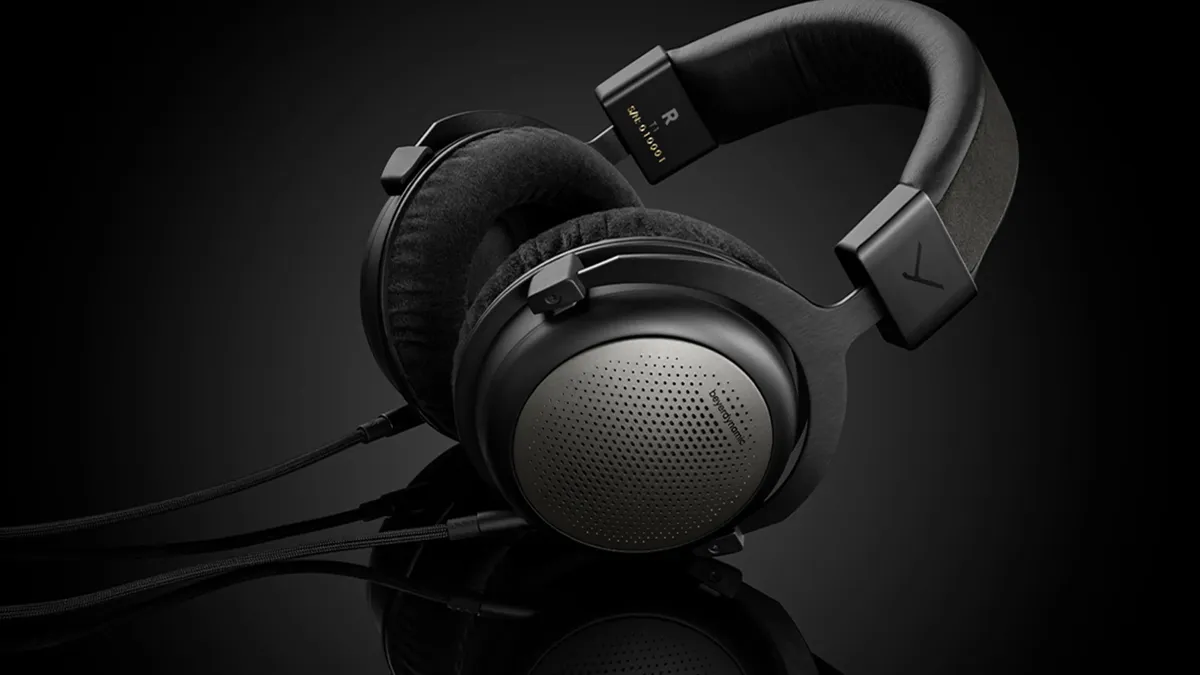


If you have a greater budget that can extend past Beyerdynamic's Amiron to its flagship T1, you won't regret taking the plunge. The 11-year-old, original T1 open-back headphones are something of a touchstone for us as far as premium headphones go.
The main change between this third-generation model and its predecessor is that the new pair is easier to drive for laptops and mobile devices. The old model had a 600ohm impedance, while this new one takes that down to 32ohms.
The results are a sound that's very similar to the originals but cleaner and clearer if anything, slightly less bright and a little more rounded in the treble too, making them a bit more forgiving of aggressive electronics and recordings. There's that same delivery of music with a palpable sense of power and authority, and vocals come through with nuance and clarity, too.
They’re comfortable enough for long listening sessions thanks to a nicely shaped, partially Alcantara-covered headband and generous velour-trimmed earpads. These aren’t the kind of headphones that impress on a short listen. However, given a few days or even weeks, it’s hard not to fall under their spell. We certainly have.
Competition comparison
Once again, these are open-back headphones that leak sound in and out (and are all the better sounding for it), but very decent closed-back alternatives would be the brilliant Beyerdynamic T5 (3rd Gen). And if your budget is bigger still, we recommend you head on over to our best audiophile headphones buying guide, which feature the likes of the Sennheiser HD 820, Focal Utopia (2022) and Yamaha YH-5000SE at the top of the A-list pile.
Read the full Beyerdynamic T1 (3rd Generation) review
Best wireless for audiophiles


Historically, even high-end wireless headphones are limited by the Bluetooth codec supported by the source device, which, in the case of the smartphone, is quite often compressed, ‘lossy’ codecs.
Step forward Sennheiser, who have provided an innovative solution. The German audio giant has included a USB-C dongle in their latest wireless headphones, which blesses the source device, even an iPhone, with the same hi-res codec as the headphones: aptX Adaptive.
The result? A natural, dynamic, Sony WH-1000XM6-beating sound that moves the goalposts for wireless sound quality.
The dongle is only part of the equation, however – even without the dongle the HDB 630 are class-leading in detail, dynamic expression and refinement.
As we said in our Sennheiser HDB 630 review: “These are wonderfully smooth and natural sounding headphones, full of shape and dynamism across the frequency range, and we’re no more than a song into our playlist before we begin to suspect that the Award-winning Sony WH-1000XM6’s days at the top of the leaderboard could be limited.”
Noise cancellation is certainly good, with the HDB 630’s physicality doing a good job of isolating you in the first place and their ANC system taking the sting out of disruptive low-end frequencies. But it’s hard to describe their ANC as great when Bose and Sony’s offerings aggressively pursue absolute silence.
Sennheiser’s chunky, ovular earcups are certainly not an overly inspired design, but instead are discreet and minimalist with a shiny matte finish and quality construction. Sennheiser has nailed the comfort too, with a tight but not burdensome fit.
A liberal 60 hours of battery life is also on board, dropping to 45 hours with the dongle on. Wired listening is available over 3.5mm and USB-C – though this does require battery life – and there are also responsive touch controls and a dedicated app with one of the most comprehensive EQs we’ve seen.
The audio quality is the main draw here, but the HDB 630 score well enough in the design and features departments to be considered a highly attractive all-round package.
Competition comparison
As far as wireless headphones are concerned, we think the Sennheiser HDB 630 takes the cake, but our overall pick, the Sony WH-1000XM6, comes close. If you have the budget, the Focal Bathys Mg sound incredible and are also appropriately stylish.
Read the full Sennheiser HDB 630 review
Best for noise-cancelling


Bose might seem like a very obvious choice when it comes to the best noise-cancelling headphones, but the company has earned that reputation for good reason – and the QuietComfort Ultra Headphones (2nd Gen) improve things further.
In their ‘Quiet’ mode, the Ultra Headphones (2nd Gen) are second to none in terms of outright sound-blocking intensity. To borrow from our Bose QuietComfort Ultra Headphones (2nd Gen) review: “Whether you’re riding public transport or walking past roadworks or construction, they provide a blanket of silence so that your music (or podcasts) can bask in the spotlight, eliminating the deepest rumbles and the majority of mid-band hubbub.”
The ANC automatically adjusts to your surroundings, automatically kicking in to drown out sharp spikes of noise.
We’re still not sold on Bose’s Immersive Audio mode, but the technology really comes into its own in the new ‘Cinema’ mode. Designed for TV and movie watching, the mode pulls dialogue and mid/upper sound effects into greater focus within the wider soundfield.
Wired listening over USB-C for lossless audio, as well as a solid 30 hours of battery life with ANC activated, or 45 hours with it off.
When it comes to sound, the Ultra Headphones (2nd Gen) are a highly enjoyable listen, characterised by Bose’s smooth, bass-rich character but also offering insight and precision. They’re punchy and entertaining headphones, with Charli xcx’s Von Dutch pulsating with snap and crispness.
Recent generations of Sony and Sennheiser have pulled ahead in the sound quality stakes, however, and even though Bose has improved on the original Ultra’s audio quality, the Ultra Headphones (2nd Gen) don’t quite catch up. The Sony WH-1000XM6, for example, deliver a more natural, even-handed tonality as well as greater clarity, texture and drive.
Still, the XM6 can’t take on the Bose for outright noise cancellation, which may well make them the headphones of choice for seasoned travellers, especially with their clever folding design and comfort over long periods.
Competition comparison
The Bose QuietComfort Ultra Headphones are in the unenviable position of being in direct competition with our best overall choice, Sony’s WH-1000XM6. If this was a straight battle based on noise-cancelling alone Bose would win every time, but as a complete package the XM6 edge it thanks to their more natural sound and lower price, hence their position at the top of this page.
Read the full Bose QuietComfort Ultra Headphones (2nd Gen) review
Best for exercise


Sony’s five-star WF-C710N aren’t explicitly sold as sports or workout headphones, but if you’re looking for a pair that both sound great and won’t do a runner at the first sign of vigorous exercise, the affordable buds are our number one pick.
The secret to their secure fit seems to be their small size and lightweight build, although there are no extra hooks or fins to really anchor them in place. If you want that extra peace of mind the Beats Fit Pro are worth considering, but they don’t sound as good and are probably set to be ousted by a sequel next year anyway.
For sports, leisure or anything in between, the noise-cancelling C710N are the way to go. The WF-C710N are so good that they knocked the outgoing WF-C700N off a main spot on this list, and that's not an easy task when you consider how much we liked those stellar Award-winners.
The WF-C710N buds are chunkier than their predecessors, but still extremely comfortable and easy to get to grips with, while that new 'Glass Blue' finish looks the part if you're into that whole '90s retro thing.
The WF-C710N boast responsive touch controls, as well as Bluetooth 5.3 with SBC and AAC codec support. You also get features like auto pause and wear detection, which pause music when you remove an earbud and kick it back into life when you put it back in your ear.
Battery life is a very solid eight and a half hours with Bluetooth and active noise cancelling engaged, meaning even the longest workouts should be covered. Add the charging case to the equation, and you’re looking at a total of around 30 hours.
To help with the ANC, Sony has added an extra mic to each bud compared to the old model and you can tell, with the WF-C710N extracting more out of low-frequency rumblings. Call quality is great for the money, too, with voices sounding clear and natural with minimal wind interference.
Sonically, the Sony buds are very strong contenders. They sound more dynamic and detailed and full-bodied than their predecessors, yet maintain that amazing musicality that keeps you tapping away with every track you play through them. Those are great qualities to have if you're trying to tackle a tough workout and need a bit of pep injected into your step.
Wherever you take them and however you use them, the WF-C710N are capable of delivering.
Competition comparison
There are a few decent pairs of wireless earbuds knocking around the £100-150 / $100-150 mark, including the long-lasting Cambridge Audio Melomania M100 (around £100 / $200) or the Apple AirPods 4 with ANC (£179 / $179 / AU$299). The former are clean, clear and detailed, with their outrageously battery life of 52 hours in total making them an attractive buy if you just want buds that will last and last.
The AirPods 4 with ANC, naturally, are great for runners who want an 'open' design with noise cancelling and compatibility with their iPhone, and that's something we totally understand. Their fit might not be for you, though, so it's worth noting they won't be ideal for all wearers looking for secure, comfy sporting buds.
Read our full Sony WF-C710N review
Best high-end wireless


The Focal Bathys Mg are designed to push the boundaries of sonic performance without wires. We've always said that wires are the way to go, and that perennial fact remains true, but Bluetooth performance is getting better every year, something the Bathys Mg reflect to a quite mesmerising degree.
Before we get to that, there are a few things you should know first. They're quite a bulky pair of cans, for starters, weighing in at 350g, and that's almost 100g more than the Sony WH-1000XM6. They're not uncomfortable to wear for most people, true, but their big, brassy design won't be for everyone, especially if you like headphones that don't draw, shall we say, unnecessary attention.
There are no touch controls, either – it’s all physical buttons, which some might feel is no bad thing. Also, there’s no wear detection, so if you want to pause your music, you need to do so manually rather than relying on your cans to do it for you. How archaic!
You also have three different Noise Cancellation modes: Transparent, Soft and Silent and the ability to alter the LED lighting around the Focal logos on the outside of each earcup – although to us, a light show like this feels a little unnecessary on a pair of expensive wireless headphones.
The Bathys Mg include support for AAC and SBC codecs and can handle higher quality aptX and aptX Adaptive streams from compatible sources. They use the Focal & Naim companion app, a perfectly acceptable platform that isn’t quite as in-depth as some rival brands.
Finally, onto sound. The Focals are beautifully balanced and neutral, and while some wireless ANC headphones can sound a little artificially boosted at the top or bottom end, the Bathys Mg deliver music with a completely straight bat.
Their detail levels are superb, as is the clarity and spaciousness on display, offering up a layered performance that feels elegant, nimble and cannily curated. Their handling of John Williams' Duel of the Fates is particularly impressive, and to borrow from our review:
"They deliver a masterclass in balance, poise and refinement, which draws you in and entertains as though you were watching the action unfold on the big screen.
Not only do the headphones have to keep up with the speed of the track, but they also have low and high-level dynamic shifts to contend with as they jostle for position in a congested sound field."
Competition comparison
We're operating in a pretty rarefied realm here. The kind of wireless cans that act as alternatives to the Focal Bathys Mg are also big-money performers, including the Mark Levinson No.5909 (£749 / $799) or, if you've got serious cash to burn, the T+A Solitaire T (tested at £1200 / $1600 / AU$2160).
Also consider
- Beyerdynamic DT 700 Pro X: If you want good-quality wired over-ears but don't like the rather divisive look of the Grado SR325x, these brilliant Beyerdynamics are another similarly priced, open-back (i.e. leaky) model well worth your cash.
- Røde NTH-100: Got a smaller budget for your wired over-ears? These Rødes are current What Hi-Fi? Award winners and set the sonic benchmark at their price. They are lovely to hold and wear, too.
- Bowers & Wilkins Pi8: The Pi8 are the best wireless earbuds we’ve heard from the brand and real contenders for class-leading status at this ultra-competitive premium end of the market, hence their current What Hi-Fi? Award. If you can spend more than the Sony XM5 wireless earbuds require, we'd be very tempted to splurge here.
- Sony WF-1000XM5: If these Sonys are on sale and considerably cheaper than the Sony WF-1000XM6 wireless earbuds in our list, jump on them! They may be a little old now, but they remain a great-value all-round package.
- Bowers & Wilkins Px7 S3: More stylish alternatives to the Sony WH-1000XM6, and more likely to attract an earlier discount, these solid Bowers over-ears very much sound and look the part, even if their ANC comes third-best to the Sonys and Bose flagships.
How to choose the best headphones
Buds or cans?
The first thing to do is decide on what style of headphones you want. For convenience you can’t beat in-ear buds, simply because you can tuck them away in your pocket when you’re not using them, whereas over-ear cans tend to require a bag or case to keep them safe. The pay-off is that over-ears have the potential to offer a more immersive listening experience due to their passive sound isolation, plus they tend to be more comfortable to wear for longer periods.
Wired or wireless?
Bluetooth technology has improved significantly in recent years, so most pairs of headphones on our list above are wireless, but there are reasons why you might want to pick a pair of wired ones instead.
If you want a pair to use with your hi-fi system at home, a wired pair of over-ear headphones is best. You'll then have to choose whether you want an open-back design (which leaks sound but offers sonic advantages) or the more traditional and common closed-back form (which isn't leaky). You can read all about the closed-back vs open-back headphones differences here.
If you have chosen a wired pair for your phone or laptop because you prioritise sound quality, just be aware that once you go beyond the budget level, we would recommend adding an external DAC as the middleman to boost your inevitably poor-sounding device. That way, you can truly make the most of your headphones purchase.
Wired in-ears are quite a rare breed these days, simply because their focus on portability and convenience means Bluetooth makes much more sense, but you will experience some of the same benefits as wired over-ears, including no longer having to worry about battery life. The main obstacle you’re likely to encounter, though, is the rarity of 3.5mm headphone ports on today’s best smartphones.
How about noise-cancelling?
Noise-cancelling headphones used to be a very distinct category all of its own but with the tech trickling down to cheaper models it’s become much more common, to the point where it’s almost become the default option (although wired noise-cancelling headphones are all but extinct now).
Noise-cancelling isn’t essential but it’s particularly handy if you’re going to be spending a lot of time using your headphones on public transport or in other busy environments. Not only does it help to minimise distractions, it also means you can listen at a lower volume and protect your hearing in the long term.
If you're still unsure which way to go, take a look at our more comprehensive guide on how to choose the right pair of headphones. You might then want to delve into one of our specific buying guides, linked below.
- Best wireless headphones
- Best noise-cancelling headphones and noise-cancelling earbuds
- Best audiophile headphones
- Best sport, running and workout headphones
- Best budget headphones
How we test headphones
We have state-of-the-art testing facilities, where our team of experienced, in-house reviewers test the majority of hi-fi and AV kit that pass through our doors.
Of course, testing headphones doesn't often require such facilities (though we do often try high-end audiophile headphones in our reference hi-fi system).
What is important in our headphones reviewing process is that each pair is compared to the best in its price and style class – whether that's one standout pair or a few we favour the highest among the 100+ pairs we listen to each year for reviews and What Hi-Fi? Awards judging.
We keep class-leading products in our stockrooms so we can always compare new products to ones we know and love.
We live with each pair for weeks during testing so we can see how they fare as all-round daily companions, clocking their battery life endurance, putting their build quality through the wringer, noting their comfort over long wears and – most importantly – comparing their sound quality with other headphones of their type and price point.
If they have active noise cancellation, spatial audio or another smart feature increasingly seen in wireless headphones nowadays, we go twelve rounds with them, too.
We are always impartial and do our best to make sure we hear every pairs at its very best, so we'll try plenty of different types of music and give them plenty of listening time (and time to run in), while the wired headphones that might warrant being used with a DAC are tested with a suitable one.
In line with how we test all products at What Hi-Fi?, all review verdicts are agreed upon by multiple members of the review team rather than an individual reviewer to eliminate any personal preference and to make sure we're being as thorough as possible.
There's no input from PR companies or our sales team when it comes to the verdict either, with What Hi-Fi? proud of having delivered honest, unbiased reviews for decades.
Read more about how we test and review headphones at What Hi-Fi?
Recent updates
- February 2026: The Apple AirPods 3 replace the AirPods 2 as the best AirPods, while the Bose QuietComfort Ultra Headphones (Gen 2) replace their predecessors as the best noise-cancelling headphones. The Sennheiser HDB 630 are also a new entrant for the best audiophile headphones, while the Sony WF-1000XM6 replace the Technics EAH-AZ100 as best premium earbuds.
- September 2025: Beyerdynamic DT 990 Pro X added as the best wired headphones for home use, while the Sony WF-C710N replace the outgoing WF-C700N as our top sporting choice. We've created a new space for the best high-end wireless headphones, too, now occupied by the Focal Bathys Mg.
- March 2025: Bose's QuietComfort Ultra over-ears have been added as our best noise-cancelling choice, while the Sony WF-C700N are our new best earbuds option for exercise. The Sony WF-1000XM5 earbuds have also been replaced by the new Technics EAH-AZ100 as our favourite premium wireless earbuds.
- January 2025: The just-announced (and reviewed) Technics EAH-AZ100 premium wireless earbuds are all-round superstars, giving the top-spot Sony XM5 a real run for their money. They earn a place in our Also Consider section, as do the top-class Dali IO-8 premium wireless headphones.
- November 2024: The budget Sony WF-C500 earbuds have been replaced by their successors, the WF-C510, which are fresh from their What Hi-Fi? Award 2024 win. Other newly crowned winners have been labelled as such, too, while we have added extra context to some entries in this light of a few new recommendable models having arrived on the scene, including the AirPods 4 with ANC and Bose QuietComfort Earbuds (2024).
- August 2024: Our definitive list hasn't changed, but the premium wireless earbuds field has a fierce contender in the excellent Bowers & Wilkins Pi8, which make our Also Consider list. The Dyson OnTrac over-ears arrived with much fanfare, too, but ultimately disappointed our reviews team.
- July 2024: We've tested a handful of headphones since our last update in May, but none have impressed enough to feature on this list: the wired Sennheiser HD 620S impressed, but pairs from Google, Sivga and Sonos didn't quite cut it.
- May 2024: No new entries this time, despite having tested 15 pairs since our last update to this page. The Sennheiser Momentum 4 Wireless earbuds came very close, but we still fancy the Sony WF-1000XM5 in this list more. And the new Sonos Ace? Disappointing, unfortunately.
- February 2024: We added more detail to our best buy picks to improve context, adding alternative options and quotes from our reviews to help you better with your buying decisions.
- October 2023: We added information to flag our new What Hi-Fi? 2023 Award winners.
Headphones FAQ
Are wired or wireless headphones better?
If you are looking to get the absolute best sound quality you can for your budget, wired headphones still have a considerable edge over wireless headphones when it comes to performance. Wired headphones are also more sustainable, of course, as they don't require batteries.
That said, wireless headphone performance is getting better every year and there are certain traditional features (such as active noise cancellation) that are increasingly only found in Bluetooth models, not to mention the fact that modern features such as spatial audio (for 3D immersive sound) and transparency mode (for amplifying external sound) are exclusive to wireless types. Their cable-free design is more convenient too.
Really, the choice of wired vs wireless headphones comes down to your priorities. If it's sound, go wired; if it's convenience or next-gen headphones features, go wireless.
Should you choose headphones or earbuds?
Generally speaking, 'headphones' refer to on-ear and over-ear designs whose earpads nestle on or around your ears, while 'earbuds' cover in-ear models whose eartips bury into your ear canal. Which type you choose will depend on what you want to use them for, what performance ambitions you're aspiring to, and largely simply which design you prefer.
Earbuds are better for exercise as they're discreet and fit more securely than a bulkier on/over-ear design. As they shoot music straight into your ear canal, they tend to sound more direct too. They're smaller, of course, and so easier to carry around with you, and there's a much wider choice at the budget end of the market below, say, £50/$50/AU$80 where on/over-ear designs are harder to come by.
However, on/over-ear designs are the ones to go for if you want the best sound you can buy, as earbuds (especially wireless models) don't reach the same performance peaks at the highest end of their market.
They tend to be less tiring to listen to over longer wears due to the space between your inner ear and the headphone driver, too, as well as comfier to wear for long periods without your ears getting sore. If noise-cancelling is important to you, an on/over model with ANC generally tends to be more effective than an in-ear pair with the functionality.
How much should you spend on headphones?
Headphones and earbuds vary wildly in price, from less than £20/$30/AU$50 to over 100x that. (The best of the former can be found in our best cheap headphones buying guide.) The answer on how much you should spend really depends on whether you go for a wired or wireless model, how serious you are about sound quality, and ultimately what you can spend or feel comfortable spending.
Typically nowadays, wireless headphones tend to be pretty universal on the features front, with active noise cancellation (ANC) and 20-hour+ battery lives spanning budget and premium price points. So what you're paying for is differences in sound quality and, in the case of Apple headphones for example, proprietary technologies that aim to enhance headphone listening and use beyond the necessaries (think Apple's spatial audio and audio sharing).
You can pick up a pair of decent-sounding wireless headphones or earbuds from about £100/$100/AU$200 or £60/$80/AU$120 respectively – we haven't come across many highly recommendable pairs below those figures – but the premium space comprising models costing around two or three times that is where you'll find not necessarily better-featured pairs but significantly better-sounding ones.
As for wired headphones, even (good) budget pairs can contend with the sound quality of mid-to-premium wireless headphones. If you're spending north of around £200/$200/AU$350 on a pair, we'd highly recommend partnering them with some sort of external DAC if your source is something like a phone or laptop to ensure you're getting the most out of them.
MORE:
More into buds? Our best wireless earbuds will sort you out
Our pick of the best headphone deals will help you snag a bargain
These are the best wireless earbuds you can buy
Today's best headphones deals

