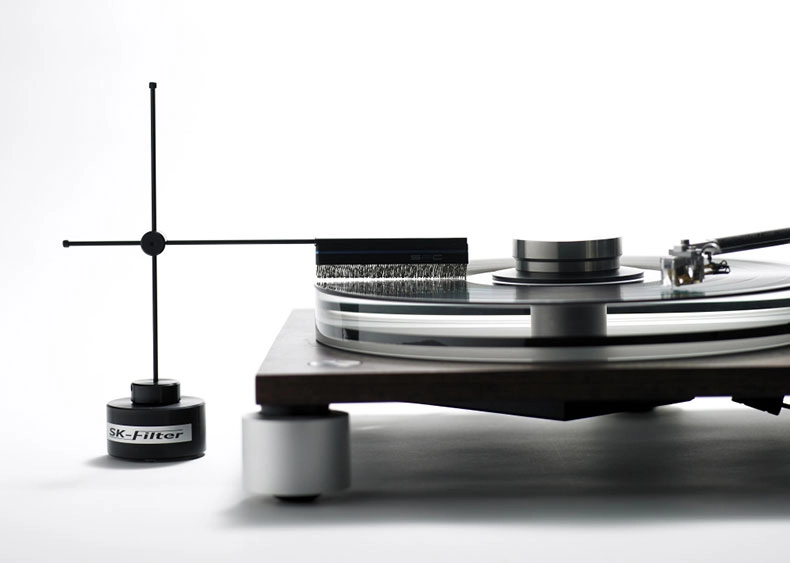
more 'snake oil'
Could someone just tell us exactly what equipment passes all DBX tests and is totally delusion free? Preferably at a number of popular system price points...
£300
£500
£1000
£2000
etc.
Domestically acceptable options preferably (no 'highlighter pen yellow' speaker cones or studio rack handles or anything else that is more befitting a teenager's bedroom 'studio' set-up).
I appreciate that listening to, and comparing different options - in the traditional shop demo/home demo manner - just invites expectation bias and that full-blown, scientifically rigorous, supervised auditioning is a near impossibility at any hi-fi outlet, department store or Pro-shop (and a total impossibility when buying online).
Obviously magazine guidance is a no-no because of their dogged subjectivity. (Even the ones who bench test the gear still listen, sighted, to the reviewed items.)
So most of us will need to be told what has already passed such testing and is therefore deemed superior to all that other hi-fi 'froo froo'/snake oil/foo etc. that we are suffering from now.
Seriously, we can't do the (scientifically validated) testing anywhere on the high street or online before purchasing, so we need a list of what has already undergone the testing, passed and is guaranteed to be 'foo' free.
Thanks
Amps have had some successes and fails, DACS and CDPs all fails.
But, whilst I would argue there have been enough tests to reach an overall conclusion about how sight and bais can affect SQ, there have not been enough tests conducted to definitively answer your question.
That's all fine, but we (as customers/magazine readers/forum members/hi-fi users/magazine staff) are constantly being berated for not following accepted scientific processes in selection of our hi-fi systems.
We go to hi-fi shops for demos. Bad. Too subjective.
We take things home to demo. Bad. Too subjective.
We read magazines for guidance. Bad. They don't conduct scientifically rigorous tests.
What can the average hi-fi customer do? A scientifically objective means of sorting out what is genuinely good is practically impossible in the retail setting. (Even in specialist dealers.) That probably goes for 'pro music' shops too. (Ok that's an assumption, but I'd be very suprised if they'd allow a double blind testing session, with objective and independent supervision and analysis/measurements, on their shop floor everytime someone wanted to know, objectively, which speakers were best to buy).
So it is only reasonable - for those who chide us for our subjectivism/foo/delusions etc. - to provide us with a list of exactly what equipment has already 'passed' such testing (and evidence of where that testing took place) so we can confidently buy the right stuff.
I did have a different view and heard cables sound different and was happy to be a believer or whatever term was being used. I started to look in more detail as even I, an enthusiastic cable debate contributor got fed up with their cyclical nature.
Not being a scientist, I started collecting evidence and putting it into a thread (initially posted here, but there were too many forum rule issues to do with links, copyright etc that it was not able to run) on a hifi forum to see where the evidence and discussion went. That thread has now been running for 2 1/2 years and as of today there have been 1,440 posts and 101,140 views, with contributions from all sides of the debate. It is an ongoing meta study on the subject of audio blind testing, peer reviewed and the present conclusions have come from that. To blow my own trumpet, it was the first time such testing had been gathered in once place, so giving the opertunity for them to be studied together, it has since been copied by others (I have stolen stuff back off them, so that is OK!) and it is by far the biggest and longest running of its type.
So all sides of the argument have been considered and it is from that (and some other smaller threads on side matters that have arisen) I strongly believe I can evidence the theory that sighted testing compared to the two types of blind testing shows how SQ is greatly influenced by factors outwith actual sound itself. That conclusion gets stronger the more studing and evidence gathering that takes place.
CnoEvil, all I did was sit for literally thousands of hours searching the internet, reading and learning about blind testing and posting tests with enough information to show they were properly conducted. I listened to thousands of hours of superb music whilst doing that, so don't feel sorry for me, it was and still is fun. The evidence was the key to the conclusion.
I admire and respect your dedication and thoroughness, but as with all these things, you are likely to attract people of a like mind, who then help underpin your viewpoint. People with an opposing POV are not easy to change because of what they believe (know) they are hearing.
I suspect a convincing case could be made for the opposing argument, if the same time and effort was put into it. I am waiting for Shunyata to publish their comparative listening tests (done over several years) for power cables, which were conducted under controlled conditions using blind and double blind tests, that repeatedly confirm the benefits of them.
Anyway, until indisputable evidence appears that finally puts this to bed, controversy will continue to reign.
Cno
Anyway, until indisputable evidence appears that finally puts this to bed, controversy will continue to reign.
Do you really think the controversy will ever end?
Anyway, until indisputable evidence appears that finally puts this to bed, controversy will continue to reign.
Do you really think the controversy will ever end? 
At some point it will be proved that I've been right all along!
.......
I admire and respect your dedication and thoroughness, but as with all these things, you are likely to attract people of a like mind, who then help underpin your viewpoint. People with an opposing POV are not easy to change because of what they believe (know) they are hearing.
I suspect a convincing case could be made for the opposing argument, if the same time and effort was put into it. I am waiting for Shunyata to publish their comparative listening tests (done over several years) for power cables, which were conducted under controlled conditions using blind and double blind tests, that repeatedly confirm the benefits of them.
Anyway, until indisputable evidence appears that finally puts this to bed, controversy will continue to reign.
Cno
I can promise you that going by criticism I have had, there are many out there who have been through the evidence who have an opposing point of view. But for the likes of cables, we await a positive ABX test. Problem is even if we do get one, such as Shunyata, we cannot then declare cables can inherantly affect SQ.
In any case, there is likely to be a way of making a cable affect SQ by attenuation and affecting volume. As I said before, slightly higher volume is audible and will sound better due to more detail, clarity and dynamics.
I think it is unlikely that undisputable evidence will appear to convince all people.
......
That's all fine, but we (as customers/magazine readers/forum members/hi-fi users/magazine staff) are constantly being berated for not following accepted scientific processes in selection of our hi-fi systems.
We go to hi-fi shops for demos. Bad. Too subjective.
We take things home to demo. Bad. Too subjective.
We read magazines for guidance. Bad. They don't conduct scientifically rigorous tests.
What can the average hi-fi customer do? A scientifically objective means of sorting out what is genuinely good is practically impossible in the retail setting. (Even in specialist dealers.) That probably goes for 'pro music' shops too. (Ok that's an assumption, but I'd be very suprised if they'd allow a double blind testing session, with objective and independent supervision and analysis/measurements, on their shop floor everytime someone wanted to know, objectively, which speakers were best to buy).
So it is only reasonable - for those who chide us for our subjectivism/foo/delusions etc. - to provide us with a list of exactly what equipment has already 'passed' such testing (and evidence of where that testing took place) so we can confidently buy the right stuff.
The evidence is in my blog. As I said before the science says spend your money on speakers, then amps and the source when digital is unimportant, except with bit rates where higher is better. Cables are a definite no.
But since looks, image, surroundings, knowledge (through reviews) affects SQ, what is wrong with going to demos or reading reviews? Nothing.Just because the science says one thing does not negate the other.
So based on that knowledge, buy a super dooper cable if during a demo it sounds better, safe in the knowledge it really does sound better, to you, based on your experience. Does it really matter what causes the cable to sound better?
Nobody has ever indentified a speaker cable in a blind test. Is that not indisputable evidence? 
No!
Nobody had been measured running a mile in under 4 minutes before 1954......it didn't mean it was impossible though, as Roger Banniister went on to prove.
I think it is unlikely that undisputable evidence will appear to convince all people.
That doesn't really matter, as long as the evidence is strong enough to persuade most reasonable thinking people.
There will always be those who won't leave the safety of their beliefs. (eg.Creationism vs Evolutionism), but as of today, we are still a fair way off agreement.....arguments abound where one side shows no respect or tolerance for the other. This hobby is broad enough to have room for differing opinions.
Cno
Blind tests are insufficient evidence on their own, but there is other evidence to say a cable cannot affect SQ. We have known the electrical properties of cables for years, back to the C19th, even skin effect. No such property has been correlated let alone causally connected to reported changes in SQ.
Then we have alternative reasons as to how a cable can affect SQ, image, brand, cost etc, which is evidentially corroborated by sighted tests and known affects on SQ with visual stimulus.
So, yes, keep an open mind to a whole new discovery, but goodness knows where it will come from or how it will explain what we do know already.
......
That's all fine, but we (as customers/magazine readers/forum members/hi-fi users/magazine staff) are constantly being berated for not following accepted scientific processes in selection of our hi-fi systems.
We go to hi-fi shops for demos. Bad. Too subjective.
We take things home to demo. Bad. Too subjective.
We read magazines for guidance. Bad. They don't conduct scientifically rigorous tests.
What can the average hi-fi customer do? A scientifically objective means of sorting out what is genuinely good is practically impossible in the retail setting. (Even in specialist dealers.) That probably goes for 'pro music' shops too. (Ok that's an assumption, but I'd be very suprised if they'd allow a double blind testing session, with objective and independent supervision and analysis/measurements, on their shop floor everytime someone wanted to know, objectively, which speakers were best to buy).
So it is only reasonable - for those who chide us for our subjectivism/foo/delusions etc. - to provide us with a list of exactly what equipment has already 'passed' such testing (and evidence of where that testing took place) so we can confidently buy the right stuff.
The evidence is in my blog. As I said before the science says spend your money on speakers, then amps and the source when digital is unimportant, except with bit rates where higher is better. Cables are a definite no.
Which speakers? Which amps.
Sorry to press this a bit, but it's not about cables (for me anyway) and - as you can see from my sig - my digital sources are iPhone/iTunes/AirPlay, an iMac, a built-in CD player on my Marantz M-CR603, a Blu-ray player, a TV and a Humax. (Hardly anything 'foo' there.)
So yes, ok, we'll discount the digital sources and the cables (I barely have any except a couple of Belkin ethernet cables and some HDMIs that cost me £3.55 each at Tesco and an optical cable I got for £8 from Beresford a long time ago).
So what are the 'scientifically acceptable' speakers and amps for me/us that are free of the taint of any subjectivity in their development, design, build, marketing etc. Brands that only prove their designs with rigorous double blind testing and don't have any truck with subjective reviewing, subjective selling or subjective consumption. Brands that you and fr0g - and the other proponents of scientific objectivism - can say with certainty are totally free of any hooey and hocum?
There are obvious reasons why speakers sound different, and that they do is not a point of contention, it's accepted by all.
......
That's all fine, but we (as customers/magazine readers/forum members/hi-fi users/magazine staff) are constantly being berated for not following accepted scientific processes in selection of our hi-fi systems.
We go to hi-fi shops for demos. Bad. Too subjective.
We take things home to demo. Bad. Too subjective.
We read magazines for guidance. Bad. They don't conduct scientifically rigorous tests.
What can the average hi-fi customer do? A scientifically objective means of sorting out what is genuinely good is practically impossible in the retail setting. (Even in specialist dealers.) That probably goes for 'pro music' shops too. (Ok that's an assumption, but I'd be very suprised if they'd allow a double blind testing session, with objective and independent supervision and analysis/measurements, on their shop floor everytime someone wanted to know, objectively, which speakers were best to buy).
So it is only reasonable - for those who chide us for our subjectivism/foo/delusions etc. - to provide us with a list of exactly what equipment has already 'passed' such testing (and evidence of where that testing took place) so we can confidently buy the right stuff.
The evidence is in my blog. As I said before the science says spend your money on speakers, then amps and the source when digital is unimportant, except with bit rates where higher is better. Cables are a definite no.
Which speakers? Which amps.
Sorry to press this a bit, but it's not about cables (for me anyway) and - as you can see from my sig - my digital sources are iPhone/iTunes/AirPlay, an iMac, a built-in CD player on my Marantz M-CR603, a Blu-ray player, a TV and a Humax. (Hardly anything 'foo' there.)
So yes, ok, we'll discount the digital sources and the cables (I barely have any except a couple of Belkin ethernet cables and some HDMIs that cost me £3.55 each at Tesco and an optical cable I got for £8 from Beresford a long time ago).
So what are the 'scientifically acceptable' speakers and amps for me/us that are free of the taint of any subjectivity in their development, design, build, marketing etc. Brands that only prove their designs with rigorous double blind testing and don't have any truck with subjective reviewing, subjective selling or subjective consumption. Brands that you and fr0g - and the other proponents of scientific objectivism - can say with certainty are totally free of any hooey and hocum?
It's unlike you to completely miss the point, but you don't seem to 'get' ABX testing. It's not about showing which speaker or which amp is better; it's about whether people can tell the difference between different speakers / amp / etc when everything is removed save listening to them. So, people can with speakers and can happily go and read reviews and demo etc and buy ones they like the sound of. Cables they can't, so they're still welcome to do all those things but may want to be aware they could save themself some money.
Arguably, the problem with your approach is that it is analogous to the Christian fundamentalists in America saying creationism ought to be taught in schools in the interests of 'balance'.
Edit: I should say, I don't think you're wrong in arguing there are differences in SQ when it comes to sources with analogue outputs and amps (which was Fr0g's point); I do think the way you make the argument is hazardous, and that it can be used in relation to things like digital cables, which I do not think make a difference.
I think that can work both ways, depending what side you are on.
Of course I'm not arguing that something that flies in the face of "proven" scientific fact should be upheld. The problem lies where "known" fact is proved to be wrong. When Galileo argued that the earth wasn't the centre of the Universe but in fact orbited the Sun, he had to retract his statement on pain of death, as it flew in the face of what was known.
You know better than this Cno, you must be tripping up over your own arguments. Galileo didn't have to change because of what was 'known', it would be because of prevailing doctrine / dogma. The argument works against you, because it is an example of someone being forced to go along with 'belief' rather than 'evidence'. The evidence, I'm afraid, is all against things like cables making a difference.
Nonetheless, your 'balance' argument is exactly that used by creationists. They wish for their point of view to be put on an equal footing with that corroborated by (an abundance of) evidence. It is not wrong or dogmatic to say that should not happen.
To continue the analogy, religious fundamentalists argue their views should have equal footing because 'so many people' hold those views. Hifi and cables are not worth getting as excited about as the (mis)education of children. So telling people to keep an open mind is fine, and as IDC has said people may still get their moneys worth due to their perception of it. But for now, I do not feel uncorroborated subjectivism should be given equal status to the science and evidence that suggest things such as cables do not make a difference.
......
Which speakers? Which amps.
Sorry to press this a bit, but it's not about cables (for me anyway) and - as you can see from my sig - my digital sources are iPhone/iTunes/AirPlay, an iMac, a built-in CD player on my Marantz M-CR603, a Blu-ray player, a TV and a Humax. (Hardly anything 'foo' there.)
So yes, ok, we'll discount the digital sources and the cables (I barely have any except a couple of Belkin ethernet cables and some HDMIs that cost me £3.55 each at Tesco and an optical cable I got for £8 from Beresford a long time ago).
So what are the 'scientifically acceptable' speakers and amps for me/us that are free of the taint of any subjectivity in their development, design, build, marketing etc. Brands that only prove their designs with rigorous double blind testing and don't have any truck with subjective reviewing, subjective selling or subjective consumption. Brands that you and fr0g - and the other proponents of scientific objectivism - can say with certainty are totally free of any hooey and hocum?
Chebby, I do not think blind testing will be able to answer your question as to which specific speaker or what ever is better.
Take speakers, there is an ABX test where 97% of tests correctly identified a Yamaha S4115H from an AR-5. But that does not tell us which one is better (I dont even know of either speaker). No ABX test can, it only shows us what is different and what is not.
What you could do with an ABX test is after the objective question of pick out X from A and B, then ask, which sounds better. But that then becomes a blind comparison test, which is subjective, which sounds better to you.
Continuing with speakers, Axion Audio, Paradigm and Harman International have conducted speaker blind comparison tests. But they do it one of their own against another of their own, or are vague about the competition. What those results have shown is that there is a greater consistency between price and SQ, more expensive tends to be better. That is different from other products such as DACs and CDPs where price and SQ is not correlated at all. But, in any case, blind comparison is subjective, not objective.
What the blind testing does, is show that there is more of an audible difference between speakers than any other part of the hifi chain, since take away other stimuli and people can still pick out which is which and which is more expensive, more so than any other hifi product.
- Login to post comments


I did have a different view and heard cables sound different and was happy to be a believer or whatever term was being used. I started to look in more detail as even I, an enthusiastic cable debate contributor got fed up with their cyclical nature.
Not being a scientist, I started collecting evidence and putting it into a thread (initially posted here, but there were too many forum rule issues to do with links, copyright etc that it was not able to run) on a hifi forum to see where the evidence and discussion went. That thread has now been running for 2 1/2 years and as of today there have been 1,440 posts and 101,140 views, with contributions from all sides of the debate. It is an ongoing meta study on the subject of audio blind testing, peer reviewed and the present conclusions have come from that. To blow my own trumpet, it was the first time such testing had been gathered in once place, so giving the opertunity for them to be studied together, it has since been copied by others (I have stolen stuff back off them, so that is OK!) and it is by far the biggest and longest running of its type.
So all sides of the argument have been considered and it is from that (and some other smaller threads on side matters that have arisen) I strongly believe I can evidence the theory that sighted testing compared to the two types of blind testing shows how SQ is greatly influenced by factors outwith actual sound itself. That conclusion gets stronger the more studing and evidence gathering that takes place.
CnoEvil, all I did was sit for literally thousands of hours searching the internet, reading and learning about blind testing and posting tests with enough information to show they were properly conducted. I listened to thousands of hours of superb music whilst doing that, so don't feel sorry for me, it was and still is fun. The evidence was the key to the conclusion.
I admire and respect your dedication and thoroughness, but as with all these things, you are likely to attract people of a like mind, who then help underpin your viewpoint. People with an opposing POV are not easy to change because of what they believe (know) they are hearing.
I suspect a convincing case could be made for the opposing argument, if the same time and effort was put into it. I am waiting for Shunyata to publish their comparative listening tests (done over several years) for power cables, which were conducted under controlled conditions using blind and double blind tests, that repeatedly confirm the benefits of them.
Anyway, until indisputable evidence appears that finally puts this to bed, controversy will continue to reign.
Cno
"Everything has been said before, but since nobody listens we have to keep going back and beginning all over again." André Gide