Experiment
Good one.
(note: sub can be difficult to get right v the room)
Agreed. See my bunged port thread
A friend and I tried this with his old pair of Focal 714s. The ports were quite large so rolled up pairs of (clean thankfully) socks were employed instead.
He enjoyed the improved mid-range and vocals especially with vocal and 'acoustic' and simpler music. However, large orchestral and heavy metal (he likes a lot of HM) were a mess.
Bass was reduced but not better (1 Neurofen instead of 2) but the 714s were pretty hopeless at bass anyway so that may be a moot point.
Anyhoo, a couple of months later, he replaced the 714s with ATM SCM11s, so the experiment worked (inasmuch as he was convinced that sealed cabinet loudspeakers were the way to go in his room).
I'd like to go back to sealed cabinet loudspeakers eventually, but they are all a bit expensive and a tad too small and inefficient/power hungry nowadays.
In the good/bad old days sealed box loudspeakers with 6.5 inch and 8 inch bass/mid drivers were far more common and tended to have larger cabinets. (They also populated the budget and mid-priced levels unlike today.)
Thing is, ported speakers are designed to be ported, and unless they're large to start with, they can sound, well, a bit lame with the ports blocked, unless you have boomy bass to start with.
True 'infinite-baffle' loudspeakers are meant to be sealed, and they will perform totally differently to a pair of ported speakers with the ports bunged up, because they've been designed from the outset to perform optimally as sealed units.
From my meagre experiments over the years, I concluded there's no easy way to convert a ported speaker to infinite-baffle and have it sound as good as a true infinite-baffle speaker, because it wasn't designed as one. If you want the fast, tight bass you get from an infinite-baffle loudspeaker, you need to buy one. And if you want deep, powerful, tight bass from an infinite-baffle loudspeaker, then there's so substitute for inches, ideally lots of them.
I think it is not about converting a ported speaker into a sealed one. Only about trying, very simplistically but effectively, to understand the effect and, most importantly, your own perception of it.
double post
When were base reflex speaker cabinets invented? . Back in the 1960's "rich" hi-fi enthusiasts used 12 inch (possible 15" or18"!) bass drivers mounted in brick walls in brick alcoves which were in effect small sealed rooms. I then recall huge sealed boxes which I had some of and then smaller bass reflex ported cabinets which predominate today.This is to save space in modern small rooms. Even if you have a large room in a modern house you will not have great ceiling height unless you have designed the house yourself. So as to stuffing socks into bass ports: why reinvent the wheel?
I think it is not about converting a ported speaker into a sealed one. Only about trying, very simplistically but effectively, to understand the effect and, most importantly, your own perception of it.
No I realise that, I was just saying that bunging-up the holes will often just compromise them in a different way, as opposed to giving you the true benefits of a sealed enclosure, which was designed to be sealed in the first place.
But hey, there's no harm in experimenting! 
You could buy a pair of transmission line type speakers and then you can have the best qualities of a sealed box and a ported speaker with none of the drawbacks of either type . IMO 
http://www.youtube.com/watch?v=683FoCDilOE&playnext=1&list=PLHvNEa5FbKOx...
Transmission lines and aperiodic loading are other takes on the theme. I think it would be fair to say they all have their advantages and disadvantages as does indeed IB. The problem these days is that relatively small drivers/cabinets are asked to produce frequencies which may exceed what is ideal. Kef, for instance has been known to limit low frequency extension of some of their designs for good reason.
Just as multi tools are usually a compromise compared with ones that are purpose made for a job, speakers are probably the same. It may be better to split them up into bits which are optimized for their use and yes I know, even that is flawed with problems ...
regards
Yup, when designing speakers, pick two out of the following:
SPL/Senstivity
Size (Cabinet Volume)
Bass Extension (Depth)
So for example, if you want a lot of bass from a small enclosure, especially in a sealed box, you scrifice senstivity and max SPL. If you want high senstivity and decent bass depth, then you need a large enclosure.
In the first example, DSP and Equalisation can help, at the expense of a lot of extra power needed. (small subwoofers for example)
Transmission lines and aperiodic loading are other takes on the theme. I think it would be fair to say they all have their advantages and disadvantages as does indeed IB. The problem these days is that relatively small drivers/cabinets are asked to produce frequencies which may exceed what is ideal. Kef, for instance has been known to limit low frequency extension of some of their designs for good reason.
Just as multi tools are usually a compromise compared with ones that are purpose made for a job, speakers are probably the same. It may be better to split them up into bits which are optimized for their use and yes I know, even that is flawed with problems ...
regards
an example of both a TL and asking too much from a driver:

I heard those and thought they were extremely boomy.
Yes, my 'experience' with PMC (if thats what it is) is unfortunately very limited to a couple of their speakers and some time ago. Their domestic products most likely conform to similar criteria as other manufacturers, namely house friendly and (relatively) unintrusive. The advantage of a transmission line probably includes more cabinet bracing (good), potentially less unwanted port output other than lower frequencies due to more strategic damping (good), usually more weight (debatable as more energy is stored in the process) and cost of manufacture (bad for us). Plus it adds a USP of course which in todays world of vast choice can't be underestimated. They still suffer from time smear though.
In all fairness, PMC also eschew the use and proclamation of boutique parts used in crossovers, instead opting for tried and tested. At least they have done so in the past. This may have changed but I'm not sure.
regards
Transmission lines and aperiodic loading are other takes on the theme. I think it would be fair to say they all have their advantages and disadvantages as does indeed IB. The problem these days is that relatively small drivers/cabinets are asked to produce frequencies which may exceed what is ideal. Kef, for instance has been known to limit low frequency extension of some of their designs for good reason.
Just as multi tools are usually a compromise compared with ones that are purpose made for a job, speakers are probably the same. It may be better to split them up into bits which are optimized for their use and yes I know, even that is flawed with problems ...
regards
an example of both a TL and asking too much from a driver:

I heard those and thought they were extremely boomy.
I found these Fact 8's to be a little too bass light and bright for my taste when I tried them with Bryston electronics
superb imaging but not enough depth or power in the bass for me . 


Further to the talks about transparency/distortion etc. - A lot of distortion comes from speakers. Particularely time smear is an issue with ported speakers.
Assuming you have what you think is a reasonably well sorted system in tonality terms, stuff the ports of your speakers with kitchen roll. Listen to the speaker for a good time without removing the paper, a whole evening should be enough. Give yourself time to get used to the 'lack of bass'. What you will hear now is most likely cleaner low frequencies withouth the time smear of a reflex port and a faster, more transparent midband.
Now revert back and I almost guarantee that the 'bass' you hear now will seem slow and tardy, to soft and not in time. Of course you may prefer this then again, you may now feel there is another way to listen to music and find it difficult to completely go back to an open port.
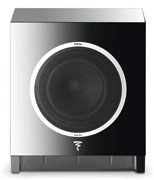
Perhaps you now prefer some sort of 'midway house' such as part blocking the ports. You could also try a good, fast, sealed subwoofer which could be the ideal compromise, giving both cleaner, faster and perhaps even more extended bass without the pitfalls of a port. Good integration is the key and some experimentation as well as a good product is the key here.
regards
Pretty ... and pretty proud of it