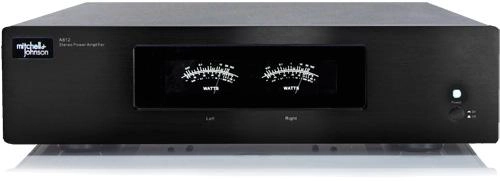
Entry level amps aren't capable to drive Proac Studio 110
Thats a good idea I was considering too. I know so many audio professionals but damn it they all work with active speakers and don't use amplifiers. I trust pro audio much more it terms of signal linearity, still looking for a chance to not buy but borrow someone's pro amp.
Here is another angle.
Although it goes against my usual advice, this guy said that his pair didn't properly open up until bi-wired:
http://www.audioasylum.com/audio/speakers/messages/27/275249.html
Here is another angle.
Although it goes against my usual advice, this guy said that his pair didn't properly open up until bi-wired:
http://www.audioasylum.com/audio/speakers/messages/27/275249.html
Seems very strange as if there is the provided jumpers on it should be no different to single.. I know it's another 'should' but the guy doesn't mention the jumpers..
Here is another angle.
Although it goes against my usual advice, this guy said that his pair didn't properly open up until bi-wired:
http://www.audioasylum.com/audio/speakers/messages/27/275249.html
Seems very strange as if there is the provided jumpers on it should be no different to single.. I know it's another 'should' but the guy doesn't mention the jumpers..
Come to think of it, my usual advice is to replace the jumpers with something better.....would probably have a similar effect.
Here is another angle.
Although it goes against my usual advice, this guy said that his pair didn't properly open up until bi-wired:
http://www.audioasylum.com/audio/speakers/messages/27/275249.html
Seems very strange as if there is the provided jumpers on it should be no different to single.. I know it's another 'should' but the guy doesn't mention the jumpers..
Come to think of it, my usual advice is to replace the jumpers with something better.....would probably have a similar effect.
If the jumpers are effecting it maybe try with the speaker cable connectors in the top 2 posts, then in the bottom 2 and see if there is an audible difference.. The connectors on mine look gold plated and the same colour/material as the posts, not sure about the 110's though
Sounds like a room issue to me. I had a similar experience with some S6es a while back, no matter what I did they were soggy and lifeless. The cure was moving house unfortunately.....
Back to the OP's problem, unless his hearing is unique, then it aint the ProAcs. Bass light they are not, when fully run in. Unlikely that an amp will such a big effect, though a budget amp will not do them justice, as they are capable of revealing a lot more. For me, it sounds like a room issue as Cno has suggested, and maybe they just won't "work" in your room.
Sounds like a room issue to me.
The op has tried them in 3 different rooms. He has also measured their output at 1m, which is probably too close for the room to be having a large effect. I'll be interested to see what the conclusion is.
Sounds like a room issue to me.
The op has tried them in 3 different rooms. He has also measured their output at 1m, which is probably too close for the room to be having a large effect. I'll be interested to see what the conclusion is.
Fair enough. not sure that even listening at 1m is the right way either, I've never found any speaker to sound "right" that close, and none with any bass to speak of. Domestic hi fi systems rarely have enough power / size to reproduce deep bass without using room resonances to help.
Guys, take a look at those preliminary measurements I've done.

I know my microphone is not calibrated and the room is not treated and thus the results are not reliable at all separately from one another but they do make sence to learn the difference between the two measured speakers
adams:

proacs:

What I can see from these images is that Adams try their best at frequencies under 100 Hz and Proacs just gradually lose power. At 75Hz difference is almost 4 dB between the two which is pretty much what I hear
Well, assuming there is a mic / room response that gives an overall treble boost (hence the upslope from L to R on the FR curve) then I'd say the ProAcs are nice and flat, whereas the SAdams have a great big bass hump. To make sense of the comparison, you have to rotate both curves slightly clowckwise (as neither speaker is capable of an HF response like that without massive EQ boost)
One is hi fi, one isn't in the strictest sense, but it's your ears.
Exactly Dimitri. It's not the amps. It's not the mains cables. It's not the room. It's not the speaker break-in. It's not the position of the moon relative to Uranus. It's the speakers. Your measurements and your ears clearly show that.
Your Adams are more tonally neutral than your Proacs. Although neither speaker is particularly good in the bass region. They are both quite a few dbs down at 40hz and they both have alarming amounts of THD below 100hz. But then one can't expect bass miracles from 6" (15 cm) mid-bass cones.
Well, assuming there is a mic / room response that gives an overall treble boost (hence the upslope from L to R on the FR curve) then I'd say the ProAcs are nice and flat, whereas the SAdams have a great big bass hump. To make sense of the comparison, you have to rotate both curves slightly clowckwise (as neither speaker is capable of an HF response like that without massive EQ boost)
One is hi fi, one isn't in the strictest sense, but it's your ears.
In a large well furnished room a bass hump measured at 1m is desirable due to bass frequencies being less directional than higher frequency ones and therefore falling off at a greater rate. A bass hump of reasonable size at 1m will give a more tonally neutral result at 5m listening distance than a speaker that measures flat at 1m, which will sound too lean at that distance.
I wouldn't make any assumptions on the mic / room response. It's possible the mic is more sensitive at higher frequencies. It's also possible that both speakers are tonally bright - which many modern speakers are to create a more "detailed" sound impression in the showroom.
Don't look at the curves, look at the differences between the two. As I said, absolute values are not reliable due to the measurement conditions.
Where there's a visual difference there's obviously the difference in the sound. At 75 Hz it is 4dB. Also Proacs are 1-2dB louder between 3 and 5 kHz.
4 dB is something very perceptible.
Dimedrol I can hear what you're saying and it can be frustrating when you can't get bass but at 'high end' levels they use more accurate components and tuned very accurately but they also tone down bass, as said previously to create the impression of 'more detail' as the main target audience don't listen to rock/dance music.. I'm goin to try some different interconnects and combinations this weekend hopefully, I may also try some Dynaudio DM2/7 which are more 'fun' sounding and have much more bass extention and slam apparently and something like that PMC or splendors (apparently) would suit the sound you are used too/looking for much more.. I tried ATC SCM 11's which everyone recons are flat but they are very hard to drive so useless unless you got a much better amp


I think comments regarding cables, etc. are contentious at best and shouldn't have to be considered beyond them being basically adequate. Rather than having to drive 300km to an audio shop, is it possible for you to purchase a 2nd hand Behringer A500 or similar from ebay? If you get one at a good price you could always sell it again without much loss and at least it would let you know if more power would help.
Synology NAS + Audio Station - ATV2 - Benchmark DAC1 HDR - Event Opal
http://nwavguy.blogspot.co.uk/2012/04/what-we-hear.html